
Snow Leopard Symbolism: What This Mysterious Mountain Animal Represents
Snow leopard symbolism captures the powerful combination of independence, quiet strength, patience, mystery, and resilience.
Known for its pale coat, extraordinary camouflage, and ability to survive in some of the world’s harshest mountain environments, the snow leopard has become a compelling symbol of inner strength and adaptability.
Its elusive nature also encourages people to reflect on solitude, self-trust, and the value of moving through life without constantly seeking recognition.
Unlike animals that symbolize power through dominance or aggression, the snow leopard represents a quieter form of power.
It survives through careful observation, strategic movement, and an exceptional ability to adapt to its surroundings.
These characteristics make its symbolism relevant to personal growth, spirituality, psychology, literature, wildlife conservation, and modern visual communication.
Understanding the symbolism of the snow leopard also requires looking beyond popular spiritual interpretations.
The animal has ecological importance, cultural significance across parts of Central and South Asia, and a growing presence in conservation storytelling.
Its meaning changes depending on whether it appears in a mountain legend, a spiritual reflection, a work of art, a brand identity, or a discussion about endangered wildlife.
This guide explores the snow leopard’s symbolic meanings, historical and cultural associations, psychological interpretations, spiritual significance, and practical applications in everyday life.
What Does Snow Leopard Symbolism Mean?
Snow leopard symbolism represents quiet strength, independence, resilience, patience, adaptability, intuition, and mystery. Because snow leopards survive in remote mountain habitats and remain difficult to observe, they are often interpreted as symbols of self-reliance, inner wisdom, and the ability to navigate challenging circumstances without attracting unnecessary attention. These meanings are symbolic interpretations rather than universal beliefs shared by every culture.
At its core, the snow leopard represents the idea that genuine strength does not always need to be visible. Its natural behavior offers a useful metaphor for people who prefer thoughtful action over public recognition.
The animal’s symbolism can be understood through several connected qualities:
- Quiet strength: Remaining capable and composed without needing to dominate others.
- Independence: Developing confidence in your own judgment while respecting others.
- Resilience: Continuing through difficult circumstances and adapting when conditions change.
- Patience: Observing carefully and waiting for the right opportunity.
- Mystery: Accepting that not everything meaningful must be immediately understood.
- Adaptability: Responding intelligently to changing environments.
- Freedom: Protecting personal space and choosing an authentic direction.
- Awareness: Recognizing subtle changes in your surroundings before acting.
These meanings emerge largely from the snow leopard’s appearance, behavior, and habitat. They are useful symbolic associations, but they should not be confused with scientific claims about supernatural powers or a fixed spiritual message.
1. The Core Symbolic Meanings of the Snow Leopard
Snow leopard symbolism becomes clearer when each characteristic of the animal is connected to a human experience. Its camouflage, solitary habits, physical agility, and mountain habitat offer different ways to understand strength, identity, patience, and freedom.
Quiet strength and inner power
The snow leopard is often associated with quiet strength because it does not need constant visibility to survive. Its powerful body, careful movements, and ability to navigate difficult terrain suggest a kind of strength grounded in competence rather than display.
In personal development, this symbolism can represent someone who remains calm under pressure, trusts their abilities, and does not feel compelled to prove themselves in every situation.
For example, a person who handles a workplace crisis through careful planning instead of public confrontation may identify with the snow leopard’s symbolic qualities. The lesson is not to suppress emotion or avoid speaking up. Rather, it is to recognize that strength can include restraint, judgment, and well-timed action.
Independence and self-reliance
Snow leopards are generally solitary animals outside periods such as mating and the raising of dependent cubs. This behavior makes them natural symbols of independence in contemporary interpretations.
The snow leopard can represent the ability to make decisions without relying entirely on external approval. It may appeal to people who are developing their identities, pursuing unconventional goals, or learning to feel comfortable spending time alone.
However, independence does not mean rejecting every relationship. A balanced interpretation recognizes that self-reliance and cooperation can coexist.
Resilience and adaptability
Snow leopards inhabit rugged mountain environments characterized by cold conditions, steep slopes, and variable prey availability. Their adaptations allow them to move and hunt in landscapes that challenge many other large mammals.
Global Snow Leopard
+1
Symbolically, these characteristics represent the capacity to respond to difficult circumstances without losing direction.
The snow leopard’s message of resilience is particularly useful when someone is experiencing a transition, such as changing careers, rebuilding confidence after disappointment, or adjusting to a new environment.
Resilience does not mean that hardship is always beneficial. It means learning to respond to hardship realistically while preserving the ability to move forward.
Mystery and the unseen
The snow leopard’s elusive behavior contributes significantly to its symbolic association with mystery. Because it inhabits remote terrain and is difficult to observe consistently, it can evoke the hidden dimensions of nature and human experience.
In literature and visual art, this mystery can suggest concealed knowledge, private emotions, unspoken truths, or aspects of identity that cannot be understood at first glance.
The symbolism is especially powerful in stories where a character must learn to observe carefully rather than judge by appearances.
Patience, precision, and timing
Snow leopards depend on stealth, terrain awareness, and effective hunting strategies. These qualities make patience and precision useful symbolic interpretations.
In everyday life, the snow leopard can serve as a reminder to gather information before making a decision. A student may prepare consistently before an examination, an entrepreneur may research a market before launching a product, and an artist may spend time refining a design before presenting it.
The central idea is that deliberate action can be more effective than constant activity.
2. Snow Leopard Spiritual Meaning
The spiritual meaning of the snow leopard is often associated with inner awareness, solitude, transformation, protection, and a connection with the natural world. These interpretations are especially appealing to people who see remote mountains as places of reflection and who associate elusive animals with spiritual depth.
It is important, however, to distinguish personal spiritual interpretations from documented religious traditions. There is no single universal doctrine defining the snow leopard as a spiritual messenger, and beliefs differ across communities.
A symbol of inner wisdom
In contemporary spiritual reflection, the snow leopard may represent wisdom that develops through observation, experience, and patience.
Its ability to navigate complicated mountain terrain provides a metaphor for making one’s way through uncertain circumstances. Rather than offering a guaranteed supernatural message, the animal encourages a reflective question: What can you understand by slowing down and paying attention?
This interpretation can be used in journaling, meditation, or personal reflection without assuming that an animal encounter predicts the future.
A symbol of spiritual independence
The snow leopard’s solitary habits can symbolize an inward journey. In this context, solitude becomes an opportunity to examine beliefs, recognize personal values, and distinguish genuine convictions from social expectations.
This symbolism should not be confused with the idea that spiritual development requires isolation. Many religious and philosophical traditions emphasize community, mentorship, and shared practice.
The snow leopard offers one complementary image: the importance of developing an inner compass.
A symbol of transformation
Snow leopard symbolism can also represent transformation because the animal is associated with challenging environments and concealed movement.
Its image may be meaningful during periods when a person is leaving behind an old identity, developing new skills, or adjusting to a major life change.
The transformation metaphor is not that difficulties automatically create wisdom. Instead, it suggests that adaptation can help people respond constructively when familiar circumstances disappear.
A symbol of protection
In some Himalayan and Central Asian cultural traditions, snow leopards have been associated with sacred landscapes, ancestral powers, spiritual beings, or protective forces. These associations are documented in local folklore and ethnographic research, although they are not identical across communities.
Conservation news
+2
For people who inherit or participate in these traditions, the animal’s meaning may be much deeper than a modern metaphor for personal strength. It may involve relationships with particular places, spiritual obligations, ancestral stories, and customary ways of treating wildlife.
Respecting these contexts is essential when discussing the snow leopard’s spiritual significance.
3. Snow Leopard as a Spirit Animal, Totem, or Personal Symbol
In contemporary spiritual language, the snow leopard is sometimes described as a spirit animal associated with independence, awareness, and quiet confidence. The term may be used informally in self-help writing, but its meaning should not be assumed to represent a shared Indigenous or religious tradition.
Different communities have their own understandings of relationships between humans, animals, ancestors, and spiritual forces.
What does the snow leopard represent as a personal symbol?
As a personal symbol, the snow leopard can represent:
- Trusting your judgment without becoming dismissive of advice.
- Protecting your privacy while remaining connected to others.
- Acting thoughtfully instead of reacting to every challenge.
- Maintaining flexibility when plans change.
- Respecting your own limits while continuing to develop your abilities.
Someone might choose a snow leopard image because it expresses their preferred values or the person they hope to become. That choice can be meaningful without requiring belief in supernatural guidance.
What if you repeatedly dream about a snow leopard?
Dreams involving snow leopards can be interpreted in several ways, depending on the dreamer’s experiences and emotions.
| Dream image | Possible symbolic interpretation |
| A snow leopard watching from a distance | Observation, caution, or an unresolved concern |
| A snow leopard moving across a mountain | Navigating a difficult transition |
| A snow leopard hiding in snow | Privacy, uncertainty, or something not yet understood |
| A calm snow leopard | Composure, confidence, or a desire for peace |
| Being chased by a snow leopard | Feeling pressured or confronting a challenging situation |
| Protecting a snow leopard | Responsibility, compassion, or protecting something vulnerable |
These are reflective possibilities, not scientifically established dream meanings. Psychology does not provide a universal dictionary proving that a particular animal dream predicts a specific event.
Expert Tip: When interpreting a snow leopard dream, begin with your emotional response. Ask whether you felt threatened, curious, peaceful, or empowered. Your personal associations and recent experiences may be more informative than a generic symbolic definition.
4. Snow Leopard Symbolism in Himalayan and Central Asian Cultures
The snow leopard has a long and varied cultural history across the mountains of Central and South Asia. Its significance emerges from centuries of interaction between wildlife and the communities who share its habitat.
Research on local folklore shows that snow leopards can be associated with ecological knowledge, spiritual beliefs, practical concerns, fear, admiration, and customary uses. Their symbolism is therefore more complex than the uniformly positive image often presented in modern inspirational content.
Frontiers
+1
Tibetan Buddhist contexts
In some Tibetan Buddhist regions, religious beliefs about compassion toward living beings have supported wildlife protection. Research published in Conservation Biology examined the relationship between Tibetan Buddhist monasteries and snow leopard habitat, finding that monasteries and their associated community practices could play an important role in protecting wildlife.
PubMed
+1
This does not mean that every Buddhist community interprets the snow leopard in the same way or that all human-wildlife conflicts disappear because of religious beliefs.
The broader cultural lesson is that an animal’s significance may influence how people behave toward it. When wildlife is understood as part of a morally significant living world, that understanding can support conservation.
It is also important to distinguish the real snow leopard from the snow lion, a mythical creature prominent in Tibetan Buddhist art and cultural symbolism. The snow lion is commonly associated with qualities such as fearlessness, strength, and joy. Although it shares mountain associations with the snow leopard, it is a distinct symbolic figure rather than simply another name for the real animal.
Frontiers
+1
Ladakh and the Trans Himalayan region
In Ladakh and neighboring parts of the Trans Himalaya, local stories reflect the complicated relationship between people, livestock, predators, and mountain environments.
Some narratives associate snow leopards with deities or spiritual significance, while others describe livestock losses, hunting, or the use of animal parts. A peer-reviewed study of Trans-Himalayan folklore documented this diversity, demonstrating that cultural values toward snow leopards cannot be reduced to a single positive or negative interpretation.
Frontiers
+1
This variation matters because symbolic respect does not always eliminate practical conflict. A herder may admire the animal and still face serious financial losses when livestock is killed.
Understanding the local context helps conservationists and writers avoid romanticizing communities or overlooking their livelihoods.
Mongolia and the Altai Mountains
Mongolian oral histories and folklore preserve accounts of encounters between snow leopards and nomadic herders. Research based on fieldwork in the Altai Mountains has examined these narratives as forms of cultural heritage and traditional ecological knowledge.
J-STAGE
+1
These stories can convey knowledge about animal behavior, landscape conditions, hunting, and relationships between people and wildlife. They also show how stories passed between generations help communities interpret experiences with animals that are rarely seen.
For modern readers, the significance is twofold: the snow leopard represents both a powerful natural presence and an animal embedded in lived cultural history.
A comparison of regional interpretations
| Cultural context | Documented or commonly discussed association | Important distinction |
| Tibetan Buddhist communities | Compassion for living beings and, in some areas, protection of wildlife | Religious beliefs and practices vary by community |
| Ladakh and the Trans Himalaya | Spiritual narratives, ecological knowledge, and sometimes conflict over livestock | Local folklore includes both positive and negative associations |
| Mongolian Altai | Oral histories, herder experiences, and traditional ecological knowledge | Stories reflect specific landscapes and historical relationships |
| Central Asian communities | Cultural heritage, mountain identity, and regional symbolism | Meanings differ among peoples and locations |
| Contemporary global culture | Resilience, mystery, independence, and conservation | These are broad modern interpretations, not universal traditional beliefs |
The key insight is that cultural symbolism develops through relationships. An animal’s meaning is shaped not only by how it looks, but also by the stories, beliefs, experiences, and responsibilities surrounding it.
5. Historical Origins and Evolution of Snow Leopard Symbolism
Snow leopard symbolism developed through the relationship between mountain wildlife and the people living across its range. Although it is difficult to identify one origin for all snow leopard beliefs, historical imagery, oral traditions, and archaeological evidence demonstrate that the animal has held cultural significance in parts of Asia for a long time.
Ancient rock art and oral traditions
Rock carvings and other historical representations of animals can reveal how earlier communities understood the natural world. In parts of the Himalaya and Central Asia, researchers have documented animal imagery and cultural traditions associated with snow leopards or similar large cats. Identifying individual animals in ancient images can be difficult, however, so interpretations should be made cautiously.
Oral traditions provide another source of historical understanding. Stories about encounters with snow leopards preserve observations of animal behavior and the challenges of living alongside a powerful predator.
Research on Mongolian nomadic narratives has examined how these stories record the relationship between herders and snow leopards across generations.
J-STAGE
+1
From local cultural symbol to national emblem
Over time, the snow leopard’s image has also been used in public identity, national heritage, and regional representation.
A 2016 publication from the Global Environment Facility and United Nations Development Programme, Silent Roar, describes the snow leopard as a cultural and political symbol in several Asian countries. It documents its use in regional emblems, public imagery, and national heritage.
GEF
+1
These uses show how an animal can become more than a subject of folklore. It can represent a region’s landscape, wildlife, identity, or commitment to environmental protection.
The modern conservation era
In modern conservation, the snow leopard has become a prominent symbol of high-mountain biodiversity.
Its survival depends on extensive landscapes, suitable prey, and the ability to coexist with human communities. Conservation organizations therefore use the animal to communicate issues involving habitat protection, biodiversity, climate-related pressures, and human-wildlife conflict.
Global Snow Leopard
+1
The change is significant: the snow leopard’s symbolism now includes not only mystery and strength, but also the responsibility to protect vulnerable ecosystems.
6. The Psychological Meaning of the Snow Leopard
From a psychological perspective, the snow leopard can be interpreted through ideas about identity, self-perception, emotional regulation, and the meanings people attach to animals.
These are interpretive applications of symbolism, not proof that people who admire snow leopards share a particular personality type.
Introversion and personal boundaries
The snow leopard’s solitary behavior can serve as a metaphor for introversion and the need for personal space.
People sometimes connect with this image because they prefer thoughtful conversations, independent work, or time alone to process experiences. The symbol can validate the idea that quiet participation is still meaningful participation.
However, the real animal is not a psychological model of human introversion. Human social needs are much more complex than a predator’s ecological behavior.
Emotional control and thoughtful action
The snow leopard’s image of patience can represent the ability to pause before reacting.
Imagine receiving criticism at work. An immediate defensive response might intensify the disagreement, while a moment of reflection could help you identify what deserves a response and what does not.
In this context, snow leopard symbolism encourages emotional awareness rather than emotional suppression. Anger, fear, and sadness are not weaknesses; the important question is how someone responds to them.
Confidence without external validation
The animal’s elusive nature also creates a useful metaphor for confidence that does not depend entirely on public attention.
In a culture shaped by social media, where likes, views, and visible achievements can become measures of self-worth, the snow leopard offers a contrasting image: the value of work that does not need to be constantly displayed.
This does not mean avoiding feedback or recognition altogether. Healthy confidence can include both internal standards and constructive input from others.
Projection and personal meaning
Semiotics and psychology help explain why one symbol can mean different things to different people.
A person who associates mountains with freedom may see the snow leopard as a symbol of independence. Someone who has studied endangered wildlife may associate it primarily with conservation. An artist may focus on camouflage, while a reader may connect the animal with a mysterious character in a novel.
The symbol acquires meaning through the interaction between the image, its cultural context, and the observer’s experience.
7. Snow Leopard Symbolism in Religion and Philosophy
There is no single religious interpretation of the snow leopard. Its meaning depends on the traditions, stories, and ethical frameworks in which it appears.
Compassion and interconnectedness
In some Buddhist communities, beliefs concerning compassion and the moral significance of living beings have influenced wildlife protection. Research into Tibetan Buddhist monasteries has documented how religious institutions and local social practices can contribute to protecting snow leopard habitat.
PubMed
+1
Philosophically, this relationship invites reflection on the idea that humans are part of a wider ecological community.
The snow leopard can therefore symbolize a shift away from viewing wildlife merely as a resource and toward recognizing that other species have their own ecological roles and value.
Sacred mountains and spiritual geography
Mountains often hold spiritual importance in religious and Indigenous traditions. They may be regarded as sacred places, sources of water, homes of spiritual beings, or locations for pilgrimage and contemplation.
Where such beliefs intersect with snow leopard habitat, the animal can become part of a broader system of meaning linking wildlife, landscape, ancestry, and community responsibilities.
These associations should be described in their specific cultural contexts rather than treated as a single universal mountain religion.
Freedom, restraint, and humility
The snow leopard also supports philosophical reflection outside formal religious settings.
Its ability to survive in a difficult environment can inspire questions about the relationship between freedom and responsibility, strength and restraint, and independence and interdependence.
A useful philosophical lesson is that independence does not remove us from our surroundings. Like the snow leopard, human beings depend on environments and relationships that make survival possible.
8. Snow Leopard Symbolism in Art, Literature, and Storytelling
In art and storytelling, the snow leopard is a compelling symbol because its visual qualities and ecological characteristics naturally support themes of concealment, endurance, danger, beauty, and freedom.
Snow leopard imagery in visual art

12
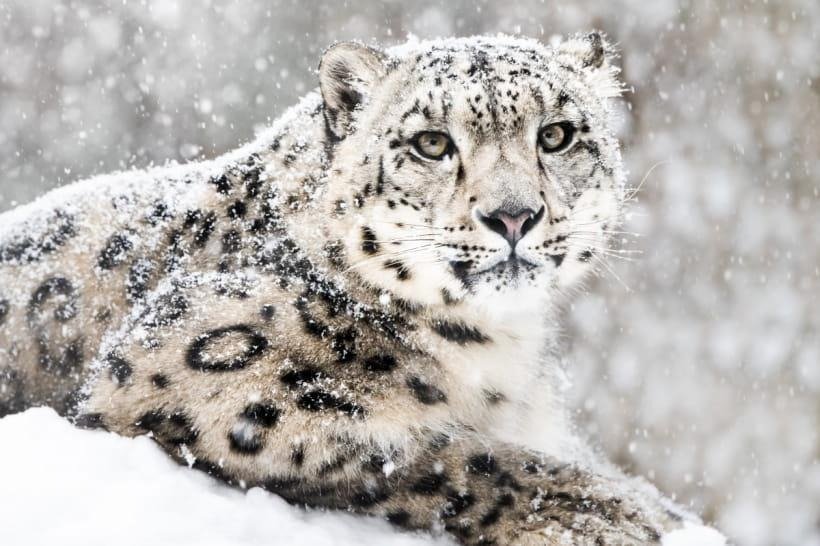
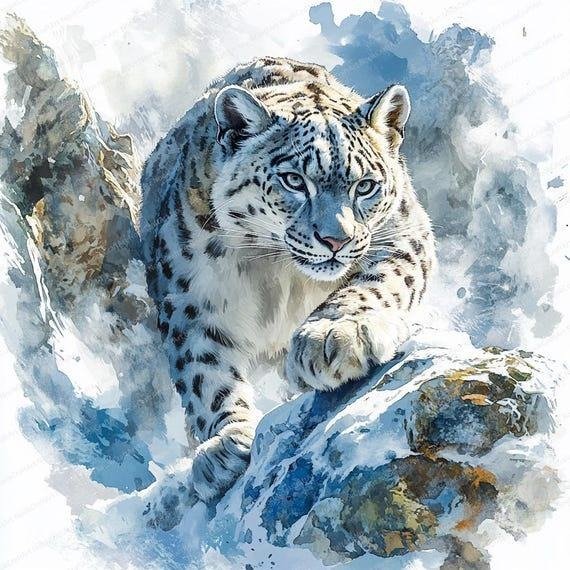
Artists can use the snow leopard’s spotted coat, pale coloring, long tail, and mountainous setting to create several different effects.
- Pale colors can evoke snow, stillness, distance, and a sense of isolation.
- Spotted patterns can communicate camouflage, visual complexity, and the relationship between an animal and its surroundings.
- Steep mountain backgrounds can suggest challenge, freedom, or remoteness.
- A direct gaze can create an impression of awareness, confidence, or guarded attention.
- A partially concealed body can evoke suspense and the limits of human knowledge.
These effects are not fixed meanings. They are design possibilities that depend on composition, lighting, medium, and cultural context.
Snow leopard symbolism in literature
Writers can use the snow leopard as a literal animal, a recurring image, or a metaphor for a character’s inner life.
For example, a protagonist who is rarely understood by others might be associated with a snow leopard because of their privacy and independence. A mountain journey featuring the animal might symbolize a difficult search for knowledge or a confrontation with the unknown.
In environmental literature, the snow leopard may instead represent the fragility of remote ecosystems and the consequences of human interference.
A useful literary analysis should ask three questions:
- Where does the snow leopard appear in the story?
- What emotions or ideas accompany its appearance?
- Does the animal’s meaning change as the plot develops?
These questions help readers interpret the symbol using evidence from the text instead of relying on a generic list of animal meanings.
Snow leopard symbolism in film and photography
Wildlife photography often emphasizes the contrast between the animal’s striking appearance and its ability to disappear into rocky terrain.
A photograph of a snow leopard almost hidden among stones may communicate the limits of human observation. A close-up portrait can instead emphasize individuality and the animal’s physical presence.
In documentary filmmaking, the snow leopard may become a focal point for stories about wildlife research, local livelihoods, conservation, and the changing relationship between people and nature.
Expert Tip: When analyzing snow leopard imagery, consider both what is visible and what remains hidden. The contrast between visibility and concealment is one of the most effective ways to communicate the animal’s symbolic mystery.
9. Snow Leopard Symbolism in Colors, Patterns, and Visual Communication
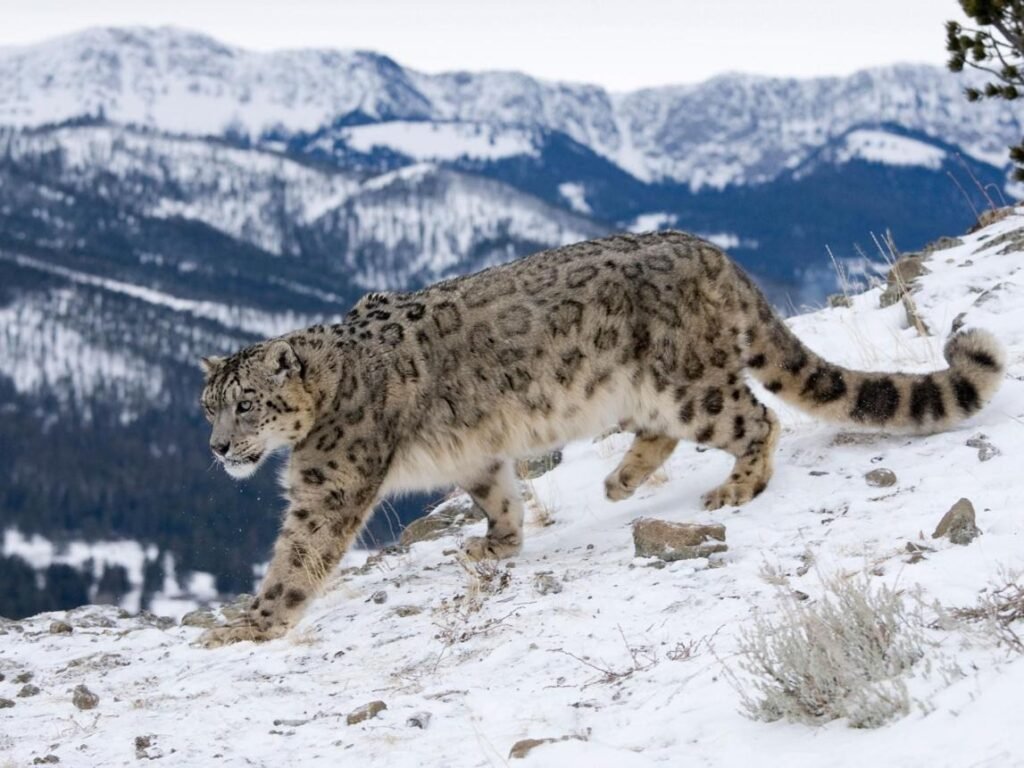
The snow leopard’s visual appearance contributes to its meaning in art, fashion, graphic design, and branding. Its pale coat and dark rosettes create a recognizable contrast that can communicate elegance, camouflage, wildness, and strength.
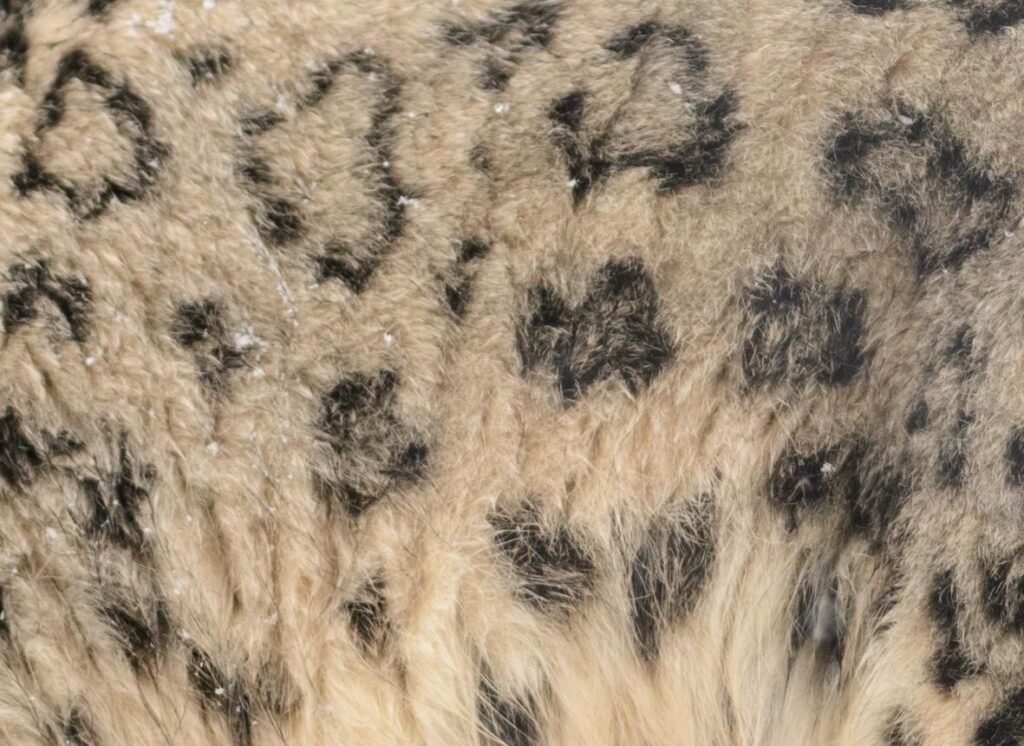
8
White and gray: stillness and subtlety
The snow leopard’s pale coat can evoke winter, silence, distance, and the ability to blend into a landscape.
In design, white and gray are sometimes used to communicate simplicity, restraint, sophistication, or calmness. These meanings depend on context; white may also signify mourning, purity, or celebration in different cultural settings.
The connection between a snow leopard’s coloring and these meanings is interpretive rather than evidence of a universal color psychology.
Black spots: contrast and individuality
The animal’s dark rosettes interrupt its pale coat, creating a distinctive pattern.
Symbolically, this contrast can represent individuality within a larger environment, the balance between visibility and concealment, or the coexistence of opposing qualities.
In visual communication, a spotted pattern can also make a design recognizable without requiring a detailed illustration of the animal.
Mountains: challenge and freedom
The mountainous landscape is central to the snow leopard’s visual identity.
A snow leopard placed high on a ridge can suggest independence and perspective. One shown moving through a narrow rocky passage might evoke persistence and navigation through uncertainty.
The setting changes the message, which is why successful visual storytelling considers the entire composition rather than the animal alone.
10. Snow Leopard Symbolism in Branding and Modern Culture
In contemporary branding, the snow leopard can communicate a combination of strength, agility, exclusivity, elegance, and environmental awareness.
Its image may suit organizations that want to express a relationship with mountain landscapes, outdoor exploration, wildlife protection, or precision.
What can the snow leopard communicate in a brand?
| Brand application | Possible message | Design consideration |
| Outdoor equipment | Adaptability and performance | Pair imagery with evidence of product quality |
| Conservation organizations | Wildlife protection and ecological responsibility | Represent the species accurately and respectfully |
| Adventure travel | Exploration and remote landscapes | Avoid implying that wild animals are guaranteed tourist encounters |
| Premium lifestyle products | Elegance and exclusivity | Avoid reducing the animal to a generic luxury motif |
| Education and museums | Biodiversity and discovery | Include accurate information about habitat and behavior |
| Digital games and storytelling | Stealth, agility, mystery | Distinguish fictional powers from real animal behavior |
Snow leopard symbolism in digital communication
The snow leopard can also appear in profile pictures, illustrations, game characters, digital stickers, and social media graphics.
Someone might choose the image to express a preference for independence or an appreciation of wildlife. A conservation campaign might use it to make an endangered species more recognizable to a wider audience.
In either case, the image functions as a compact form of visual communication: viewers infer a message from the animal’s appearance and the context in which it is presented.
For websites, the most effective use of snow leopard imagery combines attractive visuals with relevant information. A wildlife article, for instance, can pair a striking photograph with accurate facts about the animal’s habitat and conservation needs.
11. Snow Leopard Symbolism and Wildlife Conservation
One of the most important modern meanings of the snow leopard is its association with the protection of mountain ecosystems.
Snow leopards inhabit high-mountain regions across 322 countries in Central and South Asia. Their long-term survival depends on suitable habitat, sufficient wild prey, and effective responses to threats such as poaching and human-wildlife conflict.
IUCN CatSG
+1
Why the snow leopard is a conservation symbol
The snow leopard attracts public attention because it is elusive, visually distinctive, and closely associated with remote mountain landscapes.
Its conservation story can introduce audiences to broader environmental issues, including habitat fragmentation, pressures on wild prey, livestock losses, and the importance of involving local communities in conservation planning.
However, the symbolic appeal of the animal should not overshadow the needs of the people living alongside it.
Livestock predation can create serious economic hardship for herders. Conservation efforts are more sustainable when they consider practical solutions, community knowledge, and the fair distribution of conservation costs and benefits.
The relationship between cultural beliefs and conservation
Cultural beliefs can help shape wildlife protection, but their effects depend on local circumstances.
A study of Tibetan Buddhist monasteries found that religious institutions and associated community practices could contribute to protecting snow leopard habitat. Other research on Trans-Himalayan folklore documents both positive and negative attitudes toward the species.
PubMed
+1
These findings demonstrate why conservation is not simply a matter of teaching people to admire an animal. It involves ecology, economics, ethics, culture, and relationships between communities and the land.
How individuals can apply this symbolism practically
If the snow leopard represents resilience and respect for nature to you, you can connect that symbolism to meaningful action:
- Learn about the species from credible wildlife conservation organizations.
- Share accurate information rather than unverified claims about its behavior.
- Support responsible conservation initiatives that work with local communities.
- Avoid products made from threatened wildlife or illegally traded animal parts.
- Choose wildlife tourism and photography practices that prioritize animal welfare.
- Recognize that protecting a species also requires protecting its habitat and ecological relationships.
In this way, snow leopard symbolism can move beyond personal inspiration and become a practical expression of environmental responsibility.
12. Practical Applications: Using Snow Leopard Symbolism in Everyday Life
The snow leopard can serve as a personal reminder of qualities you want to cultivate. Its symbolic value becomes most useful when you connect an abstract meaning to a specific action.
For personal growth
If you associate the snow leopard with independence, use that association to reflect on a decision you have been postponing because you are worried about others’ opinions.
If you associate it with patience, consider whether you need more information before taking your next step.
If you associate it with resilience, identify one practical adjustment that could help you respond to a difficult situation.
For education and teaching
Teachers can use the snow leopard to connect biology with literature, cultural studies, environmental ethics, and visual literacy.
For example, students might compare a scientific description of the animal with a traditional story or a conservation poster. They can then examine how the same species takes on different meanings in different contexts.
This approach develops both subject knowledge and critical thinking.
For creative projects
Writers, designers, and artists can use the snow leopard as a starting point for exploring themes such as:
- Concealment versus visibility.
- Individuality versus belonging.
- Strength versus aggression.
- Freedom versus responsibility.
- Survival versus environmental change.
The strongest creative use emerges when the symbol contributes to the work’s central message rather than appearing simply because it looks impressive.
For personal reflection
Try these questions when the snow leopard feels meaningful to you:
- Where in my life would patience be more useful than urgency?
- Am I protecting my independence in a healthy way?
- What challenge requires adaptability rather than resistance?
- Do I need time alone, or do I need support from others?
- How can my appreciation of wildlife translate into responsible action?
These questions allow the symbolism to become a tool for reflection without treating it as a prediction or a source of guaranteed answers.
13. Did You Know? Facts That Enrich Snow Leopard Symbolism
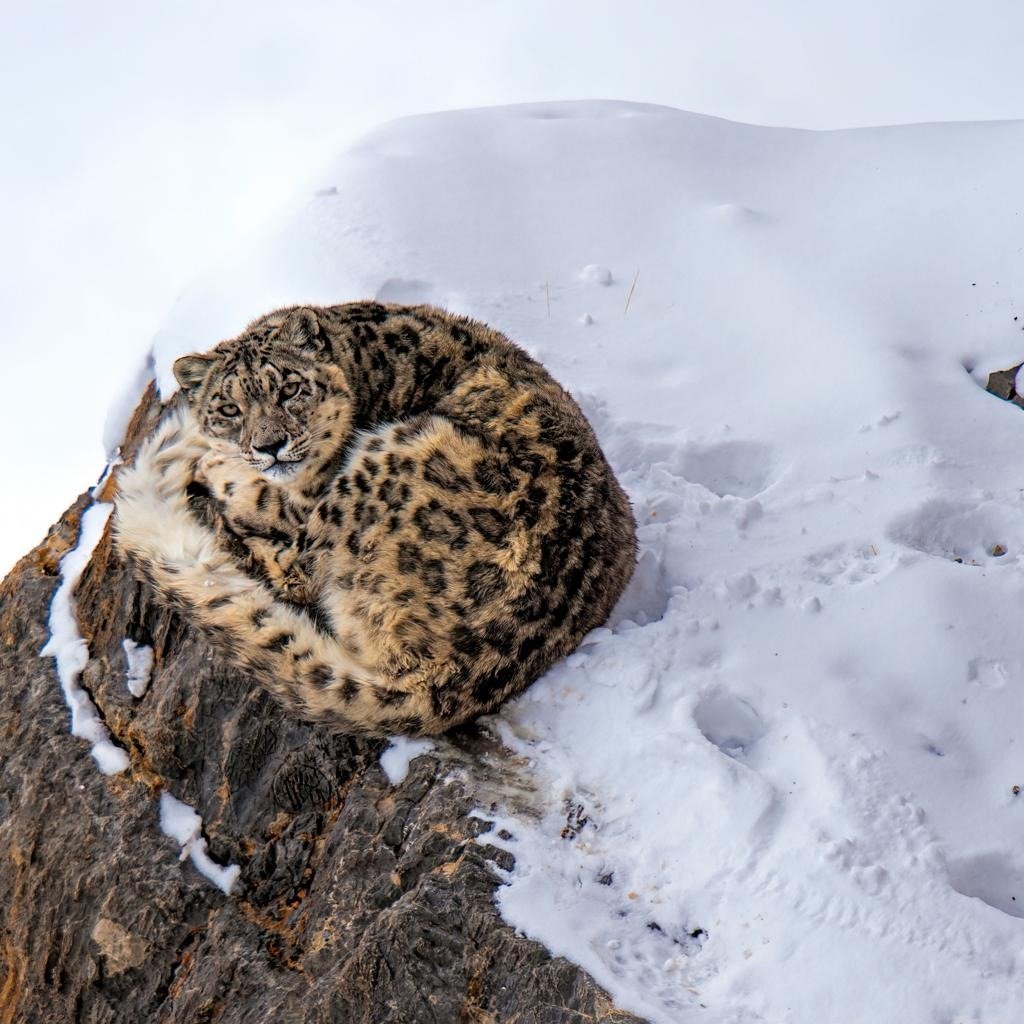
The snow leopard has a remarkably long tail.
Its thick tail helps with balance on rugged terrain and can be wrapped around its body for additional warmth. Symbolically, this adaptation can suggest balance, preparedness, and resourcefulness.
IUCN CatSG
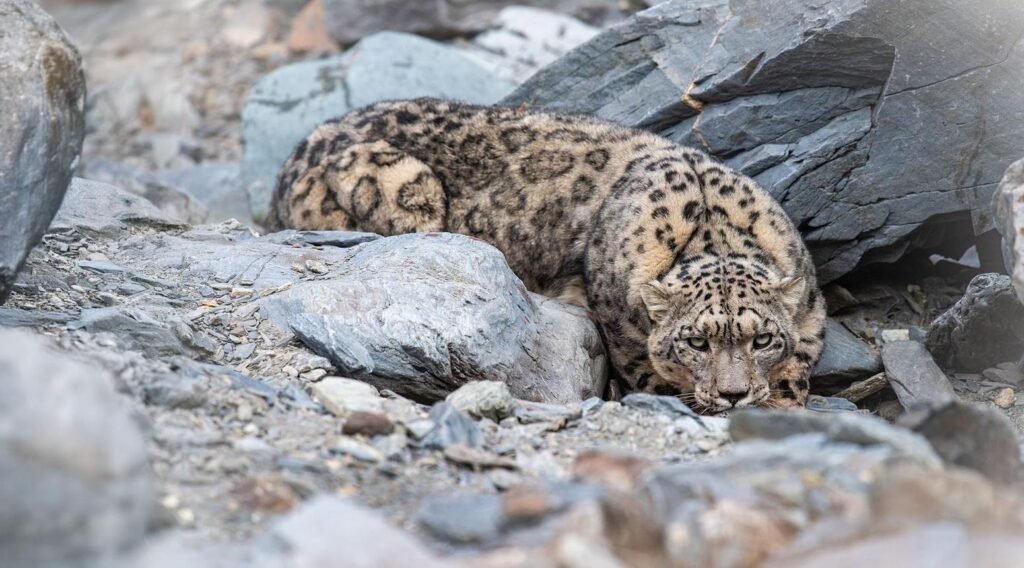
Its camouflage makes it difficult to spot.
The snow leopard’s coat blends with rocky mountain surroundings, reinforcing its modern symbolic association with mystery and subtle presence.
Global Snow Leopard
+1
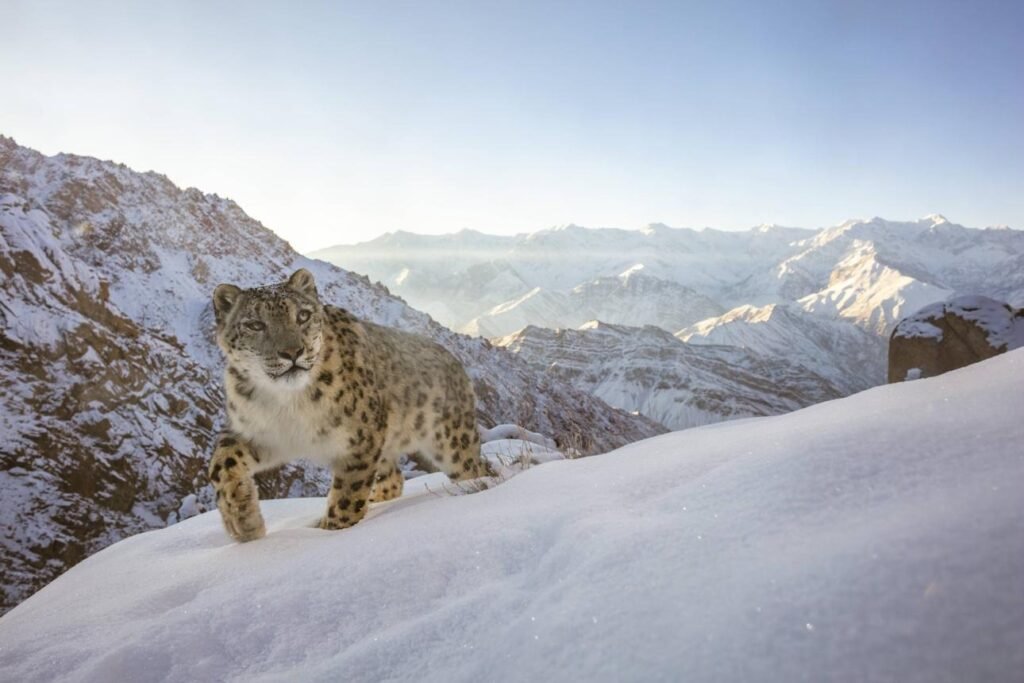
It is adapted to challenging mountain terrain.
Its physical adaptations and habitat make it a powerful symbol of persistence, although the real animal’s survival depends on ecological conditions rather than determination alone.
Global Snow Leopard
+1
14. Common Mistakes When Interpreting Snow Leopard Symbolism
Symbolic interpretation is most useful when it remains open to context and evidence.
Mistake 1: Assuming every snow leopard encounter is a supernatural sign.
Seeing a snow leopard in a dream, photograph, or natural setting does not establish that a supernatural message has been delivered. People may choose to interpret the experience personally, but such interpretations are not objectively verified predictions.
Mistake 2: Treating all Asian traditions as one belief system.
Central and South Asia contain many distinct languages, religious traditions, communities, and histories. A belief documented in one Himalayan community should not automatically be attributed to every Buddhist, Mongolian, or Central Asian community.
Mistake 3: Confusing the snow leopard with the snow lion.
The snow leopard is a real species, Panthera uncia. The snow lion is a mythical figure with its own cultural and religious significance. Their mountain associations overlap, but their identities and symbolism are not interchangeable.
Frontiers
+1
Mistake 4: Equating solitude with loneliness.
The snow leopard’s solitary habits can inspire reflection on independence, but human relationships are more complicated. Time alone may be restorative for one person and difficult for another.
Mistake 5: Romanticizing resilience.
Survival in harsh conditions is not evidence that suffering is necessary for growth. The snow leopard’s adaptations are the result of evolutionary processes, and human resilience can involve seeking help, changing circumstances, or avoiding unnecessary hardship.
Mistake 6: Using the animal only as an aesthetic trend.
The snow leopard is a living species facing conservation challenges. Responsible symbolism acknowledges its ecological reality rather than treating the animal merely as a decorative emblem.
15. Myth vs. Fact: Understanding Snow Leopard Symbolism
| Popular claim | What is more accurate |
| Snow leopards always symbolize spiritual protection. | Protection is one possible interpretation, while documented cultural beliefs vary considerably. |
| Seeing a snow leopard means a major life change is coming. | This is a personal or spiritual interpretation, not a verified prediction. |
| Snow leopards and snow lions are the same creature. | One is a real species; the other is a mythical cultural figure. |
| Solitary animals symbolize emotional detachment. | Solitude can represent independence, reflection, or other qualities depending on context. |
| The snow leopard’s symbolism is the same worldwide. | Symbolic meanings develop through specific histories, traditions, and personal experiences. |
| The animal’s strength comes from never needing help. | Its survival depends on adaptations, prey, habitat, and ecological relationships. |
The most reliable approach is to distinguish biological facts, documented cultural traditions, and modern personal interpretations. All three can contribute to a rich understanding of snow leopard symbolism, but they are not interchangeable forms of evidence.
16. Key Insights: What the Snow Leopard Can Teach Us
The snow leopard offers several useful themes for reflection, creative work, and understanding the relationship between humans and nature.
- Strength can be quiet. Competence does not always require public recognition or aggressive behavior.
- Independence benefits from awareness. Self-reliance is most effective when combined with sound judgment and respect for others.
- Adaptability matters. Responding to changing circumstances can be more useful than insisting that conditions remain the same.
- Mystery invites curiosity. What remains hidden may deserve careful observation rather than immediate judgment.
- Cultural meanings require context. The snow leopard’s significance varies across communities and historical periods.
- Nature has value beyond symbolism. The species deserves protection as a living animal, not merely admiration as a metaphor.
These insights explain why the snow leopard continues to inspire writers, artists, spiritual seekers, educators, and conservationists. It provides a vivid image through which people can explore questions of identity, resilience, responsibility, and the natural world.
17. Frequently Asked Questions About Snow Leopard Symbolism
1. What does a snow leopard symbolize spiritually?
A snow leopard commonly symbolizes quiet strength, independence, patience, mystery, resilience, and awareness in contemporary spiritual interpretations. In some Himalayan and Central Asian traditions, snow leopards also have associations with sacred landscapes, spiritual beings, or protection. These meanings differ by community, and no single interpretation applies to everyone.
2. Is the snow leopard a symbol of strength?
Yes. The snow leopard is widely used as a symbol of strength, especially quiet strength and adaptability. Its ability to navigate steep, rocky terrain makes it a compelling metaphor for facing challenges with patience and resourcefulness. Unlike symbols associated primarily with dominance, the snow leopard often represents power expressed through restraint and thoughtful action.
3. What does it mean if you dream about a snow leopard?
A snow leopard in a dream may represent independence, a challenge, uncertainty, self-confidence, or the desire for greater personal freedom. The interpretation depends on the dream’s context and the dreamer’s feelings. There is no scientifically established universal meaning for snow leopard dreams, and a dream should not be treated as a reliable prediction of future events.
4. What does the snow leopard symbolize in Tibetan culture?
Snow leopard symbolism in Tibetan cultural contexts is not uniform. In some Tibetan Buddhist regions, beliefs about compassion for living beings and sacred landscapes can support wildlife protection. The real snow leopard should also be distinguished from the mythical snow lion, a prominent figure in Tibetan art and symbolism associated with qualities such as strength and fearlessness.
5. Why is the snow leopard associated with mystery and independence?
The snow leopard is associated with mystery because it inhabits remote mountain environments and can be difficult to observe. Its generally solitary behavior also inspires associations with independence and self-reliance. These symbolic meanings arise from its ecology and appearance, although the personal or cultural significance of the animal varies.
6. What does a snow leopard symbolize in art and literature?
In art and literature, the snow leopard can symbolize hidden knowledge, resilience, freedom, elegance, solitude, danger, or the fragility of nature. Writers may use it to represent a private or misunderstood character, while visual artists can use its camouflage and mountain setting to create a sense of mystery. The most accurate interpretation depends on how the image functions within the specific work.
Conclusion: The Lasting Significance of Snow Leopard Symbolism
Snow leopard symbolism brings together quiet strength, independence, patience, mystery, resilience, and adaptability.
Its connection with remote mountain environments makes it a powerful image for navigating uncertainty, maintaining personal boundaries, and responding thoughtfully to challenges.
Its cultural significance extends beyond these contemporary interpretations.
In parts of the Himalaya and Central Asia, snow leopards appear in folklore, traditional knowledge, spiritual beliefs, and regional identity.
Their meanings vary, reflecting the different relationships that communities have developed with mountain landscapes and wildlife.
The snow leopard also has a meaningful place in modern art, literature, branding, education, and conservation communication.
Its striking appearance makes it an effective visual symbol, while its ecological importance reminds us that the real animal is more than a metaphor.
Ultimately, the most valuable lesson of snow leopard symbolism is that meaning depends on context.
The animal can inspire personal reflection, encourage creative expression, and deepen cultural understanding, but responsible interpretation distinguishes documented facts from spiritual beliefs and individual associations.
By appreciating both the symbolism and the living species, we can recognize the snow leopard as an enduring emblem of resilience, mystery, and the importance of protecting the natural world.
Semantic Entities, NLP Concepts, and Related Keywords
The following terms represent the main semantic relationships covered in this article. They can also support internal linking and topic-cluster planning for a symbolism-focused website.
Primary keyword
– Snow leopard symbolism
Semantic keywords and contextual synonyms
- Snow leopard meaning
- Snow leopard spiritual meaning
- Snow leopard symbolic meaning
- Snow leopard as a spirit animal
- Snow leopard dream meaning
- Snow leopard spiritual significance
- Snow leopard personality symbolism
- Snow leopard meaning in different cultures
- Snow leopard symbolism in art
- Snow leopard symbolism in literature
Related symbolic concepts
- Quiet strength
- Independence
- Self-reliance
- Resilience
- Adaptability
- Patience
- Mystery
- Inner wisdom
- Personal boundaries
- Freedom
- Protection
- Transformation
- Emotional awareness
- Environmental responsibility
Cultural and historical entities
- Tibetan Buddhism
- Ladakh
- Trans-Himalayan folklore
- Mongolian Altai
- Central Asia
- Himalayan cultural traditions
- Oral history
- Traditional ecological knowledge
- Snow lion
- Sacred mountains
- Wildlife conservation
Scientific and ecological entities
- Panthera uncia
- High-altitude habitat
- Mountain ecosystems
- Camouflage
- Predator-prey relationships
- Wild prey
- Biodiversity
- Human-wildlife conflict
- Habitat protection
- Conservation ecology
NLP concepts and topical relationships
- Symbolism and visual communication
- Animal symbolism and cultural identity
- Spiritual interpretation and personal reflection
- Animal behavior and metaphor
- Semiotics and visual meaning
- Psychology and symbolic projection
- Mythology and folklore
- Literature and character development
- Branding and visual identity
- Cultural traditions and conservation
- Wildlife imagery and environmental education
Suggested related articles for a symbolism topic cluster
- Snow Lion Symbolism
- Leopard Symbolism
- Mountain Symbolism
- White Animal Symbolism
- Cat Symbolism
- Solitude Symbolism
- Strength Symbolism
- Resilience Symbolism
- Camouflage Symbolism
- Endangered Animals and Their Symbolic Meanings
These related topics can create a coherent internal-linking structure, helping readers explore animal symbolism alongside its cultural, psychological, literary, and environmental dimensions.
Editorial note: This article distinguishes established biological information and documented cultural research from interpretive spiritual meanings. It is structured for readability and search relevance, but originality, factual accuracy, and competitive search performance should be evaluated rather than guaranteed.

Learn about religious symbolism, cultural icons, and historical meanings with William Carter.
