Marigold Symbolism: What Do Marigolds Represent?
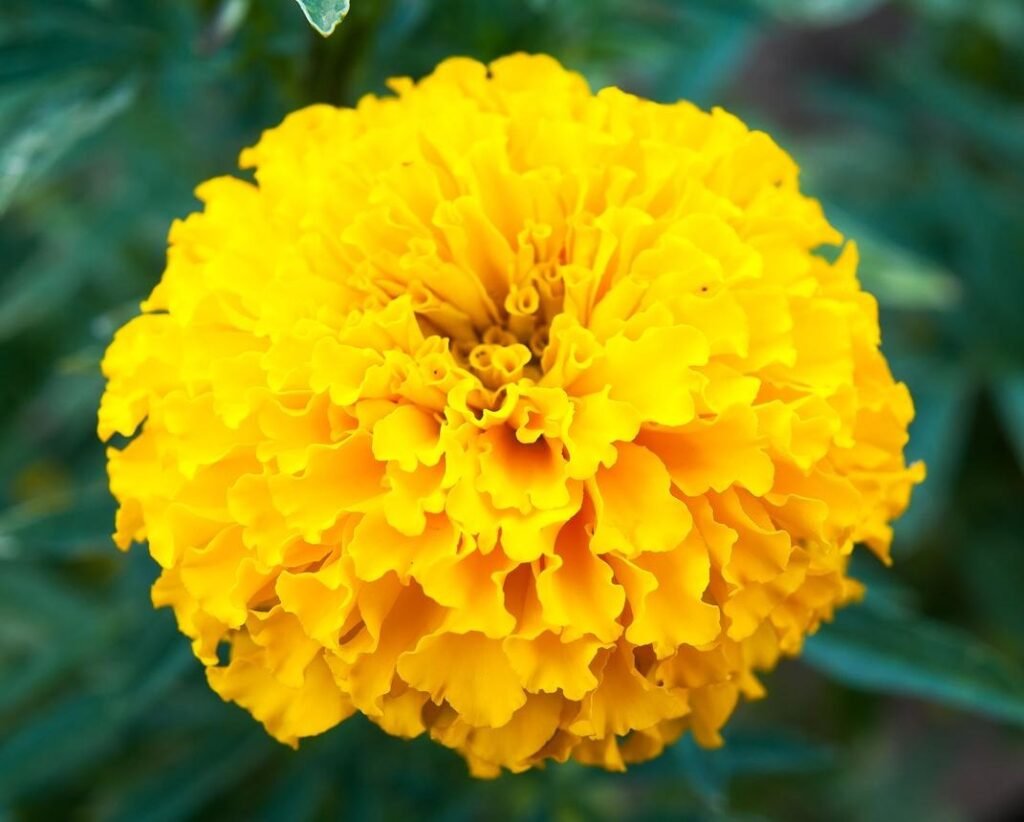
Marigolds are among the most recognizable flowers in the world, admired for their brilliant golden, yellow, orange, and reddish blooms.
Yet their appeal goes far beyond their vivid colors. Marigold symbolism connects these flowers with joy, warmth, remembrance, devotion, protection, creativity, and the cycle of life and death.
From colorful gardens and wedding decorations to sacred ceremonies and memorial altars, marigolds have developed rich meanings shaped by cultural traditions, religious practices, and human experiences.
The symbolism of marigolds is particularly fascinating because the same flower can communicate happiness in one setting and solemn remembrance in another.
Its bright petals may represent the warmth of the sun, while its presence in a memorial ceremony can express love for those who have died.
Understanding these different meanings reveals how flowers become powerful forms of visual communication.
Whether you are researching flower symbolism, exploring spiritual interpretations, choosing flowers for a meaningful occasion, or looking for inspiration for art and writing, the marigold offers a compelling example of how nature acquires cultural and emotional significance.
What Is the Symbolism of Marigolds?
Marigold symbolism refers to the meanings people associate with marigold flowers, including happiness, warmth, devotion, remembrance, protection, renewal, and prosperity. Their golden and orange colors often suggest sunlight, vitality, and abundance, while their ceremonial uses connect them with spiritual devotion and honoring the dead. These meanings vary across cultures, religions, historical periods, and personal experiences.
The marigold does not have one universal meaning. Its interpretation depends on the occasion, the community using it, the color of the flower, and the traditions surrounding it.
For example, a garland of marigolds at a celebration may express welcome, good fortune, or festivity. The same flower arranged on a remembrance altar may symbolize an enduring bond between the living and the dead.
This flexibility makes marigolds especially important in cultural symbolism, where objects and natural forms communicate ideas that words alone may not fully express.
1. The Core Meanings of Marigold Flowers
Marigolds can represent several related ideas, but their strongest associations arise from their colors, appearance, fragrance, and use in ceremonies.
10
Joy, happiness, and optimism
The golden and orange petals of marigolds naturally evoke sunshine, warmth, and lively celebrations. In floral symbolism, these colors are often associated with enthusiasm, hope, and positive energy.
Marigolds are therefore suitable symbols of a cheerful outlook, especially when someone wants to celebrate a new beginning, recognize an achievement, or brighten another person’s day.
Their abundant blooms also create a sense of fullness and vitality. In gardens, festivals, and decorative arrangements, they can communicate a welcoming, energetic atmosphere.
Example: A bouquet of yellow marigolds can express encouragement or appreciation without relying on elaborate words.
Remembrance and the connection between life and death
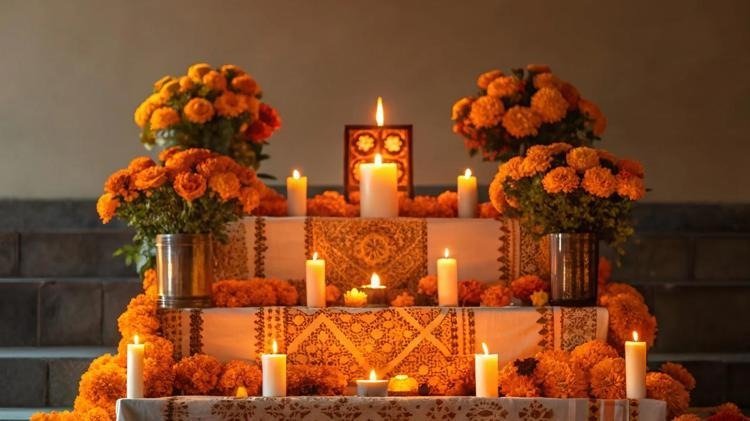
One of the most distinctive meanings of marigolds is remembrance. Mexican marigolds, especially Tagetes erecta, have a central role in Día de los Muertos, or Day of the Dead, traditions.
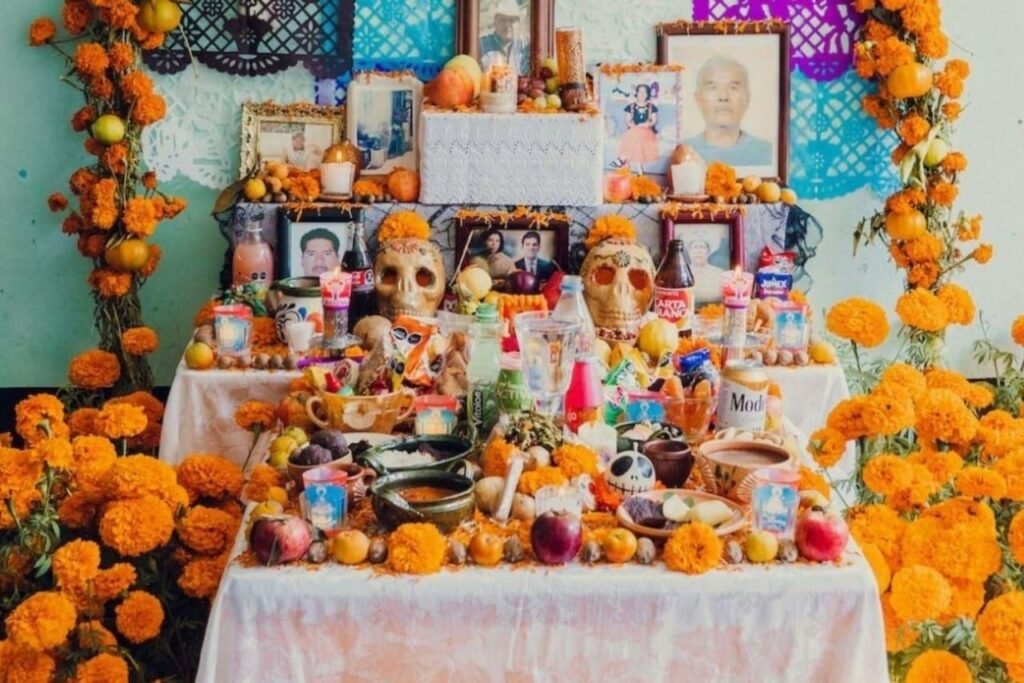
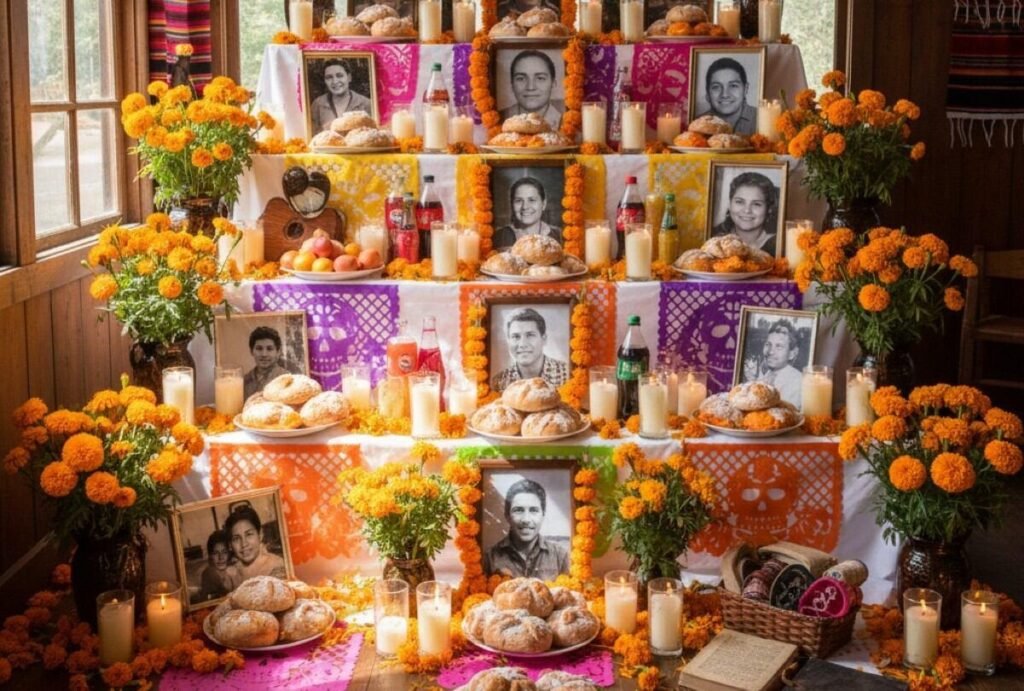
Families decorate ofrendas—altars honoring deceased loved ones—with flowers, candles, photographs, food, and other meaningful objects. In many traditions, the bright color and distinctive scent of marigolds are believed to help guide the spirits of the departed toward these offerings.
Kew
+1
This use gives marigolds a profound symbolic dimension: they can express grief without presenting death as the end of love or memory.
Their vivid colors also challenge the assumption that mourning must always be represented through dark or subdued imagery. Marigolds show how remembrance can include warmth, gratitude, family connection, and celebration.
Devotion, reverence, and gratitude
Marigolds are widely used as offerings and decorations at religious and ceremonial occasions, particularly in South Asian Hindu traditions.
Their presence can communicate respect, sincerity, gratitude, and dedication. When flowers are offered at a shrine or arranged around a sacred image, the gesture itself becomes a form of nonverbal communication.
The meaning does not come only from the flower. It also comes from the act of offering it, the setting in which the offering takes place, and the beliefs of the people participating.
Protection and spiritual safeguarding
In some cultural and folk traditions, marigolds are associated with protection against negative influences or unwanted spiritual forces. Their strong fragrance, bright colors, and use in ritual settings have contributed to these associations.
However, protection is a traditional symbolic belief rather than a scientifically established supernatural property of the flower.
A marigold garland displayed at an entrance may function as a meaningful sign of blessing, welcome, or sacred protection for the people who place it there.
Prosperity, abundance, and good fortune
Golden flowers often suggest wealth, fertility, abundance, and success because their color recalls precious metals, ripened crops, and sunlight.
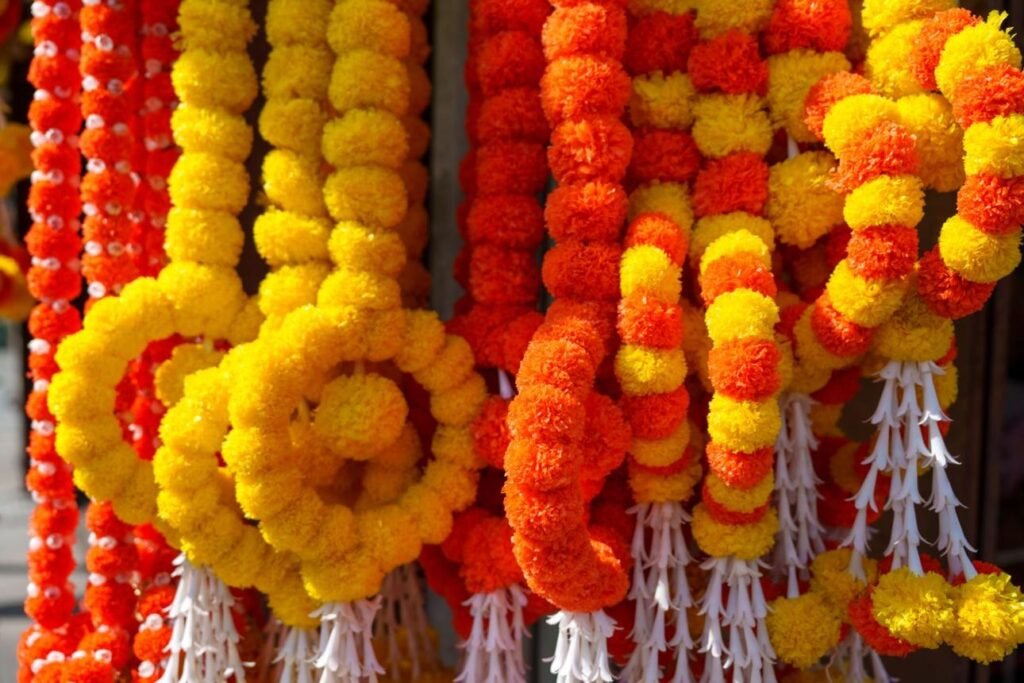
In parts of South Asia, marigold garlands feature prominently at weddings, festivals, and auspicious occasions. Their association with celebration and blessing makes them a natural choice for events marking hoped-for prosperity or a fortunate beginning.
National Geographic
+1
These associations should not be mistaken for a universal belief that marigolds guarantee financial success. Rather, the flowers communicate hopes and intentions through established cultural practices.
2. Historical Origins and Evolution of Marigold Symbolism
Marigold symbolism developed through centuries of human interaction with plants, religious practices, trade, and artistic traditions. Although marigolds are now cultivated around the world, their botanical history begins in the Americas.
Marigolds in ancient Mesoamerica
8
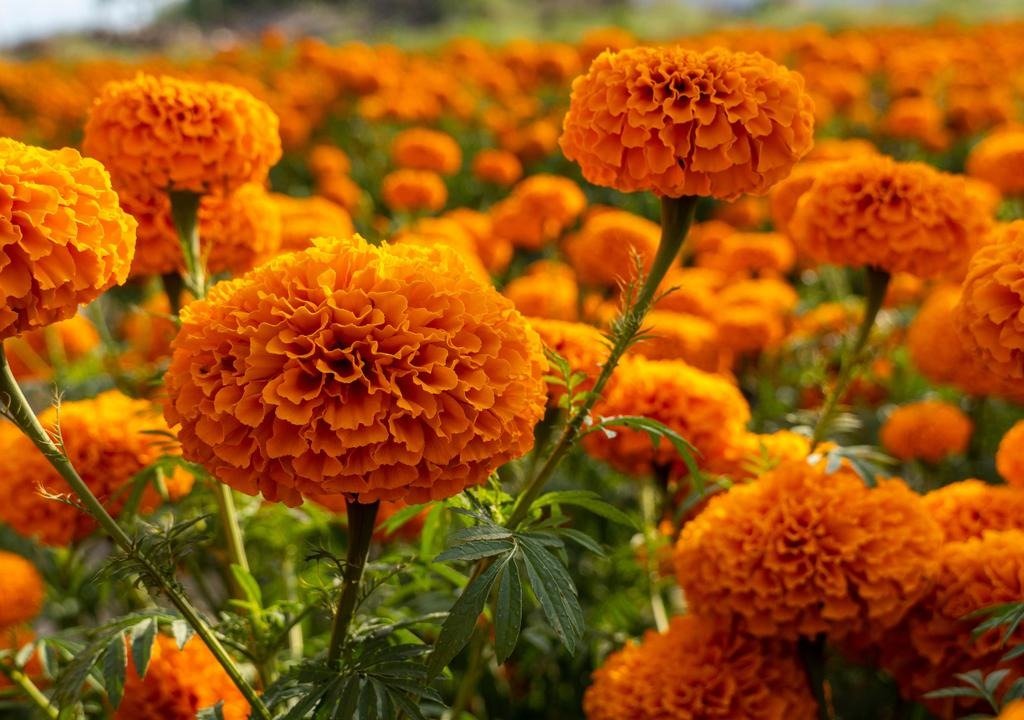
Several species in the genus Tagetes are native to the Americas, including Mexico and parts of Central America. Mexican marigold, Tagetes erecta, became particularly important in the region’s cultural and ceremonial history.
Kew
+1
The Nahua peoples, including the Aztecs, cultivated and used marigolds in ways that connected the plants with ceremonial life, healing traditions, and the honoring of the dead.
The flower is known in Mexico as cempasúchil, a name derived from Nahuatl and commonly associated with the flower’s many petals. The name is sometimes translated or explained through expressions such as “twenty flowers” or “flower of twenty petals.” Other popular descriptions call it the “flower of 400 lives.” These expressions belong to different naming and interpretive traditions and should not be treated as interchangeable literal botanical definitions.
Kew
+1
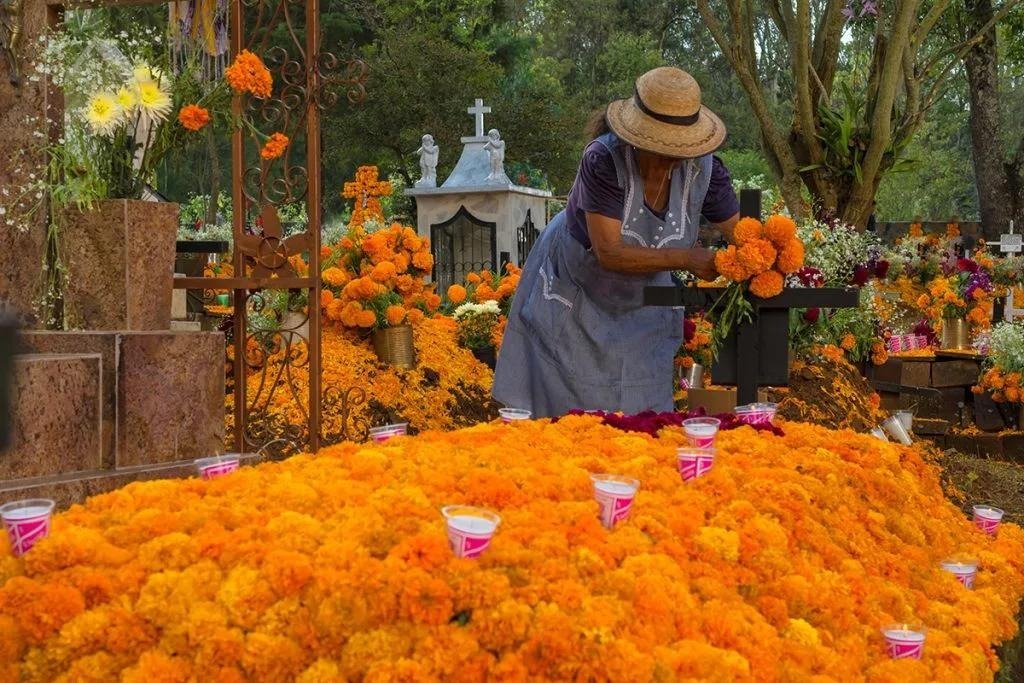
Marigolds’ connection with the dead remains especially visible in contemporary Mexican remembrance practices. Yet these traditions are not simply relics of the past: families continue to adapt them through personal memories, local customs, and contemporary celebrations.
The development of Día de los Muertos symbolism
Día de los Muertos combines Indigenous histories and practices with traditions shaped by Spanish colonialism and Catholic observances associated with All Saints’ Day and All Souls’ Day.
Marigolds became a defining feature of many contemporary celebrations, where their color and scent contribute to the sensory environment of family altars, cemeteries, and public events.
An ofrenda is not merely a decoration. It is a carefully assembled expression of memory, hospitality, identity, and continuing family bonds. Marigolds can mark the space as a place of welcome for the deceased, according to the beliefs of those observing the tradition.
National Geographic
+1
It is important not to reduce the holiday to a generic festival or assume that every Mexican family observes it in exactly the same way. Regional customs and individual beliefs differ.
How marigolds spread around the world
Following European contact with the Americas, marigolds traveled across continents through botanical exchange and trade. By the early modern period, different marigold varieties had become established in European gardens, and later spread to other regions, including South Asia.
As the flowers entered new environments, people incorporated them into local practices and developed meanings shaped by existing cultural values.
National Geographic
+1
This history illustrates a central principle of cultural symbolism: a plant can retain certain visual qualities while acquiring new meanings in different societies.
The marigold’s golden color, abundant petals, and suitability for garlands helped it become a familiar ceremonial flower far beyond its native range.
3. Marigold Symbolism Across Cultures and Traditions
The meaning of marigolds changes depending on the cultural context. Comparing traditions helps explain why the same flower can be associated with celebration, devotion, remembrance, and spiritual connection.
| Culture or context | Common symbolic associations | How marigolds are used |
| Mexico and Día de los Muertos | Remembrance, family connection, welcoming the departed | Ofrendas, graves, pathways, and memorial arrangements |
| Hindu traditions in South Asia | Devotion, auspiciousness, respect, celebration | Garlands, temple offerings, weddings, and festivals |
| Weddings and communal celebrations | Joy, welcome, good fortune, abundance | Floral arches, entrances, stages, and ceremonial decorations |
| Gardening and home decoration | Warmth, vitality, cheerfulness | Flower beds, borders, containers, and seasonal displays |
| Contemporary art and design | Memory, identity, cultural heritage, transformation | Photography, illustration, installations, and decorative motifs |
These are broad associations, not fixed rules. Practices vary by community, region, religion, and family.
Marigold symbolism in Mexican culture
In Mexico, the orange cempasúchil is especially associated with Día de los Muertos.
Its petals may be scattered to create a pathway toward an altar, while flowers decorate photographs, candles, food offerings, and other objects honoring deceased relatives.
The symbolism combines two seemingly contrasting ideas: the temporary nature of human life and the enduring importance of remembrance.
A fresh flower eventually fades, yet its role in a recurring ceremony allows memory to be renewed. The marigold therefore becomes a symbol of both mortality and continuity.
Marigold symbolism in Hindu traditions


9
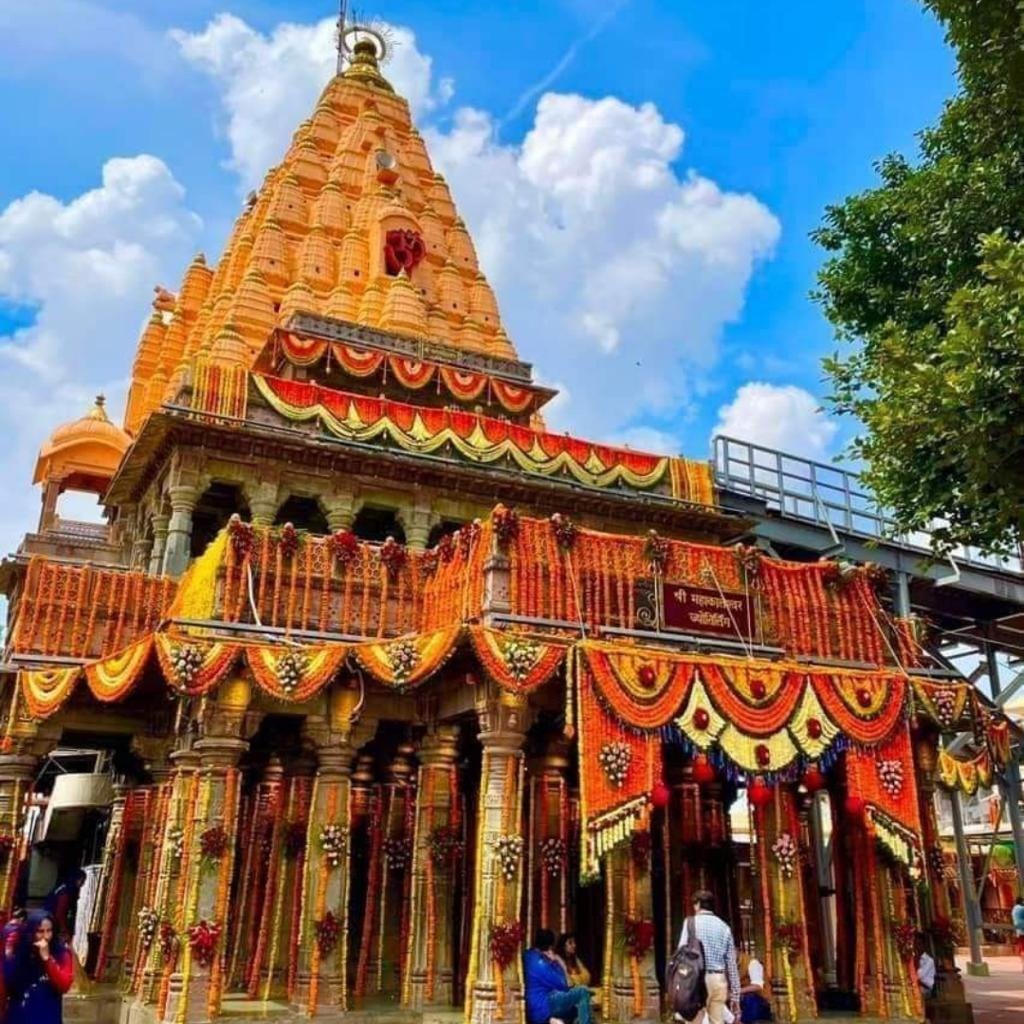
Across many Hindu communities, marigolds are used in devotional offerings, temple decoration, weddings, and festivals such as Diwali.
Garlands may adorn sacred images, entrances, ceremonial spaces, and participants. In these contexts, flowers can express reverence, welcome, auspiciousness, and a wish for blessing.
During Diwali, marigolds often contribute to the festive appearance of homes and gathering spaces. Their bright colors complement lamps and other decorations associated with the festival’s themes of light and the triumph of good over evil.
The flower’s exact significance depends on the particular ritual and community. Marigolds should not be understood as having one identical religious meaning across every Hindu tradition.
National Geographic
+1
Marigold symbolism in other religious and cultural settings
Marigolds also appear in a variety of regional and community traditions beyond Mexico and India. Their practical availability and visual appeal make them useful for celebrations, memorials, public ceremonies, and decorative displays.
In some settings, the flower is used as a general expression of respect rather than as a sign of a specific religious doctrine. In others, it carries meanings rooted in local history and customary practice.
It is therefore important to distinguish between a widespread decorative use and a documented religious belief. A marigold arrangement outside a building, for example, does not by itself establish the faith or beliefs of the people who placed it there.
4. The Spiritual Meaning of Marigolds
Spiritually, marigolds are often interpreted as symbols of light, renewal, devotion, protection, and the relationship between the visible world and the unseen.
These interpretations arise from religious customs, folklore, personal reflection, and the flower’s physical characteristics. They are meaningful within particular belief systems, but they are not universal facts about supernatural forces.
Marigolds and the symbolism of sunlight
Golden and orange marigolds resemble the warm colors of sunlight. This visual connection makes them suitable symbols of vitality, illumination, hope, and spiritual awareness.
In a personal or reflective setting, a marigold may represent the desire to bring clarity into a difficult period or to remain hopeful through change.
The connection is symbolic rather than botanical evidence that marigolds possess special spiritual energy.
Marigolds as symbols of renewal
Many spiritual traditions use flowers to express the temporary nature of life and the possibility of renewal.
Marigolds can support this interpretation because their blooms develop, reach maturity, and eventually fade. Their life cycle offers a visible reminder that beauty can be temporary without being meaningless.
In this sense, marigold symbolism may encourage people to appreciate the present, honor their experiences, and accept change.
Marigolds and remembrance of ancestors
The use of marigolds in ancestral remembrance is one of the clearest examples of flowers functioning as spiritual symbols.
Within traditions that honor the departed, flowers help create a setting in which memory, family identity, and spiritual belief come together. Their fragrance, color, and arrangement make remembrance a physical, sensory experience.
The meaning is particularly powerful because it connects personal grief with shared cultural practices.
Can marigolds be symbols of protection?
Yes. Marigolds are associated with protection in some folk and spiritual traditions, especially when placed near entrances or incorporated into ceremonial arrangements.
However, this interpretation is culturally dependent. There is no established scientific evidence that displaying a marigold prevents supernatural harm or guarantees a particular spiritual outcome.
A balanced understanding respects the meaning a tradition gives the flower without presenting faith-based interpretations as experimentally proven facts.
5. The Psychological Meaning of Marigolds
Marigold symbolism also offers an opportunity to examine how people respond to color, shape, scent, and familiar cultural associations.
Why orange and yellow marigolds feel uplifting
Yellow and orange are often used in visual communication to suggest warmth, energy, friendliness, or attention. Marigolds combine these colors with rounded, abundant flower heads, making them visually prominent.
However, color psychology is context-sensitive. People’s responses depend on individual experience, cultural learning, surrounding colors, and the situation in which a flower appears.
A yellow marigold in a celebratory arrangement may feel cheerful, while the same flower on a remembrance altar may evoke tenderness, longing, or grief.
Flowers as emotional reminders
Objects become emotionally meaningful through association. A marigold may remind someone of a grandparent’s garden, a religious festival, a wedding, or a memorial ceremony.
Over time, the flower can function as a personal symbol of belonging and memory. Its significance comes partly from the experiences attached to it rather than from a universal meaning inherent in the plant.
This is why the same flower can create very different emotional responses in different people.
The role of sensory experience
Marigolds are not purely visual symbols. Their fragrance, texture, color, and arrangement can contribute to a memorable experience.
In ceremonies, sensory details help people recognize a meaningful setting and connect it with repeated practices. Flowers can make abstract ideas such as remembrance, devotion, or celebration tangible.
Expert Tip: When interpreting a marigold in a photograph, artwork, or ceremony, consider the surrounding objects, the occasion, the flower’s color, and the cultural background before assigning it a meaning.
6. Marigold Symbolism by Color
Although marigolds are best known for their golden and orange shades, different colors can suggest different emotions and intentions. These interpretations are useful in floral design, but they are not a universal symbolic code.
6
| Marigold color | Common symbolic associations | Suitable contexts |
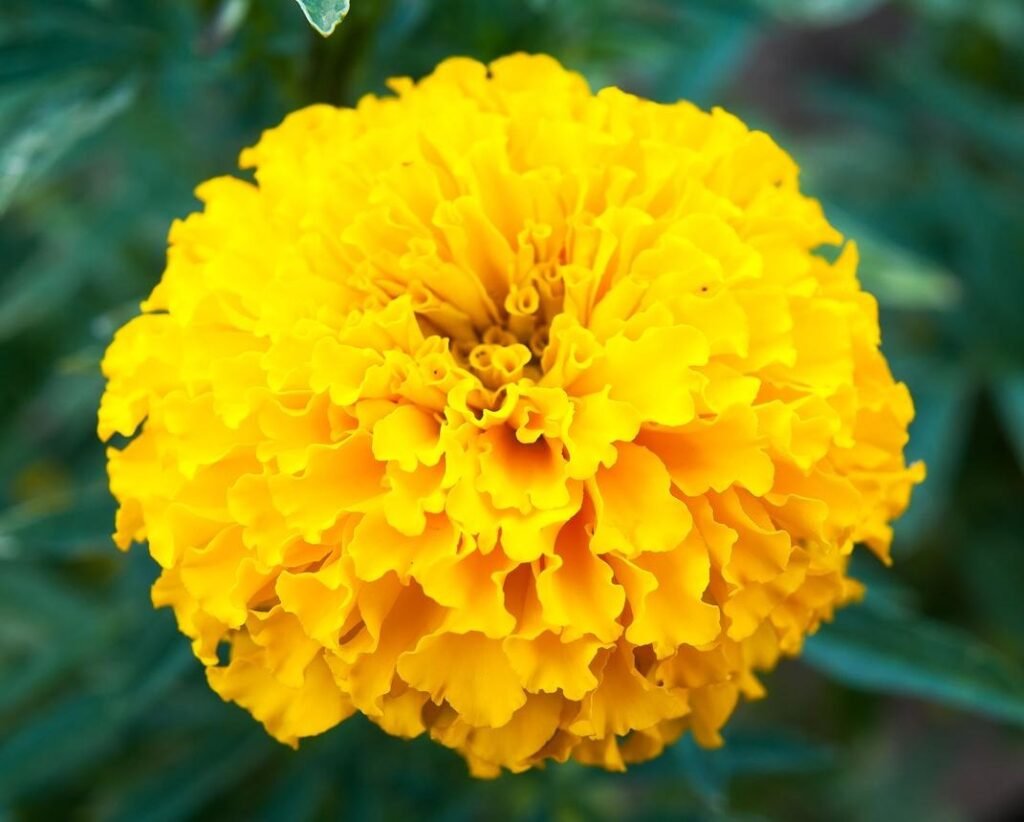
| Yellow | Joy, optimism, friendship, warmth | Thank-you gifts, celebrations, garden displays |
| Orange | Vitality, enthusiasm, remembrance, creativity | Cultural festivals, memorials, artistic arrangements |
| Golden | Abundance, prosperity, achievement | Weddings, festive decorations, milestone celebrations |
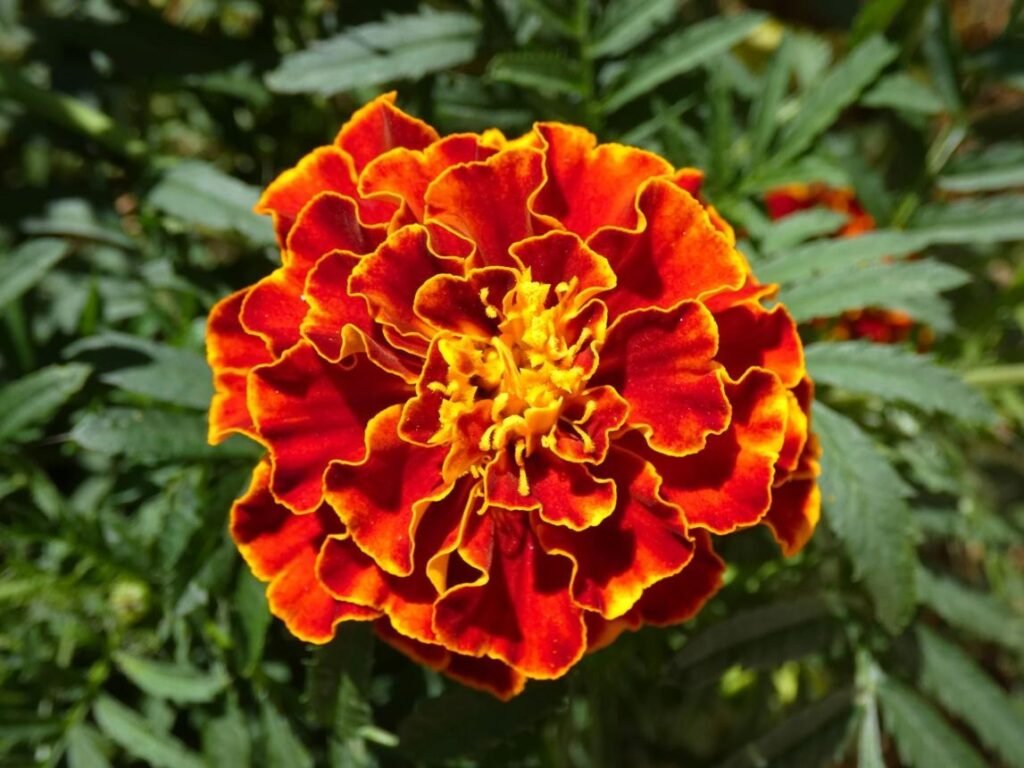
| Red-orange | Passion, courage, energy | Bold floral designs and expressive artwork |
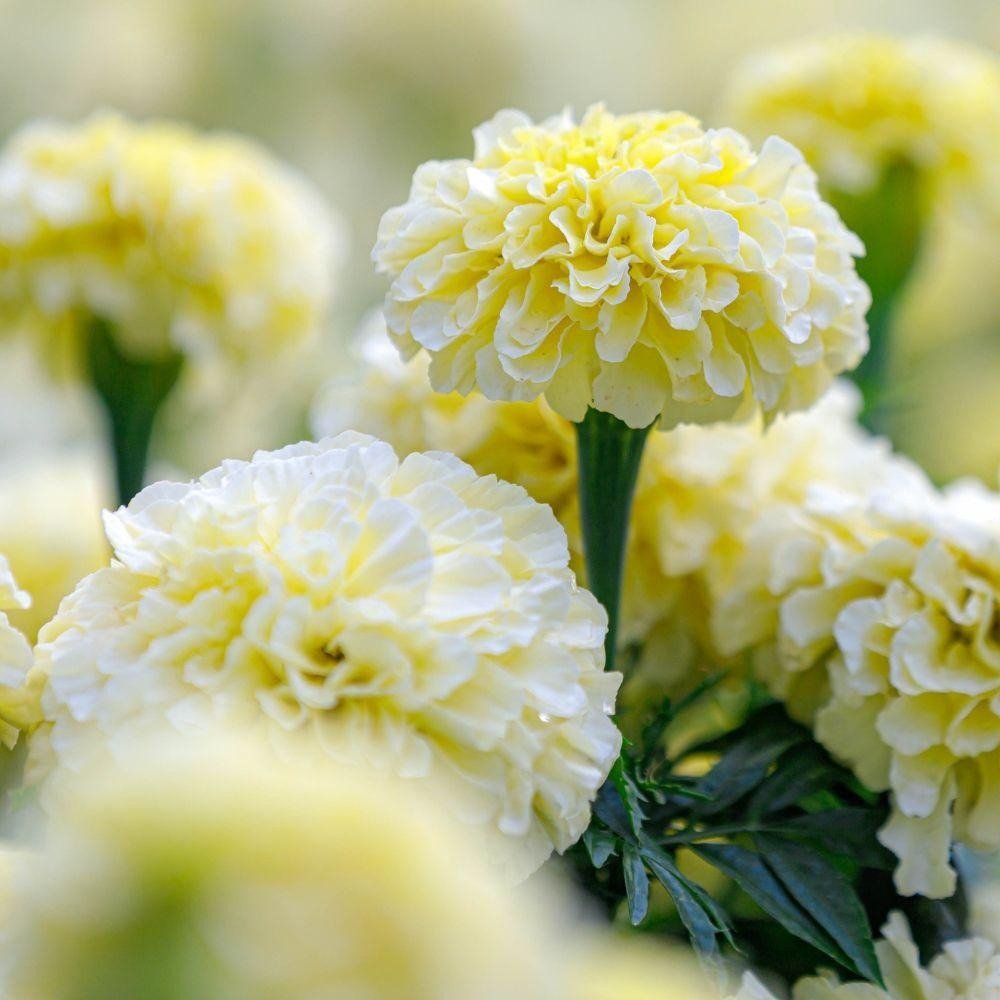
| Cream or pale yellow | Gentleness, simplicity, understated warmth | Minimalist arrangements and soft garden palettes |
These meanings are interpretive associations rather than strict rules. Orange marigolds, for instance, can represent celebration in one setting and remembrance in another.
Yellow marigold symbolism
Yellow marigolds often evoke sunlight, happiness, and friendly affection. They are useful when the goal is to create a bright, welcoming atmosphere.
A yellow marigold arrangement can be a thoughtful gesture for someone beginning a new job, celebrating an achievement, or establishing a new home.
Orange marigold symbolism
Orange marigolds combine the warmth of yellow with the intensity commonly associated with orange. Their symbolism may include enthusiasm, vitality, spiritual devotion, and remembrance.
In Mexican Día de los Muertos traditions, orange cempasúchil is especially significant. Its cultural meaning goes beyond the general symbolism of the color orange and must be understood within the ceremony itself.
Kew
+1
Golden marigold symbolism
Golden marigolds may suggest abundance, prosperity, and success. Their resemblance to sunlight and precious metals makes them suitable visual expressions of celebration and hope.
In branding and design, golden marigold shades can help communicate warmth and optimism, particularly when paired with complementary natural colors.
7. Marigolds in Art, Literature, and Storytelling
Marigolds are valuable symbols in creative work because their appearance and cultural associations allow writers and artists to express complex ideas through a familiar flower.
Marigolds in visual art
Artists can use marigolds to establish atmosphere, convey cultural identity, or create a contrast between beauty and mortality.
An arrangement of bright orange flowers beside candles and photographs may suggest remembrance. Marigolds surrounding a doorway may communicate hospitality, celebration, or the significance of a ceremonial space.
In photography, the flowers’ saturated colors can draw attention toward a person, an offering, or an important detail in a larger composition.
The interpretation depends on the entire visual scene. Semiotics the study of signs and meaning helps explain why a flower can function as both a natural object and a culturally meaningful sign.
Marigolds in literature
Writers can use marigolds as recurring motifs to represent hope, memory, resilience, or the passage of time.
For example, a character who plants marigolds after losing a loved one might be using gardening as a way to preserve a connection with the past. Flowers returning each season could represent the continuation of memory, while fading petals might emphasize the temporary nature of life.
These are creative possibilities, not fixed literary definitions. A writer may deliberately challenge conventional associations by placing marigolds in an unsettling or unexpected context.
Marigolds in mythology and folklore
In folklore, flowers frequently become associated with deities, healing practices, seasonal change, and relationships between human communities and the natural world.
Marigold traditions in Mesoamerica illustrate how a plant can acquire significance through religious beliefs and ceremonial practices. Contemporary stories about the flower often draw on this heritage, especially its association with honoring the dead.
When retelling such traditions, it is important to distinguish documented cultural practices from later legends, modern interpretations, and generalized claims about ancient beliefs.
8. The Name Marigold: Origins and Symbolic Associations
The English word marigold is commonly understood as a historical combination of Mary and gold, often linked in traditional explanations to the Virgin Mary and golden flowers used in European religious settings.
However, the English common name covers different plants, and the word’s historical associations should not be confused with the botanical origin of every marigold species.
The plants most commonly called garden marigolds belong to the genus Tagetes, native to the Americas. Calendula, often called pot marigold, belongs to a different genus, Calendula.
Kew Science
+1
This distinction matters because articles about marigold symbolism sometimes combine traditions involving different plants as if they were identical.
A useful rule is to check the species and cultural context before attributing a particular religious or historical meaning to a flower.
9. Marigold Symbolism in Modern Life
Today, marigolds remain meaningful in ceremonies and also appear in gardens, education, commercial design, photography, and everyday communication.
Weddings and celebrations
Marigold garlands and floral installations are popular in many South Asian wedding traditions. They may decorate entrances, ceremonial structures, and gathering spaces.
Their visual abundance creates a festive atmosphere, while their customary use can connect the celebration with family heritage, hospitality, and auspicious beginnings.
When choosing marigolds for a wedding, consider the cultural traditions of the people involved rather than assuming the flowers mean the same thing to every guest.
Gardens and home decoration
Marigolds can represent renewal, cheerfulness, and the beauty of ordinary life in a home garden.
Because many garden varieties flower abundantly during suitable growing conditions, they are often used to create colorful borders, container displays, and seasonal arrangements.
Their practical horticultural qualities are separate from their symbolism, but the two can complement each other: a plant that is easy to grow may become an enduring reminder of care, patience, and seasonal change.
Branding and graphic design
In branding, marigold-inspired colors can communicate warmth, approachability, creativity, and energy. They can work well for businesses seeking a lively, welcoming visual identity.
However, cultural associations matter. A design incorporating cempasúchil may evoke Mexican heritage and remembrance, particularly around Día de los Muertos. Using such imagery without understanding its context can reduce a meaningful tradition to decoration.
Expert Tip: If marigold imagery is intended to represent a particular culture, research the specific tradition and consult people familiar with it. Cultural context makes visual communication more accurate and respectful.
Education and cultural awareness
Marigolds offer an accessible way to teach students about anthropology, botany, religious studies, and visual communication.
A classroom comparison between marigolds used on a Mexican remembrance altar and marigold garlands used at a South Asian celebration can show how a single plant acquires different meanings across communities.
Students can explore how geography, history, migration, and shared practices influence the meaning of natural objects.
10. Did You Know? Interesting Facts About Marigold Symbolism
-
Marigolds are native to the Americas. Despite names such as African marigold, Tagetes erecta originates in Mexico and Guatemala.
Kew Science
+1 - Marigolds can symbolize both celebration and mourning. Their use in weddings and festivals contrasts with their prominent role in Día de los Muertos remembrance.
-
The flower’s scent is part of its cultural meaning. In some Mexican traditions, the fragrance, along with the bright petals, is believed to help guide the departed toward offerings.
Kew
+1 - Not every marigold is a Tagetes. Calendula, commonly known as pot marigold, belongs to a separate botanical genus.
-
A flower’s symbolism can travel with people. As marigolds spread through trade and migration, communities incorporated them into different local customs and celebrations.
National Geographic
+1
11. Common Mistakes When Interpreting Marigold Symbolism
Understanding flower symbolism requires more than memorizing a list of meanings. The following mistakes can lead to inaccurate interpretations.
Mistake 1: Assuming marigolds always symbolize happiness
Their bright colors are often associated with joy, but marigolds can also represent grief, devotion, and remembrance.
Better approach: Interpret the flower in relation to the occasion and surrounding imagery.
Mistake 2: Treating every culture’s interpretation as identical
Marigolds have distinct roles in Mexican remembrance traditions and South Asian religious celebrations.
Better approach: Identify the specific community, ceremony, and historical background before explaining the symbolism.
Mistake 3: Confusing cultural beliefs with scientific evidence
A traditional belief that flowers guide spirits is meaningful within the tradition, but it is not scientific proof of supernatural activity.
Better approach: Explain the belief respectfully while clearly identifying it as a cultural or spiritual interpretation.
Mistake 4: Confusing marigold species
Different plants can share the common name marigold despite belonging to different botanical groups.
Better approach: Use botanical names when historical or religious accuracy matters.
Mistake 5: Assuming color has a universal meaning
Yellow does not always mean happiness, and orange does not always mean enthusiasm.
Better approach: Consider the full context, including cultural associations, personal experiences, and the purpose of the arrangement.
12. Myth vs. Fact: Understanding Marigold Meaning
| Claim | What is more accurate? |
| Marigolds symbolize only happiness. | They can represent joy, devotion, remembrance, and other meanings depending on context. |
| Marigolds originated in Africa. | The Tagetes erecta species originated in Mexico and Guatemala, despite its common name African marigold. |
| Every marigold has the same religious significance. | Symbolic meanings differ across communities, traditions, and ceremonies. |
| Marigolds scientifically guide spirits. | This is a spiritual belief found in some cultural traditions, not an established scientific finding. |
| Marigold symbolism is an ancient tradition that never changes. | Historical associations continue to be interpreted and adapted by contemporary communities. |
13. Practical Applications: How to Use Marigolds Meaningfully
Marigolds can communicate different intentions when chosen thoughtfully.

For a gift
Choose yellow marigolds to suggest warmth, encouragement, or appreciation. Consider the recipient’s preferences and cultural associations.
For remembrance
Use marigolds within a culturally appropriate memorial arrangement. In Día de los Muertos contexts, understand the meaning of the ofrenda and its offerings rather than treating the flowers as generic decorations.
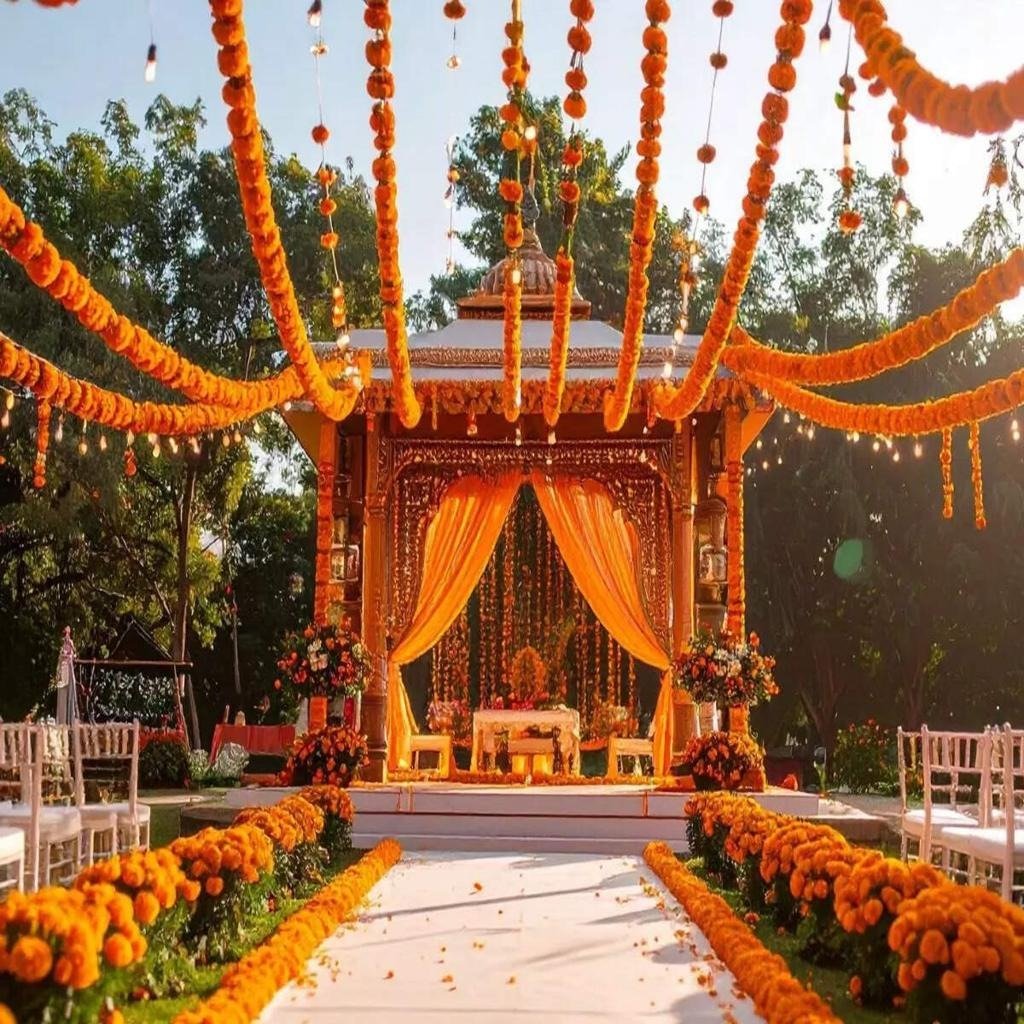
For weddings and celebrations
Marigold garlands can communicate welcome, devotion, and auspiciousness in traditions that use them ceremonially.
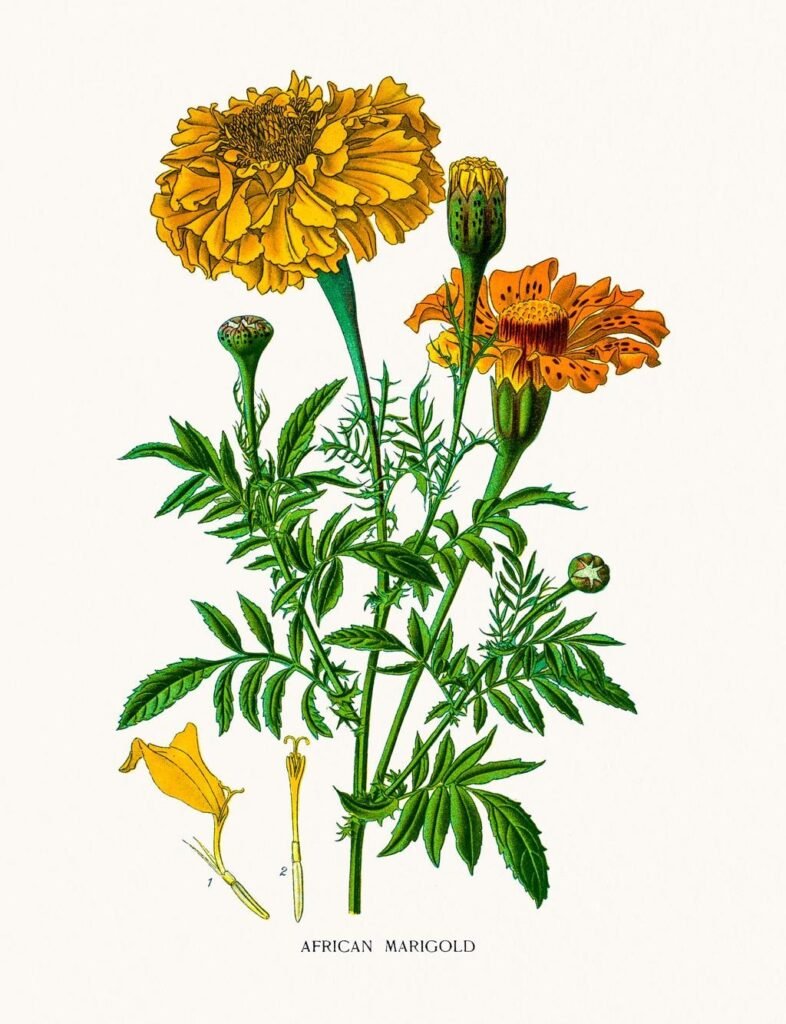
For art and design
Use marigold imagery to explore themes of sunlight, identity, memory, or transformation. Research the cultural context if the design references a specific ceremony.
The most meaningful use of a marigold begins with a clear intention. Ask whether you want to communicate celebration, respect, remembrance, hope, or cultural connection, then choose an arrangement that suits that purpose.
14. Key Insights About Marigold Symbolism
Marigold symbolism becomes easier to understand when its major themes are viewed together.
- Joy and vitality: Golden and orange flowers evoke warmth and energy.
- Remembrance: In Mexican Día de los Muertos traditions, marigolds help create spaces for honoring deceased loved ones.
- Devotion: In many South Asian religious settings, marigolds serve as offerings and ceremonial decorations.
- Prosperity: Their golden colors and festive uses can communicate abundance and auspicious beginnings.
- Renewal: Their life cycle offers a natural metaphor for change and the passage of time.
- Cultural identity: Their use in ceremonies demonstrates how flowers preserve and communicate shared traditions.
- Personal meaning: Memories and experiences can give a marigold significance beyond its established cultural associations.
The most important principle is that marigolds do not have a single universal meaning. Their symbolism emerges from the interaction of appearance, history, cultural practice, religious belief, and individual experience.
15. Frequently Asked Questions About Marigold Symbolism
1. What do marigolds symbolize spiritually?
Marigolds commonly symbolize devotion, light, renewal, protection, and remembrance in different spiritual and cultural traditions. In some settings, their golden colors suggest vitality and hope; in others, they are used to honor ancestors or make offerings. Spiritual interpretations vary and should not be treated as universal facts.
2. Why are marigolds associated with death and remembrance?
Marigolds are strongly associated with remembrance because of their role in Mexico’s Día de los Muertos celebrations. Families use orange cempasúchil flowers to decorate ofrendas honoring deceased loved ones. In some traditions, the flowers’ color and fragrance are believed to help guide the departed toward these offerings. The flowers express an ongoing connection between memory, family, and the dead.
Kew
+1
3. Do marigolds symbolize good luck?
Marigolds can symbolize good fortune, prosperity, and auspicious beginnings in some cultural settings. Their use at weddings, festivals, and ceremonial occasions supports these associations. However, the meaning varies by tradition, and there is no scientific evidence that marigolds guarantee good luck.
4. What does a yellow marigold symbolize?
Yellow marigolds often represent joy, optimism, warmth, friendship, and positive energy. Their color evokes sunlight, making them suitable for cheerful floral arrangements, gifts, and celebrations. In specific cultural contexts, however, their meaning may extend beyond these general associations.
5. What does an orange marigold symbolize?
Orange marigolds may represent vitality, enthusiasm, creativity, devotion, and remembrance. They have particular cultural significance in Mexican Día de los Muertos traditions, where cempasúchil flowers feature prominently in memorial altars and offerings. Their meaning depends on the setting in which they appear.
6. Are marigolds considered sacred flowers?
Marigolds hold ceremonial or sacred significance in some traditions, including Indigenous Mexican practices and many Hindu communities. They may be used as offerings, garlands, and decorations at religious festivals. However, not every culture or religion considers marigolds sacred, and their role differs across communities.
Conclusion: The Lasting Meaning of Marigolds
Marigold symbolism demonstrates how a familiar flower can communicate a remarkable range of human experiences.
Its golden and orange blooms can suggest joy, vitality, devotion, prosperity, remembrance, and renewal.
Their significance becomes especially clear in cultural traditions that use flowers to honor the departed, express reverence, or celebrate important life events.
From the cempasúchil flowers of Mexican Día de los Muertos to the garlands used in South Asian religious celebrations, marigolds connect the natural world with cultural identity, shared memory, and spiritual expression.
Their meanings also remain useful in modern life.
Artists use them to communicate emotion, designers draw on their vivid colors, writers employ them as symbols, and families incorporate them into ceremonies that preserve meaningful connections.
Ultimately, understanding marigold symbolism means looking beyond the flower itself.
History, context, intention, and lived experience all influence what it represents. When interpreted with cultural awareness and care, the marigold becomes more than a colorful bloom:
it becomes a meaningful expression of how people celebrate life, remember loved ones, and communicate what matters most.
Semantic Entities, NLP Concepts, and Related Keywords
The following topical relationships and related terms are naturally covered in this article and can help organize a broader content cluster about flower symbolism.
| Category | Entities and related terms |
| Primary keyword | Marigold symbolism, marigold meaning, symbolism of marigolds |
| Botanical entities | Tagetes, Tagetes erecta, Calendula, Mexican marigold, cempasúchil |
| Cultural entities | Día de los Muertos, ofrenda, Nahua peoples, Aztec history, South Asian traditions |
| Symbolic concepts | Joy, remembrance, devotion, prosperity, renewal, protection, optimism, vitality |
| Spiritual concepts | Ancestor remembrance, sacred offerings, spiritual traditions, ceremonial flowers |
| Color symbolism | Yellow flower symbolism, orange flower symbolism, golden flowers, color psychology |
| Related flower topics | Flower symbolism, botanical symbolism, cultural symbolism, floral meanings |
| Creative disciplines | Semiotics, iconography, literature, visual communication, photography, storytelling |
| SEO topic relationships | Marigold spiritual meaning, marigold cultural significance, marigold symbolism by color, marigold history, marigolds in Día de los Muertos |
Editorial note: This article distinguishes botanical information and documented cultural practices from spiritual interpretations and symbolic associations. These distinctions support a more accurate, reader-focused approach to semantic SEO and topical authority. Search rankings cannot be guaranteed, and claims of being undetectable by AI detectors cannot be reliably verified.

Discover symbolism in art, literature, and creativity with Amelia Rhodes’ insightful articles.
