
Mouse Symbolism: What Does a Mouse Represent?
Mouse symbolism is surprisingly rich. Although mice are often associated with smallness, timidity, secrecy, and vulnerability, they can also represent resourcefulness, adaptability, intelligence, survival, attention to detail, fertility, and persistence.
Across cultures, the mouse may appear as a trickster, sacred creature, household nuisance, spiritual messenger, or symbol of humility.
A mouse is easy to overlook. It is small, quiet, and usually active when humans are not paying attention.
Yet its ability to survive in changing environments makes it an interesting symbolic figure. The contrast between physical weakness and practical resourcefulness is one of the central themes behind mouse symbolism.
Whether you encountered a mouse in a dream, noticed one repeatedly in nature, are researching animal symbolism, or simply want to understand what mice represent in mythology and culture, the answer depends heavily on context.
Featured Snippet Answer:
Mouse symbolism commonly represents resourcefulness, adaptability, humility, vulnerability, secrecy, intelligence, and survival. Because mice are small but remarkably capable of finding food, shelter, and ways around obstacles, they can symbolize persistence and cleverness. In some traditions they also represent fertility, abundance, transformation, or trickster-like intelligence.
What Does a Mouse Symbolize?
The mouse can symbolize several seemingly contradictory qualities:
| Mouse Symbolism | What It Can Represent |
| Small size | Humility, modesty, vulnerability |
| Quiet movement | Secrecy, observation, discretion |
| Resourcefulness | Survival and practical intelligence |
| Rapid reproduction | Fertility and abundance |
| Nocturnal behavior | Mystery, hidden knowledge, the unconscious |
| Ability to hide | Privacy, avoidance, invisibility |
| Persistence | Determination and resilience |
| Cleverness | Strategy and problem-solving |
| Household presence | Domestic life, food, scarcity, or intrusion |
| Fear of predators | Vulnerability and caution |
The important point is that mouse symbolism is contextual rather than fixed.
A mouse quietly finding food in a difficult environment may symbolize ingenuity. A mouse hiding from danger may represent fear or avoidance. A mouse appearing in a story as a clever character may symbolize intelligence overcoming physical limitations.
This makes the mouse particularly useful in storytelling and visual symbolism.
The Core Meaning of Mouse Symbolism
At its heart, the symbolism of the mouse revolves around a fascinating paradox:
Something physically small can possess enormous survival ability.
A mouse does not dominate its environment through strength. Instead, it relies on speed, sensory awareness, hiding, exploration, flexibility, and opportunistic behavior.
That makes the mouse an effective symbol for people or ideas that succeed without appearing powerful.
Smallness and Humility
One of the most obvious associations is smallness.
The word “mouse” itself can be used metaphorically for someone perceived as timid, quiet, or inconspicuous. This linguistic association has influenced how the animal is represented in literature and popular culture.
But smallness does not necessarily mean weakness.
Symbolically, being small can mean:
- staying unnoticed
- avoiding unnecessary attention
- observing before acting
- conserving resources
- remaining flexible
- succeeding without authority or physical power
The mouse therefore provides a useful lesson in the difference between visibility and effectiveness.
Mouse Symbolism and Resourcefulness
Perhaps the most positive interpretation of the mouse is resourcefulness.
Mice are highly adaptable animals. They can exploit different food sources, find shelter in changing environments, and survive in places strongly influenced by human activity.
Symbolically, this translates into:
“Use what you have rather than waiting for perfect circumstances.”
A mouse does not need enormous physical strength to survive. Its advantage comes from making efficient use of its environment.
This symbolism can be applied to:
- entrepreneurship
- personal resilience
- education
- problem-solving
- leadership
- creative work
- survival narratives
- organizational strategy
The mouse can therefore represent practical intelligence rather than intellectual prestige.
Mouse Symbolism in Different Cultures
Mouse symbolism changes considerably across cultures. There is no universal meaning assigned to the animal.
In some traditions, mice are associated with cleverness or divine power. In others, they are connected with destruction, impurity, fear, or household disorder.
Understanding this variation is essential when discussing animal symbolism.
Mouse Symbolism in Ancient Egypt
One of the most interesting aspects of ancient Egyptian culture is the importance of animals within religious and artistic systems.
Rodents themselves were not necessarily represented through a single universally recognized “mouse god.” However, rodents existed within the Egyptian natural and symbolic environment, and animals could acquire meaning through their relationships with gods, humans, agriculture, death, and the natural world.
More broadly, the mouse can be interpreted through the Egyptian cultural emphasis on the relationship between humans, animals, fertility, agriculture, and cosmic order.
It is important not to impose a modern symbolic interpretation onto ancient Egyptian religion simply because an animal appears in Egyptian art.
Mouse Symbolism in Hindu Tradition
The mouse has a particularly important religious association in Hinduism because of its connection with Ganesha.
Ganesha is traditionally depicted with a mouse or rat as his vehicle, known as his vahana.



6
The pairing is symbolically fascinating.
Ganesha is associated with wisdom, intellect, removing obstacles, and auspicious beginnings, while the mouse is a tiny creature capable of entering extremely small spaces.
Traditional interpretations connect the mouse with desires and the restless mind. The relationship between the powerful deity and the tiny vehicle can also be understood as a symbolic contrast between enormous spiritual power and a seemingly insignificant creature.
This provides an important lesson:
Size does not necessarily determine spiritual importance.
The mouse can represent the mind’s ability to move into places that seem inaccessible, while Ganesha represents wisdom capable of directing that energy.
Mouse Symbolism in European Folklore
European folklore frequently portrays mice as small, clever, nervous, or mischievous creatures.
Their small size makes them ideal characters for stories in which an apparently powerless individual succeeds through intelligence.
Folklore often uses animals to externalize human characteristics. A mouse can therefore become a representation of:
- cowardice
- cleverness
- poverty
- hunger
- secrecy
- domestic life
- vulnerability
- persistence
The meaning depends on the narrative.
A frightened mouse and a clever mouse are not symbolically identical.
Mouse Symbolism in Chinese Culture
Chinese animal symbolism is highly dependent on historical context, linguistic associations, folklore, astrology, and regional traditions.
The rat, rather than the small house mouse specifically, has an especially prominent role in Chinese zodiac traditions.
The Rat is the first animal in the Chinese zodiac cycle.
It is commonly associated with characteristics such as:
- intelligence
- adaptability
- quick thinking
- resourcefulness
- alertness
- ambition
This provides an important cultural contrast with Western stereotypes that often portray rodents primarily as dirty or undesirable.
The broader lesson is that the same animal family can carry dramatically different meanings in different symbolic systems.
Mouse Symbolism in Christianity
Mouse symbolism does not have one central, universally accepted Christian meaning.
However, mice and rodents have sometimes appeared in Christian and European moral traditions as representations of undesirable qualities, particularly when associated with contamination, destruction of food, hidden behavior, or domestic disorder.
At the same time, Christianity places considerable value on humility and the idea that apparent worldly weakness does not determine spiritual worth.
Therefore, it is possible to encounter two different symbolic directions:
Negative interpretation: impurity, destruction, hidden wrongdoing, or disorder.
Positive interpretive association: humility, smallness, dependence, and the rejection of worldly status.
These should not be confused with formal Christian doctrine. They are broader symbolic and cultural associations.
Mouse Symbolism in Mythology and Folklore
Animals often become symbolic characters because humans project recognizable behavioral qualities onto them.
The mouse is particularly effective because people tend to perceive it as:
- small
- fast
- cautious
- difficult to catch
- secretive
- adaptable
- prolific
These characteristics naturally lend themselves to mythology and storytelling.
A mouse can become the “unlikely hero” because its physical limitations create a narrative challenge.
The character succeeds not through brute force but through:
strategy + patience + observation + timing.
That is one reason small animals are frequently used in moral stories.
Psychological Meaning of Mouse Symbolism
From a psychological perspective, the mouse can represent the experience of feeling small in relation to one’s surroundings.
This does not mean that seeing a mouse automatically reveals a particular psychological state. Symbolic interpretation is subjective.
However, mice can function as powerful psychological metaphors.
The Mouse as Vulnerability
A mouse is vulnerable to many larger animals.
Consequently, it can symbolize:
- insecurity
- fear
- social anxiety
- feeling powerless
- avoiding confrontation
- sensitivity to environmental threats
The Mouse as Adaptability
The opposite interpretation is equally important.
The mouse survives because it notices its environment and adjusts.
Psychologically, this can represent:
- resilience
- flexibility
- situational awareness
- strategic thinking
- practical intelligence
The symbolic tension between vulnerability and adaptability is one of the most useful ways to understand mouse symbolism.
Mouse Symbolism and the Unconscious Mind
Because mice often move quietly and may emerge from hidden places, they can become metaphors for things operating beneath conscious awareness.
In symbolic storytelling, a mouse appearing from behind a wall or inside a hidden space can represent something that has been:
- ignored
- suppressed
- overlooked
- concealed
- quietly developing
This does not establish a scientific psychological interpretation of mice. Rather, it demonstrates how their behavioral characteristics lend themselves to metaphor.
The symbolic connection between darkness, hidden spaces, and the unconscious is especially common in literature and visual storytelling.
Mouse Symbolism in Dreams
Dream symbolism should always be treated as interpretive rather than predictive.
Dreams involving mice can have different meanings depending on the dreamer’s emotions and circumstances.
Seeing a Mouse
A mouse may symbolize something small that has caught your attention.
It could represent a minor concern, hidden issue, vulnerability, or overlooked opportunity.
A Mouse Running Away
This may be interpreted symbolically as avoidance, missed opportunities, or an issue that is difficult to control.
Many Mice
Multiple mice may represent overwhelming minor problems, persistent distractions, or concerns multiplying faster than expected.
However, personal associations matter more than a universal dream dictionary.
If someone grew up loving mice, their dream association could be completely different from someone who strongly fears rodents.
Spiritual Meaning of a Mouse
In spiritual symbolism, the mouse can represent humility, awareness, adaptability, and attention to what others overlook.
A spiritual interpretation may encourage a person to recognize that meaningful progress does not always look dramatic.
The mouse can symbolically ask:
What small detail are you ignoring?
That question is particularly relevant because mice are associated with environments where resources must be discovered rather than simply provided.
Spiritual Lessons Associated With the Mouse
A mouse can symbolically encourage:
- Humility — Do not confuse size with importance.
- Awareness — Notice what happens around you.
- Adaptability — Change strategies when circumstances change.
- Resourcefulness — Use available resources intelligently.
- Discretion — Not everything requires public attention.
- Persistence — Small actions can produce meaningful results.
Mouse Symbolism and Fertility
Rodents are sometimes symbolically associated with fertility because of their reproductive capacity.
Historically, cultures observing animal behavior could connect prolific reproduction with:
- abundance
- fertility
- multiplication
- prosperity
- uncontrolled growth
But this association can have a double meaning.
Abundance is positive when discussing harvests or family growth.
Rapid multiplication can become negative when discussing pests, disease, or resource depletion.
Thus, mouse symbolism can move between fertility and excess depending on context.
Mouse Symbolism in Literature
Literature frequently uses mice to explore human characteristics indirectly.
One of the strongest literary techniques involving mice is contrast.
A tiny creature can be placed against an enormous environment to emphasize:
- vulnerability
- courage
- injustice
- survival
- humility
- cleverness
Mouse characters may also expose human behavior.
For example, a writer can use a mouse to show how a seemingly insignificant event creates major consequences.
The mouse becomes a literary device for asking:
Does power come from physical strength, social status, or intelligence?
Mouse Symbolism in Art
Artists can use mice to introduce several symbolic layers into an image.
A mouse hidden in the corner of a painting might symbolize something unnoticed.
A mouse near food could suggest abundance or consumption.
A mouse near a person might create an intentional contrast between human scale and animal scale.
In visual semiotics, context matters.
The same mouse can communicate entirely different meanings depending on:
- color
- position
- surrounding objects
- facial expression
- human interaction
- setting
- historical period
- artistic style
This is why interpreting animal imagery requires more than identifying the animal itself.
Mouse Symbolism in Branding and Design
Mouse symbolism is less common in mainstream branding than animals such as lions, eagles, wolves, or horses.
That difference is revealing.
Brands often select animals that communicate power, speed, freedom, prestige, or authority.
The mouse communicates something else.
It can suggest:
- approachability
- cleverness
- simplicity
- curiosity
- precision
- small-scale innovation
- friendliness
- stealth
This can make mouse imagery effective for children’s brands, educational products, technology concepts, games, or businesses wanting to appear clever rather than intimidating.
The Computer Mouse: A Modern Symbolic Transformation
One of the most interesting modern developments is the computer mouse.
The device was named for its resemblance to a small mouse, particularly because of its shape and early cable design.
But the symbolic meaning evolved.
Today, “mouse” can evoke:
- digital interaction
- navigation
- clicking
- control
- interface design
- technology
- human-computer interaction
This is an excellent example of how symbolism evolves through technological culture.
An animal that once primarily represented smallness and secrecy became part of everyday digital vocabulary.
Mouse Symbolism in Popular Culture
Popular culture has repeatedly transformed the mouse from a feared household pest into a lovable or heroic character.
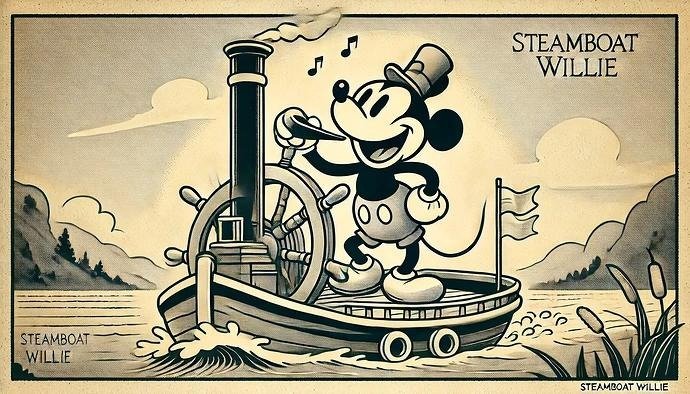
Mickey Mouse is perhaps the most globally recognizable example.


6
The cultural significance of Mickey Mouse demonstrates how symbolism can be completely reshaped through storytelling and branding.
Instead of fear or household nuisance, the mouse becomes associated with:
- friendliness
- entertainment
- childhood
- imagination
- play
- optimism
This is an important lesson in semiotics:
Symbols acquire meaning through repeated cultural use.
Did You Know? Mouse Symbolism Has a Major Contradiction
A fascinating feature of mouse symbolism is that the animal can represent both weakness and intelligence.
That contradiction is not a flaw.
It is precisely what makes the mouse symbolically useful.
The mouse is physically vulnerable but behaviorally capable.
This allows storytellers and cultures to explore a recurring human idea:
You do not need to be the strongest person in the room to survive or succeed.
Expert Tip: Interpret Mouse Symbolism Through Context
If you are researching a mouse symbol for an article, tattoo, logo, artwork, dream, or spiritual practice, avoid assigning one meaning automatically.
Instead, ask five questions:
- Where does the mouse appear?
- What is it doing?
- How does the viewer feel about it?
- Which culture or historical period is involved?
- What other symbols appear alongside it?
A mouse beside food has a different symbolic relationship from a mouse beside a religious figure.
Context creates meaning.
Common Mistakes When Interpreting Mouse Symbolism
Mistake 1: Assuming mice always represent fear
Fear is one possible interpretation, not the only one.
Mistake 2: Treating all cultures as identical
Chinese zodiac symbolism, Hindu religious symbolism, European folklore, and modern Western popular culture can assign very different meanings to rodents.
Mistake 3: Confusing folklore with scientific evidence
A spiritual or cultural belief should not be presented as scientifically proven.
Mistake 4: Treating dream symbolism as prediction
Dream interpretation is subjective. There is no universal scientific dictionary proving that a mouse dream predicts a specific event.
Mistake 5: Ignoring positive meanings
Mice can represent intelligence, adaptability, persistence, and resourcefulness—not merely weakness or contamination.
Myth vs. Fact
| Myth | Fact |
| A mouse always symbolizes cowardice. | Mouse symbolism can also represent cleverness and resilience. |
| Mouse symbolism is identical everywhere. | Cultural meanings vary substantially. |
| Seeing a mouse spiritually predicts something. | Spiritual interpretations are matters of belief, not established prediction. |
| Mice only symbolize negative things. | They can represent adaptability, humility, fertility, and survival. |
| Small animals are symbolically insignificant. | Smallness itself can be an important symbolic theme. |
Practical Applications of Mouse Symbolism
Mouse symbolism can be useful in several creative and professional fields.
Storytelling
Use the mouse to represent an underestimated character who succeeds through intelligence.
Education
The mouse can demonstrate concepts such as adaptation, ecosystems, food chains, or behavioral ecology.
Branding
A mouse can communicate cleverness, friendliness, precision, or approachability.
Art
Mouse imagery can introduce contrast between vulnerability and strength.
Literature
The animal can function as a metaphor for hidden problems, overlooked individuals, or resourcefulness.
Personal Reflection
The mouse can serve as a reminder that small, consistent actions can matter.
UX and Technology
The computer mouse demonstrates how an animal metaphor became embedded in technological language.
Key Insights About Mouse Symbolism
The most important meanings associated with the mouse include:
- Resourcefulness
- Adaptability
- Humility
- Vulnerability
- Cleverness
- Persistence
- Secrecy
- Observation
- Fertility
- Abundance
- Survival
- Smallness
- Hidden activity
- Strategic intelligence
These meanings should not be treated as a rigid dictionary. Symbolism changes according to cultural context, narrative purpose, personal experience, and visual surroundings.
Why Mouse Symbolism Still Matters Today
Mouse symbolism remains relevant because the qualities associated with the animal continue to describe human life.
Modern society still values adaptability, resourcefulness, strategic thinking, and attention to small details.
The mouse also demonstrates how cultural symbols evolve.
An animal that might once have represented household scarcity or vulnerability can simultaneously represent beloved childhood characters, religious imagery, technological interfaces, and clever storytelling.
This makes the mouse a particularly useful example of dynamic symbolism.
Symbols are not static labels.
They are cultural tools through which people organize ideas about nature, society, identity, power, fear, intelligence, and survival.
Conclusion
Mouse symbolism is much more complex than the simple image of a timid or unwanted household animal.
The mouse can represent smallness without insignificance, vulnerability without helplessness, and quietness without weakness. Its ability to adapt, hide, search for resources, and survive changing environments makes it a powerful metaphor for resourcefulness and persistence.
Across cultural traditions, the mouse or related rodent imagery has been interpreted in different ways—from cleverness and fertility to impurity, fear, or disruption. Its association with Ganesha provides an especially significant religious example, while Chinese zodiac traditions demonstrate how rodents can be associated with intelligence and adaptability rather than simply negativity.
In literature, art, folklore, branding, popular culture, and technology, the mouse continues to evolve as a symbol.
Ultimately, its most compelling lesson may be simple:
Being small does not mean being powerless.
Frequently Asked Questions About Mouse Symbolism
What does a mouse symbolize spiritually?
Spiritually, a mouse can symbolize humility, awareness, adaptability, resourcefulness, persistence, and attention to details that others overlook. In some traditions, mouse or rat imagery can have specific religious associations, so interpretation depends on the spiritual system being discussed.
What does a mouse symbolize in dreams?
A mouse in a dream may symbolically represent vulnerability, a minor concern, avoidance, secrecy, resourcefulness, or something being overlooked. The emotional experience of the dreamer and the specific circumstances of the dream are more important than applying a universal interpretation.
What does a mouse represent in Hinduism?
The mouse or rat is traditionally associated with Ganesha as his vahana, or vehicle. Interpretations often connect the creature with desires, the restless mind, accessibility to hidden places, and the contrast between immense spiritual power and a very small creature.
Is mouse symbolism positive or negative?
It can be either. Negative associations include fear, weakness, secrecy, contamination, and disorder. Positive associations include intelligence, adaptability, humility, survival, persistence, and resourcefulness.
What does a mouse symbolize in Chinese culture?
Rodent symbolism in Chinese culture is diverse, but the Rat has a particularly important place in the Chinese zodiac, where it is traditionally associated with qualities such as intelligence, adaptability, alertness, and resourcefulness.
Why are mice used as symbols of cleverness?
Their small size and ability to survive through speed, awareness, exploration, and adaptability make mice effective metaphors for intelligence overcoming physical disadvantage. Stories often use the mouse as an “unlikely hero” precisely because it cannot depend on brute strength.
Final Key Takeaways
Mouse symbolism represents a spectrum of meanings rather than one fixed definition.
The strongest recurring themes are:
- Adaptability — surviving by adjusting to circumstances.
- Resourcefulness — making effective use of limited resources.
- Humility — recognizing that smallness does not equal insignificance.
- Vulnerability — acknowledging exposure to larger forces.
- Cleverness — succeeding through strategy rather than strength.
- Persistence — continuing despite obstacles.
- Secrecy — moving quietly and remaining hidden.
- Fertility — association with multiplication and abundance in some contexts.
- Cultural flexibility — meanings change across religions, regions, and historical periods.
- Transformation — the mouse has evolved from folklore and animal imagery into a major figure in popular culture and technology.
Semantic Entities, NLP Concepts & Topical Relationships
Major Semantic Entities
Mouse, mice, rodent, rat, Ganesha, Hinduism, Chinese zodiac, folklore, mythology, religion, psychology, anthropology, semiotics, literature, art, branding, technology, popular culture, dreams, symbolism.
Related NLP Concepts
Animal symbolism, cultural symbolism, spiritual symbolism, religious symbolism, psychological symbolism, dream interpretation, folklore, mythology, visual communication, cultural identity, iconography, semiotics, human perception, storytelling, archetypes, metaphor.
LSI & Semantic Keywords
Mouse meaning, mouse spiritual meaning, mouse symbolism meaning, what does a mouse symbolize, mouse symbolism in dreams, mouse meaning in different cultures, mouse mythology, mouse folklore, mouse symbolism in religion, mouse symbolism in Hinduism, mouse symbolism in Chinese culture, mouse meaning spiritually, mouse as a symbol, animal symbolism, rodent symbolism, mouse symbolism psychology, mouse symbolism in literature, mouse symbolism in art, mouse symbolism in branding.
Topical Relationships
Mouse → smallness → humility → vulnerability → adaptability → survival → resourcefulness → intelligence → folklore → mythology → religion → Ganesha → Chinese zodiac → psychology → dreams → literature → art → popular culture → branding → technology → computer mouse → modern symbolism.

Explore folklore, anthropology, and global symbolism with Noah Whitmore’s research-based articles.
