Wind Symbolism: What Does Wind Represent?
Wind is invisible, yet its presence can transform an entire landscape. It bends trees, carries seeds across distant fields, moves clouds through the sky, and announces the arrival of changing weather.
In human experience, wind can feel refreshing and liberating one moment, then unsettling and destructive the next.
These contrasting qualities make wind symbolism a powerful way to explore freedom, transformation, invisible forces, communication, and the unpredictable nature of life.
Across mythology, religion, literature, art, and everyday language, wind has represented much more than moving air.
It can suggest a fresh beginning, the breath of life, a message from the unseen world, or a force that no person can fully control.
Its meaning depends on the context: a gentle breeze may symbolize peace and hope, while a violent storm may evoke conflict, upheaval, or emotional turmoil.
Understanding the symbolism of wind helps readers recognize how natural elements communicate complex human ideas.
Whether wind appears in a dream, a poem, a spiritual tradition, a painting, or a brand identity, its symbolic power comes from the relationship between an invisible force and its visible effects.
What Is the Symbolism of Wind?
Wind symbolism is the use of moving air to represent abstract ideas, emotions, spiritual concepts, and changes in human life. Depending on its intensity and context, wind can symbolize freedom, transformation, life, inspiration, communication, uncertainty, destruction, or renewal. Its meaning varies across cultures, religions, literary works, and personal experiences.
Wind is especially effective as a symbol because people can feel and observe its effects without seeing the force itself. This makes it a natural metaphor for invisible influences, including emotions, beliefs, destiny, memory, and social change.
For example, a writer might describe a fresh breeze entering an open window to suggest emotional relief after a difficult period. A filmmaker might use rising winds to create suspense before a major revelation. A spiritual teacher might compare the movement of air with the breath that sustains life.
The physical phenomenon remains the same, but its symbolic interpretation changes with the situation.
1. The Core Meanings of Wind Symbolism
Wind has several recurring symbolic meanings because it can be gentle or powerful, predictable or sudden, refreshing or destructive. The surrounding imagery determines which interpretation makes the most sense.

Freedom and independence
Wind moves across landscapes without visible boundaries. It therefore symbolizes independence, exploration, personal liberty, and the desire to escape limitations. In stories, wind blowing across an open field can suggest a character’s readiness to begin a new life.

Change and transformation
Wind moves leaves, changes weather, and signals approaching seasons. Symbolically, it can represent transitions, unexpected opportunities, the end of one chapter, and the beginning of another.

Spiritual presence and invisible forces
Although wind cannot ordinarily be seen, its effects are unmistakable. This quality makes it a meaningful metaphor for spirit, divine power, inspiration, or an unseen influence in human life. Such interpretations appear in several religious and philosophical traditions.
Oxford Academic+1
Disruption and uncertainty
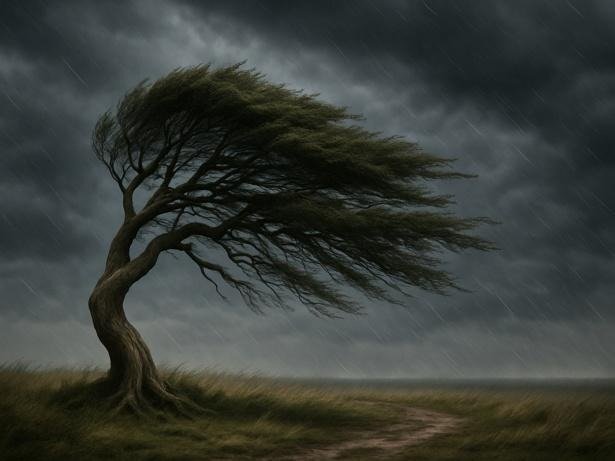
Powerful winds can uproot trees, damage buildings, and change a familiar environment. In symbolic writing, they often represent emotional conflict, social upheaval, instability, or circumstances beyond human control.

Renewal and new possibilities
Wind carries pollen and seeds, helping many plants reproduce and spread. This natural role supports symbolic associations with growth, fresh beginnings, possibility, and the movement of ideas from one place to another.
These meanings are related but not interchangeable. A breeze in a romantic poem may communicate intimacy, while the same movement in a suspense story may suggest that something unseen is approaching.
2. The Historical Origins and Evolution of Wind Symbolism
Wind symbolism developed through humanity’s close relationship with the natural world. Before modern meteorology explained atmospheric circulation, people experienced wind as a powerful force whose causes and consequences were not always apparent.
Wind could fill sails, bring rain, spread seeds, cool overheated communities, fan fires, or destroy homes. These experiences encouraged people to incorporate wind into religious stories, agricultural traditions, seasonal rituals, and explanations of the world.
Ancient civilizations and the power of the wind
In several ancient societies, wind and storms were associated with divine beings or supernatural authority. The connection was understandable within worldviews in which natural events could express the actions of gods.
- Ancient Mesopotamia: The deity Enlil was associated with air, wind, and authority, while Mesopotamian traditions also connected powerful gods with control over cosmic forces.
- Ancient Egypt: Shu was associated with air and the space separating the sky from the earth. His role placed air within the larger structure of Egyptian cosmology.
- Ancient Greek religion: Aeolus became associated with the management of winds in Greek literary tradition. In Homer’s Odyssey, the winds influence Odysseus’s difficult journey home.
-
Ancient Near Eastern traditions: Wind and storm imagery could communicate divine power, creation, judgment, fertility, or the disruption of ordinary life.
SciELO+2
These examples demonstrate that wind did not have one universal meaning. Its symbolism depended on the deity, story, ritual, and cultural setting in which it appeared.
From divine force to literary metaphor
As literary traditions developed, wind became an effective way to express ideas that were difficult to describe directly. A sudden gust could represent a revelation, a storm could suggest political conflict, and a departing breeze could evoke the passing of time.
Wind also became associated with human powerlessness. People might prepare for a storm, but they could not simply command it to stop. This made wind a compelling metaphor for fate, mortality, unpredictable events, and the limits of human control.
Scientific explanations of weather later changed how many people understood wind physically. They did not eliminate its cultural or artistic meanings. Instead, wind acquired additional associations with travel, technology, environmental change, energy production, and global interconnectedness.
3. Spiritual Meaning of Wind
Wind has a rich spiritual symbolism because it is invisible yet tangible. Many people interpret it as a metaphor for the soul, divine activity, inner awakening, or the movement of life itself. These are religious and philosophical interpretations rather than scientifically established explanations of supernatural events.
Wind as the breath of life
Breath connects wind with living beings. Humans and animals breathe, and the movement of air can therefore serve as a bridge between the external environment and the experience of being alive.
In biblical Hebrew, the word ruach can mean wind, breath, or spirit, depending on context. This range of meanings is important when interpreting biblical passages: the intended meaning must be understood from the surrounding language and passage, rather than assuming that every occurrence refers to the same concept.
Bible Gateway+1
For some readers, this association makes wind a reminder of life’s fragility and sacredness. A gentle breeze may prompt reflection on gratitude, while conscious breathing can become a practical focus for meditation.
Wind as spiritual awakening
A sudden change in the atmosphere can feel like a moment of transition. In spiritual writing, that experience may be used to represent an awakening, a new perspective, or the release of an outdated belief.
For example, a character who opens a window and feels fresh air after a period of isolation may be experiencing symbolic renewal. The wind does not prove that a supernatural event has occurred; it creates an image through which the character’s emotional or spiritual change can be expressed.
Wind as surrender and trust
Wind also reminds people that not every circumstance can be controlled. Spiritual interpretations sometimes use this quality to encourage patience, humility, and acceptance.
This does not mean that people should passively accept harmful circumstances. Rather, the symbol can distinguish between what a person can influence and what must be approached with flexibility.
Expert Tip: When interpreting wind as a spiritual sign, consider the setting, your emotional response, and the beliefs of the tradition involved. Personal meaning can be valuable without treating every gust of wind as a universal message or prediction.
4. Wind Symbolism in Different Religions and Cultures
Wind has appeared in many religious and cultural systems, but its meaning changes according to local beliefs, histories, and storytelling traditions. The following examples are starting points for interpretation, not exhaustive descriptions of entire cultures.
| Tradition or cultural context | Symbolic association | Important context |
| Biblical traditions | Spirit, breath, creation, divine power | The meaning depends on the particular passage and its language. |
| Ancient Greek mythology | Divine influence, travel, danger, natural power | Winds could be personified and given distinct roles in myth. |
| Ancient Egyptian religion | Air, space, cosmic order | Shu’s association with air belongs to a broader creation cosmology. |
| Japanese cultural history | Wind as a natural and sometimes sacred force | Meanings vary by historical setting, religious tradition, and event. |
| Chinese philosophical traditions | Movement, change, and relationships between natural forces | Wind’s significance differs among cosmology, medicine, literature, and folk practices. |
| Indigenous traditions worldwide | May relate to place, weather, ancestors, spirits, or seasonal knowledge | Indigenous peoples have distinct traditions; no single interpretation applies to all. |
Wind in Christianity and the Bible
Christian interpretations of wind frequently draw on biblical passages involving breath, spirit, storms, and divine power. In the Old Testament, ruach can describe atmospheric wind as well as breath or spirit. In the New Testament, the account of Pentecost in Acts 2 uses the sound of a powerful wind as part of the scene surrounding the coming of the Holy Spirit.
These passages give wind a place in discussions of creation, renewal, divine presence, and spiritual transformation. Yet biblical imagery is context-dependent: wind can also be associated with danger, instability, or the fleeting nature of worldly pursuits.
St Andrews Encyclopaedia of Theology+1
Wind in Greek mythology
In Greek mythology, winds could be personified as beings with particular identities and functions. Aeolus, known in literary tradition for his relationship with the winds, is especially significant in Homer’s Odyssey.
The story in which Odysseus receives a bag containing winds illustrates how a natural force can become a narrative symbol. The winds influence his journey, while the mishandling of the bag turns a possible advantage into another setback.
The broader symbolism includes travel, destiny, human error, and the difficulty of controlling powerful forces.
Wind in Japanese traditions
Japanese cultural history includes religious and historical interpretations of wind, including the term kamikaze, meaning “divine wind.” The term became especially associated with accounts of storms that helped thwart Mongol-led invasions of Japan in the thirteenth century.
The historical meaning should be distinguished from later military usage during World War II. The same word acquired different political and cultural associations over time. It demonstrates how a natural phenomenon can become part of national memory and later be reinterpreted in another historical setting.
Oxford Academic+1
Wind in Chinese philosophical and cultural contexts
In Chinese traditions, wind can be considered through several distinct lenses, including classical cosmology, literature, poetry, and traditional medicine. These fields do not necessarily assign it the same meaning.
In poetry, wind may suggest seasonal transition, distance, longing, or the movement of the natural world. In philosophical contexts, it may form part of broader reflections on change and the relationships between humans and nature.
It is important not to reduce these complex traditions to a single claim that wind always represents spiritual energy or good fortune.
Indigenous perspectives on wind
Indigenous communities across the world have developed varied relationships with wind through environmental knowledge, oral histories, ceremony, and place-based traditions. In some contexts, directional winds and seasonal patterns carry cultural significance alongside their practical importance for travel, farming, fishing, and land stewardship.
Because Indigenous traditions are diverse and often specific to particular communities, responsible interpretation requires attention to the relevant people, place, language, and source. It is inaccurate to assign one generalized spiritual meaning to all Indigenous cultures.
5. The Psychological Meaning of Wind
Psychologically, wind can function as a symbol of emotional movement, uncertainty, liberation, and change. Its meaning often emerges from how a person experiences the environment and how an author or artist frames that experience.
Wind as a reflection of emotions
A soft breeze can create an impression of relief or comfort, while harsh gusts may contribute to feelings of exposure or vulnerability. Writers use these associations to make emotional states visible without directly naming them.
Consider these examples:
- A gentle breeze after an argument: suggests reconciliation, emotional release, or the possibility of forgiveness.
- Wind rattling a closed window: may evoke anxiety, isolation, or an approaching conflict.
- A person standing against the wind: can represent resilience, determination, or resistance to pressure.
- Wind carrying away fallen leaves: may suggest letting go of the past and accepting change.
These are interpretive possibilities, not fixed psychological rules. A storm may feel exciting to one person and frightening to another.
Wind and the desire for freedom
The image of wind moving without visible boundaries lends itself to ideas of autonomy and escape. In stories, a character watching wind sweep across a wide landscape may be expressing a desire to leave restrictive circumstances.
This symbolism is especially useful when exploring coming-of-age narratives, migration, travel, personal identity, and the transition from dependence to independence.
Wind and uncertainty
Wind changes direction, varies in intensity, and sometimes arrives unexpectedly. These characteristics make it an effective metaphor for uncertain circumstances.
In a narrative, wind that shifts direction might signal a turning point. In a painting, moving branches and unsettled clouds can create a feeling of instability. In everyday language, expressions such as “the winds of change” translate environmental movement into a description of social or personal transformation.
Important distinction: Psychology can investigate how people respond to weather, sensory experiences, and environmental conditions. It does not establish that a particular gust of wind carries a universal psychological message or predicts a person’s future.
6. Wind Symbolism in Literature and Poetry
Wind is one of the most flexible natural symbols in literature because it can influence a setting while also reflecting a character’s internal world.
Wind as a symbol of change
Authors frequently use changing weather to prepare readers for a shift in the plot. A breeze may precede an important discovery, while a storm can accompany a crisis.
The effect is especially strong when the natural environment changes alongside a character’s circumstances. If the wind grows stronger as a conflict intensifies, the setting becomes part of the story’s emotional structure.
Wind as an invisible messenger
Because wind can carry sounds, scents, pollen, and seeds, it can be imagined as a messenger between distant places. In poetry, it may connect a speaker with a loved one, a lost home, a distant landscape, or a memory.
A poet might imagine that the wind carries a familiar fragrance from a childhood garden. The fragrance is physically plausible, but its role in recalling the past is symbolic.
Wind as a force beyond human control
Wind also represents forces that individuals cannot easily command. In epic narratives, it may help or obstruct a hero’s journey. In political fiction, it can suggest revolutionary pressure or a changing public mood. In tragedy, a violent storm can mirror the breakdown of order.
For example, in Homer’s Odyssey, the winds are not merely background weather; they materially affect the voyage and help shape the narrative’s obstacles. The story connects natural forces with the difficulties of travel, decision-making, and human vulnerability.
Wind in visual storytelling
Filmmakers, illustrators, and theater directors can communicate wind without dialogue. They may show:
- Hair and clothing moving before a character speaks.
- Curtains lifting in an otherwise silent room.
- Dust crossing an empty street.
- Trees bending as the camera approaches a pivotal scene.
- Leaves scattering after a character makes a difficult decision.
These techniques use visual communication and sensory cues to build atmosphere. Their success depends on timing, composition, and narrative context rather than on a universal symbolic code.
7. Wind in Art, Architecture, and Visual Communication
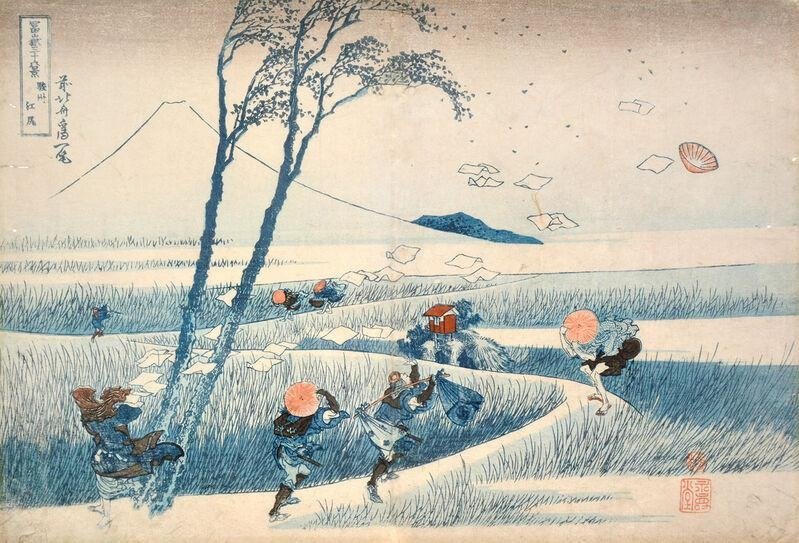
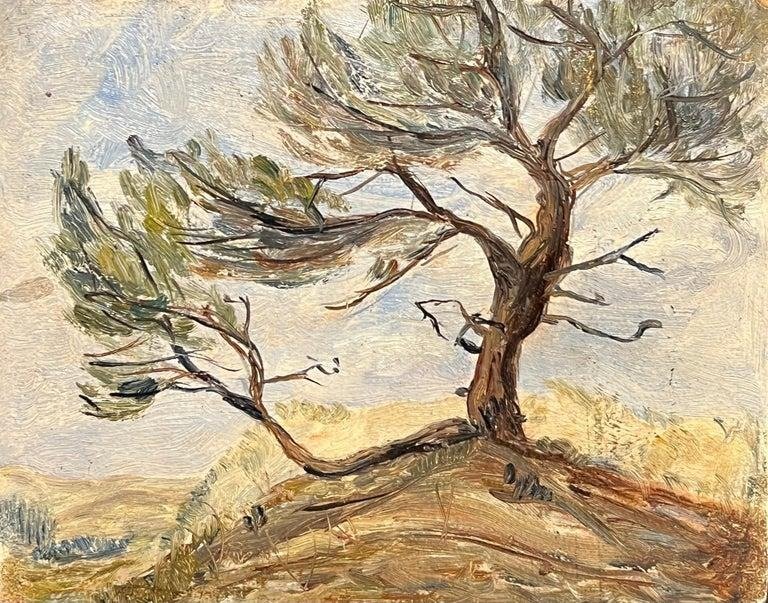
In art and design, wind is often represented through movement rather than through a literal depiction of air. Artists make an invisible force perceptible by showing what it moves.
10
How artists represent wind
Common visual techniques include flowing lines, diagonally tilted forms, scattered objects, moving fabric, bent vegetation, and swirling clouds. Each technique creates a different impression.
| Visual technique | Possible symbolic effect |
| Smooth, flowing lines | Grace, continuity, freedom |
| Gentle movement in leaves | Peace, natural harmony |
| Sharp, diagonal lines | Tension, speed, disruption |
| Whirling forms and scattered objects | Chaos, instability, transformation |
| Wind moving seeds or blossoms | Growth, renewal, the spread of life |
| A solitary figure facing strong wind | Courage, vulnerability, endurance |
These effects depend on the full composition. A swirling pattern, for instance, might communicate joy and movement in one artwork but confusion in another.
Wind in architecture and spatial design
Architecture rarely represents wind only as a symbol. It also responds to airflow as a practical environmental factor.
Courtyards, screened openings, shaded passages, and cross-ventilation strategies can help people experience moving air in built environments. Designers may associate these features with openness, comfort, and a closer connection to nature.
In conceptual architecture, a flowing façade or a structure inspired by wind patterns may communicate lightness, adaptability, or movement. The symbolic message should be distinguished from the building’s actual environmental performance.
Wind in branding and graphic design
Brands sometimes use wind-related imagery to suggest speed, innovation, clean energy, freedom, or forward movement. Curved lines and streamlined forms can imply motion even in a static logo.
Wind-related imagery may be especially relevant to renewable-energy companies, travel services, outdoor clothing, aviation, and technology businesses.
However, a wind-inspired logo does not prove that a company is environmentally responsible or technologically advanced. Symbolism influences perception, while claims about sustainability or performance require evidence.
8. Wind Symbolism in Nature and the Environment
Wind has both physical importance and symbolic richness. Understanding its real-world functions helps explain why people associate it with renewal, travel, power, and unpredictability.
Wind as a carrier of life
Wind disperses the seeds of many plant species and moves pollen in certain plants. It also redistributes heat and moisture through the atmosphere, influencing weather and climate.
These processes provide a concrete foundation for interpreting wind as a symbol of growth, connection, and renewal. Unlike a purely invented association, this symbolism draws on observable natural processes.
Wind as a destructive force
Strong winds can damage buildings, uproot trees, intensify wildfires under some conditions, and accompany severe storms. In cultural narratives, these effects make wind a natural metaphor for disruption and the limits of human control.
Yet wind itself is not inherently good or bad. Its environmental consequences depend on its speed, direction, duration, location, and interaction with other conditions.
Wind as a source of energy
Modern wind turbines convert the kinetic energy of moving air into electricity. This technology has introduced additional associations with renewable energy, innovation, energy independence, and the transition away from fossil fuels.
Wind energy also raises practical questions about land use, wildlife, infrastructure, transmission, and community acceptance. Symbolically presenting wind power as clean or progressive should not replace a balanced assessment of its benefits and limitations.
9. Wind Symbolism in Dreams and Everyday Life
People often interpret wind in dreams, but there is no scientifically established universal dictionary that assigns one definitive meaning to every wind-related dream.
Instead, the details of the dream and the dreamer’s personal associations provide a more responsible starting point.
| Dream or everyday experience | Possible interpretation |
| Feeling a soft breeze | Relief, comfort, openness |
| Walking against strong wind | Resistance, effort, external pressure |
| Watching leaves blow away | Transition, release, the passage of time |
| Hearing wind during a storm | Anxiety, uncertainty, anticipated conflict |
| Flying or moving with the wind | Freedom, possibility, reduced resistance |
| Opening a window to fresh air | A new perspective, emotional renewal |
These interpretations are reflective prompts, not predictions or diagnostic tools.
How to interpret wind in your own experience
Ask yourself three questions:
- What was the wind doing? Was it gentle, forceful, warm, cold, refreshing, or frightening?
- What was happening around it? Consider the setting, people present, and events immediately before and after the experience.
- What does wind mean to you personally? Someone who associates wind with childhood holidays may respond differently from someone whose home was damaged in a storm.
A useful interpretation should account for these details rather than relying on a single generalized meaning.
Myth vs. Fact
- Myth: Wind always signals a spiritual message.
- Fact: Wind can carry spiritual meaning within a particular belief system, but ordinary wind is also a natural atmospheric phenomenon.
- Myth: Strong wind always represents negative change.
- Fact: It may symbolize struggle, but it can also suggest strength, liberation, or necessary transformation.
- Myth: A dream about wind predicts a future event.
- Fact: Dreams can be explored for personal meaning, but their wind imagery is not a reliable method of forecasting the future.
10. The Symbolism of Different Types of Wind
The kind of wind portrayed in a story, artwork, or personal reflection can significantly affect its meaning.
| Type of wind | Common symbolic meanings | Example |
| Gentle breeze | Peace, comfort, subtle change | A breeze entering a quiet room |
| Strong wind | Power, resistance, determination | A traveler moving against the wind |
| Cold wind | Isolation, emotional distance, hardship | A character walking through an empty winter landscape |
| Warm wind | Comfort, affection, seasonal change | A warm breeze marking the arrival of spring |
| Storm wind | Conflict, upheaval, uncontrolled forces | A storm accompanying a dramatic confrontation |
| Changing wind | Uncertainty, new direction, shifting circumstances | A story’s atmosphere changing before a revelation |
| Tailwind | Support, momentum, favorable circumstances | A traveler making faster progress toward a goal |
| Headwind | Obstacles, perseverance, resistance | A person continuing despite difficult conditions |
These associations are flexible. A cold wind can evoke peaceful winter beauty rather than loneliness, while a storm can symbolize purification or a necessary break with the past. The surrounding narrative determines the strongest interpretation.
11. Common Mistakes When Interpreting Wind Symbolism
Understanding symbolism requires more than matching an image to a keyword. Several common mistakes can lead to shallow or misleading interpretations.
Mistake 1: Assuming wind always represents freedom
Wind frequently symbolizes freedom because it moves without visible boundaries. However, the same wind can restrict movement, threaten safety, or prevent a journey from continuing.
Better approach: Identify what the wind enables or prevents in the specific scene.
Mistake 2: Treating spiritual interpretations as established facts
Some religious traditions interpret wind as an expression of divine presence. That is an important cultural and theological meaning, but it should not be presented as a scientifically proven explanation for every occurrence of wind.
Better approach: Clearly distinguish religious beliefs, literary interpretations, personal associations, and scientific explanations.
Mistake 3: Applying one meaning to every culture
Wind imagery appears across many cultures, but its meaning differs according to language, history, geography, and religious belief.
Better approach: Identify the particular tradition or historical setting before interpreting the symbol.
Mistake 4: Ignoring the author’s purpose
In literature, symbols work within a broader narrative. Wind may communicate hope in one passage and danger in another.
Better approach: Examine the imagery, mood, character development, plot, and recurring themes together.
Mistake 5: Confusing coincidence with prediction
Experiencing wind during a significant moment can feel personally meaningful. However, the coincidence does not establish that the wind predicts future events.
Better approach: Use the experience as an opportunity for reflection without assuming that it determines what will happen.
12. Practical Applications of Wind Symbolism
Wind symbolism remains useful because it can translate abstract ideas into familiar sensory experiences.
Literature and education
Teachers can use wind imagery to help students identify metaphor, personification, mood, foreshadowing, and theme. Students can compare a gentle breeze with a destructive storm to see how an author’s choice of imagery affects interpretation.
Art and creative writing
Artists can use flowing forms to express freedom, while writers can use changing winds to represent uncertainty or transition. The most effective choices reinforce the central idea rather than merely decorate the scene.
Branding and marketing
Wind-inspired designs can suggest movement, lightness, speed, or renewable energy. Marketing professionals should ensure that these visual associations match the product and do not imply unsupported environmental or performance claims.
Personal reflection
Wind can serve as a metaphor for changing circumstances, releasing expectations, or adapting to uncertainty. Journaling about a wind-related memory can help someone explore what freedom, resistance, or renewal means to them.
Film and digital media
Moving leaves, blowing curtains, sound effects, and animated lines can establish atmosphere quickly. On social media, wind imagery can communicate a fresh start, adventure, or change even when the accompanying text is brief.
An expert approach to interpreting wind
When analyzing wind symbolism, use a simple three-part method:
- Observe the physical image. Describe what the wind does rather than immediately assigning it a meaning.
- Connect the image to the context. Consider the emotions, cultural references, narrative events, and other symbols surrounding it.
- Explain the interpretation with evidence. Show how the image supports a particular reading, and acknowledge plausible alternatives.
This method works for literary analysis, cultural research, visual communication, and personal reflection. It also prevents interpretations from becoming vague or overly dependent on assumptions.
13. Did You Know? Interesting Facts About Wind Symbolism
- Wind can symbolize what cannot be seen. This association is especially clear in traditions that connect wind, breath, and spirit.
- Wind has shaped storytelling for centuries. In Greek epic, winds can influence voyages and determine whether characters progress toward their goals.
- Wind has both creative and destructive associations. It can spread seeds and support plant reproduction, but severe winds can also damage landscapes and settlements.
- Wind symbolism changes with historical context. The Japanese term kamikaze, for example, has religious-historical associations as well as later military and political meanings.
- Wind is a natural metaphor for social change. Expressions such as “the winds of change” transform the movement of air into an image of shifting circumstances and collective attitudes.
These examples show why wind continues to appear in mythology, literature, philosophy, and modern communication. Its symbolic richness comes from the many ways humans experience its physical effects.
14. Key Insights About Wind Symbolism
The most important lessons about the symbolism of wind can be summarized as follows:
- Freedom: Wind’s unrestricted movement makes it a natural metaphor for independence and exploration.
- Transformation: Changing winds can represent transitions, new opportunities, and the movement from one stage of life to another.
- Spirituality: Wind and breath are associated with spirit in several religious traditions, although interpretations differ.
- Emotional expression: Gentle breezes and violent storms can help writers communicate peace, anxiety, conflict, or renewal.
- Cultural variation: Wind does not carry one universal meaning; history, language, religion, and personal experience all influence interpretation.
- Modern relevance: Wind imagery continues to shape branding, environmental communication, architecture, art, and digital storytelling.
- Context matters: The most persuasive interpretation explains how a particular image functions within its specific setting.
Conclusion: Why Wind Symbolism Still Matters
Wind symbolism remains powerful because it connects an ordinary natural experience with ideas that are difficult to express directly.
Its invisible movement makes it a meaningful representation of spiritual presence, while its changing intensity lends itself to themes of freedom, emotional transformation, uncertainty, and resilience.
Across ancient mythology, religious texts, literature, visual art, and contemporary branding, wind has helped people communicate the relationship between visible events and invisible forces.
It can represent a liberating new beginning, an approaching challenge, the fragility of human control, or the quiet possibility of renewal.
Its meaning, however, is never entirely fixed.
A breeze that suggests comfort to one person may evoke sadness in another, and a storm that represents destruction in one narrative may symbolize liberation in another.
The most useful way to understand wind symbolism is to combine observation with context. Examine what the wind does, consider the cultural or narrative setting, and support your interpretation with relevant details.
This approach reveals how a simple natural force can communicate complex ideas across culture, education, religion, psychology, literature, design, and everyday life.
Ultimately, wind reminds us that something does not need to be visible to have a powerful effect.
That enduring idea explains why wind continues to inspire stories, beliefs, images, and metaphors across generations.
Frequently Asked Questions About Wind Symbolism
1. What does wind symbolize spiritually?
Wind often symbolizes spirit, breath, life, divine presence, transformation, and the movement of unseen forces. In biblical traditions, for example, the Hebrew word ruach can refer to wind, breath, or spirit, depending on context. Spiritual interpretations vary across religions and should be understood within their particular traditions.
2. What does wind symbolize in literature?
In literature, wind commonly represents change, freedom, emotional movement, uncertainty, or forces beyond human control. A gentle breeze may reinforce a scene of peace, while a violent storm may accompany conflict or upheaval. The surrounding imagery, characters, and plot determine its specific meaning.
3. Does wind symbolize change and new beginnings?
Yes, wind frequently symbolizes change and new beginnings because it moves through the environment and alters what surrounds it. Writers may use a fresh breeze to suggest a new perspective, the end of a difficult period, or the beginning of a journey. This is a recurring symbolic association rather than a universal rule.
4. What does a gentle breeze symbolize?
A gentle breeze can symbolize peace, comfort, emotional relief, freedom, subtle inspiration, or renewal. In a poem, it might communicate tenderness; in a spiritual reflection, it might encourage mindfulness. Its interpretation depends on the setting and the observer’s associations.
5. What does strong wind symbolize?
Strong wind often represents power, resistance, adversity, upheaval, or circumstances beyond human control. It can also symbolize determination when a person stands against it or freedom when it propels someone forward. The surrounding context helps determine whether its meaning is positive, negative, or mixed.
6. Is wind a symbol of the Holy Spirit?
Wind is an important image associated with the Holy Spirit in Christian interpretation, particularly in the account of Pentecost in Acts 2. Biblical imagery connects wind, breath, and spirit in ways that depend on the passage and its original language. Christians interpret these passages within their theological traditions; wind itself is not proof of a supernatural event.
Semantic SEO, NLP Entities, and Topical Relationships
The following terms represent the main semantic concepts covered in this article. They can help guide related content planning for a symbolism-focused website without requiring repetitive keyword insertion.
| Category | Related terms and entities |
| Primary keyword | Wind symbolism |
| Core semantic keywords | Wind meaning, wind spiritual meaning, symbolism of wind, wind as a symbol |
| Related concepts | Freedom, change, renewal, breath, spirit, transformation, uncertainty, resilience |
| Cultural and historical entities | Aeolus, Odyssey, Enlil, Shu, ruach, Pentecost, kamikaze |
| Religious and philosophical concepts | Divine presence, creation, spiritual awakening, surrender, natural forces |
| Literary concepts | Metaphor, personification, imagery, foreshadowing, atmosphere, narrative symbolism |
| Psychological concepts | Emotional associations, personal meaning, perception, memory, uncertainty |
| Visual communication | Flowing lines, movement, composition, environmental imagery, visual metaphor |
| Modern applications | Branding, graphic design, architecture, renewable energy, digital storytelling |
| Related topic clusters | Air symbolism, storm symbolism, sky symbolism, breath symbolism, nature symbolism, weather symbolism |
Suggested related articles for a symbolism content cluster
- Air Symbolism: Meaning, Spiritual Significance, and Cultural Interpretations
- Storm Symbolism: Destruction, Transformation, and Renewal
- Sky Symbolism: Freedom, Hope, and Infinite Possibilities
- Rain Symbolism: Cleansing, Rebirth, and Emotional Release
- Breath Symbolism: Life, Spirit, and Inner Awareness
- Weather Symbolism in Literature: How Nature Reflects Human Emotions
These topics can form a coherent internal-linking structure by connecting wind symbolism with related natural elements and literary techniques.
Editorial note: This article is structured for SEO, semantic relevance, readability, and answer-focused search experiences. No article can be guaranteed to rank or be undetectable by AI-detection systems; publication quality is best supported by careful fact-checking, original editorial judgment, and appropriate sourcing.
Understand color meanings, psychology, and visual symbolism with Charlotte Monroe.
