
The Symbolism of Crows: Understanding the Meaning Behind These Mysterious Birds
The symbolism of crows has fascinated people for centuries because these intelligent, adaptable birds occupy a unique place in human imagination.
Often associated with mystery, wisdom, transformation, death, protection, and spiritual awareness, crows appear in myths, folklore, religious traditions, literature, and modern storytelling.
Their dark feathers, distinctive calls, social behavior, and remarkable problem-solving abilities have inspired interpretations ranging from ominous warnings to powerful symbols of intelligence and renewal.
Yet crows do not have one universal meaning. In some traditions, they are connected with ancestors, divine messages, or sacred knowledge.
In others, they represent trickery, misfortune, or the uncertain boundary between life and death. Their meaning also depends on personal experience, cultural background, artistic context, and the circumstances in which a crow appears.
Understanding crow symbolism requires looking beyond superstition.
By exploring natural behavior alongside history, mythology, psychology, spirituality, and visual communication, we can understand why these birds remain such compelling symbols in both ancient traditions and contemporary culture.
What Is the Symbolism of Crows?
Crow symbolism refers to the meanings people associate with crows, including intelligence, wisdom, mystery, transformation, death, adaptability, and spiritual awareness. Across different cultures, crows may represent divine messengers, ancestral connections, tricksters, or warnings about change. Their interpretation depends on cultural traditions, religious beliefs, personal experiences, and the context in which they appear.
In symbolic language, the crow is especially interesting because it combines observable characteristics with imaginative interpretation. Its intelligence can inspire associations with wisdom, while its dark plumage and scavenging behavior have contributed to connections with mortality and mystery.
These meanings are cultural interpretations rather than proof that crows predict future events or communicate supernatural messages.
1. The Core Meanings of Crow Symbolism
Crows carry several interconnected symbolic meanings. Their reputation for intelligence, their dark appearance, their social relationships, and their presence in stories about life and death have all shaped how people interpret them.
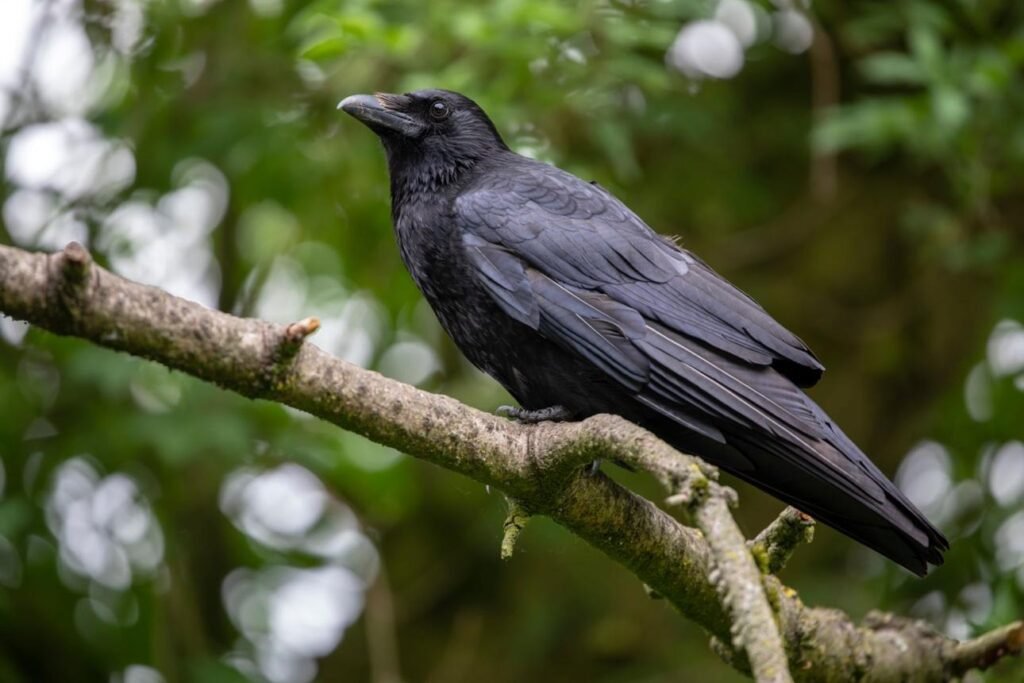
Wisdom and intelligence
Crows symbolize cleverness, observation, learning, and strategic thinking. Their real-world problem-solving abilities make them powerful representations of mental flexibility and resourcefulness.
All About Birds
+1
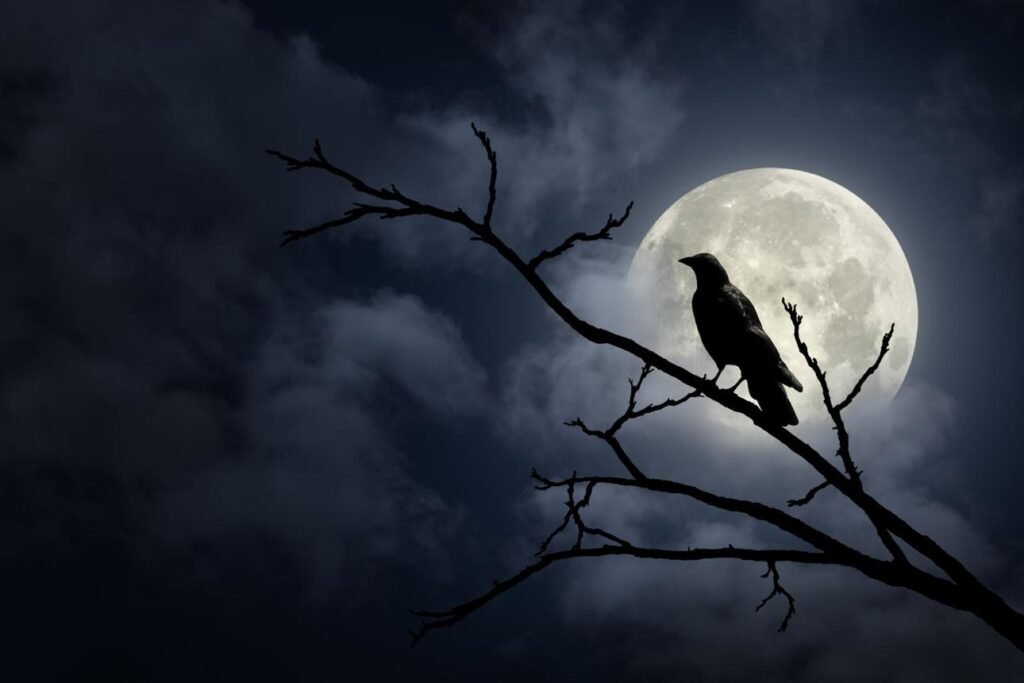
Mystery and the unknown
A crow’s dark silhouette and distinctive call can create an atmosphere of suspense. In literature and visual art, this makes the bird an effective symbol of secrets, uncertainty, hidden knowledge, and unexplored possibilities.
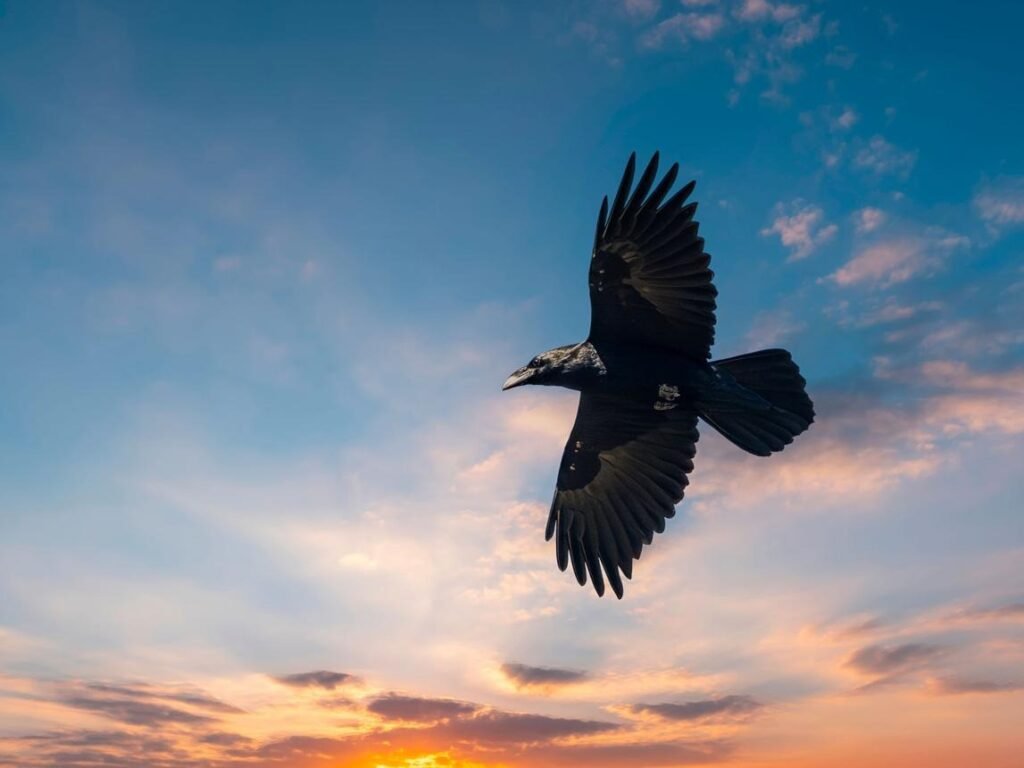
Death and transformation
Because crows may feed on carrion and are sometimes seen around roadsides, battlefields, and cemeteries, they have become associated with mortality. Symbolically, death can also represent the end of one chapter and the beginning of another.

Community and protection
Crows live in social groups, cooperate in raising young, and sometimes join together to drive away predators. These behaviors can inspire symbolism connected with family, collective awareness, loyalty, and mutual defense.
All About Birds
+1

Adaptability and resilience
Crows thrive in many environments, including forests, farms, parks, and cities. As a symbol, they can represent the ability to adapt to changing circumstances and find opportunities in unexpected places.
All About Birds
+1
These interpretations overlap. A crow in a story about a difficult decision might represent wisdom, while the same bird in a story about grief might symbolize mortality or the presence of a memory that refuses to disappear.
2. Historical Origins and Evolution of Crow Symbolism
Crow symbolism developed over time through people’s encounters with birds, their observations of the natural world, and the stories communities passed between generations.
Crows are widespread, conspicuous, and adaptable. Their ability to survive near human settlements means that people have had many opportunities to observe them. Their calls, dark plumage, feeding habits, and social behavior offered memorable material for mythology, folklore, and religious interpretation.
Ancient beliefs about crows
In the ancient world, birds were frequently incorporated into systems of divination, sacred storytelling, and the interpretation of natural signs. In some societies, people believed the movements or calls of birds could reveal information about future events or the intentions of divine powers.
Crow-like birds became particularly suitable for these roles because they were observant, vocal, and often associated with wilderness, death, or places where human activity and the natural world intersected.
In ancient Greek traditions, crows and other birds appeared in stories associated with Apollo and in practices of augury, the interpretation of bird behavior as an omen. These traditions show how an ordinary animal could become part of a larger system of religious meaning.
However, ancient beliefs were not uniform. Different communities interpreted the same animal differently, and historical accounts do not justify assigning one universal crow meaning to all ancient peoples.
How crow symbolism changed over time
Ancient societies
Crows and related birds appeared in mythology, divination, sacred narratives, and explanations of the natural world.
Medieval folklore
In many European stories, black birds became associated with ominous events, battle, death, witchcraft, and the supernatural. These associations varied by place and period.
Literature and visual art
Writers and artists used crows to evoke grief, foreboding, isolation, cleverness, rebellion, and the uncanny.
Contemporary culture
Crows now appear in fantasy, horror, gaming, tattoos, fashion, branding, photography, and online discussions of spiritual symbolism.
The important historical lesson is that symbolism is not fixed. Meanings change as societies change, even when the animal itself remains familiar.
3. Crow Symbolism Across Different Cultures and Traditions
There is no single worldwide interpretation of the crow. Some traditions emphasize its connection with ancestors and sacred knowledge, while others highlight trickery, misfortune, guidance, or the natural cycle of life.
| Culture or tradition | Associated symbolism | Important context |
| Norse mythology | Thought, memory, knowledge, observation | Odin’s two birds are ravens, commonly distinguished from crows in modern English. |
| Japanese tradition | Divine guidance and protection | The three-legged crow, Yatagarasu, is a sacred guiding figure. |
| Chinese mythology | Solar power and cosmic imagery | The three-legged crow is associated with the sun in ancient mythological imagery. |
| Ancient Greek traditions | Divination and divine associations | Birds, including crows, could be interpreted through religious stories and augury. |
| Hindu traditions | Ancestors and offerings | Crows can feature in ancestral rites, including practices associated with Pitru Paksha. |
| Various Indigenous traditions | Trickster qualities, transformation, creation, or wisdom | Meanings differ significantly among distinct peoples and oral traditions. |
| European folklore | Omens, death, mystery, and the supernatural | Associations vary across historical periods and local beliefs. |
These are broad examples rather than complete descriptions of entire cultures. The distinctions between crows, ravens, and other corvids also matter when interpreting older stories.
World Birds
+1
Crow symbolism in Norse mythology
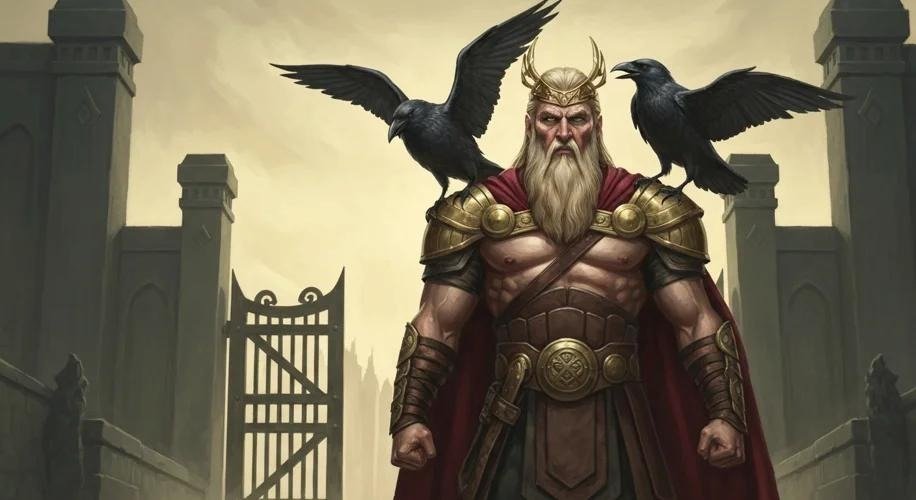
One of the best-known examples of corvid symbolism comes from Norse mythology. Odin, a major god associated with wisdom, war, poetry, and knowledge, is accompanied by two ravens named Huginn and Muninn.
Their names are commonly translated as Thought and Memory. The birds travel through the world and return with information, making them symbols of observation, awareness, and the gathering of knowledge.
Although they are often discussed alongside crow symbolism, these birds are specifically ravens in the Norse tradition. Their story nevertheless helps explain why black corvids more broadly are frequently associated with intelligence, foresight, and hidden knowledge.
The myth also offers a practical metaphor: wisdom depends not only on possessing information but on observing the world, remembering what has happened, and considering what it means.
Crow symbolism in Japanese culture
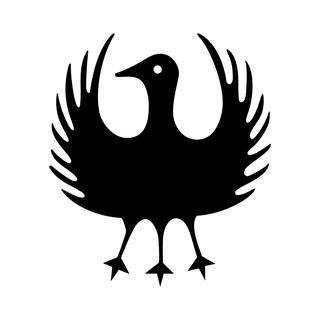
In Japanese tradition, the Yatagarasu, a three legged crow, is associated with divine guidance. In accounts of Japan’s legendary early history, the bird guides Emperor Jimmu toward Yamato.
The Yatagarasu is therefore interpreted as a sign of direction, assistance, and guidance from a higher power. It appears in the cultural and religious traditions associated with the Kumano region and is also used in modern Japanese sporting imagery.
Codex Mundi
This example challenges the assumption that a crow must represent bad luck. Within this tradition, a crow-like bird can instead signify help when a person needs to find the right path.
As a contemporary metaphor, the Yatagarasu can represent finding direction during uncertainty, listening to wise guidance, or moving forward with a clear purpose.
Crow symbolism in Chinese mythology
In Chinese mythological imagery, a three-legged crow is associated with the sun. Known in English as the three-legged sun crow or golden crow, it appears in ancient representations of solar power and cosmic order.
This symbolism links the bird with light, celestial energy, and the relationship between the natural world and the heavens. Historical examples of solar-crow imagery demonstrate that black plumage does not automatically produce negative symbolism.
Codex Mundi
Chinese folklore also contains other beliefs about crows, including unfavorable interpretations of their calls in certain circumstances. These contrasting meanings illustrate how the same bird can acquire different associations within one broad cultural setting.
Crow symbolism in Hindu traditions
In Hindu practice, crows can have an important role in rituals connected with ancestors. During Pitru Paksha, a period devoted to honoring deceased family members, offerings of food may be made as part of ancestral observances, and crows can be involved in these customs.
The meaning depends on the specific rite, family practice, and religious interpretation. In some contexts, the crow’s acceptance of an offering is treated as symbolically significant within the ritual.
This association makes the crow a reminder of family continuity, remembrance, gratitude, and the relationship between living people and their ancestors.
It is important not to interpret every crow sighting as a religious sign. Ritual practices have particular contexts, and their significance should be understood within the traditions in which they occur.
Crow symbolism in Indigenous traditions
Indigenous traditions across North America and other regions are diverse, and no single description can accurately represent them all.
In some Indigenous stories, Raven, rather than Crow, is a creator, transformer, or trickster figure. Raven has especially prominent roles in several Indigenous traditions of the Pacific Northwest Coast. Other communities have distinct stories and meanings associated with crows and related birds.
Trickster figures may challenge established rules, expose hypocrisy, create unexpected opportunities, or change the world through cleverness and disruption. Such characters are not simply evil or foolish; their role can reveal the complexity of social life and the consequences of human behavior.
When researching Indigenous crow symbolism, identify the specific nation, community, or storytelling tradition whenever possible. Treating all Indigenous beliefs as one system erases important cultural differences.
Crow symbolism in European folklore
In European folklore, crows and ravens are often associated with death, ominous predictions, battlefields, and supernatural events. Their dark feathers, calls, and presence around carrion helped make them compelling figures in stories about mortality.
Yet European traditions also include positive or ambiguous associations, including intelligence, endurance, guardianship, and the ability to perceive what others overlook.
A crow in folklore may therefore be a warning, a witness, a messenger, or a clever survivor. Its precise role depends on the story rather than on a universal rule.
4. The Spiritual Meaning of Crows
Spiritually, crows are often interpreted as symbols of awareness, transition, intuition, and the ability to recognize meaning in uncertain circumstances. In modern spiritual writing, they may be described as messengers or guides, but these interpretations are matters of belief rather than scientifically verified explanations.
Are crows spiritual messengers?
Some spiritual traditions and contemporary belief systems interpret a crow’s appearance as a reminder to pay attention, reflect on a decision, or become more aware of one’s surroundings.
For example, someone considering a major life change might see a crow and associate it with the need to examine their choices carefully. The bird becomes a personal symbol for reflection rather than objective evidence that an external force is sending a message.
This distinction matters. A symbolic experience can feel meaningful without proving a supernatural explanation.
Crow symbolism and intuition
Crows are associated with intuition because they are observant and responsive to their environment. Symbolically, they encourage people to notice patterns, question assumptions, and consider information that might otherwise be overlooked.
The practical lesson is to combine intuition with evidence. A feeling may draw attention to a possibility, but careful thought and real-world information help determine what to do next.
Crows as symbols of spiritual transformation
Transformation is another common interpretation of crow symbolism. The bird may represent a period in which familiar beliefs, relationships, or habits are changing.
In this interpretation, the crow does not necessarily signal that something bad will happen. Instead, it represents the uncertainty that can accompany growth.
Consider someone leaving an unfulfilling career to pursue a different path. A crow appearing in a personal photograph or recurring in their artwork might become a reminder of their willingness to face uncertainty and begin again.
The meaning comes from the individual’s reflection, not from a guaranteed prediction.
5. Crow Symbolism in Dreams
Dream interpretations involving crows are highly subjective. A crow in a dream might represent intelligence, anxiety, grief, freedom, secrecy, or an unresolved situation, depending on the dreamer’s experiences and associations.
There is no scientifically established dictionary that assigns a single meaning to every crow dream.
| Dream scenario | Possible symbolic interpretation | Reflective question |
| A crow flying freely | Independence, perspective, or change | Where would I like more freedom? |
| A crow watching you | Awareness, scrutiny, or self-reflection | Is there something I need to pay attention to? |
| A group of crows | Community, social pressure, or collective intelligence | How are other people influencing my decisions? |
| A crow calling loudly | An urgent feeling or a need to communicate | Is there something I have been avoiding saying? |
| A dead crow | An ending, grief, or a change in perspective | What chapter of my life may be closing? |
| A friendly crow | Curiosity, connection, or unexpected support | Where might I be overlooking a helpful relationship? |
These are interpretive possibilities, not predictions or universal rules.
What does it mean to dream of a black crow?
A black crow in a dream may draw attention to mystery, uncertainty, fear, or hidden aspects of a situation. However, blackness does not automatically make the dream negative.
A person who enjoys birdwatching may associate a crow with curiosity and intelligence, while someone who recently experienced a loss may connect the same bird with grief.
Expert Tip: When interpreting a crow dream, consider three things: the emotion you experienced, the crow’s behavior, and what is happening in your waking life. These details are usually more useful for personal reflection than a rigid dream dictionary.
6. What Does It Mean When You See a Crow?
Seeing a crow can inspire many symbolic interpretations, but its presence alone does not establish that an omen or supernatural event is occurring.
People who explore spiritual symbolism commonly associate a crow sighting with awareness, change, resilience, or a reminder to examine their circumstances.
Seeing a crow alone
A solitary crow may symbolize independence, observation, or self-reliance in a personal interpretation. It can also simply be a bird searching for food, resting, or watching its surroundings.
If the encounter feels meaningful, consider what it brings to mind rather than assuming it has a predetermined message.
Seeing multiple crows
A group of crows may suggest community, shared awareness, cooperation, or collective strength in symbolic writing.
There is also a straightforward natural explanation: crows are social birds, and some gather in large groups to feed or roost.
All About Birds
+1
The symbolic meaning and the biological explanation can coexist without being confused with each other.
Hearing a crow caw
A crow’s call has often been interpreted in folklore as a warning or omen. In a modern reflective interpretation, it might represent communication, alertness, or the need to notice something important.
In nature, crows use vocalizations in a range of social and environmental contexts. Hearing a crow does not reliably predict bad news, death, or another future event.
Seeing a crow near your home
A crow near your home might symbolize protection, family, or awareness if that is how you interpret the encounter. But crows also visit residential areas because they offer food, nesting opportunities, trees, and places to perch.
All About Birds
+1
Rather than treating the visit as a definite omen, you can appreciate the bird and reflect on whatever meaning the experience holds for you.
7. Crow Symbolism, Death, and Rebirth
The association between crows and death is one of the most recognizable features of their symbolism. It developed partly from the birds’ appearance and feeding behavior, as well as their presence in stories and artistic depictions of mortality.
Crows are omnivores that sometimes consume carrion, although carrion is only one part of their varied diet.
All About Birds
This natural behavior has helped connect them with the aftermath of death, the passage of time, and the fragile boundary between life and mortality.
Why are crows associated with death?
Several factors contribute to this association:
- Dark plumage: Black feathers are frequently used in Western visual traditions to evoke mourning, solemnity, and mystery.
- Scavenging behavior: Feeding on carrion links crows with death in human observation.
- Historical imagery: Stories, paintings, and poems have used black birds to establish ominous or unsettling moods.
- Folklore: Some traditions interpret the appearance or calls of certain birds as omens.
These associations are learned cultural meanings, not evidence that crows cause death or can predict it.
Does crow symbolism also represent rebirth?
Yes, in many contemporary symbolic interpretations, death can be understood metaphorically as the ending of a phase rather than a literal physical death.
A crow may therefore represent:
- Releasing an outdated belief.
- Recovering after a difficult experience.
- Accepting the end of a relationship or life chapter.
- Developing a more mature understanding of oneself.
- Finding new opportunities after a setback.
This interpretation is particularly useful because it moves beyond fear. The crow becomes a symbol of confronting reality and continuing through change.
8. The Psychological Meaning of Crow Symbolism
From a psychological perspective, crow symbolism demonstrates how humans attach meaning to familiar animals, colors, shapes, and behaviors.
A crow’s appearance can evoke different responses because perception is influenced by memory, emotion, culture, and personal experience.
The role of the color black
Black often communicates elegance, authority, seriousness, secrecy, or mourning in particular cultural and design contexts. It can also suggest sophistication and strength.
Because crows have predominantly black plumage, artists and storytellers can use their silhouettes to reinforce these associations.
However, black does not have one universal psychological effect. Its meaning depends on the surrounding imagery, cultural context, and the viewer’s experience.
Crows and the human tendency to find patterns
People naturally look for patterns and connections, especially during emotionally significant experiences. If someone notices a crow shortly before receiving unexpected news, they may remember the encounter and connect the two events.
This is an example of how personal associations can develop. It does not establish that the crow predicted the news.
The same process can make a crow a positive symbol. Someone who encounters crows while recovering from a difficult period may begin to associate them with persistence and resilience.
Why crow symbolism feels powerful
Crow symbolism combines several memorable elements:
- Visual contrast: Dark feathers stand out against bright skies, snow, and open landscapes.
- Distinctive sound: Their calls can create a strong impression in quiet environments.
- Observable intelligence: Their problem-solving behavior encourages comparisons with human reasoning.
- Cultural storytelling: Myths and literature provide familiar narratives that shape expectations.
- Personal association: Individual experiences add emotional significance to an otherwise ordinary encounter.
Together, these factors help explain why crows continue to appear in symbolic systems even as scientific understanding of their behavior improves.
9. Crows in Art, Literature, and Popular Culture
Artists and writers use crows because they can communicate complex ideas with a single image. Depending on the scene, a crow may make a landscape feel mysterious, suggest an approaching danger, or represent a character’s intelligence and independence.
Crow symbolism in literature
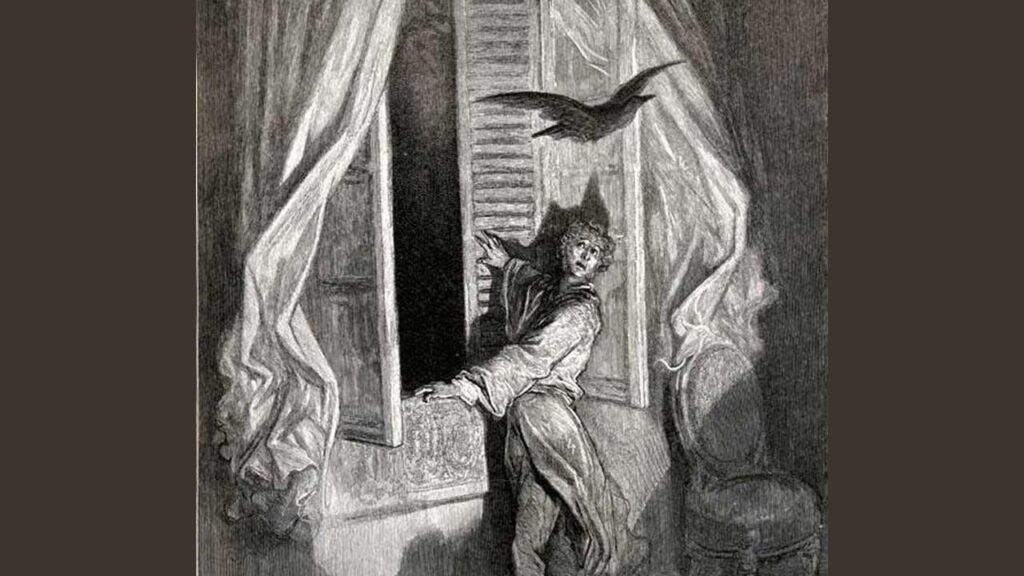
A famous example is Edgar Allan Poe’s The Raven. Although Poe’s bird is a raven rather than a crow, the poem is important to understanding the broader symbolism of black corvids in Western literature.
The raven becomes associated with grief, repetition, memory, and the speaker’s inability to escape sorrow. Its presence intensifies the poem’s atmosphere and reinforces its central emotional conflict.
The distinction between crow and raven matters biologically, but literature often draws on their shared visual and cultural associations.
Crows also appear in mystery stories, fantasy fiction, horror, and modern poetry. They can serve as observers, companions, warnings, or symbols of knowledge that remains inaccessible to the main character.
Crow symbolism in visual art
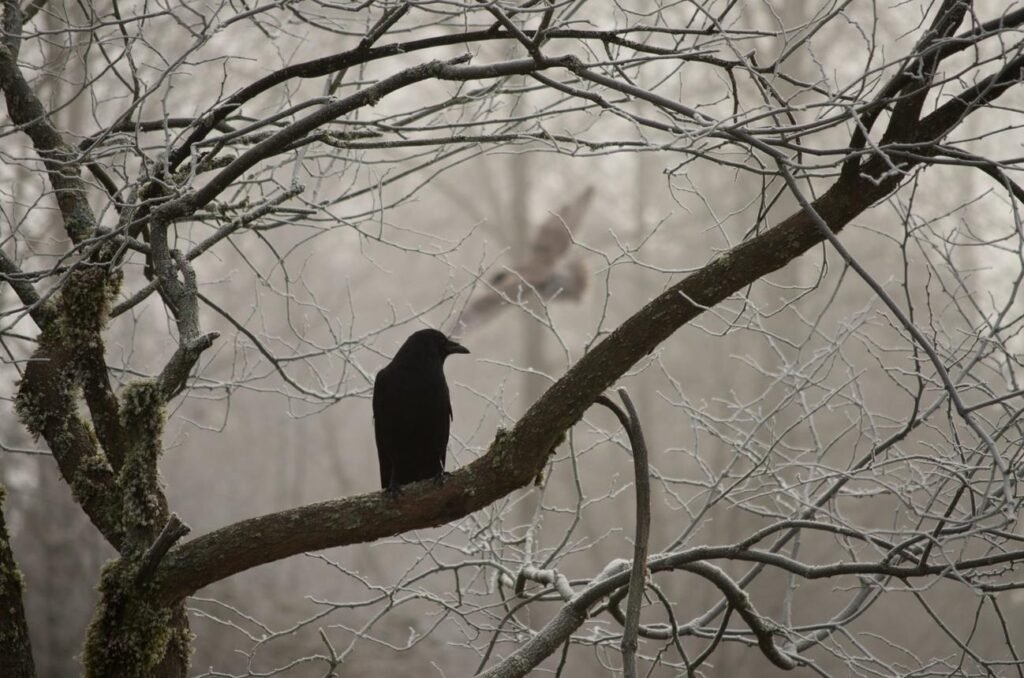
In visual art, crows can establish mood, direct attention, or create contrast between the natural world and human emotion.
An artist might place a crow against a pale winter sky to emphasize isolation. A group of crows above a city might suggest collective movement or the persistence of nature within an urban setting.
Historical artworks also demonstrate how black corvids could be given explicitly ominous or socially critical meanings. For example, the Metropolitan Museum of Art documents Félix Bracquemond’s Le Corbeau, an 1859 print that uses a menacing raven image and a gallows to create a dark, socially pointed composition.
The Metropolitan Museum of Art
Crows in film, games, and digital media
In contemporary entertainment, crows and ravens are frequently used to signal mystery, danger, supernatural knowledge, or an unfamiliar world.
Their silhouettes are easy to recognize, even when reduced to a small icon or background detail. This makes them effective visual shorthand in posters, animation, video games, and online illustrations.
A crow appearing before a dramatic revelation can suggest that the story is moving into uncertain territory. A crow accompanying a clever protagonist may instead communicate independence or unconventional intelligence.
These effects are not automatic. Lighting, framing, sound, narrative context, and the audience’s cultural expectations all influence how the image is understood.
10. Crow Symbolism in Tattoos, Branding, and Design
Crow imagery is popular in tattoos, graphic design, fashion, and personal artwork because the bird can communicate several meanings without requiring words.
Crow tattoos and their meanings
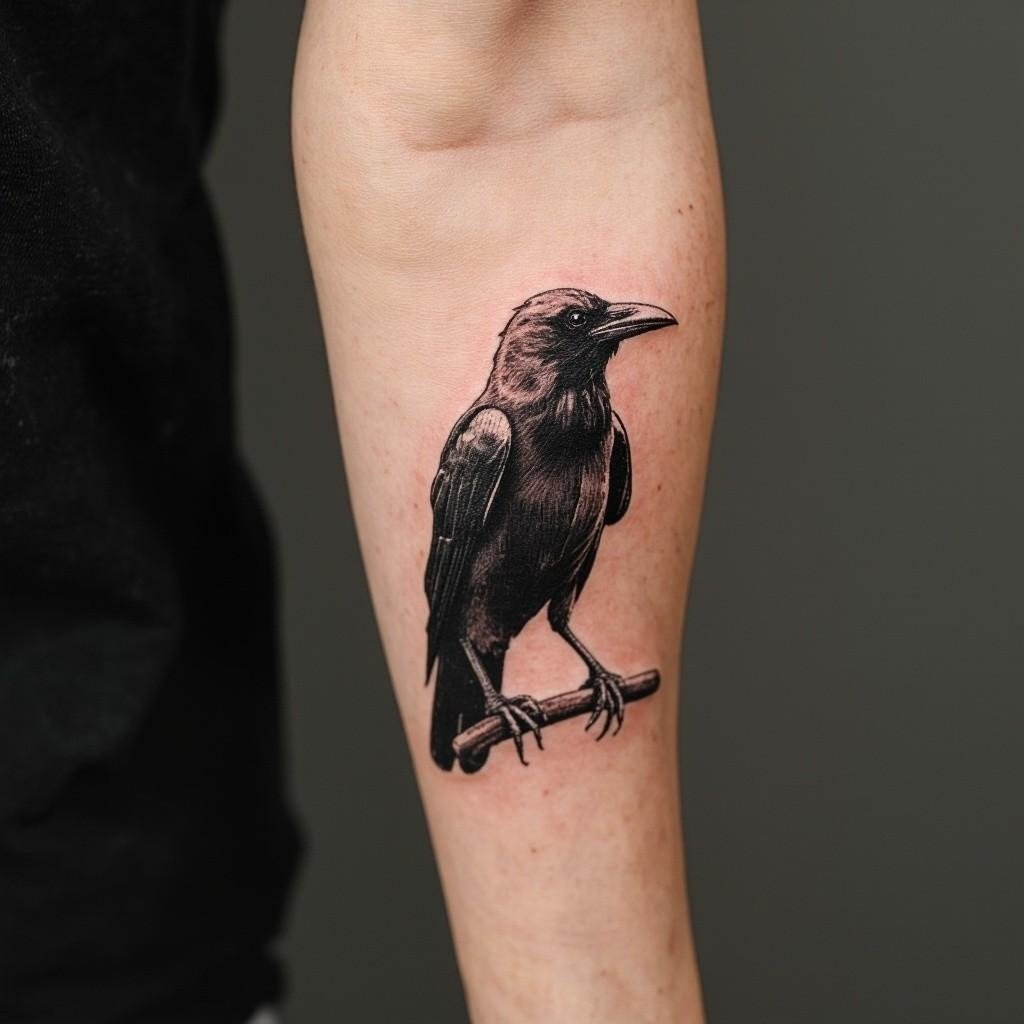
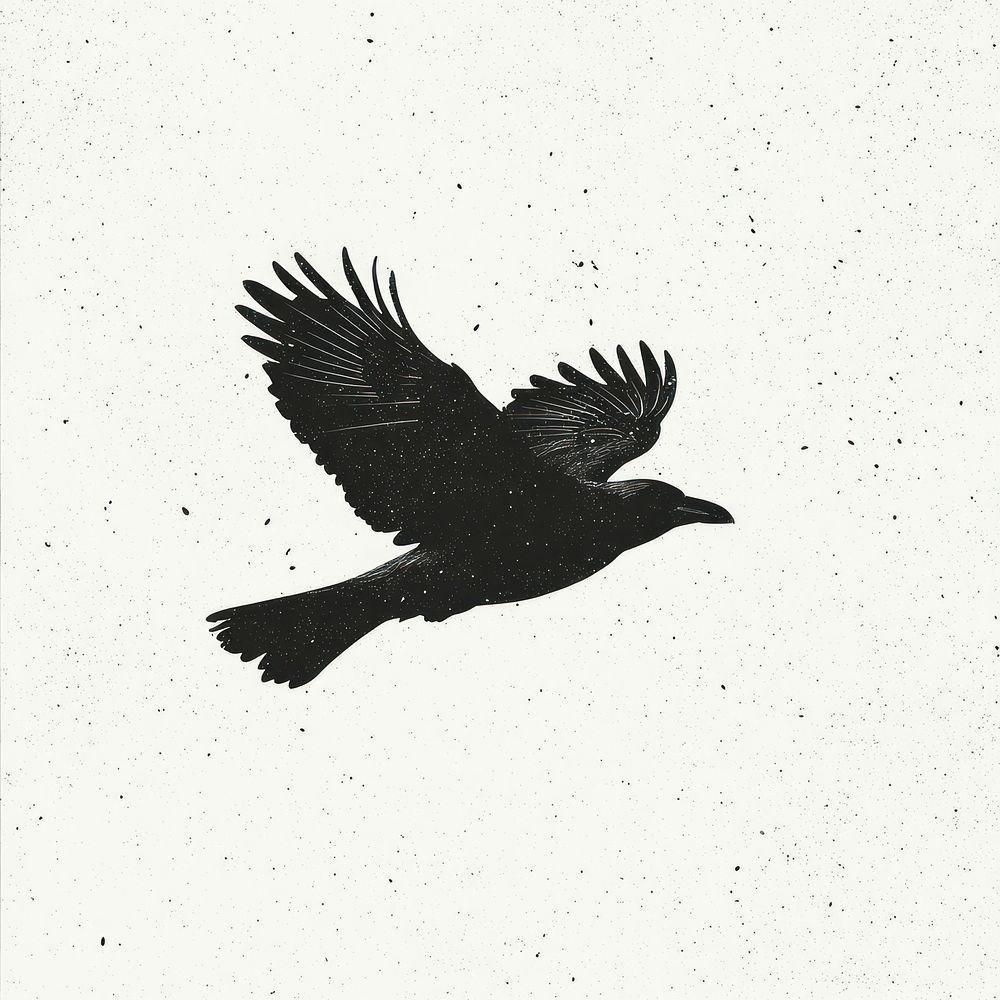
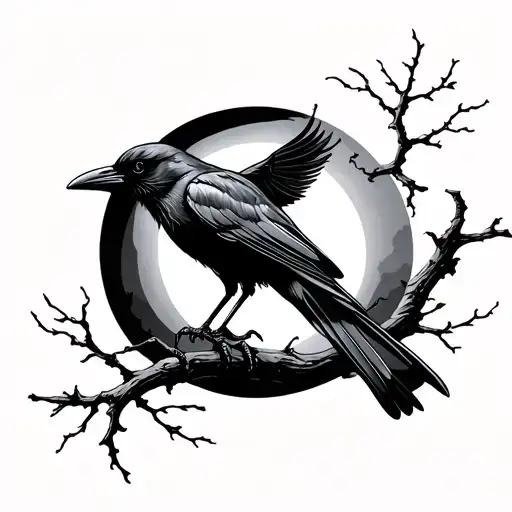
14
A crow tattoo may represent intelligence, independence, remembrance, resilience, mystery, or personal transformation. The meaning depends on the design and the wearer’s intentions.
| Tattoo design | Possible interpretation |
| Flying crow | Freedom, independence, or transition |
| Crow with a moon | Mystery, reflection, or the unknown |
| Crow skull composition | Mortality, impermanence, or confronting fear |
| Two crows | Partnership, connection, or duality |
| Crow on a branch | Patience, observation, or resilience |
| Minimalist crow silhouette | Simplicity, independence, or understated mystery |
These are design interpretations, not fixed cultural definitions. A tattoo may also commemorate a loved one, express an interest in mythology, or simply celebrate a person’s appreciation for birds.
Crow symbolism in branding
Brands can use crow imagery to communicate intelligence, adaptability, boldness, unconventional thinking, or a mysterious identity.
A creative studio might use a crow to suggest observation and originality. A literary publisher might choose one to evoke classic gothic fiction. An outdoor brand might emphasize the bird’s resourcefulness and ability to thrive in different environments.
However, the same image can produce different reactions. Some audiences may associate a crow with intelligence, while others may perceive it as ominous. Effective branding therefore requires understanding the intended audience and the surrounding visual identity.
Using crow imagery in visual communication
When incorporating crow symbolism into a design, consider the following principles:
- Color: Black and white create strong contrast and a dramatic visual effect.
- Composition: An isolated crow can suggest solitude, while a group can communicate community or collective strength.
- Movement: A flying crow may imply change or freedom, whereas a stationary crow can suggest observation.
- Typography: Serif fonts may evoke historical literature, while clean sans-serif typography can produce a contemporary aesthetic.
- Context: The surrounding images, words, and colors determine whether the crow appears threatening, thoughtful, elegant, or hopeful.
Expert Tip: Define the message before choosing the image. If the intended message is wisdom, pair the crow with visual cues that suggest observation or knowledge rather than relying on dark imagery alone.
11. Common Mistakes About Crow Symbolism
Crow symbolism becomes less useful when cultural interpretations are treated as unquestionable facts.
Here are several common misconceptions worth avoiding.
Myth: Crows always represent bad luck.
Fact: Crows can represent intelligence, guidance, adaptability, or sacred knowledge in different stories and traditions.
Myth: Seeing a crow means someone will die.
Fact: No reliable evidence establishes that crow sightings predict death. Their association with mortality comes from cultural beliefs, natural observations, and storytelling.
Myth: Crows and ravens have identical meanings in every tradition.
Fact: The birds are related but distinct. Older stories and modern translations sometimes blur the distinction, so identify the actual bird when possible.
Myth: Every crow encounter is a supernatural message.
Fact: A sighting can be personally meaningful, but crows also behave according to ordinary ecological needs.
Myth: Every Indigenous tradition interprets crows in the same way.
Fact: Indigenous peoples have distinct histories, languages, and traditions. Raven stories, in particular, should not be generalized into a universal crow belief.
The key principle is to distinguish biological facts, documented historical traditions, and personal spiritual interpretations. All three can be discussed meaningfully, but they should not be presented as interchangeable forms of evidence.
12. Practical Applications: How to Use Crow Symbolism in Everyday Life
Crow symbolism can be useful even if you do not believe that animals deliver supernatural messages. Its value often lies in the questions it encourages people to ask.
For personal reflection
Use the crow as a metaphor for adaptability and awareness. When facing a difficult decision, consider whether you are overlooking useful information or relying too heavily on an old assumption.
For writing and storytelling
Give the crow a role that fits the character and the scene. It might be an observer who notices what others miss, a trickster who challenges authority, or a recurring image connected with a character’s grief.
Avoid using a crow merely because it is black and therefore supposedly evil. A more layered portrayal can produce richer storytelling.
For education
Crow symbolism provides an opportunity to connect biology, cultural history, literature, and art. Students can compare the actual behavior of crows with the meanings people assign to them.
For example, a lesson might contrast crow intelligence and social behavior with their portrayal as ominous birds in a literary work. This encourages students to distinguish observation from interpretation.
For cultural research
When studying crow symbolism, identify the source, period, and community behind a particular interpretation. Check whether the original story concerns a crow, a raven, or another bird.
This approach reduces cultural generalizations and makes historical analysis more reliable.
For design and creative projects
Choose a specific meaning before selecting a crow image. If the message is remembrance, use a composition that communicates reflection. If the message is adaptability, consider imagery that conveys movement or environmental change.
In each case, the symbol becomes more effective when its visual treatment supports the intended message.
13. Frequently Asked Questions About Crow Symbolism
1. What does a crow symbolize spiritually?
A crow commonly symbolizes wisdom, awareness, mystery, transformation, and adaptability in modern spiritual interpretations. Some traditions also associate crows with ancestors or divine guidance. These meanings vary by culture and belief system, and seeing a crow does not establish that a supernatural message has been delivered.
2. Are crows a sign of good luck or bad luck?
Crows can be associated with either good or bad luck, depending on the cultural tradition and context. Some folklore portrays them as ominous birds connected with death, while other traditions associate crow-like birds with guidance, intelligence, or sacred knowledge. There is no scientific evidence that seeing a crow determines future luck.
3. What does it mean when a crow visits your home?
A crow visiting your home can be interpreted symbolically as a reminder of awareness, resilience, or protection. In practical terms, crows may visit residential areas in search of food, nesting sites, or safe places to perch. The encounter may have personal meaning, but it is not reliable evidence of an omen.
4. What does a crow symbolize in dreams?
A crow in a dream may represent uncertainty, intelligence, grief, independence, or personal change, depending on the dreamer’s associations and emotions. For a useful personal interpretation, consider what the bird was doing and how you felt during the dream. Dream symbolism is subjective, and no single meaning applies to everyone.
5. What is the difference between crow and raven symbolism?
Crow symbolism often emphasizes intelligence, adaptability, mystery, and mortality. Raven symbolism frequently includes similar themes, along with prominent associations with creation, transformation, and trickster figures in particular mythologies. The two birds are related but distinct, and the meanings of their appearances depend on the specific cultural or literary context.
6. What does a crow symbolize in mythology and literature?
In mythology, crows and related corvids may serve as messengers, tricksters, symbols of divine guidance, or figures connected with knowledge and the natural world. In literature, they often establish an atmosphere of mystery, grief, danger, or intelligence. Their precise meaning depends on the story, its cultural background, and the role the bird plays.
Conclusion: Why the Symbolism of Crows Still Matters
The symbolism of crows reveals how a familiar animal can carry a remarkably complex range of meanings.
Across mythology, folklore, spirituality, literature, and contemporary design, crows have represented intelligence, mystery, mortality, transformation, guidance, and resilience.
Their significance changes across cultures and historical periods.
Norse mythology connects Odin’s ravens with thought and memory, Japanese tradition presents the Yatagarasu as a guide, and Hindu ancestral practices give crows a place in particular ritual contexts. European folklore and modern literature, meanwhile, frequently draw on their association with mystery and death.
Understanding these differences requires more than memorizing symbolic definitions. It involves examining the relationship between natural behavior, human perception, cultural identity, and storytelling.
Crows also offer practical inspiration.
Their adaptability can serve as a metaphor for resilience, their intelligence can encourage thoughtful observation, and their place in literature and art demonstrates how visual symbols communicate complex ideas.
Ultimately, crow symbolism is most meaningful when interpreted with curiosity, cultural awareness, and critical thinking.
hether you encounter a crow in nature, read about one in mythology, or choose one for a tattoo or creative project, the bird can invite reflection without requiring you to treat every encounter as a prediction or supernatural sign.
Key Takeaways
- Crows commonly symbolize intelligence, mystery, transformation, adaptability, and mortality.
- Spiritual interpretations may include guidance, awareness, and ancestral connections, depending on the tradition.
- Crow symbolism varies across cultures and should not be reduced to a single universal meaning.
- Crows and ravens are distinct birds, although their symbolism sometimes overlaps.
- A crow sighting or dream does not reliably predict death, luck, or future events.
- In art, literature, branding, and design, context determines how audiences interpret crow imagery.
- Understanding crow symbolism means distinguishing biological observations, documented cultural beliefs, and personal interpretations.
Semantic Entities, NLP Concepts, and Related Keywords
The following terms identify the main topic clusters and contextual relationships covered in this article. They can help organize related content on a symbolism-focused website.
| Category | Related entities and keywords |
| Primary keyword | symbolism of crows, crow symbolism |
| Core symbolic meanings | crow meaning, crow spiritual meaning, crow wisdom, crow mystery, crow transformation, crow adaptability |
| Spiritual and folkloric topics | crow as a messenger, crow omens, crow ancestors, crow mythology, crow folklore, crow spiritual significance |
| Dream interpretation | crow dream meaning, dreaming of a black crow, crow in dreams |
| Cultural entities | Norse mythology, Odin, Huginn, Muninn, Yatagarasu, Japanese mythology, Chinese mythology, Hindu traditions, Pitru Paksha |
| Related animals | raven symbolism, corvid symbolism, American crow, Common Raven |
| Literature and art | Edgar Allan Poe, The Raven, gothic literature, bird symbolism, visual storytelling, iconography |
| Psychology and semiotics | symbolism, cultural perception, visual communication, associative meaning, color psychology, semiotics |
| Practical applications | crow tattoo meaning, crow logo design, crow imagery in branding, storytelling symbolism, educational applications |
| Related conceptual topics | death symbolism, rebirth symbolism, resilience, intuition, collective intelligence, cultural identity, folklore |
Suggested topic-cluster relationships: Crow symbolism can connect naturally to broader articles about animal symbolism, raven symbolism, black bird symbolism, bird omens, death symbolism, transformation symbolism, spiritual animal meanings, dream symbolism, and bird symbolism in mythology.
For SEO, use these related topics where they genuinely improve the reader’s understanding. No particular keyword arrangement guarantees rankings, and claims of guaranteed first-page placement or AI-undetectability should be avoided. The strongest foundation is accurate, useful content that satisfies the reader’s intent.

Learn about religious symbolism, cultural icons, and historical meanings with William Carter.
