Ivy Symbolism: What Does Ivy Represent?
Ivy symbolism has fascinated people for centuries because this evergreen climbing plant represents qualities that humans continue to value:
loyalty, endurance, connection, and the ability to thrive through changing circumstances.
With its twisting vines and persistent green leaves, ivy appears in ancient mythology, religious art, wedding traditions, literature, architecture, and modern garden design.
Its ability to cling to walls and grow across difficult surfaces has also made it a powerful metaphor for attachment, determination, and lasting relationships.
But ivy does not have just one symbolic meaning. Depending on the culture, historical period, artistic context, or personal experience, it can represent devoted love, friendship, immortality, spiritual perseverance, intellectual achievement, or even excessive attachment.
Understanding these different interpretations helps explain why this modest plant has remained meaningful in human culture.
What Is the Symbolism of Ivy?
Ivy symbolism primarily represents loyalty, enduring love, friendship, resilience, eternity, and spiritual persistence. Because ivy remains green through much of the year and attaches itself firmly to supporting surfaces, it has become a metaphor for relationships that endure, commitment that survives hardship, and personal growth that continues despite obstacles. Its meaning varies across cultural traditions, religious imagery, literature, and individual experiences.
The plant’s symbolism comes partly from its observable characteristics. Its evergreen foliage suggests continuity, while its climbing growth suggests ambition, connection, and perseverance. These natural features have inspired generations of storytellers, artists, poets, and gardeners to use ivy as a visual expression of ideas that are difficult to communicate through words alone.
Ivy can therefore be understood through three interconnected dimensions:
- Natural symbolism: Evergreen leaves and persistent growth suggest endurance and renewal.
- Cultural symbolism: Historical traditions associate ivy with love, fidelity, celebration, and intellectual achievement.
- Personal symbolism: People may interpret ivy as a reminder of a lasting relationship, a difficult period overcome, or the importance of remaining connected to others.
These meanings are interpretations rather than universal rules. Ivy can symbolize strength in one setting and unhealthy attachment in another.
1. The Main Symbolic Meanings of Ivy
Ivy is a versatile symbol because its physical form supports several different interpretations. The same plant that represents lasting devotion can also suggest persistence, ambition, or dependence on something stronger than itself.
Loyalty and fidelity
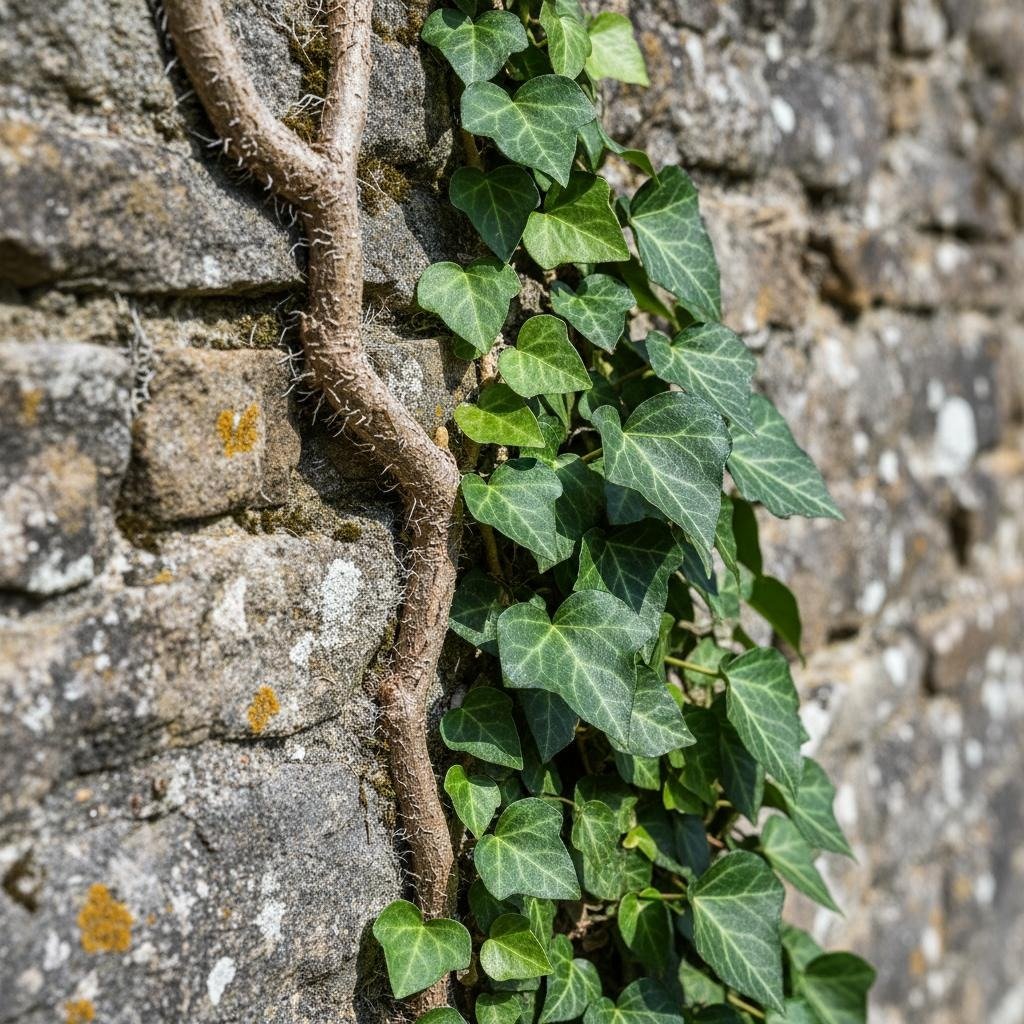
Ivy’s enduring growth makes it a natural metaphor for steadfast affection and commitment. In symbolic art, ivy can suggest a relationship that continues through changing circumstances.
Love and friendship
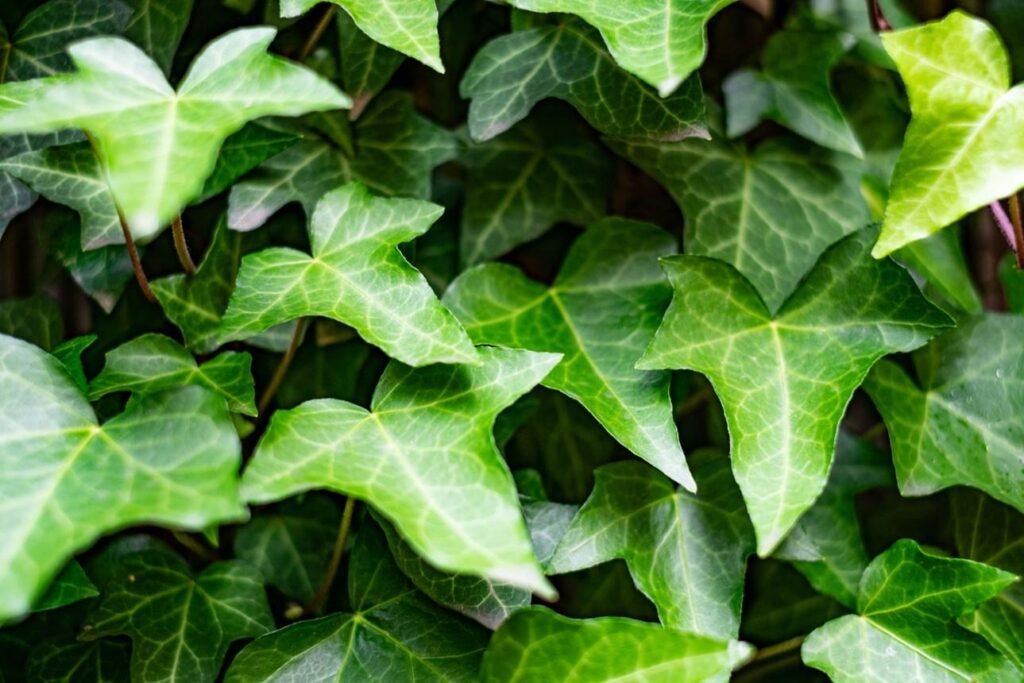
Intertwining vines evoke closeness, shared experiences, and emotional bonds. Ivy can therefore appear in romantic designs, friendship gifts, and wedding decorations.

Resilience and perseverance
Ivy grows in varied environments and can climb over stone, wood, and other surfaces. Symbolically, it represents patience, adaptability, and the determination to keep growing.
Eternity and renewal
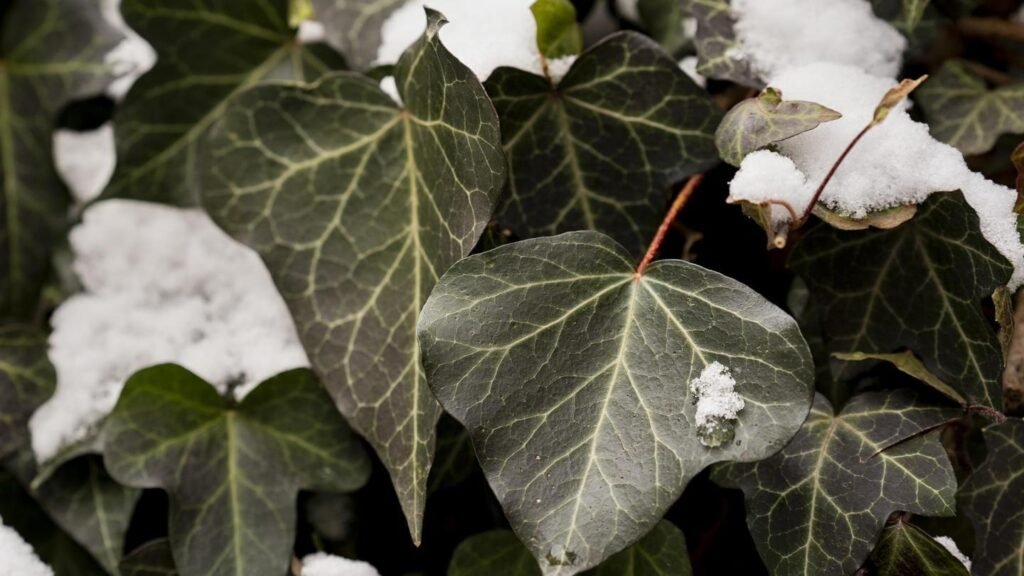
Because common ivy is evergreen, its foliage can represent continuity and the persistence of life. In poetry and decorative art, this quality can suggest enduring memory or hope beyond difficult seasons.
Growth, ambition, and connection
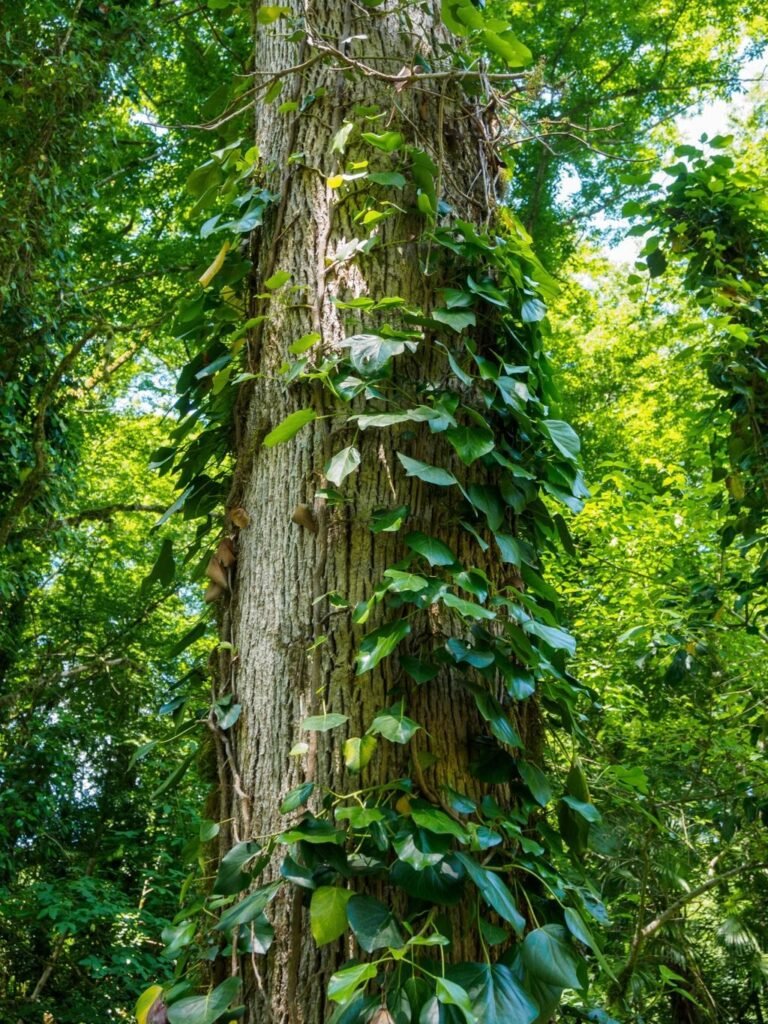
Ivy’s upward movement can symbolize personal development, aspiration, and the support systems that help people progress. Its dependence on a surface for climbing can also invite reflection on healthy and unhealthy attachment.
These meanings overlap, but context determines which interpretation is most appropriate. Ivy on a wedding invitation communicates something different from ivy covering a neglected building in a novel.
2. Historical Origins of Ivy Symbolism
Ivy symbolism developed through the close relationship between people and the natural world. Before modern visual communication, plants frequently served as recognizable signs in religious ceremonies, seasonal celebrations, decorative objects, and stories.
Ancient Greek symbolism and Dionysus
In ancient Greek culture, ivy was closely associated with Dionysus (also known as Bacchus in Roman tradition), a deity connected with wine, celebration, theatre, and ecstatic religious experience.
Ivy appeared in Dionysian imagery, including wreaths and the thyrsus, a ceremonial staff associated with the god. The Archaeological Park of Livithra, a Greek cultural heritage site, describes ivy as part of this visual tradition and notes its appearance in ancient decorative art.
Archaeological Park of Livithra
+1
This association gave ivy meanings beyond simple plant growth. It could evoke celebration, vitality, divine presence, and the mysterious relationship between nature and human experience.
Ivy’s evergreen character also made it a fitting image of continuing life. Its appearance in ancient Greek and Roman contexts contributed to its later interpretation as a symbol of endurance and immortality, although these meanings were not identical in every setting.
CAMWS
+1
Roman traditions and classical art
Roman culture inherited and adapted many Greek artistic and religious traditions. Bacchic imagery, plant wreaths, and decorative foliage helped carry ivy into visual representations of celebration and cultivated life.
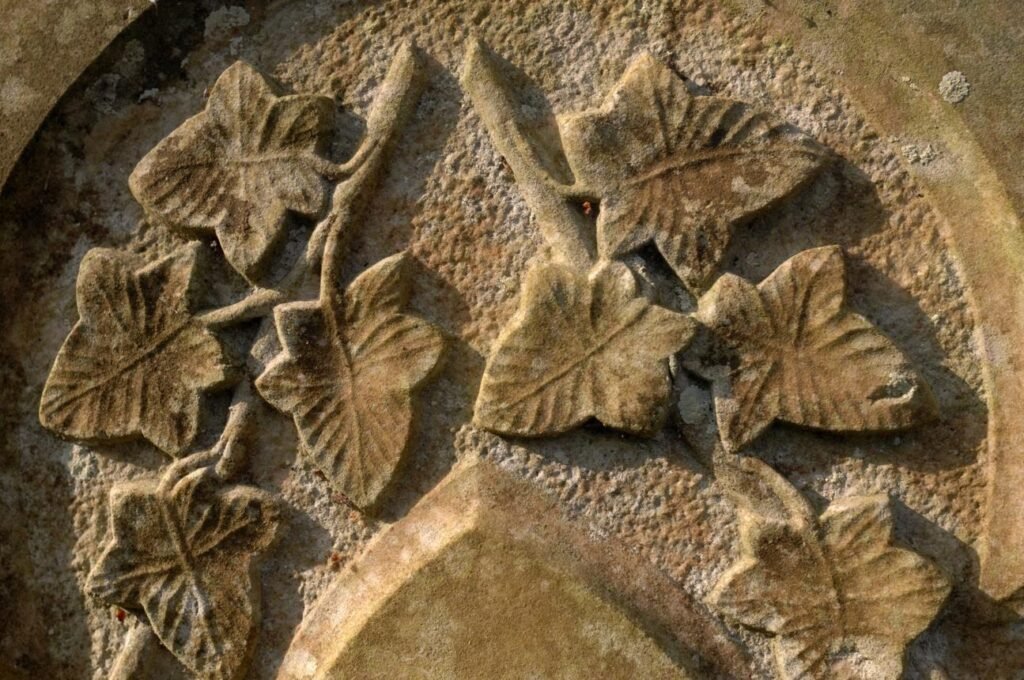
Ivy also became part of ornamental design. Its twisting stems and distinctive leaves were suitable for carved surfaces, pottery, mosaics, and architectural decoration. Such motifs allowed artists to connect buildings and objects with nature, vitality, and classical cultural identity.
It is important not to assume that every ancient ivy design had a fixed religious meaning. Sometimes ivy was symbolic; in other cases, it served as an attractive botanical ornament.
Ivy in medieval and later European traditions
In later European history, evergreen plants acquired associations with seasonal continuity and life during winter. Ivy became familiar in Christmas decorations, often appearing alongside holly and other greenery. The Royal Botanic Gardens, Kew, identifies ivy as a traditional Christmas plant.
Kew
Its continued presence in decorative traditions helped preserve the idea of evergreen foliage as a sign of persistence, even when its earlier classical associations were less prominent.
Over time, ivy also became a popular motif in poetry, romantic imagery, garden design, and memorial decoration. Its meaning expanded through repeated use rather than through a single origin story.
3. Ivy Symbolism in Different Cultures and Traditions
Ivy symbolism is not universal. The meanings associated with ivy in one historical tradition should not automatically be attributed to every culture or belief system.
| Cultural or historical context | Common interpretation | Important qualification |
| Ancient Greece | Dionysus, celebration, vitality, religious ritual | Meaning depends on the specific ritual or artwork. |
| Ancient Rome | Festivity, classical ornament, continuity | Decorative ivy does not always indicate a religious message. |
| European seasonal traditions | Evergreen life, winter greenery, renewal | Customs vary by region and period. |
| Romantic and decorative art | Love, attachment, fidelity, enduring bonds | These meanings depend on artistic convention and context. |
| Academic institutions | Learning, achievement, institutional identity | Ivy’s association with education is especially strong in particular American institutions. |
| Modern personal symbolism | Resilience, growth, belonging, memory | Individual experiences can produce different interpretations. |
Ivy and enduring love
In European romantic imagery, ivy has often been used to evoke lasting attachment. Its tendency to cling and intertwine provides an easily understood visual metaphor for two lives becoming connected.
However, the idea that ivy universally represents marital fidelity should be treated as a symbolic convention rather than a rule shared by every culture. The same visual characteristic can be interpreted as affection, dependency, or persistence.
Ivy and seasonal celebrations
Evergreen plants are often especially noticeable in winter, when many other plants lose their leaves. Ivy’s continued foliage helps explain its place in seasonal decoration.
In Christmas wreaths and other greenery arrangements, ivy may contribute a sense of continuity, life, and hope. These interpretations arise from broader seasonal traditions, not from a single universal religious doctrine.
Ivy and academic identity
One of ivy’s most recognizable modern associations comes from the term Ivy League, which refers to a group of eight universities in the northeastern United States.
The name has become strongly connected with academic prestige, tradition, achievement, and institutional heritage. Yet this is a modern cultural association rather than the original meaning of ivy in classical mythology.
The distinction illustrates how symbolism evolves: a plant associated with nature and classical art can acquire a new meaning through education, institutions, architecture, and popular culture.
4. Spiritual Meaning of Ivy
Spiritually, ivy is often interpreted as a symbol of persistence, connection, renewal, and the search for lasting meaning. These interpretations draw on the plant’s evergreen leaves and climbing habit rather than on a universally accepted spiritual doctrine.
Ivy as a symbol of eternal life
Evergreen foliage can suggest that life continues even when circumstances change. In a spiritual or reflective context, ivy may represent the enduring influence of love, memory, faith, or personal values.
For some people, ivy-covered stonework evokes the passage of time: buildings age, people change, and circumstances shift, yet living growth continues.
This is a meaningful metaphor, but it should not be confused with scientific evidence for an afterlife or with a belief shared by every religion.
Ivy and spiritual resilience
Ivy can also symbolize the ability to remain committed to a personal path during difficult periods.
Its gradual growth offers a useful analogy for spiritual development. Rather than suggesting sudden transformation, ivy represents progress built through time, adaptation, and repeated effort.
Someone who uses ivy as a personal spiritual emblem might associate it with:
- Staying grounded during uncertainty.
- Maintaining hope through change.
- Preserving meaningful relationships.
- Growing patiently rather than seeking immediate results.
- Finding support without losing personal identity.
Ivy and interconnectedness
The intertwining appearance of ivy can represent the connections between individuals, families, communities, and the natural world.
This interpretation fits contemporary discussions of belonging and ecological awareness. Nevertheless, ivy’s physical attachment should not be treated as proof of a supernatural message or as evidence that a particular event is destined to occur.
Expert tip: When interpreting ivy spiritually, consider what it means in your own setting. Ivy growing around a family home might evoke continuity and belonging, while ivy on an abandoned building might suggest memory, change, or the passage of time.
5. Ivy Symbolism in Christianity and Religion
Ivy appears in some Christian decorative and seasonal contexts, but its meaning is not fixed throughout Christianity, and it is not a universal central symbol of Christian doctrine.
Its evergreen leaves can be used to evoke continuing life, hope, or constancy. In church decorations and seasonal arrangements, ivy may contribute to broader themes of endurance and renewal.
It is important to distinguish these associations from more established Christian symbols, such as the cross. Ivy’s interpretation often depends on the particular artwork, local custom, or surrounding imagery.
Ivy and religious art
In religious architecture and decorative art, foliage can serve several purposes. It may frame a sacred scene, soften a geometric design, evoke the created world, or carry a secondary symbolic meaning.
Ivy can therefore function as:
- A decorative border around an image or inscription.
- A reference to evergreen life and continuity.
- A visual element connecting a building with the natural world.
- A motif whose meaning depends on neighboring symbols.
Ivy and memorials
Ivy growing across an old grave, monument, or memorial can evoke remembrance and the endurance of affection. The effect comes partly from the contrast between aging stone and living foliage.
Such imagery can be moving without implying a single prescribed religious belief. A viewer might see it as a sign of enduring love, while another might focus on nature reclaiming human structures.
6. Psychological Meaning of Ivy
From a psychological perspective, ivy can serve as a visual metaphor for attachment, perseverance, security, and growth. These interpretations are best understood as ways people use images to communicate meaning, not as scientifically established personality tests.
Ivy and attachment
Because ivy holds firmly to a supporting surface, it can represent the human desire for security and belonging.
In a positive interpretation, attachment means mutual care, trust, and dependable support. In a more critical interpretation, ivy can suggest dependence that becomes restrictive.
The distinction matters. A healthy relationship provides support while allowing both people to grow; an unhealthy one may limit independence.
Ivy and resilience
Ivy’s ability to grow across different surfaces makes it a useful image for adaptation. In personal writing, artwork, or reflection, it can represent a person’s ability to respond to setbacks without abandoning long-term goals.
The metaphor is especially useful because it emphasizes gradual persistence rather than dramatic victory.
Ivy and memory
Plants frequently acquire personal meaning through association. Ivy planted in a family garden, seen on an old school building, or included in a wedding bouquet may become linked to particular people and experiences.
This personal meaning can be stronger than any general cultural definition. Symbolic interpretation is shaped not only by the image itself but also by memory, social context, and lived experience.
7. Ivy Symbolism in Literature, Poetry, and Mythology
Writers use ivy because its physical characteristics can express complicated emotional and philosophical ideas. A single image of a vine climbing a wall may communicate devotion, the passage of time, the persistence of memory, or a relationship that has become difficult to escape.
Ivy as a literary symbol of love
In romantic writing, ivy can suggest affection that survives distance, time, or hardship. Its intertwining stems provide a visual analogy for emotional closeness.
For example, a poet might describe ivy growing around an old doorway to suggest that love remains part of a place long after the people who once lived there have departed.
The plant becomes more than scenery: it helps communicate the emotional history of the setting.
Ivy as a symbol of time and memory
Ivy frequently suits stories involving abandoned houses, ruins, old gardens, and historic buildings. Its growth can suggest the passage of years and the persistence of the natural world.
A novelist might use ivy-covered walls to create an atmosphere of mystery, nostalgia, or forgotten history. The meaning depends on the surrounding narrative, rather than on the plant alone.
Ivy as a symbol of dependence
The same climbing habit that makes ivy an image of devotion can also represent an attachment that has become excessive.
In a darker story, ivy covering a window might symbolize a character’s inability to escape the past. A vine wrapping around another plant could evoke a relationship that appears loving but has become controlling.
This dual meaning gives ivy considerable literary flexibility.
Ivy in mythology
Ivy’s historical connection with Dionysus makes it particularly relevant to classical mythology. In this setting, it may evoke divine celebration, the natural world, ritual, and experiences that challenge ordinary social boundaries.
The connection between ivy and Dionysus is supported by historical and archaeological discussions of ancient Greek religious imagery.
Archaeological Park of Livithra
+1
Did you know? Ivy and grapevines can both appear in Dionysian imagery. Their association with the same deity does not mean they carry identical meanings in every artwork or ritual.
8. Ivy in Art, Architecture, and Visual Communication
Ivy’s distinctive leaves and winding stems make it an effective visual motif. Designers can use it to communicate an idea without writing an explanatory sentence.
In semiotics—the study of signs and how they create meaning—ivy can function as a sign whose interpretation depends on both its physical appearance and the cultural context in which it is presented.
Ivy in architecture


9
Ivy appears in historic building facades, garden walls, decorative carvings, and architectural photography.
Its visual associations include:
- Heritage: Ivy on an old building can suggest history and continuity.
- Natural beauty: Green foliage softens hard architectural lines.
- Romantic atmosphere: Ivy-covered walls can evoke mystery, nostalgia, or intimacy.
- Institutional tradition: Ivy-clad academic buildings often communicate a sense of age and prestige.
These are common visual associations, not guaranteed interpretations. Ivy may simply be a plant growing on a wall, and it can sometimes damage buildings or obscure their original features.
Ivy in painting and illustration
Artists can use ivy to frame a central subject, guide the viewer’s eye, or create contrast between organic and geometric forms.
For example, ivy surrounding a portrait may suggest an enduring connection with the past. In a fantasy illustration, the same plant might imply that a forgotten place is being reclaimed by nature.
The shape of the leaves also lends itself to decorative borders, botanical prints, book covers, and repeating patterns.
Ivy in branding and graphic design
Brands may use ivy-inspired imagery to communicate tradition, environmental awareness, craftsmanship, growth, or enduring quality.
| Design context | Possible message conveyed by ivy |
| Educational branding | Knowledge, achievement, tradition |
| Wedding stationery | Commitment, connection, enduring affection |
| Botanical businesses | Nature, greenery, organic growth |
| Heritage organizations | History, continuity, preservation |
| Literary publications | Memory, mystery, romance |
| Wellness or reflective journals | Personal growth, resilience, connection |
Expert tip: Use ivy when its meaning supports the brand’s actual identity. A heritage institution may benefit from its traditional associations, whereas a modern technology brand may need a more contemporary treatment to avoid appearing old-fashioned.
9. Ivy Symbolism in Tattoos, Jewelry, and Personal Gifts
Ivy is popular in decorative personal imagery because it can communicate a lasting connection without relying on words.
Ivy tattoo meaning
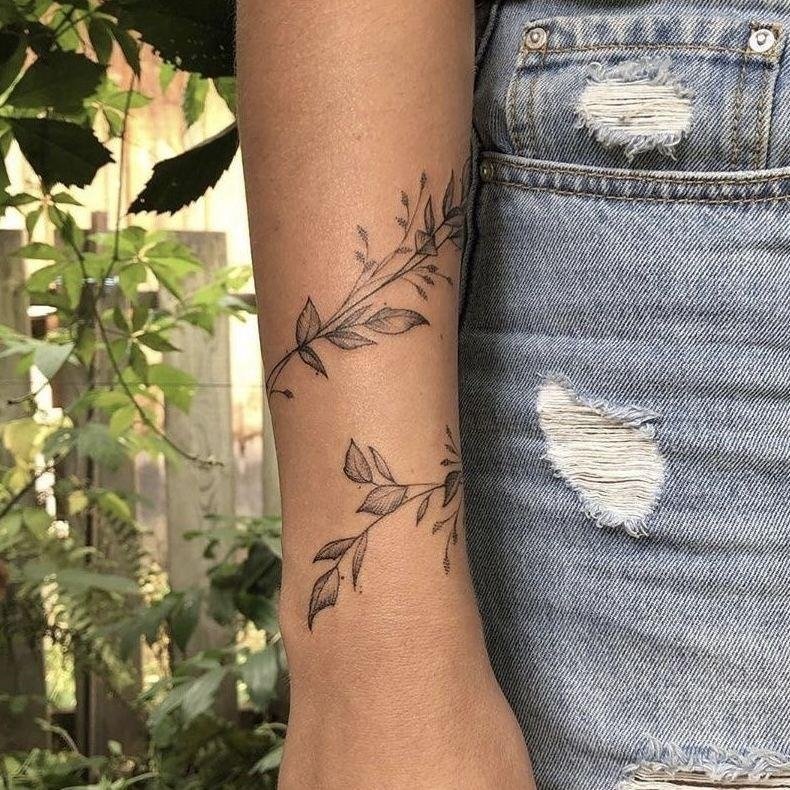
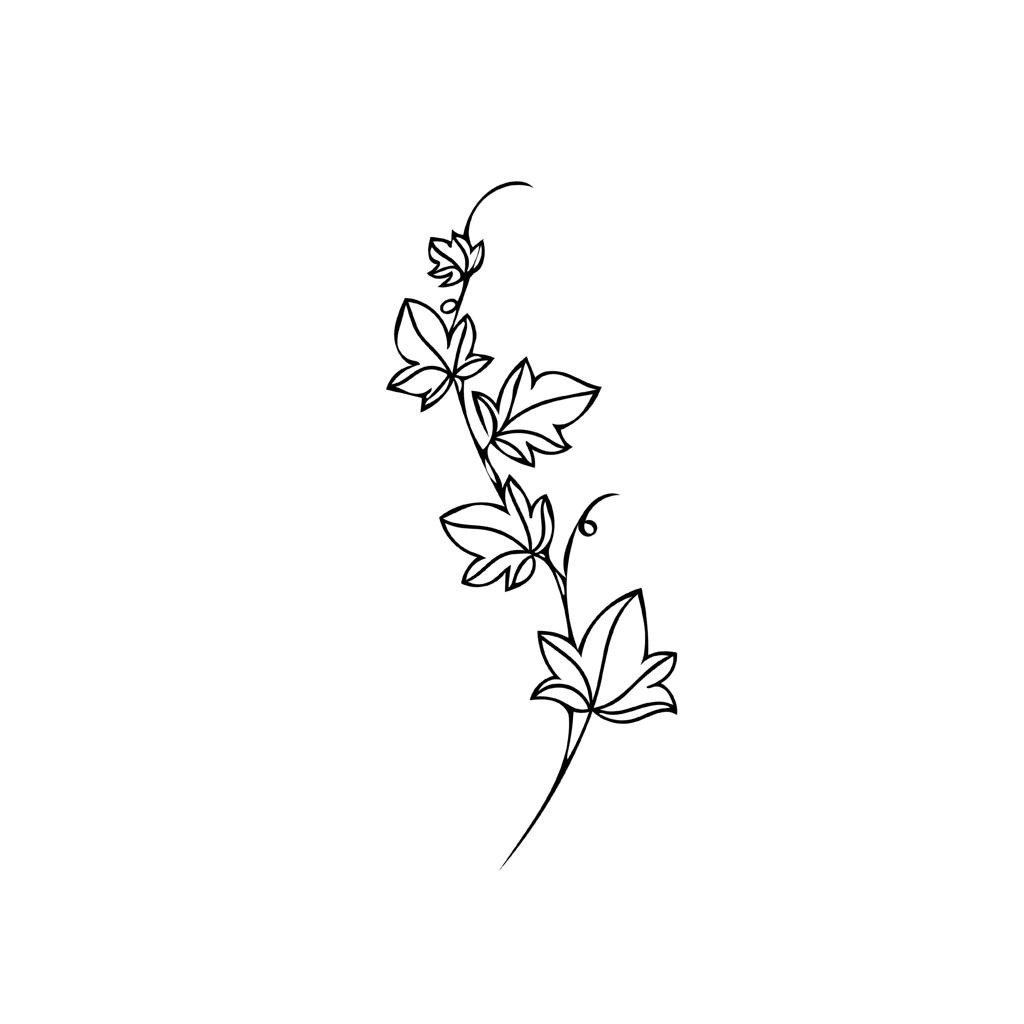
An ivy tattoo can represent loyalty, personal resilience, family bonds, enduring love, or a connection with nature. The interpretation depends on the wearer’s intentions and the other elements in the design.
12
Common design interpretations include:
- Ivy around the wrist: An ongoing commitment or meaningful personal bond.
- Ivy climbing the arm: Growth, determination, and moving forward.
- Ivy intertwined with another plant: Connection between two people or different aspects of identity.
- Ivy with a date or initials: A memorial to a person or an important event.
- Minimalist ivy leaves: A subtle reminder of resilience or the natural world.
These meanings are personal conventions rather than standardized tattoo definitions.
Ivy in jewelry
Ivy-inspired pendants, bracelets, and engraved ornaments can symbolize lasting affection or connection. They may be given as anniversary presents, friendship gifts, or reminders of a meaningful relationship.
The symbolism is strongest when the giver explains why the plant was chosen. A gift becomes more meaningful when its imagery is connected to a shared experience.
Ivy at weddings
Ivy can be incorporated into bouquets, table arrangements, garlands, and invitation designs to evoke enduring love and interconnected lives.
However, its presence does not have a universal ceremonial meaning. In many modern weddings, ivy is selected primarily for its appearance and ability to complement flowers.
10. Ivy Symbolism in Dreams
Some people interpret plants in dreams as reflections of emotions, memories, or personal concerns. Ivy may be understood through its associations with attachment, growth, persistence, and relationships.
There is no reliable scientific basis for claiming that ivy has one universal dream meaning or that seeing it predicts a specific future event.
Possible personal interpretations include:
| Dream image | A possible reflective interpretation |
| Healthy green ivy | Growth, continuity, or a valued relationship |
| Ivy climbing a wall | Ambition, persistence, or gradual progress |
| Ivy covering a doorway | Feeling restricted or reflecting on a difficult transition |
| Ivy intertwined with flowers | Connection, affection, or shared growth |
| Dead or damaged ivy | Change, loss, or a relationship requiring attention |
| Ivy growing around an old house | Memory, family history, or attachment to the past |
These interpretations are prompts for reflection, not diagnostic conclusions.
If ivy appears in a dream, consider the emotional atmosphere, the people involved, and the associations the plant holds for you. A comforting dream about ivy may mean something quite different from a frightening one.
11. Ivy Leaf Shape and Color Symbolism
Ivy’s appearance can affect the way it is interpreted in art and design. Color associations, in particular, depend on cultural conventions and the surrounding visual elements.
Green ivy
Often associated with life, renewal, stability, nature, and persistence. Green foliage is the most familiar visual form of ivy and supports its symbolism of continuing growth.
Golden or yellow-variegated ivy
In decorative contexts, yellow and gold tones may suggest warmth, brightness, or refinement. These associations come from broader color conventions rather than from a fixed ivy tradition.
Dark ivy imagery
Dark lighting and heavy foliage can create an impression of mystery, secrecy, age, or confinement. Here, the atmosphere created by the artwork is as important as the plant itself.
Leaf shape can contribute meaning too. Intertwined vines emphasize connection, upward-growing stems suggest ambition, and ivy spreading across a surface can evoke persistence or the passage of time.
These interpretations are especially useful in visual storytelling, but they should not be mistaken for universal psychological laws.
12. Positive and Negative Meanings of Ivy
Ivy symbolism becomes more nuanced when its benefits and potential drawbacks are considered together.
| Positive interpretation | Contrasting interpretation |
| Loyalty and devotion | Excessive attachment |
| Enduring love | Difficulty letting go |
| Resilience | Stubbornness |
| Growth and ambition | Uncontrolled expansion |
| Connection and belonging | Loss of independence |
| Heritage and continuity | Being trapped in the past |
| Persistence through hardship | Refusal to adapt or change direction |
This contrast is one of ivy’s most interesting symbolic qualities. Its ability to hold firmly to a surface can represent reliable commitment, but it can also suggest an attachment that has become restrictive.
The plant itself is neither morally good nor bad. Its symbolism emerges from the way people interpret its behavior in a particular setting.
Myth vs. fact
Myth: Ivy always symbolizes eternal love.
Fact: Ivy is frequently associated with enduring love and fidelity, but its meaning varies by cultural tradition, artwork, and personal context.
Myth: Ivy has one universal spiritual meaning.
Fact: Spiritual interpretations differ, and some uses of ivy are primarily decorative.
Myth: Ivy climbing a wall is always a sign of destruction.
Fact: Ivy’s ecological and structural effects depend on the plant species, the host, and the conditions. English ivy is not parasitic, although dense growth can harm trees and may damage vulnerable structures.
Kew
+1
13. Practical Applications of Ivy Symbolism Today
Ivy symbolism remains useful because it connects familiar natural imagery with ideas that matter in everyday life.
In education
Ivy’s association with academic tradition makes it useful in discussions of educational identity and institutional heritage. The term Ivy League is a particularly recognizable example of how a plant name becomes linked to social and cultural prestige.
In storytelling and media
Writers, filmmakers, and illustrators can use ivy to establish a setting or communicate a theme quickly. Ivy-covered ruins may suggest the passage of time, while a climbing vine can visually reinforce a character’s ambition or persistence.
In interior design
Ivy-inspired prints, botanical illustrations, and decorative patterns can introduce a sense of nature, continuity, and traditional elegance.
Designers should also distinguish artificial ivy motifs from living plants. English ivy can spread aggressively outdoors in some regions, and its leaves and berries can be toxic if ingested.
North Carolina Extension Gardener Plant Toolbox
+1
In personal reflection
Ivy can serve as a reminder to consider what deserves long-term commitment and what needs to change.
For example, someone might use ivy in a journal illustration to represent a relationship that has supported their growth. Another person might use the same image to reflect on the importance of maintaining independence.
In gifts and commemorations
Ivy motifs can personalize memorial cards, anniversary gifts, family keepsakes, and friendship tokens. Their symbolism is most effective when it reflects the recipient’s values or the relationship being celebrated.
14. Common Mistakes When Interpreting Ivy Symbolism
Understanding ivy requires attention to context. Several common mistakes can lead to oversimplified or inaccurate interpretations.
- Assuming every ivy image means love: Ivy can symbolize history, growth, celebration, or attachment, depending on the context.
- Treating modern meanings as ancient beliefs: The association between ivy and academic prestige is distinct from its ancient Greek religious associations.
- Confusing folklore with scientific evidence: Symbolic interpretations can be culturally meaningful without being scientifically verifiable.
- Ignoring the surrounding imagery: Ivy beside a wedding ring may suggest commitment, while ivy covering a ruined building may emphasize time and change.
-
Assuming all ivy species are identical: The word ivy refers to several plants, and Boston ivy is botanically distinct from common English ivy.
Home & Garden Information Center
+1
The most reliable approach is to ask three questions: What kind of ivy is shown? Where does the image appear? What message does the surrounding context communicate?
15. Key Insights: What Ivy Teaches Us About Symbolism
Ivy demonstrates how ordinary natural objects can acquire complex meanings through observation, tradition, and repeated use.
Its evergreen foliage makes it an effective symbol of continuity. Its climbing habit lends itself to interpretations of ambition, persistence, and connection. Its association with classical mythology links it to ancient religious and artistic traditions, while its modern association with academic institutions shows how symbolism changes over time.
Most importantly, ivy illustrates that symbols can contain opposing meanings. Connection can become dependence, persistence can become stubbornness, and tradition can provide either stability or resistance to change.
Recognizing these contrasts makes symbolic interpretation more thoughtful and useful. Rather than memorizing a single definition, readers can examine how the plant’s natural qualities, cultural history, and visual setting work together.
Conclusion: Why Ivy Symbolism Still Matters
Ivy symbolism remains relevant because it expresses enduring human concerns through a familiar natural image.
Its strongest associations include loyalty, lasting love, friendship, resilience, renewal, and interconnectedness.
Historical connections with Dionysus, seasonal greenery, romantic art, and academic identity have expanded its meanings across centuries.
Today, ivy continues to appear in literature, tattoos, wedding decorations, architecture, branding, education, and personal gifts.
In each setting, its meaning depends on the message being communicated and the experiences of the people interpreting it.
Ivy can represent the strength of a lasting bond, the patience required for personal growth, or the difficulty of releasing an attachment.
Understanding these possibilities helps readers interpret visual symbols more accurately and use them more intentionally in creative work and everyday communication.
Ultimately, ivy reminds us that growth and connection are powerful, but their value depends on how they shape the lives they touch.
Frequently Asked Questions About Ivy Symbolism
1. What does ivy symbolize spiritually?
Ivy is often interpreted spiritually as a symbol of endurance, eternal life, connection, hope, and personal growth. Its evergreen leaves suggest continuity, while its climbing habit can represent perseverance. These meanings are interpretive traditions rather than universal religious teachings.
2. Does ivy symbolize love and loyalty?
Yes. Ivy is commonly used as a symbol of enduring love, fidelity, friendship, and commitment. Its intertwining vines and persistent attachment provide visual metaphors for lasting relationships. However, its meaning varies with cultural and artistic context.
3. What does ivy symbolize in ancient Greek mythology?
In ancient Greek tradition, ivy was associated with Dionysus, the god connected with wine, festivity, theatre, and ecstatic religious experience. Ivy appeared in Dionysian wreaths and ceremonial imagery and became associated with celebration, vitality, and the natural world.
Archaeological Park of Livithra
+1
4. What does an ivy tattoo mean?
An ivy tattoo may represent loyalty, resilience, enduring love, family connection, personal growth, or remembrance. The design can change the interpretation: climbing ivy may suggest perseverance, while intertwined vines may symbolize a close relationship. The meaning ultimately depends on the wearer’s personal intention.
5. What does ivy symbolize in literature?
In literature, ivy can represent enduring affection, memory, persistence, the passage of time, or excessive attachment. Ivy covering an old building may suggest history and nostalgia, while vines surrounding a character or doorway may symbolize an attachment that is difficult to escape.
6. Is ivy a symbol of eternity?
Ivy can symbolize eternity or immortality because common ivy remains evergreen and continues growing across seasons. This association appears in historical and artistic interpretations, particularly in classical contexts. It is a metaphor for continuity rather than a literal claim about eternal life.
Key Takeaways
- Loyalty: Ivy commonly represents fidelity, devotion, and enduring relationships.
- Resilience: Its persistent growth suggests determination and adaptability.
- Eternity: Evergreen foliage evokes continuity and renewal.
- Spirituality: Ivy may represent hope, interconnectedness, and lasting values.
- History: Ancient Greek associations with Dionysus helped shape its cultural significance.
- Education: The Ivy League gives ivy a recognizable modern association with academic tradition and prestige.
- Art and literature: Ivy can communicate love, memory, heritage, mystery, or excessive attachment.
- Context matters: Ivy’s meaning depends on its cultural setting, visual presentation, and personal significance.
Semantic SEO, NLP Entities, and Topical Relationships
The following related terms and entities naturally support the article’s topical coverage and provide useful directions for related content on a symbolism-focused website.
| Category | Related entities and concepts |
| Primary keyword | Ivy symbolism |
| Core semantic keywords | Ivy meaning, ivy plant symbolism, spiritual meaning of ivy, ivy flower meaning, ivy vine symbolism |
| Emotional concepts | Loyalty, fidelity, enduring love, friendship, attachment, remembrance |
| Natural concepts | Evergreen foliage, climbing vines, resilience, renewal, growth, interconnectedness |
| Historical entities | Dionysus, Bacchus, ancient Greek mythology, Roman art |
| Religious concepts | Christian decorative traditions, seasonal greenery, continuity, hope, memorial symbolism |
| Academic concepts | Ivy League, academic heritage, institutional identity, educational prestige |
| Art and communication | Semiotics, iconography, visual communication, literary symbolism, architectural ornament |
| Modern applications | Ivy tattoos, wedding decorations, branding, jewelry, botanical design, dream interpretation |
| Botanical entities | Hedera helix, evergreen vines, aerial rootlets, ivy leaves |
| Related topic clusters | Plant symbolism, evergreen symbolism, vine symbolism, loyalty symbolism, love symbolism, resilience symbolism, nature symbolism |
Suggested related articles for your symbolism topic cluster:
- Evergreen Tree Symbolism
- Vine Symbolism
- Oak Tree Symbolism
- Laurel Wreath Symbolism
- Ivy Tattoo Meaning
- Green Color Symbolism
- Rose Symbolism
- Symbolism of Eternal Love
These topics can support internal linking between related articles when the links are genuinely useful to readers.
Editorial accuracy note: This article distinguishes historical associations, cultural traditions, and personal interpretations. It is written with SEO readability and semantic coverage in mind, but no article can guarantee a particular search ranking or AI-search visibility.

Explore folklore, anthropology, and global symbolism with Noah Whitmore’s research-based articles.
