
Saturn Symbolism: What Does Saturn Represent?
Saturn symbolism connects one of the most recognizable planets in the night sky with some of life’s most enduring themes:
time, discipline, responsibility, limitations, maturity, and wisdom.
Across ancient mythology, astrology, philosophy, and modern culture, Saturn has represented the forces that shape human experience through patience, consequences, and the gradual process of growth.
Its distant appearance, slow orbit around the Sun, and association with the Roman god Saturn have made it a compelling symbol of order, endurance, and the passage of time.
Yet Saturn is not simply a symbol of hardship or restriction.
It can also represent achievement earned through effort, stability built through commitment, and wisdom developed through experience.
In astrology, Saturn is often associated with lessons and responsibilities; in Roman mythology, it is connected with agriculture and an idealized age of prosperity; and in astronomy, its magnificent rings have inspired centuries of observation and wonder.
Understanding Saturn symbolism means exploring how a real celestial body became a powerful cultural image and why its meanings continue to influence spiritual practices, storytelling, art, psychology, and everyday language.
What Is the Symbolism of Saturn?
Saturn symbolism primarily represents time, discipline, responsibility, structure, boundaries, karma, maturity, and wisdom. In Roman mythology, Saturn was associated with agriculture and an idealized golden age. In astrology, the planet traditionally symbolizes limits, commitment, and long-term growth. Its meaning varies by historical tradition, spiritual belief, and cultural context.
Saturn’s symbolism can be understood through three related perspectives:
- Mythological Saturn: The Roman deity associated with agriculture, sowing, and the Saturnalia festival.
- Astrological Saturn: A traditional symbol of discipline, responsibility, limitations, patience, and the consequences of actions.
- Astronomical Saturn: A real gas giant whose rings, slow orbital movement, and great distance from the Sun have inspired symbolic interpretations of time, order, and mystery.
These perspectives overlap, but they are not interchangeable. Astronomy describes Saturn through scientific observation, while mythology and astrology interpret the planet through cultural stories and symbolic frameworks.
This distinction matters because Saturn’s symbolism is richest when its historical origins are understood without treating spiritual interpretations as scientific facts.
1. The Main Symbolic Meanings of Saturn
Saturn has several closely related symbolic meanings, but each emphasizes a different aspect of human experience.

Time and mortality
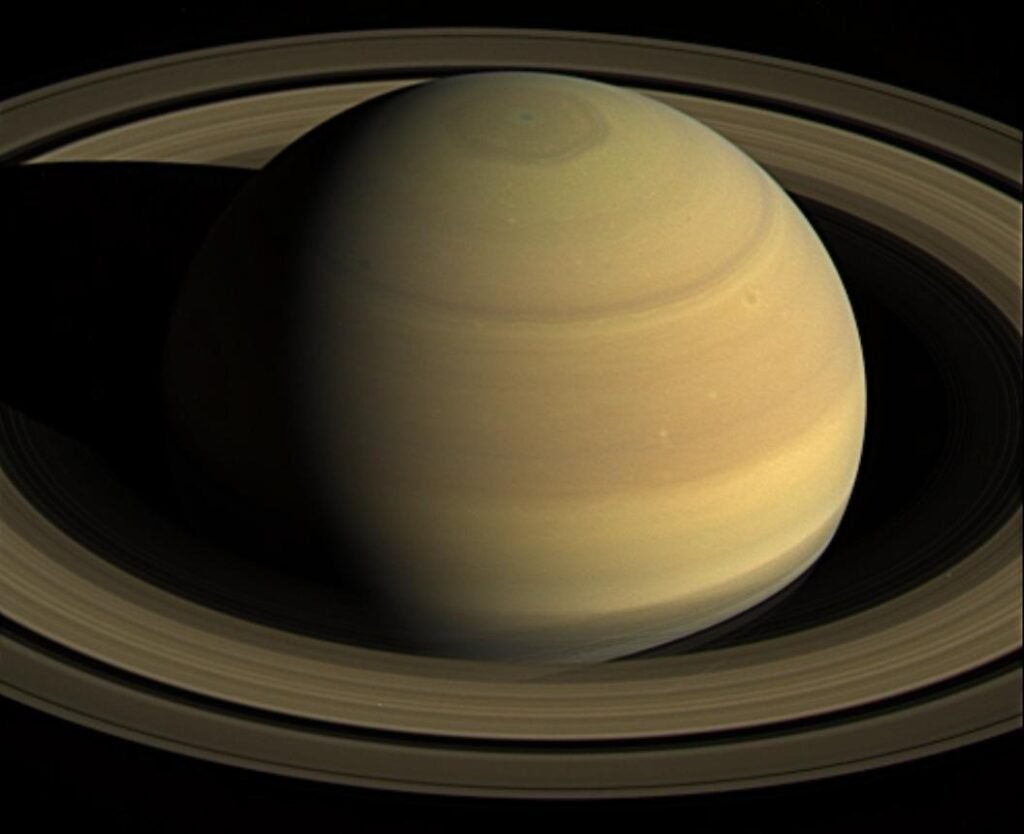
Saturn is associated with time, aging, impermanence, and the awareness that opportunities do not last forever. This connection is strengthened by the historical identification of Saturn with the Greek Cronus and the later artistic figure of Father Time.
NASA Science
+1
Discipline and responsibility
In astrology, Saturn represents rules, commitments, boundaries, and the effort required to build something durable. Its symbolism emphasizes accountability rather than instant gratification.

Wisdom and maturity
Saturn can represent lessons learned through experience. Its symbolic emphasis is on developing judgment, accepting limitations, and making thoughtful decisions over time.
Boundaries and structure
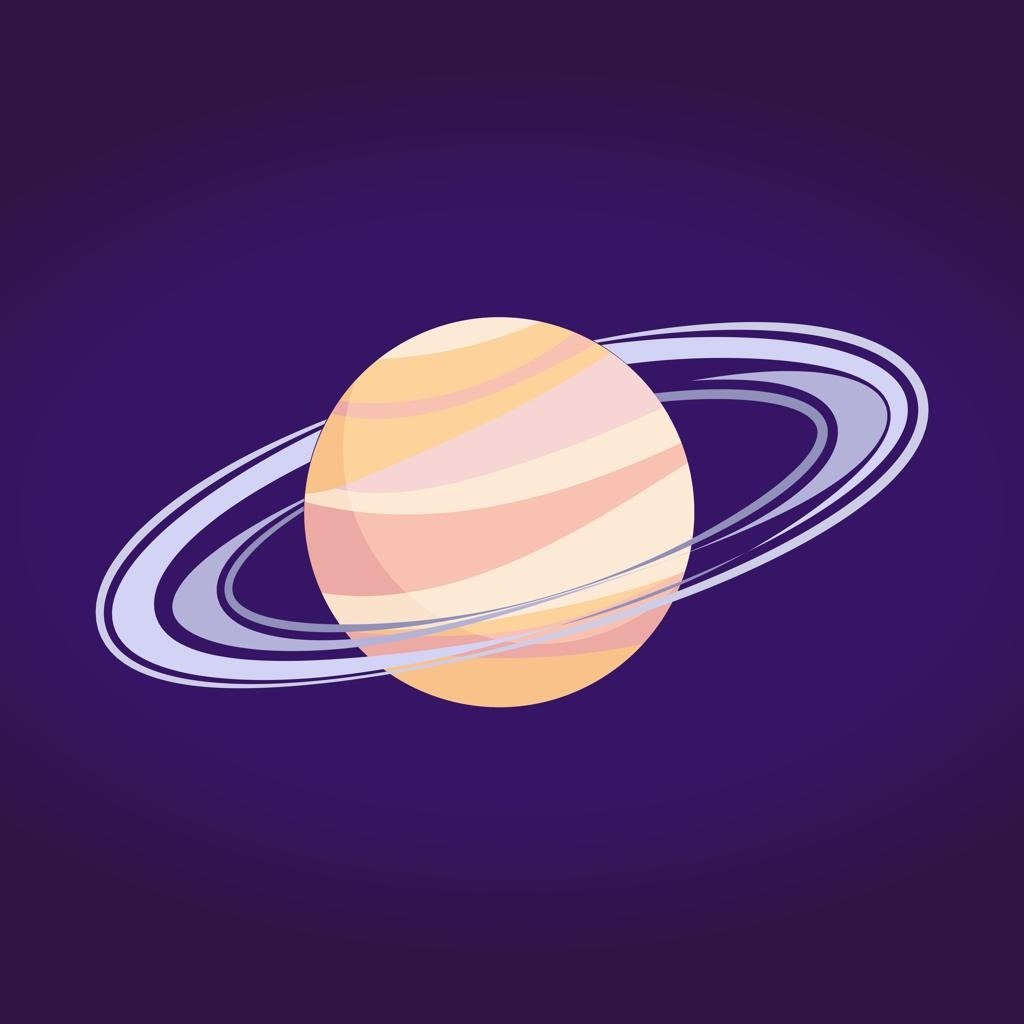
Saturn is associated with the structures that organize life: schedules, laws, commitments, institutions, and personal limits. These can create stability, although excessive rigidity may restrict growth.

Karma and consequences
In contemporary astrological language, Saturn is often connected with accountability and the long-term consequences of choices. This is a symbolic interpretation, not scientific proof that a planet determines a person’s fate.
Together, these meanings make Saturn a symbol of the relationship between freedom and responsibility. It asks what people are willing to build, what limits they must acknowledge, and how their decisions shape the future.
2. The Historical Origins of Saturn Symbolism
Saturn’s symbolism developed over thousands of years as people observed the planet, worshipped associated deities, and incorporated celestial bodies into religious and philosophical systems.
Saturn in ancient Roman mythology
In Roman religion, Saturn was primarily a god associated with sowing and agriculture. His mythology was linked with the fertility of the land, agricultural labor, and the prosperity that farming could bring.
HISTORY
+1
These associations help explain why Saturn’s earliest Roman symbolism was not limited to punishment or hardship. Agriculture required planning, seasonal awareness, patience, and labor. Sowing a crop meant accepting a delay between effort and harvest.
As a symbolic parallel, Saturn came to represent the idea that worthwhile results require time and sustained commitment.
Saturn and the Golden Age
Roman traditions also associated Saturn’s reign with an idealized Golden Age—a mythical period of abundance and peace. Later Roman accounts connected the god with a vision of an earlier, more harmonious society.
This tradition gives Saturn a more optimistic meaning than the familiar image of a stern planet associated with restrictions.
The Golden Age motif can represent:
- A longing for social harmony and abundance.
- The relationship between agriculture and civilization.
- An idealized past that contrasts with the difficulties of the present.
- The belief that order and prosperity can emerge from stable foundations.
These are mythological and literary themes, not evidence that a historical society actually experienced a perfect age.
Saturn and the Greek god Cronus
When Roman writers and religious traditions identified Saturn with the Greek god Cronus (also spelled Kronos), their stories became intertwined.
In Greek mythology, Cronus was a Titan who overthrew his father, Uranus, and was later overthrown by his son Zeus. This story concerns succession, power, fear, and the recurring conflict between generations.
NASA Science
+1
Cronus is frequently confused with Chronos, a Greek personification of time. The names and concepts became associated in later interpretations, helping strengthen Saturn’s connection with time and aging. However, Cronus and Chronos were not originally identical figures in Greek mythology.
This distinction is important when discussing the origins of Saturn symbolism. Its connection with time developed through a blend of religious identification, later interpretation, and artistic tradition rather than through one simple, original meaning.
Saturnalia: The festival of Saturn
Saturn’s major Roman festival, Saturnalia, began on December 317 and became a period of feasting, gift-giving, public celebration, and temporary changes to normal social conventions. Its observance expanded beyond a single day during the Roman period.
HISTORY
+1
During Saturnalia, customary routines were relaxed. Celebrations could include meals, games, gifts, and the temporary suspension of ordinary business.
The festival reveals a fascinating contrast in Saturn’s symbolism: the same deity later associated with restraint and stern discipline was honored through a celebration of freedom, generosity, and social release.
Rather than seeing these meanings as contradictory, we can understand Saturn as a symbol of cycles work and rest, scarcity and abundance, constraint and release.
Did you know? The English word Saturday derives from the name of Saturn through the historical tradition of naming days after celestial bodies and deities.
worldwidewords.org
+1
3. Saturn Symbolism in Astrology
Saturn has one of the most distinctive reputations in traditional astrology. It is commonly associated with discipline, limits, responsibility, patience, maturity, and the consequences of actions.
Astrology interprets Saturn’s position and relationships with other chart elements symbolically. These interpretations belong to an established cultural and divinatory tradition; they have not been demonstrated to predict personality or life events reliably through scientific testing.
What does Saturn represent in a birth chart?
In an astrological birth chart, Saturn is often interpreted as an indicator of where a person may encounter responsibilities, restrictions, long-term commitments, or opportunities to develop patience.
Astrologers may interpret Saturn’s placement by zodiac sign, astrological house, and aspects to other planets. Different schools of astrology can assign different emphases to the same placement.
| Astrological concept | Traditional symbolic interpretation |
| Saturn in a birth chart | Responsibility, limits, maturity, and long-term development |
| Saturn’s zodiac sign | The style or qualities through which Saturn’s themes are interpreted |
| Saturn’s house | The life area in which astrologers locate responsibilities or challenges |
| Saturn’s aspects | Relationships between Saturn and other chart factors |
| Saturn transits | Periods interpreted as emphasizing accountability, restructuring, or commitment |
| Saturn return | A major astrological milestone associated with maturity and life reassessment |
These meanings are used within astrology. They should not be treated as fixed predictions or as substitutes for evidence-based decisions about health, relationships, finances, or career.
Saturn in Capricorn and Aquarius
In traditional Western astrology, Saturn rules Capricorn and Aquarius. Modern Western astrologers commonly assign Uranus as the ruler of Aquarius, although traditional practitioners may retain Saturn’s rulership.
Astrodienst Astrowiki
Capricorn is often associated with ambition, organization, achievement, and practical responsibility. Saturn’s rulership is interpreted as reinforcing the importance of structure, planning, and sustained effort.
Aquarius, in traditional astrology, connects Saturn with systems, social order, collective responsibility, and established principles. Modern interpretations may emphasize Uranus instead, highlighting innovation and disruption.
These are astrological frameworks, not empirically established descriptions of everyone born under those signs.
The Saturn return
A Saturn return occurs when Saturn returns to approximately the same position in the zodiac that it occupied at a person’s birth.
Because Saturn takes about 29.5 Earth years to orbit the Sun, the first Saturn return generally occurs around age 29–30. A second commonly occurs around age 58–60.
NASA Science
+1
In astrology, the first Saturn return is often interpreted as a period of reassessment involving adulthood, career direction, relationships, independence, and long-term commitments.
People may find this framework useful as a prompt for reflection. However, the planetary return itself does not establish that a person will experience a crisis or a particular life event at that age.
Saturn retrograde symbolism
Saturn retrograde describes a period when Saturn appears to move backward against the background of the sky as observed from Earth. This apparent reversal is a result of the relative motions of Earth and Saturn; the planet does not physically reverse its orbit around the Sun.
In astrology, Saturn retrograde is often interpreted as a time for reconsidering responsibilities, personal boundaries, commitments, and unfinished work.
From an evidence-based perspective, the apparent retrograde motion is an astronomical phenomenon. The proposed psychological or spiritual effects remain astrological interpretations.
4. The Spiritual Meaning of Saturn
Spiritually, Saturn is often interpreted as a symbol of patience, humility, inner discipline, and growth through difficulty.
Rather than promising effortless success, Saturn’s symbolic language emphasizes the value of accepting reality, developing self-control, and learning from experience.
Saturn as a teacher
In contemporary spiritual writing, Saturn is sometimes called a teacher because its symbolism encourages reflection on difficult experiences.
For example, someone facing a demanding project might use Saturn as a reminder to organize their time, establish realistic goals, and accept that progress requires repeated effort.
The symbolism does not mean that every hardship has a supernatural purpose. It offers a framework for finding constructive lessons in experiences that might otherwise feel frustrating or discouraging.
Saturn and spiritual maturity
Saturn can represent the transition from reacting impulsively to acting deliberately. In this sense, maturity involves recognizing that actions have consequences and that personal freedom exists alongside obligations.
A Saturn-inspired approach to spiritual growth might include:
- Developing a consistent reflective practice.
- Setting boundaries that protect time and attention.
- Taking responsibility for mistakes without defining oneself by them.
- Accepting uncertainty where control is impossible.
- Working patiently toward values that matter over the long term.
These practices can be useful independently of astrology.
Saturn and karma
Saturn is frequently linked with karma in modern astrological interpretations. The term, however, has deeper and more varied meanings in Indian religious and philosophical traditions.
In Hindu, Buddhist, and Jain traditions, karma is understood through distinct teachings about action, intention, and consequences. It should not be reduced to the simple claim that every good or bad event is a reward or punishment.
Some contemporary astrologers use Saturn as a symbol of accountability or consequences, but this is not equivalent to the full philosophical meaning of karma across these religions.
Expert tip: When exploring Saturn’s spiritual meaning, distinguish between using the planet as a personal metaphor and asserting that it controls your life. The former can encourage thoughtful reflection without requiring belief in planetary causation.
5. Saturn Symbolism in Hindu Astrology and Other Traditions
Saturn’s meaning differs across astrological and religious traditions. A particularly important comparison is between the Greco-Roman Saturn and Shani, the planetary deity associated with Saturn in Hindu traditions.
Shani in Hindu traditions
Shani (also called Shani Dev) is a planetary deity within Hindu religious and astrological traditions. Shani is commonly associated with discipline, justice, responsibility, karmic consequences, and the challenges attributed to Saturn’s astrological influence.
Shani is not simply another name for the Roman god Saturn. The two figures belong to different religious and cultural systems, each with its own mythology, devotional practices, and interpretations.
In many Hindu astrological traditions, Shani is considered a serious and powerful planetary influence. Devotional practices may include prayer, offerings, acts of service, and observances associated with Saturday. Practices and interpretations vary among communities and traditions.
DOI
The symbolic emphasis on justice and accountability can encourage people to reflect on their actions, commitments, and responsibilities. However, beliefs about planetary effects should be distinguished from scientific evidence.
Saturn in Greco-Roman traditions
In Roman mythology, Saturn’s agricultural associations emphasize sowing, harvest, prosperity, and the Golden Age. His identification with the Greek Cronus also brought themes of generational conflict, power, and time into the broader tradition.
HISTORY
+1
Saturn across cultural contexts
| Tradition or context | Main symbolic emphasis | Important distinction |
| Ancient Roman religion | Agriculture, sowing, prosperity, Saturnalia | Saturn’s original Roman role was not limited to hardship. |
| Ancient Greek mythology | Cronus, succession, conflict between generations | Cronus and Chronos were distinct figures, although later interpretations connected them. |
| Hindu astrology and devotion | Shani, responsibility, justice, karmic consequences | Shani belongs to a distinct religious tradition, not simply Roman mythology. |
| Traditional Western astrology | Boundaries, discipline, limitations, maturity | Interpretations depend on the astrological school. |
| Modern spiritual reflection | Patience, self-discipline, accountability | These are personal or spiritual interpretations, not demonstrated planetary effects. |
| Modern astronomy | A ringed gas giant and a system of moons | Scientific observations do not establish astrological meanings. |
Why cultural context matters
Comparing these traditions reveals both similarities and differences. Several associate Saturn with responsibility or the consequences of actions, but the reasons and religious frameworks differ.
A respectful interpretation should avoid claiming that all cultures share one Saturn archetype. Similar symbolic ideas can develop independently or through historical exchange, and their meanings may change over time.
6. Saturn’s Astronomical Symbolism: The Planet and Its Rings
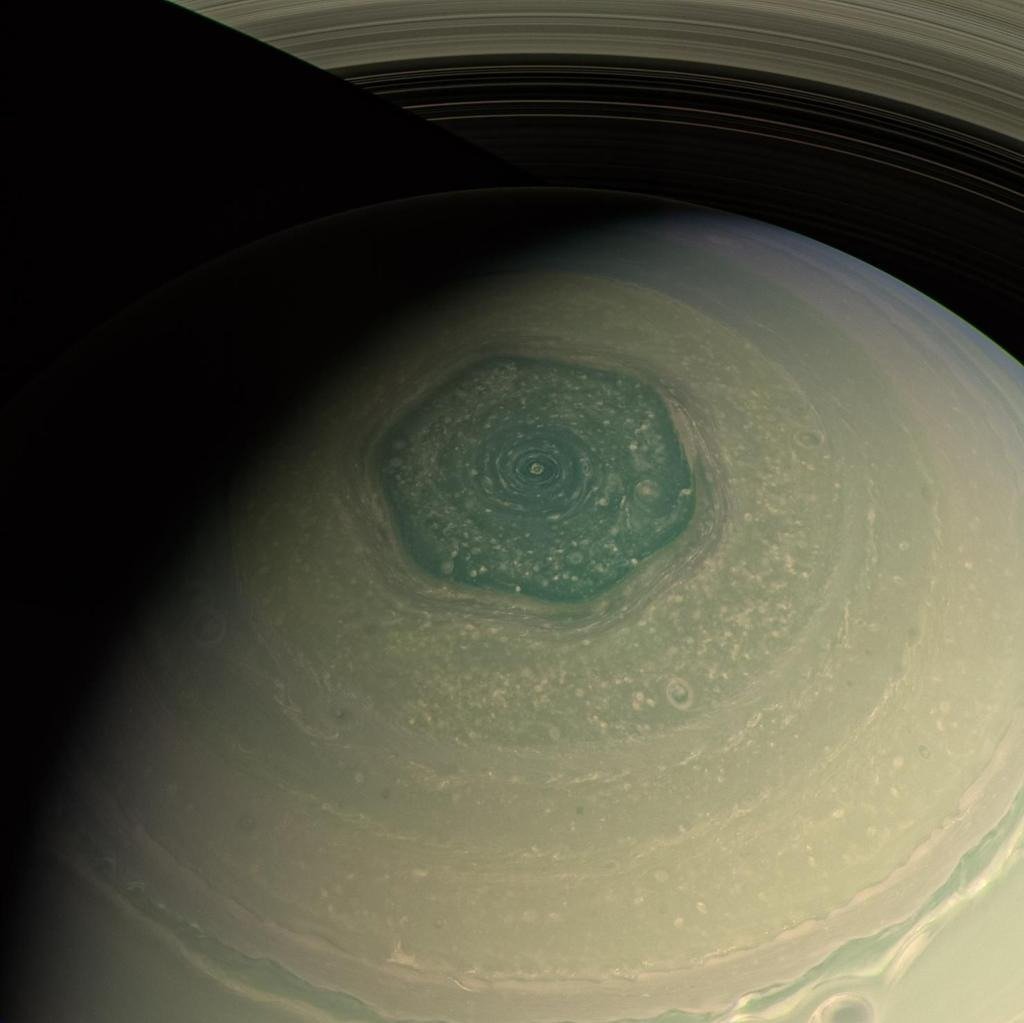
The real planet Saturn contributes another dimension to its symbolic meaning. Its slow journey around the Sun, spectacular ring system, and place in the outer solar system have made it a source of fascination for observers throughout history.


7
Saturn is the sixth planet from the Sun and the second-largest planet in our solar system. It is a gas giant composed primarily of hydrogen and helium, and its rings consist largely of particles of ice and rocky material.
NASA Science
+1
These facts are scientifically established. The symbolic meanings people draw from them are interpretations.
Saturn’s slow orbit and the symbolism of time
Saturn takes approximately 29.5 Earth years to complete one orbit around the Sun. Its relatively slow movement against the background of stars contributed to its historical reputation as a planet associated with slowness and duration.
NASA Science
+1
In symbolic writing, this slow orbit can evoke patience, long-term planning, and the gradual development of maturity.
For example, a writer might compare Saturn’s orbital period with the years needed to develop expertise in a profession. The comparison is metaphorical, but it communicates the idea that meaningful progress often takes time.
The rings as a symbol of boundaries and order
Saturn’s rings are among the most recognizable features in the solar system. Their circular appearance can inspire visual metaphors involving boundaries, cycles, continuity, and order.
A designer might use a ringed Saturn in an illustration about time management, systems thinking, or cosmic harmony. A writer might use its rings to suggest the limits surrounding an individual or institution.
These are creative interpretations, not traditional meanings that all cultures have historically assigned to the rings.
Saturn as a symbol of mystery and discovery
Saturn has been observed since antiquity, but telescopes and spacecraft transformed humanity’s understanding of it. The Cassini mission, which studied Saturn and its system from 2004 to 2017, revealed details of its rings, atmosphere, and moons.
NASA Science
+1
This scientific history offers a modern symbolic association: the pursuit of knowledge through patience, observation, and sustained investigation.
It also reminds us that a symbol can evolve when new information changes how people see the object behind it.
7. The Saturn Symbol and Its Meaning
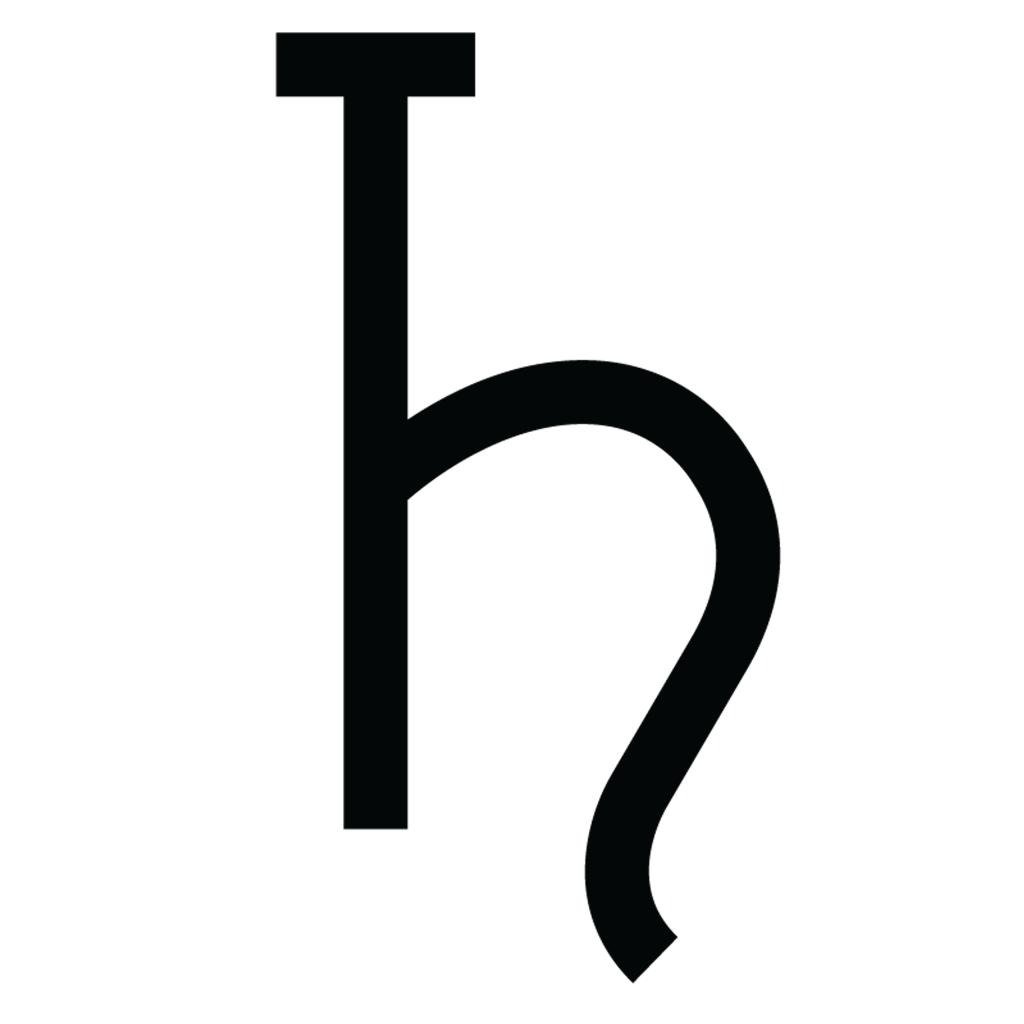
The familiar astrological glyph for Saturn is ♄. It is generally associated with an old sickle or scythe, reflecting Saturn’s agricultural heritage and its later connection with time. NASA’s guide to planetary symbols describes the Saturn glyph in these terms.
NASA Science
The symbol appears in astrology charts, astronomical illustrations, historical texts, jewelry, tattoos, and contemporary spiritual designs.
What does the Saturn glyph represent?
Within astrology, the glyph is used to identify the planet Saturn. Its traditional interpretation connects it with limitation, structure, and discipline.
A common modern symbolic reading treats the curved portion as representing receptive or material experience and the cross as representing practical reality or constraint. However, such component-by-component interpretations are not universally standardized; they should be presented as particular interpretive conventions rather than definitive historical facts.
Saturn’s symbol in tattoos and jewelry
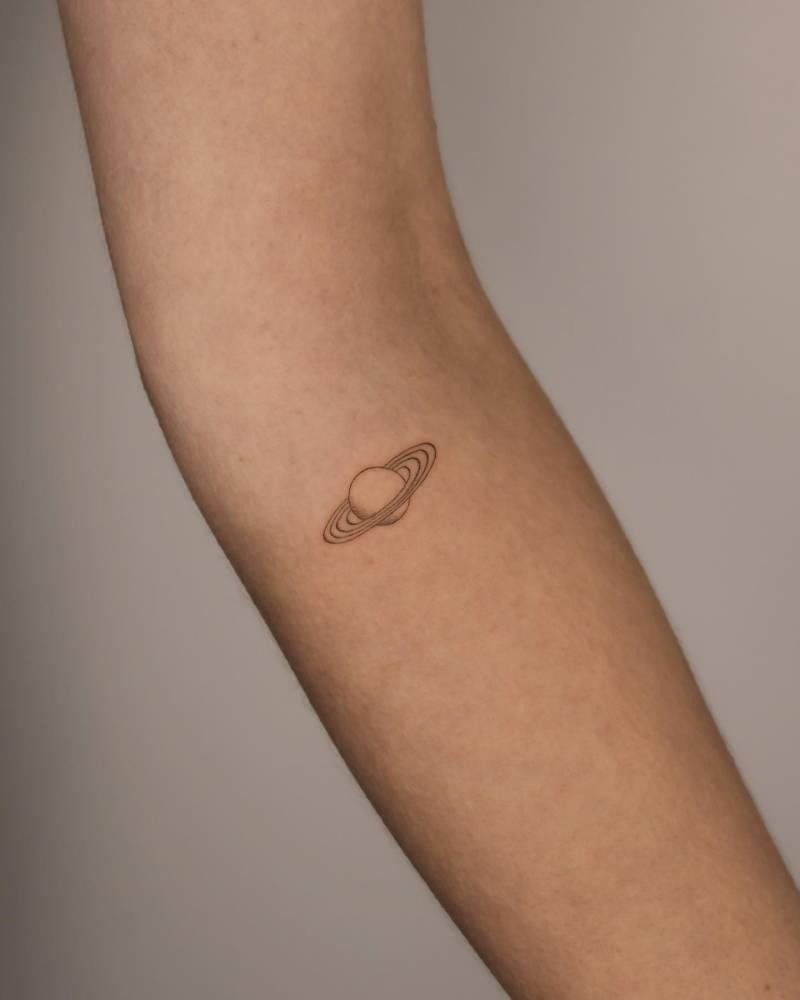
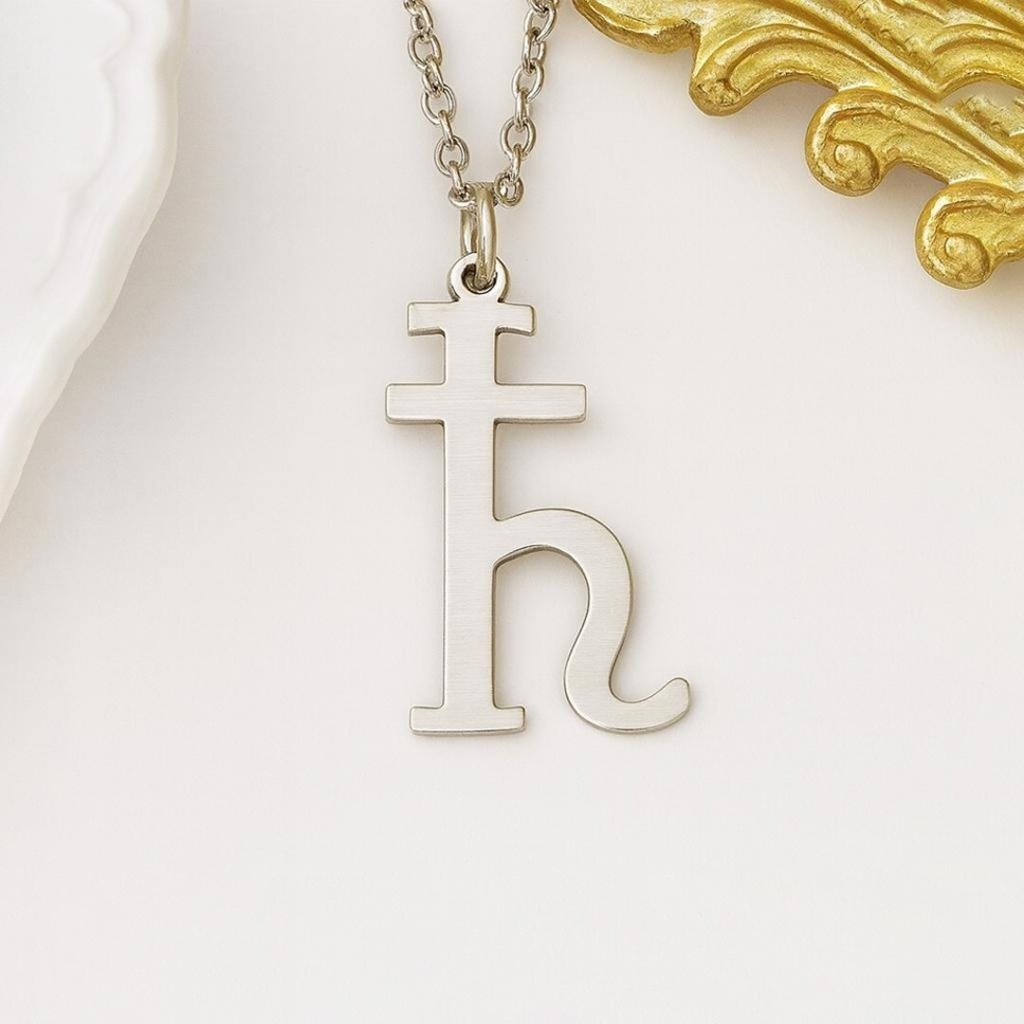
8
People may choose Saturn imagery to express:
- Commitment to long-term goals.
- Personal responsibility and maturity.
- Interest in astronomy or astrology.
- A reminder to respect time and boundaries.
- An appreciation for cosmic imagery and classical mythology.
A Saturn tattoo does not necessarily indicate a belief in astrology. Some people choose the symbol for its visual form or scientific associations.
Expert tip: If using the Saturn glyph in branding, jewelry, or a tattoo, decide whether you want to communicate astronomy, astrology, mythology, or a personal philosophy. The same image can carry very different meanings for different audiences.
8. Saturn Symbolism in Art, Literature, and Music
Artists have repeatedly returned to Saturn because its mythology offers powerful themes: the passage of time, fear of aging, the desire to preserve power, and the destruction that can result from resisting change.
Francisco Goya’s Saturn Devouring His Son

One of the most famous artistic representations of Saturn is Saturn Devouring His Son by Francisco de Goya.
Created around 1820–1823 as part of Goya’s Black Paintings, the work depicts the mythological Saturn consuming one of his children. The Prado Museum identifies fear of losing power as one interpretation of the image.
Museo Nacional del Prado
+1
The painting transforms the myth into an unsettling image of desperation and violence. Saturn attempts to prevent the loss of power, yet his actions reveal the destructive nature of that fear.
The image has inspired several interpretations, including the relationship between time and destruction, the terror of aging, political violence, and the consequences of trying to maintain absolute control. No single modern interpretation should be mistaken for a definitively established statement of Goya’s intention.
Saturn in Renaissance and Baroque art
Artists such as Peter Paul Rubens also depicted Saturn devouring his child. Rubens’s painting, completed in 1636–1638, draws on the classical myth and presents Saturn with his characteristic scythe.
Museo Nacional del Prado
Such artworks helped establish Saturn as a powerful figure in European visual culture. His image could evoke both the agricultural deity of ancient Rome and the terrifying force of time that consumes what it creates.
Saturn in music
The planet also inspired the orchestral suite The Planets by Gustav Holst. Its movement Saturn, the Bringer of Old Age explores a somber, reflective atmosphere associated with aging and the passage of time.
Cosmic Designs and The Planets
+1
Here, Saturn’s symbolism is communicated through musical pacing, orchestration, and mood rather than through a literal depiction of the god or planet.
Saturn in literature
In literature, Saturn can symbolize time’s power over human life, the burden of responsibility, fear of succession, or the melancholy associated with aging.
A story might use Saturn as a mythological reference when a ruler fears being replaced. Another might use the planet itself to suggest distance, solitude, or the limits of human knowledge.
The effectiveness of these references depends on how the writer connects them to the story’s themes.
9. The Psychological Meaning of Saturn
Saturn symbolism can be understood psychologically as a framework for thinking about discipline, boundaries, maturity, and the relationship between immediate desires and long-term goals.
This is a symbolic and reflective use of the planet, not a clinical psychological theory or a scientifically validated personality assessment.
Saturn and self discipline
Discipline involves continuing to act toward a meaningful goal even when motivation fluctuates. Saturn’s traditional symbolism provides a useful metaphor for this process.
For example, a student preparing for an important examination might use Saturn as a reminder to study consistently, track progress, and accept that competence develops over time.
The value comes from the practical behavior, not from any established causal influence of the planet.
Saturn and healthy boundaries
Boundaries define what a person can reasonably accept, manage, or commit to. Saturn’s association with limits can provide a visual shorthand for this concept.
Healthy boundaries may involve protecting time, declining unreasonable demands, and recognizing the limits of personal responsibility.
However, boundaries can become excessive when they are used to avoid every uncertainty or prevent meaningful connection. Saturn’s dual symbolism invites reflection on the difference between structure and rigidity.
Saturn and fear of failure
Saturn’s mythology, especially the story of Cronus attempting to prevent his overthrow, can be interpreted as a warning about fear-driven control.
The myth suggests a paradox: trying desperately to prevent change can contribute to the very outcome one fears.
In everyday life, this metaphor might apply to a leader who refuses to develop successors, a business that resists every innovation, or an individual who avoids new opportunities to protect a familiar identity.
These are applications of the story’s themes, not psychological diagnoses.
10. The Positive and Negative Sides of Saturn Symbolism
Saturn is often portrayed as a difficult or restrictive influence, particularly in astrology. Yet its symbolic meanings include constructive qualities as well as challenges.
| Positive Saturn symbolism | Challenging Saturn symbolism |
| Discipline and perseverance | Excessive rigidity |
| Wisdom and maturity | Pessimism or fear of change |
| Responsibility and accountability | Overwhelming obligation |
| Structure and stability | Restriction and inflexibility |
| Patience and long-term planning | Delays and frustration |
| Healthy boundaries | Isolation or emotional distance |
| Respect for time | Anxiety about aging or mortality |
| Earned achievement | Perfectionism or fear of failure |
The central question is not whether Saturn is inherently good or bad. It is how the qualities associated with its symbolism are expressed.
Discipline can support freedom by helping people develop skills and achieve goals. But discipline without flexibility can become oppressive. Responsibility can strengthen relationships, while excessive responsibility can lead people to neglect their own needs.
This balance makes Saturn a useful subject for philosophical reflection.
11. Saturn Symbolism in Color, Design, and Branding
Saturn’s visual identity can communicate different ideas depending on the colors, shapes, and surrounding imagery used to represent it.
The planet is often depicted with muted gold, brown, gray, black, and deep blue tones. These colors can create associations with age, seriousness, mystery, stability, or the vastness of space. Such associations are design conventions, not universal psychological effects.
Gray and charcoal
Often used to convey restraint, seriousness, structure, and a restrained visual style. They work well in designs focused on discipline, time, or institutional identity.
Deep blue
Can evoke the night sky, scientific discovery, distance, and contemplation. It is useful for astronomy-inspired graphics and educational material.
Earthy brown and muted gold
May suggest age, tradition, material resources, agriculture, and historical heritage associations that can connect with Saturn’s Roman background.
Saturn in branding
Saturn-inspired branding can work for organizations concerned with long-term planning, astronomy, education, craftsmanship, or historical themes.
For example, an educational project might use Saturn’s rings to represent connected systems, while a time management product might use the planet as a visual metaphor for structure and long term goals.
A brand should not assume that all viewers will understand the astrological symbolism. If the intended meaning is important, supporting text and consistent design choices can make the message clearer.
12. Practical Applications of Saturn Symbolism in Everyday Life
Saturn symbolism can be useful as a reflective tool even for people who do not practice astrology. Its themes provide a framework for thinking about time, responsibility, and the choices that shape long-term outcomes.
Personal goal-setting
Use Saturn as a reminder to turn broad ambitions into manageable commitments.
For example, rather than simply wishing to become a better writer, establish a regular writing schedule, finish drafts, seek feedback, and revise consistently.
The symbolism reinforces the practical principle that achievement usually depends on sustained effort.
Career and education
Saturn can represent the gradual development of expertise. In education, it may serve as a metaphor for learning through repetition, accepting constructive criticism, and building knowledge over time.
In a professional setting, it can encourage realistic planning, accountability, and thoughtful decision-making.
Relationships
Saturn’s association with commitment and boundaries can prompt useful questions:
- Are responsibilities shared fairly?
- Do commitments reflect genuine priorities?
- Are boundaries protecting both people?
- Is the relationship allowing room for change and growth?
These questions make the symbolism practical without treating astrological interpretations as predictions.
Art and storytelling
Saturn’s mythology can support stories about aging, succession, fear of losing power, and the tension between stability and transformation.
A writer could use the god Saturn in a historical narrative, the ringed planet in a science-fiction story, or the Saturn glyph in a symbolic illustration. Each approach activates a different aspect of the symbol.
Social media and digital communication
Saturn imagery appears in astrology posts, educational infographics, astronomy content, and personal reflections about life transitions.
Because digital platforms compress ideas into brief captions and recognizable visuals, a Saturn symbol can quickly suggest maturity, responsibility, or a period of reassessment. However, the meaning may differ between scientific, spiritual, and entertainment-focused audiences.
Expert tip: Make the context explicit when sharing Saturn imagery. A post about the planet’s 29.5-year orbit should be clearly distinguished from an astrological interpretation of the Saturn return.
13. Common Mistakes and Myths About Saturn Symbolism
Saturn’s many interpretations can easily become confused when mythology, astronomy, and astrology are treated as one system.
Myth 1: Saturn only represents bad luck
Fact: In some astrological traditions, Saturn is considered challenging, but it also represents discipline, maturity, stability, and long-term achievement. In Roman religion, it was closely associated with agriculture and prosperity.
Myth 2: Saturn and Cronus were always identical
Fact: Saturn was a Roman deity associated with sowing and agriculture. Romans later identified him with the Greek Cronus, blending elements of their respective traditions. Chronos, the Greek personification of time, was a distinct figure, although later interpretations connected the names and symbolism.
Myth 3: Saturn causes every difficult life event
Fact: Astrology interprets planetary positions symbolically, but reliable scientific evidence does not establish that Saturn causes personal hardships or determines individual destiny.
Myth 4: The Saturn return guarantees a crisis
Fact: The Saturn return is an astronomical recurrence used in astrology as a symbolic milestone. It does not guarantee a breakup, career change, personal crisis, or other specific event.
Myth 5: Saturn’s rings prove it is a symbol of boundaries
Fact: The rings are physical structures made of orbiting material. Interpreting them as boundaries or cycles is a creative or spiritual metaphor, not a scientific explanation of their existence.
Myth 6: Every culture interprets Saturn in the same way
Fact: Roman mythology, Greek mythology, Hindu traditions, Western astrology, and modern astronomy have different histories and interpretive systems. Similar themes do not make these traditions interchangeable.
14. Key Insights: What Saturn Symbolism Can Teach Us
Saturn’s symbolic power comes from the combination of its mythology, astronomical appearance, and long history in astrology.
Its Roman agricultural associations connect it with sowing, work, and prosperity. Its identification with Cronus introduces themes of succession, power, and time. Traditional astrology emphasizes responsibility, limitations, patience, and maturity, while modern spiritual interpretations often use Saturn as a metaphor for accountability and personal development.
The planet’s rings and slow orbit offer additional imagery for cycles, boundaries, and long-term change, although these interpretations are not scientific claims about human behavior.
Saturn also illustrates how symbols can contain contrasting meanings. Discipline can support achievement or become rigid control. Responsibility can build trust or turn into excessive obligation. Respect for time can inspire purposeful action or create fear of aging.
The most useful interpretation is therefore not that Saturn predicts a person’s future, but that its symbolism can encourage thoughtful questions about the present: What deserves sustained effort? Which limits are realistic? Where is greater responsibility needed, and where has responsibility become excessive?
Conclusion: Why Saturn Symbolism Still Matters
Saturn symbolism remains influential because it expresses enduring questions about time, power, responsibility, maturity, and the limits of human control.
Its ancient Roman associations with agriculture and prosperity, its connection with Greek mythology, its place in astrology, and its appearance in art and literature have created a rich and sometimes contradictory symbolic tradition.
In modern life, Saturn can represent the value of patience, the importance of boundaries, and the effort required to build something lasting.
It can also serve as a cautionary image of fear driven control and resistance to inevitable change.
Understanding Saturn requires distinguishing between historical evidence, astronomical facts, cultural traditions, and spiritual interpretations.
That distinction allows readers to appreciate its symbolism without confusing metaphor with scientific causation.
Whether Saturn appears in a mythological painting, an astrology chart, a scientific illustration, a tattoo, or a literary work, its meaning depends on context.
Its lasting relevance lies in the questions it invites us to consider about how we use our time, accept responsibility, and respond to change.
Frequently Asked Questions About Saturn Symbolism
1. What does Saturn symbolize spiritually?
Saturn is commonly interpreted as a symbol of discipline, patience, maturity, responsibility, boundaries, and lessons learned through experience. In modern spiritual contexts, it can represent accountability and steady personal growth. These are symbolic interpretations rather than scientifically established effects of the planet.
2. What does Saturn symbolize in astrology?
In traditional Western astrology, Saturn represents structure, limits, commitment, discipline, and long-term development. Astrologers interpret its position in a birth chart to explore where responsibilities or challenges may arise. These interpretations belong to astrology and should not be treated as scientifically validated predictions.
3. What does Saturn symbolize in Roman mythology?
Saturn was the Roman god associated with sowing and agriculture, and his mythology was connected with prosperity and the Golden Age. His festival, Saturnalia, featured feasting, gift-giving, and temporary changes to normal social conventions. Later traditions also associated Saturn with time.
HISTORY
+1
4. What does the Saturn symbol ♄ mean?
The Saturn glyph is a traditional planetary symbol commonly interpreted as an old sickle or scythe, reflecting Saturn’s agricultural origins and later association with time. It is used in astrology charts, planetary diagrams, jewelry, and tattoos. Specific interpretations of the glyph’s individual parts vary.
5. What does the Saturn return mean spiritually?
In astrology, the Saturn return occurs when Saturn returns to approximately its natal position, usually around ages 29–30 and again around 58–60. It is often interpreted as a period of maturity, reassessment, and renewed responsibility. It does not scientifically predict a crisis or a particular life event.
6. Is Saturn a positive or negative symbol?
Saturn can represent both constructive and challenging qualities. Its positive associations include discipline, patience, maturity, stability, and achievement. Its challenging associations include restriction, fear, rigidity, and excessive responsibility. The interpretation depends on the cultural, artistic, or astrological context.
Semantic SEO, NLP Entities, and Topical Relationships
The following entities and related concepts support the article’s semantic coverage and can help organize a broader Saturn symbolism topic cluster for a symbolism-focused website.
| Category | Entities and related terms |
| Primary keyword | Saturn symbolism |
| Core semantic keywords | Saturn meaning, spiritual meaning of Saturn, Saturn planet symbolism, Saturn astrology meaning, Saturn symbol meaning |
| Mythology | Saturn, Cronus, Chronos, Golden Age, Saturnalia |
| Hindu traditions | Shani, Shani Dev, Hindu astrology, Navagraha |
| Astrology | Saturn return, Saturn retrograde, natal chart, zodiac signs, Capricorn, Aquarius, planetary aspects, astrological houses |
| Astronomy | Gas giant, planetary rings, orbital period, Cassini mission, Saturn’s moons, solar system |
| Philosophical concepts | Time, mortality, responsibility, karma, discipline, boundaries, maturity, impermanence |
| Psychology-related concepts | Self-discipline, personal accountability, attachment to control, long-term goals, resilience, healthy boundaries |
| Art and literature | Saturn Devouring His Son, Francisco de Goya, Peter Paul Rubens, Gustav Holst, The Planets, Father Time |
| Visual symbolism | Saturn glyph, sickle, scythe, rings, hourglass, cosmic imagery, dark color palettes |
| Modern applications | Saturn tattoos, astrology content, branding, education, digital storytelling, personal reflection |
Suggested related articles for your topic cluster
- Jupiter Symbolism: Meaning, Power, and Abundance
- Pluto Symbolism: Transformation, Death, and Rebirth
- Mars Symbolism: Courage, Conflict, and Ambition
- Venus Symbolism: Love, Beauty, and Harmony
- Moon Symbolism: Intuition, Cycles, and Emotion
- Sun Symbolism: Life, Power, and Identity
- Karma Symbolism: Meaning Across Spiritual Traditions
- Time Symbolism: Mortality, Change, and Eternity
- Capricorn Symbolism: Ambition, Discipline, and Stability
- Saturn Return Meaning: Astrology, Reflection, and Personal Growth
These related articles can support internal linking when the connections are relevant to the reader’s question.
Editorial note: This article distinguishes astronomical facts and documented historical traditions from astrological interpretations and spiritual beliefs. It is structured for readability, semantic relevance, and search intent, but rankings and visibility in search engines or AI-powered search platforms cannot be guaranteed.

Learn about religious symbolism, cultural icons, and historical meanings with William Carter.
