
Introduction: What Does an Acorn Symbolize?
Acorn symbolism offers a powerful reminder that something small can contain the potential for something extraordinary.
An acorn, the seed of an oak tree, represents growth, strength, patience, resilience, wisdom, and the promise of future possibilities.
Although an acorn may appear ordinary, it carries the potential to become a tree that stands for generations.
This natural transformation explains why acorns appear in discussions about personal development, spiritual growth, prosperity, and the relationship between small beginnings and lasting achievements.
The symbolism of an acorn is especially meaningful in a world that often celebrates immediate success.
An acorn reminds us that meaningful progress frequently begins quietly.
A new idea, a personal decision, a creative project, or a small act of kindness may eventually produce results far greater than anyone initially expects.
Across art, folklore, nature inspired design, literature, and contemporary spiritual interpretations, the acorn serves as a symbol of possibility. Its meaning can change according to cultural context, personal experience, and the circumstances in which it appears.
Understanding acorn symbolism involves more than assigning a spiritual message to a seed.
It also means exploring the natural characteristics of oak trees, the historical importance of forests, the role of seeds in human imagination, and the ways people use natural objects to communicate abstract ideas.
What Is the Symbolic Meaning of an Acorn?
Acorn symbolism refers to the meanings people associate with the seed of an oak tree, particularly potential, growth, resilience, patience, strength, prosperity, and renewal. Because an acorn can develop into a large oak under suitable conditions, it often represents the ability of small beginnings to produce significant results over time.
The most common symbolic meanings of an acorn include:
- Potential: The possibility of becoming something greater than one’s present circumstances suggest.
- Growth: Personal development, learning, and gradual transformation.
- Strength: Inner resilience and the ability to withstand challenges.
- Patience: Respect for the time required to develop lasting achievements.
- Prosperity: The hope for abundance, security, and future success.
- Wisdom: The value of experience, maturity, and long-term thinking.
- Renewal: New opportunities and the continuation of life.
- Legacy: The influence that small actions can have on future generations.
These meanings are interconnected, but they are not universal rules. An acorn may represent prosperity to one person, childhood memories to another, and ecological renewal to someone who studies forests.
The central idea remains consistent: great possibilities can exist within seemingly modest beginnings.
1. The Historical Origins of Acorn Symbolism
Acorn symbolism developed from the long-standing relationship between humans, oak trees, food, shelter, and the natural world. Long before acorns became popular decorative motifs, they were practical resources that supported human communities and animals.
Acorns in ancient societies
Archaeological evidence indicates that acorns were an important food source for various human populations in prehistoric Eurasia. Historical and ethnographic research also documents their use in traditional diets. This practical relationship helps explain why oak trees became deeply embedded in cultural memory.
PMC
+1
Acorns were not merely seeds falling from trees. They were part of a wider system of survival, seasonal change, and resource management. People who collected and processed them understood that nature could provide nourishment when other resources were limited.
Over time, these practical associations could support broader symbolic ideas:
- Abundance: A productive oak could provide large quantities of acorns.
- Preparation: Collecting seasonal food required planning for future needs.
- Continuity: Seeds could produce new trees and sustain woodland ecosystems.
- Interdependence: Oak woodlands supported people, wildlife, and other plants.
These connections are grounded in the historical relationship between humans and oaks. They do not establish that every ancient society assigned the acorn the same symbolic meaning.
Acorns in ancient Greek and Roman thought
The oak held an important place in ancient Mediterranean traditions. Greek mythology associated oak trees with Zeus, while Roman religion associated them with Jupiter. Both gods were connected with thunder and supreme authority. Sacred oak groves and the interpretation of oak leaves also played roles in certain ancient religious traditions.
FAOHome
+1
The acorn inherited some of its symbolic associations through its relationship with the oak. Where the oak represented authority, endurance, or divine power, its seed could be interpreted as a small expression of those qualities.
Nevertheless, it is important to distinguish between historical evidence about the oak tree and modern interpretations of the acorn. Ancient writers did not always treat the seed as a separate symbol with a fixed spiritual meaning.
Acorns and Celtic traditions
Celtic traditions are frequently mentioned in discussions of acorn symbolism because oak trees and sacred groves were significant in several ancient Celtic contexts.
Historical accounts describe oak groves as places associated with religious activity among some groups identified as Druids. Irish literary traditions also celebrate remarkable oak trees, sometimes linking them with kingship, fertility, abundance, and the sacred landscape.
Trees for Life
+2
In contemporary interpretations inspired by Celtic traditions, an acorn may represent:
- A connection with nature and ancestral heritage.
- The preservation of wisdom across generations.
- Spiritual potential waiting to develop.
- The relationship between the visible world and unseen possibilities.
These interpretations can be meaningful within modern spiritual practice, but they should not automatically be presented as universal beliefs held by all ancient Celts.
How historical associations shaped modern meaning
The modern symbolism of the acorn draws on several overlapping ideas: the oak’s impressive size, its longevity, the usefulness of its wood, its value as a food source, and the ability of its seeds to produce new trees.
The result is a symbol that communicates both strength and possibility. Unlike a fully grown oak, an acorn represents these qualities before they become visible.
2. The Spiritual Meaning of an Acorn
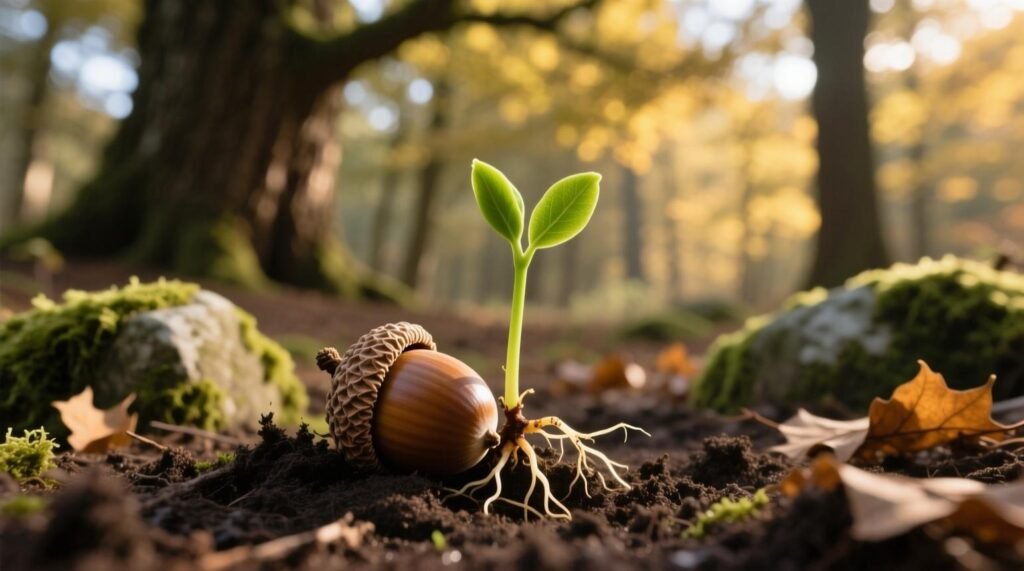
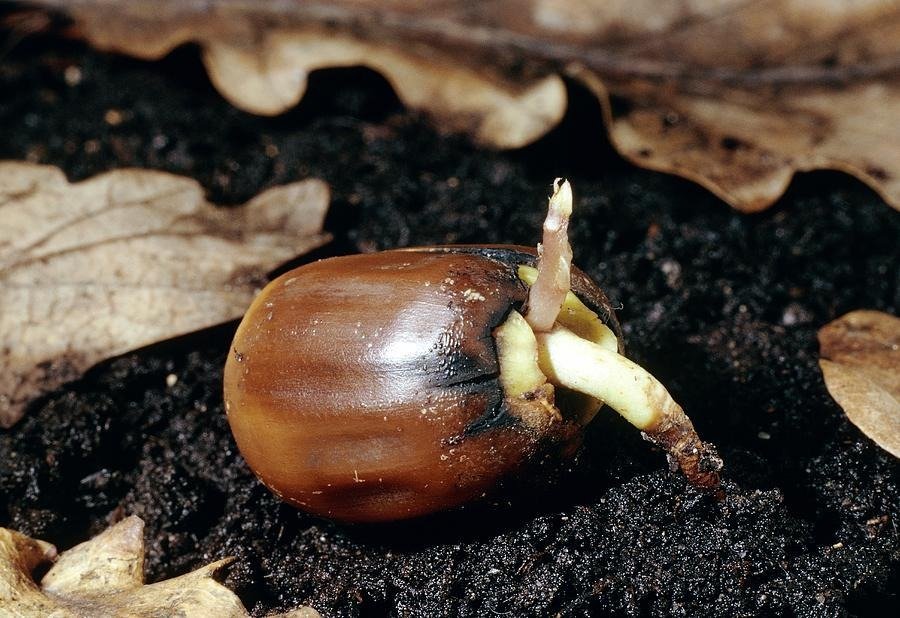
Spiritually, an acorn often represents the potential for transformation, the importance of patience, and the belief that meaningful growth begins within. People may interpret finding an acorn as a personal reminder to trust gradual progress, remain grounded, and nurture their aspirations.

8
A symbol of hidden potential
An acorn’s most recognizable spiritual message is that potential may exist long before it becomes apparent.
A person beginning a new career, recovering from a difficult period, or learning an unfamiliar skill may feel that progress is insignificant. The acorn offers a useful metaphor: the early stage of development does not necessarily reveal the eventual scale of what can grow.
For example, someone who spends fifteen minutes a day learning a language might use an acorn as a reminder that consistent effort can gradually produce meaningful improvement.
This interpretation is a reflective metaphor, not a promise that every ambition will succeed.
Patience and divine timing
In spiritual writing, the acorn is often connected with patience and the idea that growth unfolds according to its own rhythm.
A seed cannot become a mature oak overnight. It needs suitable conditions, time, and opportunities to develop. Similarly, human goals may require preparation that is not immediately visible.
People who associate the acorn with divine timing may understand it as encouragement to remain faithful to their values while allowing life to unfold without demanding instant results.
However, divine timing is a spiritual belief rather than a scientifically established force governing individual outcomes.
Grounding and connection with nature
Acorns grow from trees rooted in the earth, making them useful symbols of grounding, stability, and belonging.
In personal reflection, grounding means remaining connected to one’s values, relationships, responsibilities, and immediate surroundings instead of becoming overwhelmed by uncertainty about the future.
An acorn can therefore represent the balance between ambition and stability: reach toward future possibilities while maintaining a dependable foundation.
Renewal and spiritual transformation
An acorn also represents renewal because it carries the possibility of beginning a new cycle of growth.
This meaning can be especially relevant during life transitions, including starting a family, changing careers, moving to a new place, or recovering after a setback.
The symbol does not suggest that change is always easy. Rather, it highlights the possibility that a difficult ending may create conditions for a different beginning.
3. Acorn Symbolism in Dreams
Dream interpretations involving acorns commonly focus on potential, personal development, security, and future opportunities. The most useful interpretation depends on the dream’s context and the dreamer’s personal associations.
Dreams do not have one universally established symbolic dictionary, and there is no reliable scientific rule that assigns a fixed prediction to an acorn appearing during sleep.
| Acorn dream scenario | Possible symbolic interpretation |
| Finding an acorn | Noticing a new opportunity or overlooked possibility |
| Planting an acorn | Investing in a long-term goal |
| Watching an acorn sprout | Recognizing progress or personal development |
| Collecting many acorns | Preparing for the future or seeking security |
| Holding a single acorn | Focusing on one promising idea or responsibility |
| Discovering a damaged acorn | Reflecting on disappointment, uncertainty, or an obstacle |
| Seeing an acorn grow into an oak | Imagining the long-term effects of present decisions |
What does it mean to dream of planting an acorn?
Planting an acorn may symbolize a commitment to something that requires time to mature. You might be starting a project, developing a relationship, or working toward a goal whose rewards are not yet visible.
Consider what you are currently nurturing in your life. The dream may provide a useful prompt for reflection, but it should not be treated as a guaranteed prediction.
What does a falling acorn mean in a dream?
A falling acorn might bring attention to change, the passage of time, or an opportunity that has appeared unexpectedly. Its significance depends on whether the experience feels hopeful, peaceful, disappointing, or unsettling.
The emotional tone of a dream is often more informative for personal reflection than a rigid symbolic definition.
4. Acorn Symbolism Across Cultures and Traditions
Acorn symbolism varies across societies because the acorn is connected to the oak, and the oak’s ecological, economic, and religious significance differs by region.
The following comparison separates documented cultural associations with oak trees from broader interpretations commonly applied to their seeds.
| Cultural or interpretive context | Associated themes | Important distinction |
| Ancient Greek traditions | Divine authority, thunder, sacred groves | These associations primarily concern oak trees and Zeus. |
| Ancient Roman traditions | Civic honor, protection, strength | Oak-leaf crowns had specific historical significance. |
| Celtic and Irish traditions | Sacred landscapes, kingship, fertility, nature | Evidence comes from varied historical accounts and literary traditions. |
| Contemporary nature spirituality | Growth, grounding, renewal | Interpretations differ among practitioners. |
| Modern personal symbolism | Patience, goals, resilience, new beginnings | Meaning often depends on individual experience. |
| Environmental education | Seeds, regeneration, biodiversity | These are ecological connections rather than supernatural claims. |
Historical sources describe oak trees as sacred or symbolically important in several European traditions, including Greek, Roman, Celtic, and Slavic contexts.
FAOHome
+1
Celtic acorn symbolism
Modern Celtic-inspired symbolism often emphasizes the acorn’s connection with the sacred oak, ancestral memory, and the continuity of nature.
An acorn used in a pendant, illustration, or personal ritual may therefore communicate a desire to remain connected to the natural world. It is best to describe this as a contemporary interpretation influenced by Celtic heritage unless a specific historical source supports a more precise claim.
Greek and Roman connections
Because oak trees were linked with Zeus and Jupiter, the acorn can acquire secondary associations with authority, protection, and strength.
The ancient Roman corona civica, for example, was an oak-leaf crown awarded for saving a fellow citizen’s life. This is a documented association between oak foliage and civic honor, not evidence that Romans universally used acorns as good-luck charms.
FAOHome
+1
Are acorns lucky in every culture?
No. Acorns are associated with good fortune in some modern folk interpretations, but there is no evidence that every culture regards them as lucky or assigns them the same meaning.
Their symbolism depends on local traditions, religious frameworks, personal experience, and the meaning people attach to the oak tree.
5. Acorn Symbolism in Christianity and Other Religious Contexts
The acorn does not have one universal religious meaning. Its interpretation often comes indirectly from the oak tree, which has appeared in different religious traditions as a symbol of sacred presence, steadfastness, or the relationship between human beings and the natural world.
Acorn symbolism in Christianity
In Christian-inspired interpretations, an acorn can serve as a metaphor for faith, spiritual maturity, hope, and the gradual development of a virtuous life.
The oak’s traditional association with steadfastness can reinforce the idea of remaining committed to one’s beliefs during difficult circumstances. The acorn adds another dimension: spiritual development may begin with something small that grows through care and perseverance.
This interpretation can be compared with the biblical parable of the mustard seed in Matthew 13:31–32. The parable uses a different plant, but both images can help readers reflect on how something small may develop into something much greater.
It is important not to confuse this interpretive comparison with a direct biblical teaching about acorns. The mustard seed is explicitly used in the parable; the acorn is an additional metaphor that readers may find useful.
Acorns in pagan and nature-based spirituality
In some contemporary pagan and nature-centered practices, acorns are used as symbols of protection, vitality, abundance, and connection with the seasonal cycle.
These meanings are frequently influenced by the oak’s historical associations with sacred landscapes and powerful deities in European traditions. However, modern practices vary, and not every practitioner assigns the same significance to an acorn.
An individual might keep an acorn on an altar, incorporate it into a seasonal decoration, or use it during personal reflection as a reminder of an intention.
Such practices should be understood as expressions of personal or spiritual belief rather than scientifically verified methods of producing particular outcomes.
Acorn symbolism and the broader idea of creation
Across religious and philosophical perspectives, seeds offer a natural metaphor for creation because they hold the potential for future development.
The acorn illustrates the relationship between what exists now and what might exist later. It encourages questions such as:
- What possibilities are present in my life today?
- What conditions do those possibilities need to develop?
- What responsibilities come with nurturing future growth?
These questions make acorn symbolism useful even for readers who do not follow a particular religious tradition.
6. The Psychological Meaning of an Acorn
Psychologically, an acorn can represent self-development, hope, resilience, and the difference between present circumstances and future possibilities. Its meaning comes from the associations people form with growth and transformation, rather than from an established psychological rule that acorns have a universal effect on the mind.
Growth mindset and personal development
The acorn offers a memorable image for the idea that abilities can develop through learning, practice, and experience.
A beginner may not yet possess the knowledge or confidence needed to accomplish a difficult task. The acorn metaphor encourages that person to recognize the difference between current ability and future potential.
For example, a student who struggles with mathematics could use an acorn illustration on a study journal as a reminder that competence develops through consistent effort.
The image does not guarantee achievement. It simply provides a visual reminder of the value of learning and persistence.
Resilience during challenging periods
An acorn can also represent resilience because it suggests the possibility of growth despite uncertainty.
When someone experiences a setback, it can be difficult to imagine a positive future. The acorn offers a small, concrete symbol of what is not yet visible.
A person rebuilding confidence after a career setback might use the image to represent a new beginning. Another might associate it with recovery, self-respect, or the decision to develop healthier habits.
The symbol’s usefulness lies in the meaning the person gives it, not in any supernatural property of the object.
Patience and delayed rewards
The acorn is particularly relevant to situations in which effort and results are separated by time.
Learning a skill, saving money, building a business, and developing meaningful relationships all require investment before their full benefits become apparent.
The acorn can act as a visual reminder to focus on the process rather than measuring success exclusively through immediate outcomes.
Expert Tip: If you use an acorn as a personal symbol, connect it to one specific action. For example, place a small acorn image beside a written goal and identify the daily or weekly habit that will help you work toward it. A meaningful symbol is more useful when it reinforces practical behavior.
7. Acorn Symbolism in Art, Literature, and Storytelling
In art and literature, acorns can communicate ideas about beginnings, maturity, hidden identity, natural cycles, and the relationship between an individual and a larger world.
Their effectiveness comes from visual contrast: an acorn is small and compact, while the oak it may eventually produce can be tall, broad, and long-lived.
The acorn as a literary metaphor
Writers can use an acorn to represent the beginning of a personal journey, a developing relationship, an early idea, or a future that remains uncertain.
Imagine a novel in which a character plants an acorn after leaving home. The act might represent the character’s hope of establishing roots in a new place. If the story later returns to a mature oak, the tree could represent the passage of time and the consequences of the character’s decisions.
This is an illustrative example rather than a reference to a specific literary work.
Acorns can also support themes of inheritance and legacy. A seed represents something that may outlive its original planter, making it a useful image for stories about family history, cultural continuity, and the effects of present actions on future generations.
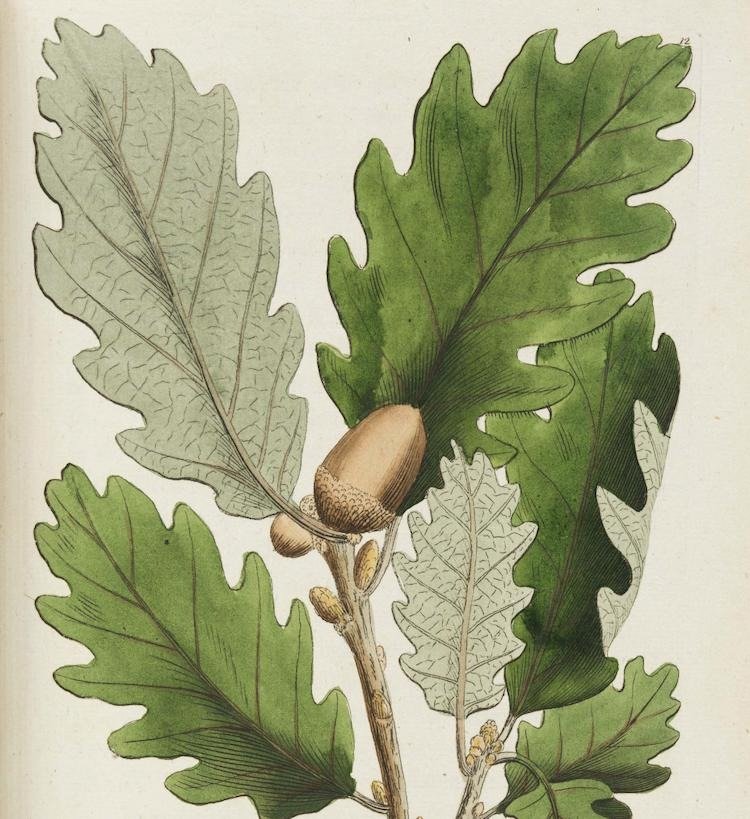
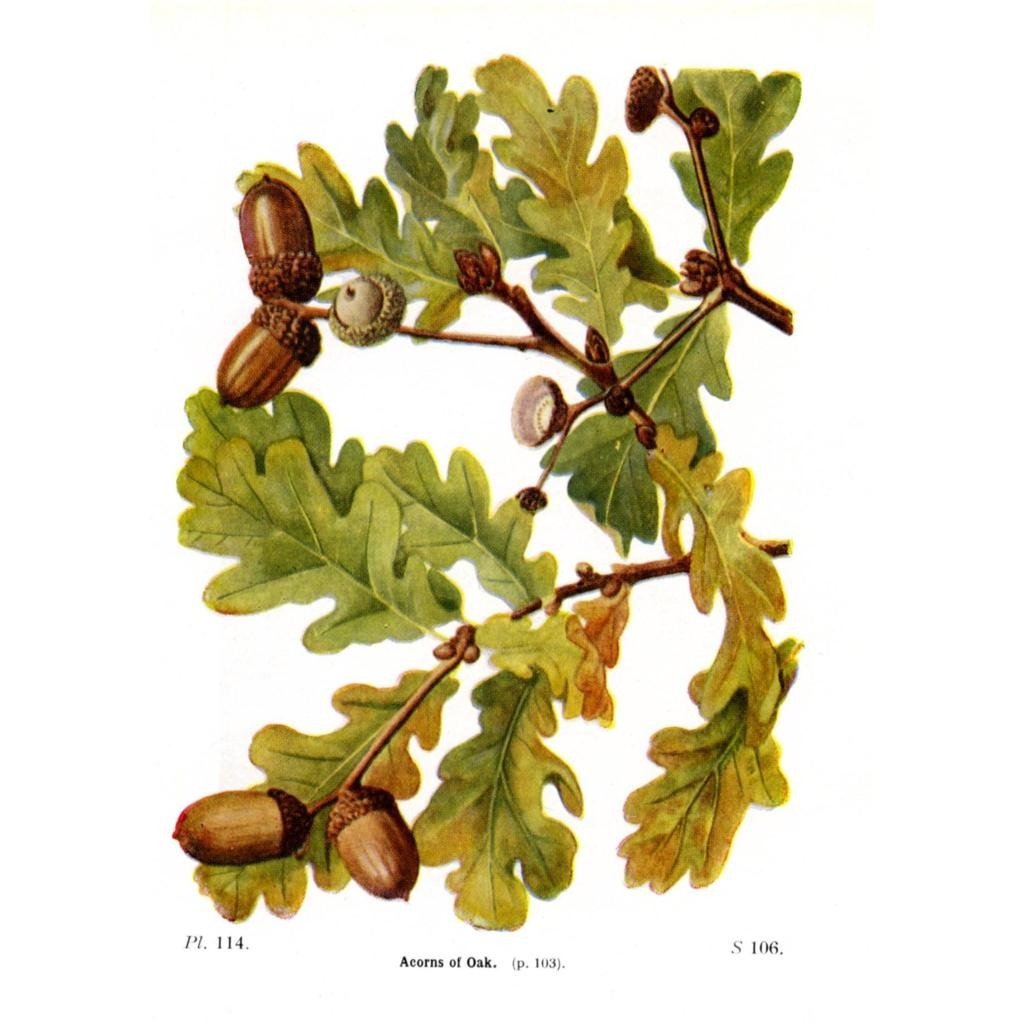
Acorns in visual art and illustration

9
Artists can use an acorn to create a range of moods depending on its setting, scale, color, and accompanying objects.
- An acorn beside a young seedling may suggest hope and early growth.
- An acorn beneath an ancient oak may emphasize continuity and ancestry.
- An acorn surrounded by autumn leaves may communicate seasonal change.
- A single acorn against a large empty background may suggest solitude or untapped potential.
- Acorns arranged in a cluster may evoke abundance, community, or preparation.
These interpretations are not fixed rules. Composition and context influence how viewers understand the image.
Acorns in folklore and visual culture
Acorn imagery is common in nature-inspired decoration, seasonal crafts, botanical illustrations, and woodland-themed designs.
Because acorns are associated with autumn in many familiar settings, they can communicate warmth, harvest, transition, and the changing seasons. Their compact shape also makes them suitable for decorative patterns, jewelry, and small emblems.
The most effective visual symbolism combines a recognizable object with a clear context. An acorn alone may suggest nature, while an acorn paired with roots and a growing shoot can communicate development more directly.
8. Acorn Symbolism in Branding, Design, and Modern Life
In contemporary design, the acorn can communicate sustainability, long-term thinking, reliability, growth, and natural simplicity. These associations make it a potential visual element for organizations and products connected with education, gardening, environmental stewardship, personal development, and community projects.
Acorns in branding
A brand may use an acorn to suggest that its work helps small ideas grow into meaningful results.
For example:
- An educational organization might use an acorn to represent learning and future potential.
- A gardening business might use it to emphasize planting and environmental care.
- A financial education service might use it as a metaphor for gradual, long-term preparation.
- A nonprofit working with children might use it to represent nurturing and development.
- A sustainability initiative might use it to connect its identity with trees and woodland ecosystems.
These are design possibilities, not claims about particular companies.
Why the acorn works as a visual symbol
From a semiotic perspective, an acorn is a recognizable natural object that can acquire additional meaning through cultural associations and repeated use.
Its shape provides a concrete image, while the idea of an oak growing from a seed provides a metaphor. Viewers can understand the physical object immediately and then interpret the broader message through the surrounding context.
A successful logo should therefore do more than display an attractive acorn. It should connect the symbol to the organization’s purpose, audience, and values.
Using acorn symbolism in everyday life
The acorn can be incorporated into ordinary routines without requiring a religious or spiritual commitment.
Practical examples include:
- Goal setting: Use an acorn image to represent a long-term objective.
- Journaling: Write about the small habits that may produce meaningful change.
- Education: Teach children how seeds develop into trees while discussing patience and responsibility.
- Gifts: Choose acorn jewelry or artwork to express encouragement, new beginnings, or appreciation.
- Home decoration: Use botanical acorn motifs to create a natural, woodland-inspired atmosphere.
- Environmental projects: Connect the symbol with native tree planting, habitat protection, and ecological education.
The last application has a particularly tangible foundation. Acorns are an important food source for numerous birds and mammals, and successful acorn germination contributes to oak regeneration.
Ask IFAS – Powered by EDIS
+1
This ecological role adds depth to the symbolism: the acorn is not simply an image of future growth but part of a real process that sustains woodland life.
9. Did You Know? Fascinating Facts About Acorns
An acorn is an oak fruit
Acorns are the fruits of trees in the genus Quercus. Their familiar cap is called a cupule and surrounds the base of the nut.

Acorns support wildlife
Squirrels, deer, wild turkeys, jays, and other animals eat acorns. Some animals also transport or bury seeds, which can influence where new oak seedlings emerge.
Ask IFAS – Powered by EDIS
+1
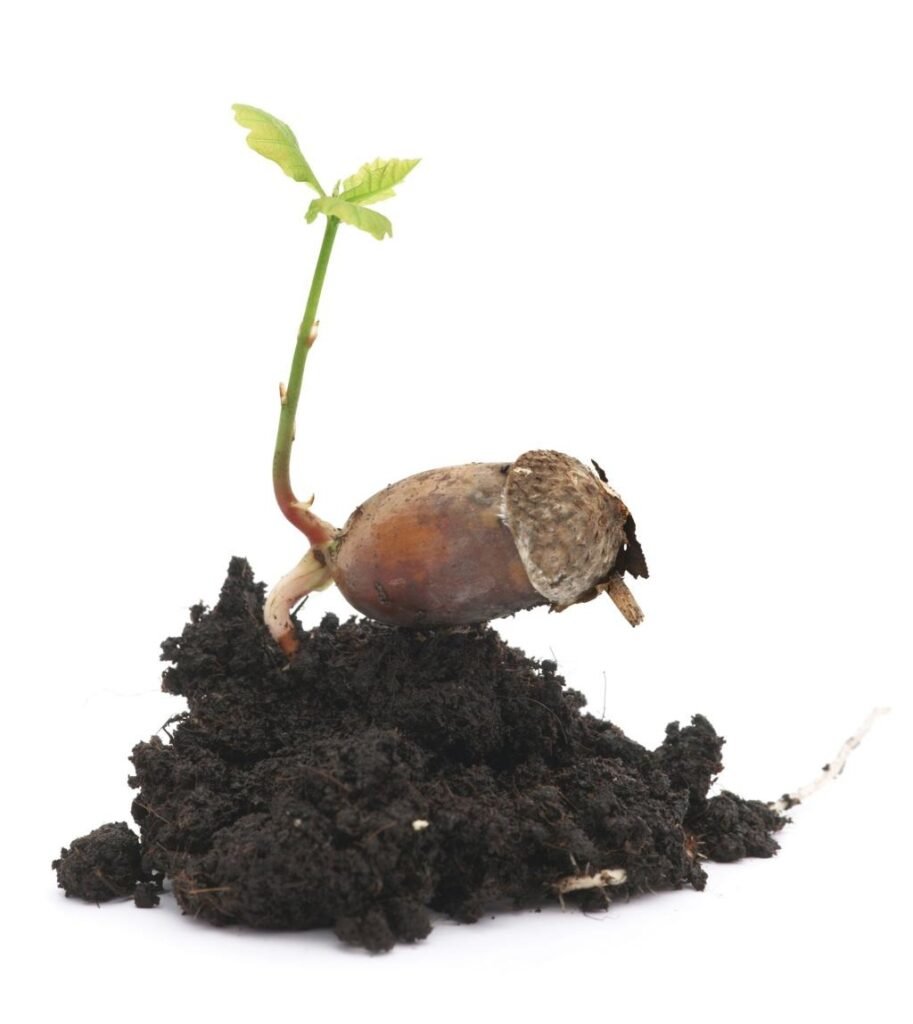
Not every acorn becomes a tree
Acorns may be eaten, damaged by insects, or fail to germinate. The difference between potential and outcome makes the acorn a useful symbol of possibility rather than guaranteed success.
MU Extension
+1
10. Common Mistakes When Interpreting Acorn Symbolism
Understanding acorn symbolism becomes easier when readers avoid treating every interpretation as an established fact.
Mistake 1: Assuming the acorn always means good luck
Some contemporary interpretations associate acorns with fortune and prosperity, but these associations are not universal. A more balanced explanation recognizes good fortune as one possible meaning among several.
Mistake 2: Treating every modern spiritual interpretation as ancient history
Modern nature spirituality may draw inspiration from ancient European traditions, but a contemporary practice is not automatically an unchanged survival from antiquity. Historical claims should be supported by evidence from relevant periods and cultures.
Mistake 3: Assuming dreams predict the future
An acorn in a dream may prompt reflection about opportunity or growth, but there is no established scientific basis for claiming that it guarantees money, marriage, success, or another specific event.
Mistake 4: Confusing symbolic potential with guaranteed results
An acorn contains the biological potential to develop into an oak, but successful growth depends on environmental conditions and other factors. The same distinction applies metaphorically to human ambitions: possibility is not certainty.
Mistake 5: Ignoring cultural and personal context
A symbol’s meaning depends on where it appears, who uses it, and what the surrounding imagery communicates. An acorn in a conservation campaign may emphasize biodiversity, while an acorn on a graduation card may suggest the beginning of a promising future.
11. Myth vs. Fact: Understanding Acorn Symbolism
| Claim | Balanced interpretation |
| Every acorn represents wealth. | Prosperity is one possible association, not a universal meaning. |
| Acorns have the same meaning in every religion. | Religious interpretations differ, and some meanings are modern metaphors. |
| Carrying an acorn guarantees protection. | This is a folk or spiritual belief, not a verified effect. |
| Acorns have always been universal symbols of good luck. | Their historical uses and meanings vary across contexts. |
| An acorn symbolizes potential because it can grow into an oak. | This is a clear natural analogy, although actual growth is not guaranteed. |
| Acorn symbolism is only spiritual. | Acorns also carry ecological, artistic, educational, and cultural significance. |
The most reliable approach is to distinguish three kinds of statements: biological facts about acorns, historical evidence about cultural practices, and personal or spiritual interpretations. Each can be valuable, but they should not be presented as interchangeable forms of evidence.
12. Acorn Symbolism in Nature and Environmental Awareness
Beyond spirituality and personal development, acorn symbolism has a meaningful ecological dimension. Acorns represent the continuation of oak populations and the relationships between plants, animals, and their habitats.
The acorn as a symbol of ecological renewal
An acorn contains the biological structures needed to begin a new oak tree’s development. Under suitable conditions, it can germinate and produce a seedling. Some acorns, however, are eaten by wildlife, damaged, or prevented from growing by unfavorable conditions.
Oak trees provide food and habitat for numerous organisms, making their regeneration important to woodland ecosystems.
Ask IFAS – Powered by EDIS
+1
This ecological perspective gives acorn symbolism a practical meaning: the future of a forest depends partly on whether the conditions for regeneration are maintained.
What the acorn teaches about sustainability
The acorn can serve as a reminder that environmental responsibility involves thinking beyond immediate rewards.
Planting an appropriate native oak, protecting existing woodland, or supporting habitat restoration can create benefits that extend beyond an individual’s lifetime. These actions embody the same long-term perspective that makes the acorn such a compelling symbol of legacy and growth.
Practical Application: If you use acorn imagery in an environmental campaign, connect the symbolism with measurable actions, such as protecting native habitats or supporting locally appropriate tree planting. This makes the message more meaningful than relying on imagery alone.
13. Key Insights About Acorn Symbolism
The central meanings of acorn symbolism can be summarized through several interconnected ideas.
- Potential: The acorn represents what may develop from a modest beginning.
- Strength: Its connection with the oak evokes endurance, stability, and resilience.
- Patience: Its growth provides a metaphor for gradual progress.
- Prosperity: It can represent abundance and preparation for the future.
- Spirituality: It may serve as a reminder of renewal, grounding, and personal reflection.
- Wisdom: It encourages long-term thinking and recognition of life’s natural cycles.
- Legacy: It illustrates how small actions may influence future generations.
- Ecology: It represents the regeneration of oak trees and their role in woodland ecosystems.
These meanings are most useful when interpreted in context. The acorn’s value as a symbol comes from the interaction between its natural characteristics, cultural history, and the meaning people choose to give it.
Conclusion: Why Acorn Symbolism Still Matters
Acorn symbolism remains powerful because it connects a simple natural object with some of life’s most enduring questions:
How does growth begin? Why does patience matter? What can we achieve through consistent effort? And how might our actions shape the future?
Historically, the acorn’s significance developed alongside the practical and cultural importance of oak trees.
Sacred traditions, folklore, literature, and artistic representations added further layers of meaning. Today, the acorn continues to appear in spiritual reflection, personal development, branding, education, environmental communication, and everyday decoration.
Its central message is straightforward: small beginnings can hold remarkable potential, but that potential requires the right conditions and sustained care to become reality.
Whether you see an acorn as a spiritual reminder, a symbol of good fortune, an artistic motif, or a representation of ecological renewal, its meaning becomes richer when you consider both its natural reality and its cultural context.
Understanding acorn symbolism ultimately encourages a thoughtful relationship with growth, resilience, and the future.
It reminds us to value beginnings, nurture worthwhile possibilities, and recognize that meaningful achievements often develop gradually rather than all at once.
Frequently Asked Questions About Acorn Symbolism
1. What does an acorn symbolize spiritually?
An acorn spiritually symbolizes potential, personal growth, patience, resilience, renewal, and the development of inner strength. Some people interpret it as a reminder to trust gradual progress and nurture their intentions. Its precise spiritual meaning depends on individual beliefs and cultural context.
2. Is an acorn a symbol of good luck?
An acorn is sometimes considered a good-luck symbol in contemporary folk traditions and personal interpretations. It may represent prosperity, protection, or future success because of its connection with the strong and long-lived oak tree. However, the belief that an acorn brings luck is cultural or spiritual rather than scientifically established.
3. What does finding an acorn mean?
Finding an acorn can symbolize a new opportunity, a promising beginning, or the potential for personal development. Some people view it as a meaningful reminder to remain patient and pay attention to small opportunities. There is no universally accepted meaning, so its significance depends on the circumstances and the individual’s interpretation.
4. What does an acorn symbolize in Celtic traditions?
Acorn symbolism in modern Celtic-inspired interpretations often includes growth, wisdom, fertility, and connection with nature. These themes are influenced by the historical significance of oak trees in several Celtic traditions. However, surviving evidence more directly documents the importance of the oak itself than a single, universal ancient meaning for the acorn.
5. What does an acorn symbolize in dreams?
An acorn in a dream may represent potential, preparation, hope, personal development, or an emerging opportunity. Planting one might suggest investing in a long-term goal, while watching it sprout might reflect a sense of progress. These interpretations are reflective possibilities, not scientifically validated predictions of future events.
6. Why is an acorn a symbol of strength and growth?
An acorn symbolizes strength and growth because it is the seed of an oak tree, which is often associated with durability, longevity, and stability. Its transformation from a small seed into a potentially large tree provides a natural metaphor for development, perseverance, and the power of gradual progress.
Final Key Takeaways
- Acorn symbolism primarily represents potential, growth, strength, patience, and renewal.
- Its historical associations are closely connected to the cultural and ecological importance of oak trees.
- Spiritual meanings include grounding, personal transformation, hope, and long-term development.
- Interpretations involving luck, dreams, and protection should be understood as cultural or personal beliefs rather than established facts.
- Acorns provide a useful metaphor for education, branding, storytelling, personal development, and environmental awareness.
- The most accurate interpretation considers the historical evidence, cultural context, and circumstances in which the symbol appears.
Semantic SEO: Entities, NLP Concepts, LSI Keywords, and Topical Relationships
The following semantic terms reflect the main subjects covered in this article and can support a coherent topical structure for a symbolism website.
| Category | Relevant terms |
| Primary keyword | Acorn symbolism |
| Core semantic keywords | Acorn meaning, acorn spiritual meaning, acorn symbol, acorn significance |
| Long-tail keywords | What does an acorn symbolize, acorn meaning in dreams, acorn symbolism in Celtic traditions, acorn as a symbol of growth |
| Related natural entities | Acorn, oak tree, oak leaf, seed, seedling, forest, woodland |
| Historical entities | Zeus, Jupiter, Druids, ancient Greek traditions, ancient Roman traditions, Celtic heritage |
| Psychological concepts | Personal growth, resilience, patience, hope, self-development, long-term thinking |
| Spiritual concepts | Renewal, grounding, abundance, transformation, faith, potential |
| Ecological concepts | Germination, oak regeneration, wildlife habitat, biodiversity, seed dispersal, sustainability |
| Literary and artistic concepts | Metaphor, visual symbolism, storytelling, botanical illustration, nature-inspired art |
| SEO topic relationships | Oak symbolism, tree symbolism, seed symbolism, nature symbolism, good-luck symbols, spiritual symbolism |
Recommended topical cluster: For a symbolism website, this article can connect naturally with related articles about oak tree symbolism, seed symbolism, tree of life symbolism, forest symbolism, and nature symbolism. Use descriptive internal links where the related articles exist, ensuring that each link helps readers explore a genuinely connected topic

Discover symbolism in art, literature, and creativity with Amelia Rhodes’ insightful articles.
