Introduction: What Does a Sea Turtle Symbolize?
Sea turtle symbolism is commonly associated with wisdom, longevity, patience, protection, resilience, freedom, and a deep connection with the natural world.
These remarkable marine reptiles travel vast distances across the ocean, navigate changing environments, and return to particular nesting regions to reproduce.
Their long lives and extraordinary journeys have inspired people to view them as symbols of endurance, peaceful strength, and the importance of finding one’s own path.
The meaning of a sea turtle can vary depending on cultural traditions, personal experiences, spiritual beliefs, and the circumstances in which it appears.
For some people, a sea turtle represents emotional balance and the ability to move through life without rushing. In particular cultural traditions, turtles hold important cosmological or ancestral meanings.
In modern environmental communication, sea turtles have also become powerful symbols of ocean conservation, biodiversity, and humanity’s responsibility to protect vulnerable wildlife.
Understanding sea turtle symbolism involves more than interpreting an animal as a spiritual sign.
it requires examining the turtle’s natural behavior, its place in mythology and folklore, the cultural traditions associated with turtles, and the ways artists, writers, and environmental advocates use its image.
Whether you encountered a sea turtle while swimming, saw one in a dream, admired its image in artwork, or want to understand its spiritual significance, exploring this symbolism can reveal meaningful connections between nature, cultural identity, personal growth, and human imagination.
What Is the Symbolism of a Sea Turtle?
Sea turtle symbolism refers to the meanings people associate with sea turtles, including longevity, wisdom, patience, protection, resilience, freedom, and harmony with nature. These meanings develop through cultural traditions, mythology, observations of turtle behavior, and personal experiences. Although some traditions give turtles sacred significance, no single symbolic interpretation applies to every culture or individual.
A sea turtle may symbolize:
- Wisdom: Learning through experience and approaching decisions thoughtfully.
- Longevity: A long life, continuity, and the passage of generations.
- Patience: Understanding that meaningful progress often takes time.
- Protection: Security, boundaries, and the importance of a safe home.
- Resilience: Continuing through challenges and adapting to changing conditions.
- Freedom: Exploring new horizons and following an independent path.
- Spiritual connection: Reflecting on the relationship between humanity, the ocean, and the wider natural world.
- Environmental responsibility: Protecting marine ecosystems and the creatures that depend on them.
- Balance: Combining movement with stillness and ambition with reflection.
These meanings are symbolic interpretations rather than scientific predictions. A sea turtle does not objectively guarantee good fortune, deliver a supernatural message, or determine a person’s future. Its significance emerges from the interaction between natural history, cultural beliefs, and individual understanding.
The Historical Origins of Sea Turtle Symbolism
Why Have Turtles Become Important Symbols?
Turtles have attracted human attention for thousands of years because of their distinctive bodies, protective shells, longevity, and relationship with both land and water. Different communities have incorporated turtles into stories about creation, the structure of the universe, ancestral origins, wisdom, and the relationship between humans and nature.
The shell is especially important to turtle symbolism. It provides physical protection and creates a recognizable image of shelter, security, and a boundary between the vulnerable body and the outside world. This makes the turtle a compelling subject for stories about survival and the protection of life.
Sea turtles add another dimension to these associations. Unlike terrestrial turtles, they spend most of their lives in marine environments and undertake extensive migrations. Their relationship with beaches, open water, and nesting grounds connects them with journeys, return, and the cycles of life.
However, many ancient traditions concern turtles generally, freshwater turtles, or land tortoises. These should not automatically be described as sea turtle traditions. Understanding the particular species and historical context helps prevent misleading interpretations.
Sea Turtles in Ancient History
Sea turtles have long been part of the material and cultural worlds of coastal societies. Depending on the region, people have encountered them through fishing, food gathering, craft traditions, storytelling, and observations of seasonal nesting.
Turtles also appear in ancient art and religious imagery, although the specific species and symbolic meanings vary. In some traditions, turtles became associated with cosmic order or the support of the world; in others, their significance was connected to particular deities, stories, or local environments.
It is important to distinguish evidence of historical human interaction with turtles from evidence of a specific symbolic belief. The discovery of turtle remains, for example, can establish that people used or encountered turtles, but it does not by itself demonstrate that they regarded them as sacred.
The Influence of the Sea
The ocean contributes significantly to contemporary sea turtle symbolism. It is vast, constantly moving, and often difficult for humans to predict or control. As a result, it has inspired associations with mystery, emotional depth, transformation, freedom, and the unknown.
Sea turtles moving through this environment can become symbols of navigating uncertainty without losing direction.
Their migrations also offer a natural example of movement across enormous distances. This makes them useful symbols for life transitions, exploration, persistence, and returning to places of personal or ancestral significance.
From a symbolic perspective, the ocean represents the changing conditions of life, while the sea turtle represents an enduring traveler moving through those conditions.
Sea Turtle Symbolism in Modern Culture
Today, sea turtles appear in jewelry, tattoos, travel imagery, children’s books, conservation campaigns, and wellness-inspired designs.
Their image often communicates calmness, endurance, connection with nature, and respect for the ocean. Environmental organizations also use sea turtles to draw attention to marine pollution, habitat loss, fishing-related threats, and the wider health of ocean ecosystems.
This modern symbolism demonstrates how an animal’s meaning can evolve. A sea turtle may simultaneously represent an individual’s personal journey, a cultural tradition, and a global environmental concern.
The Spiritual Meaning of a Sea Turtle
The spiritual meaning of a sea turtle is often associated with patience, grounding, protection, inner wisdom, and trust in life’s natural rhythms. For people who find spiritual meaning in nature, the sea turtle can serve as a reminder to move deliberately, remain connected to personal values, and respect the journey rather than focusing exclusively on the destination.
These interpretations are not universal religious teachings. They are drawn from a combination of individual spirituality, cultural symbolism, and reflection on the animal’s natural characteristics.
1. Sea Turtle as a Symbol of Patience
A sea turtle may symbolize patience because its life involves gradual development, long migrations, and the repeated rhythms of feeding, traveling, and nesting.
Its symbolism encourages a different relationship with progress. Instead of expecting immediate results, people can use the sea turtle as a reminder that meaningful changes often require consistency and time.
For example, someone building a business, learning a new skill, or recovering from a personal setback might connect with the sea turtle’s image as a reminder to continue working without comparing every stage of progress with someone else’s achievements.
Spiritual lesson: Progress does not always need to be fast to be meaningful.
2. Sea Turtle as a Symbol of Protection
The turtle’s shell is one of the most recognizable features associated with protection. Symbolically, it can represent personal boundaries, emotional security, and the ability to create a safe space during difficult periods.
This interpretation is particularly relevant when someone is learning to protect their time, establish healthier relationships, or become more comfortable saying no.
The shell can also represent a place of retreat. Taking time away from noise and external pressure may allow a person to reflect before responding to a challenging situation.
However, protection should not be confused with complete withdrawal. The sea turtle must still navigate its environment, find food, and respond to danger. Its symbolism can therefore suggest a balance between protecting yourself and remaining engaged with life.
Spiritual lesson: Healthy boundaries can help you participate in life without abandoning your own needs.
3. Sea Turtle as a Symbol of Inner Wisdom
Sea turtles are frequently associated with wisdom in contemporary spiritual interpretations because of their long lives and unhurried movements.
Their symbolism encourages thoughtful decisions, learning from experience, and recognizing that not every question requires an immediate answer.
Imagine facing a difficult decision about a relationship or career. The sea turtle may serve as a personal reminder to gather information, consider long-term consequences, and avoid acting solely out of fear or impatience.
This is a metaphorical lesson, not evidence that sea turtles possess supernatural knowledge or that encountering one will automatically reveal the correct decision.
Spiritual lesson: Wisdom often involves knowing when to act and when to pause.
4. Sea Turtle as a Symbol of Life’s Journey
Sea turtles undertake extensive migrations between feeding grounds and nesting beaches. This remarkable behavior makes them compelling symbols of journeys, transitions, and persistence.
Spiritually, a sea turtle may represent the understanding that life is not a straight line. People move through periods of exploration, uncertainty, separation, growth, and return.
A person moving to a new country, changing careers, beginning a relationship, or entering a new stage of adulthood might find meaning in this image.
The turtle’s journey also raises a useful question: What does it mean to move forward while remaining connected to your roots?
Spiritual lesson: Growth can take you far from familiar surroundings without requiring you to forget where you began.
5. Sea Turtle as a Symbol of Balance and Harmony
The sea turtle’s connection with the ocean often inspires interpretations involving emotional balance, adaptability, and harmony with nature.
The ocean is constantly changing, and marine life must respond to changing conditions. As a symbolic image, the sea turtle encourages people to recognize that stability does not always mean keeping everything around them unchanged.
Sometimes balance involves adapting to circumstances while preserving a sense of identity and purpose.
For example, someone balancing family responsibilities, work, and personal interests might use the sea turtle as a reminder to establish sustainable routines rather than trying to control every aspect of life.
Spiritual lesson: Inner steadiness can coexist with external change.
6. Sea Turtle as a Symbol of Spiritual Renewal
Sea turtles are also interpreted as symbols of renewal and new beginnings. Their movement through the ocean and return to nesting beaches can evoke the recurring cycles of life.
In personal spirituality, this may represent releasing old habits, reconsidering priorities, or making room for a different future.
A sea turtle image might become meaningful after a difficult period because it reminds someone that one chapter does not define an entire life.
Renewal does not mean that the past disappears. Instead, it involves learning from previous experiences and using that understanding to make different choices.
Spiritual lesson: A new beginning can grow out of the experience gained during a difficult chapter.
What Does It Mean When You See a Sea Turtle?
Seeing a sea turtle can feel memorable because the animal is distinctive and its presence in the wild may be unusual for many people. Some interpret such an encounter spiritually, while others experience it as a moment of wonder, connection with nature, or appreciation for marine wildlife.
There is no scientifically established universal meaning for a sea turtle sighting. Its personal significance depends on your beliefs, the circumstances of the encounter, and the feelings it evokes.
| Encounter | Possible symbolic interpretation | A practical way to reflect |
| Seeing a sea turtle in the ocean | Freedom, adaptability, exploration | Consider where you want more independence |
| Seeing a turtle swimming calmly | Patience, emotional balance | Identify an area of life where slowing down may help |
| Seeing a sea turtle near a beach | Return, transitions, connection with home | Reflect on your roots and current direction |
| Seeing a sea turtle while traveling | Discovery, personal growth | Think about what new experiences are teaching you |
| Seeing a sea turtle during a difficult period | Resilience, hope, perseverance | Identify one realistic next step you can take |
| Seeing a sea turtle in a conservation setting | Responsibility, interconnectedness | Consider how your choices affect the environment |
These interpretations are possibilities, not predictions or guarantees of future events.
Is Seeing a Sea Turtle Considered Good Luck?
In contemporary spiritual and popular interpretations, a sea turtle sighting is sometimes regarded as a sign of good luck, protection, or positive change. However, these associations are not universal, and there is no scientific evidence that encountering a sea turtle causes good fortune.
You can still treat the experience as a meaningful reminder to appreciate an opportunity, remain hopeful, or reconnect with nature without assuming that it predicts a particular outcome.
If you encounter a sea turtle in the wild, the most important consideration is to observe it responsibly. Avoid touching, chasing, feeding, or obstructing it, and follow local wildlife guidance, particularly near nesting beaches.
What Does a Sea Turtle Mean During a Major Life Change?
During a major transition, sea turtle symbolism can represent persistence, adaptability, and a willingness to continue even when the destination is not yet clear.
Its image may help you reflect on three questions:
- What deserves my patience right now?
- Which personal boundaries should I protect?
- What do I want to carry with me into the next stage of life?
The value of the symbol lies in how it encourages reflection and constructive action, rather than in any claim that the animal has selected you for a particular destiny.
Sea Turtle Symbolism Across Cultures and Traditions
Sea turtle symbolism is not identical across the world. Turtles appear in many cultural traditions, but the meaning attached to them depends on local histories, religious beliefs, artistic practices, and relationships with the natural environment.
An important distinction is that turtle symbolism is broader than sea turtle symbolism. Some well-known stories concern turtles without identifying a marine species. Respecting that distinction makes cultural interpretation more accurate.
Sea Turtle Symbolism in Indigenous Pacific Cultures

10
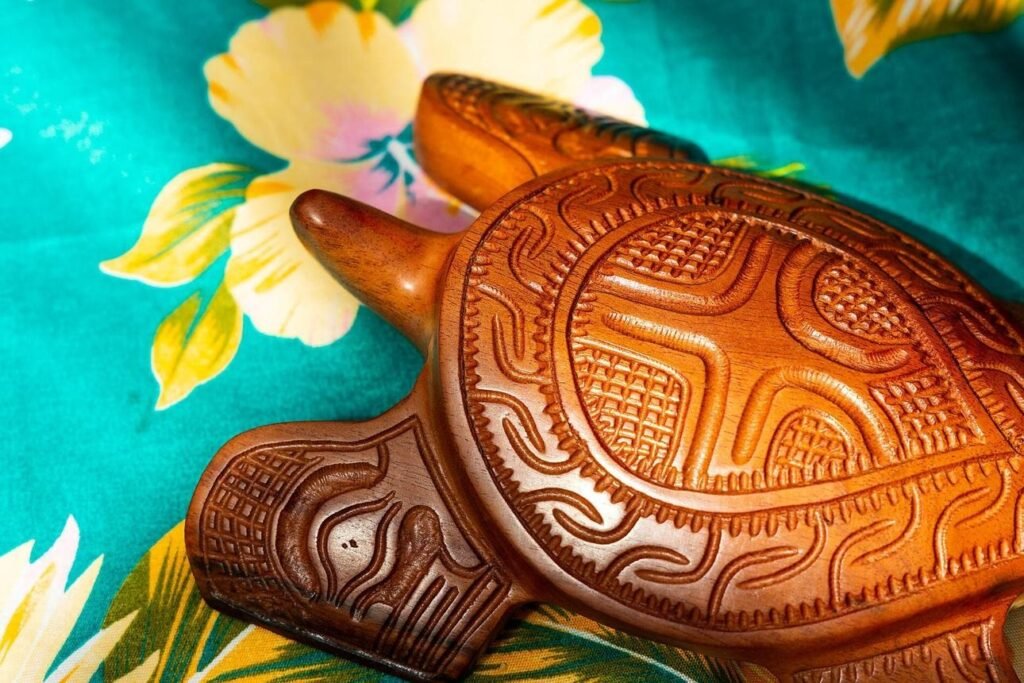
Turtles hold significance in some Pacific Island cultures, where the ocean, ancestral relationships, navigation, and marine life can be deeply interconnected. Turtle imagery may appear in traditional art, storytelling, and contemporary cultural expression.
However, the Pacific encompasses many distinct peoples, languages, and belief systems. There is no single Indigenous Pacific interpretation of sea turtles.
In some communities, turtles may be associated with ancestry, identity, protection, or relationships with the sea. Such meanings should be attributed to a particular community only when supported by its documented traditions or the community’s own explanations.
Modern Polynesian-inspired turtle designs are also widely used in tattoos and decorative art. Their popularity does not mean every design has the same traditional meaning, or that a contemporary commercial interpretation accurately represents a specific island culture.
Cultural insight: When interpreting a turtle motif, consider the community, the design’s origins, and whether the image is traditional, contemporary, or commercially adapted.
Turtle Symbolism in Native Hawaiian Culture
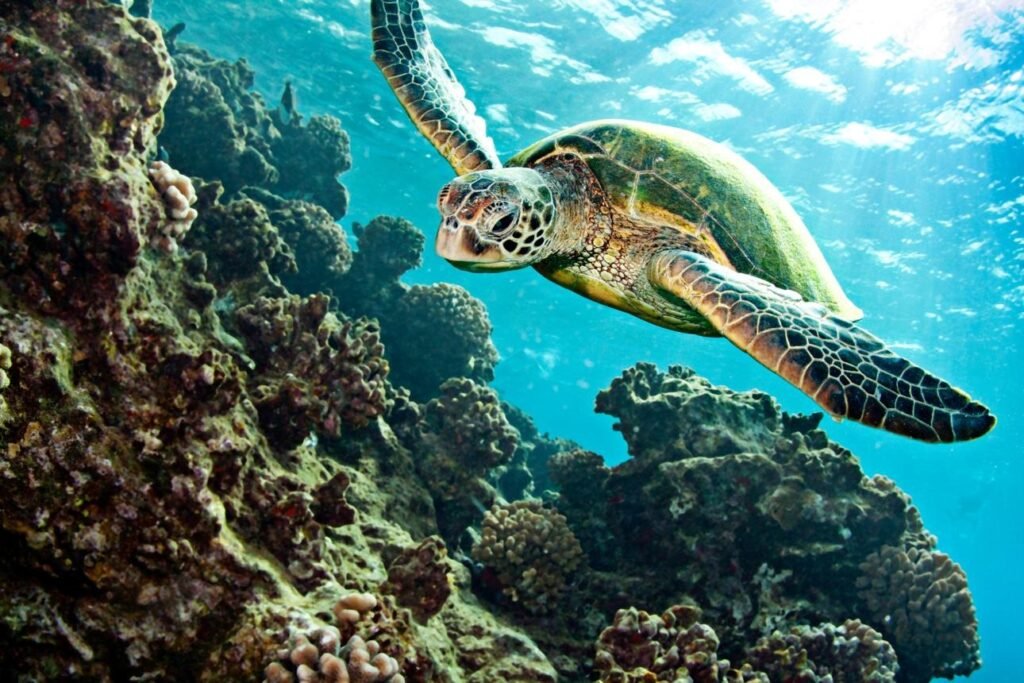
In Hawaiʻi, the green sea turtle, known as honu in Hawaiian, is an important marine animal with cultural and ecological significance.
The honu appears in Hawaiian cultural expression and is often associated in contemporary interpretations with longevity, good fortune, protection, and a connection to the ocean. Its significance can extend beyond individual spirituality to questions of cultural continuity and care for the natural environment.
It is important not to reduce Hawaiian traditions to a universal list of spiritual meanings. Interpretations can differ among individuals and families, and cultural knowledge should be understood within its own context.
The honu also has clear contemporary conservation significance. Hawaiian green sea turtles are protected wildlife, and respectful observation is essential to their welfare.
Sea Turtle Symbolism in Chinese Traditions
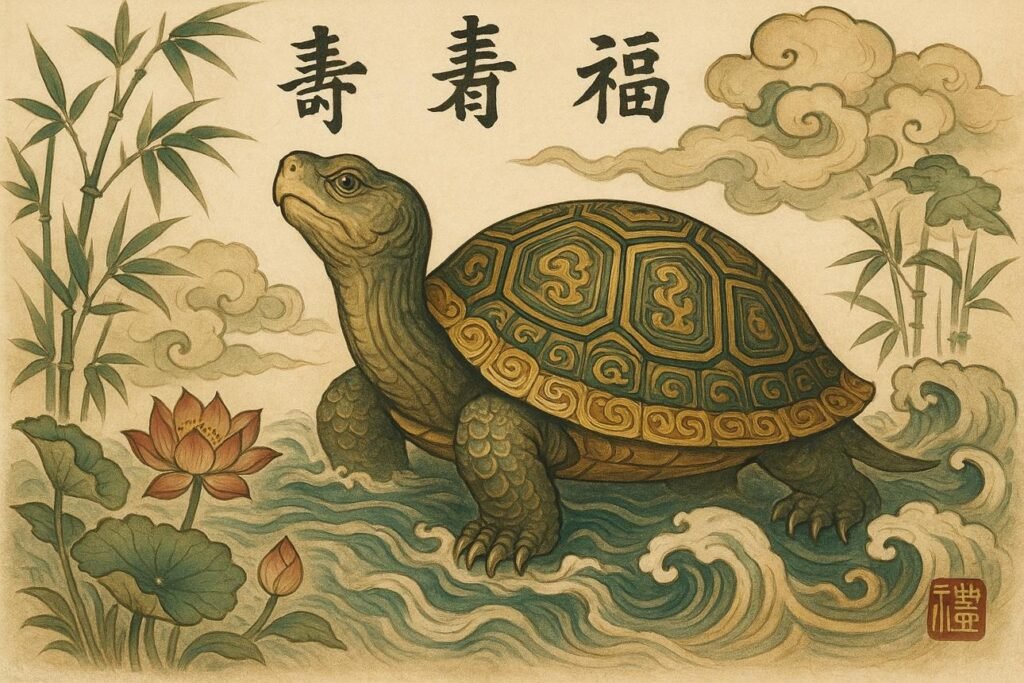
In Chinese tradition, turtles have been associated in various historical contexts with longevity, endurance, stability, and cosmological order. The turtle also appears in traditional imagery connected with auspiciousness and the symbolic structure of the universe.
These associations are part of a broader turtle tradition rather than evidence that all the same meanings originated specifically with marine turtles.
In traditional Chinese cosmological imagery, the Black Tortoise, or Xuanwu, is a significant directional and protective figure commonly represented through a tortoise and snake. It should not be confused with a sea turtle.
This distinction demonstrates how important species identification and historical context are when discussing animal symbolism.
Turtle Symbolism in Japanese Culture
Turtles have positive associations in Japanese cultural traditions, particularly longevity, good fortune, and enduring life. They appear in art, decorative objects, folklore, and celebrations.
The Japanese word kame means turtle, and the animal is familiar as a symbol of long life. The well-known folktale of Urashima Tarō, for example, features a turtle, although its narrative is more complex than a simple story about luck or longevity.
These broader turtle associations can inform modern interpretations of sea turtle imagery, but they should not be presented as a single ancient sea turtle doctrine.
Turtle Symbolism in Hindu Traditions
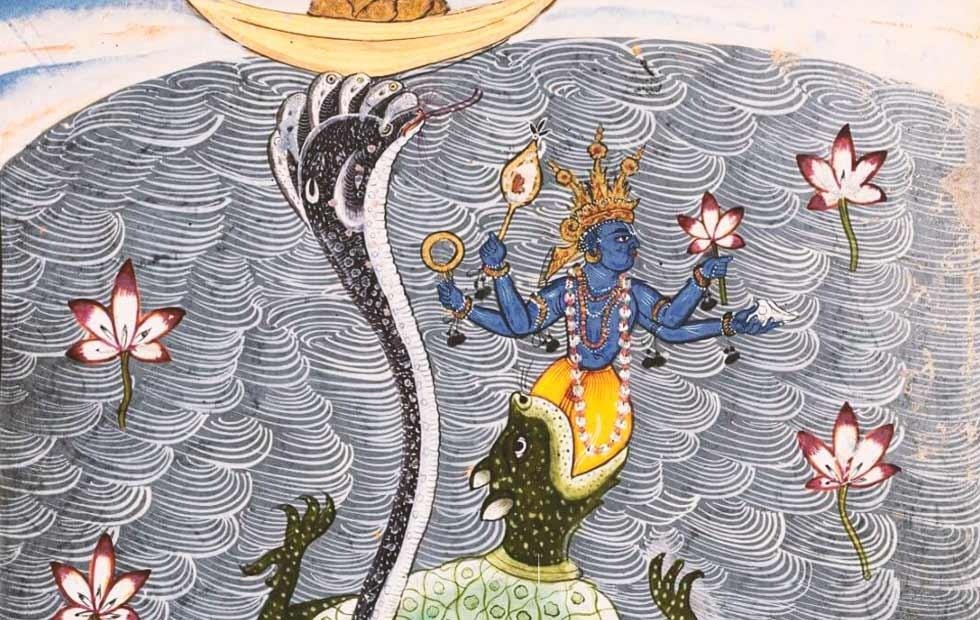
In Hindu traditions, the tortoise has important religious significance through Kurma, the tortoise incarnation of Vishnu. In the well-known story of the churning of the ocean, Vishnu takes the form of a tortoise to support Mount Mandara.
The narrative is associated with divine intervention and the preservation of cosmic order. The tortoise’s supporting role makes it a powerful image of stability and the sustaining foundation beneath a difficult undertaking.
However, Kurma is not specifically a sea turtle in the modern zoological sense. It is more accurate to discuss this story as tortoise symbolism in Hindu religious tradition than to identify it as direct evidence of sea turtle worship.
For contemporary readers, the story may inspire reflection on the importance of a stable foundation, collective effort, and the often-unseen support behind major achievements.
Turtle Symbolism in Indigenous North American Traditions
Turtles hold important places in the traditions of several Indigenous nations in North America. Some creation narratives connect a turtle with the land or the formation of the world, leading to the widely used name Turtle Island in certain Indigenous contexts.
These traditions are not uniform. Their details, significance, and relationships to community identity differ among nations.
Furthermore, many of these narratives concern turtles generally or freshwater species, not sea turtles specifically. They should not be combined into a single generalized belief about marine turtles.
A respectful interpretation recognizes the significance of the traditions to the communities that maintain them and avoids presenting sacred stories as interchangeable spiritual metaphors.
A Cultural Comparison of Turtle Symbolism
| Cultural context | Broader turtle association | Important distinction |
| Native Hawaiian culture | Cultural identity, connection with the ocean, contemporary protection and longevity associations | Honu specifically refers to the Hawaiian green sea turtle |
| Some Pacific Island cultures | Relationships with the sea, cultural identity, ancestry, and marine life | Meanings differ across communities |
| Chinese traditions | Longevity, stability, and cosmological symbolism | The Black Tortoise is not a sea turtle |
| Japanese traditions | Longevity and good fortune | Many familiar associations concern turtles generally |
| Hindu traditions | Cosmic support and preservation through Kurma | Kurma is a tortoise incarnation, not specifically a marine turtle |
| Some Indigenous North American traditions | Creation narratives and relationships with the land | Stories are nation-specific and often concern turtles other than sea turtles |
The central lesson is that cultural symbolism becomes more meaningful when examined in its actual historical and social setting. Similar images may develop independently in different societies, while apparently similar interpretations can carry very different meanings.
The Psychological Meaning of a Sea Turtle
The psychological meaning of a sea turtle can be explored through the associations people form with animals, the emotional significance of nature, and the way familiar images help communicate abstract ideas.
A sea turtle may evoke calmness, resilience, safety, or freedom because of its appearance and behavior. These responses are not universal psychological laws. They are interpretations influenced by personal experience, cultural learning, and context.
Why Sea Turtles Can Represent Emotional Resilience
Resilience generally refers to the ability to adapt to adversity and continue functioning through challenging circumstances. The sea turtle offers a compelling metaphor for this process because it lives in a changing environment and must respond to ecological challenges throughout its life.
Its symbolism can encourage people to think about resilience as adaptation rather than invulnerability.
For example, a person experiencing a career setback might associate the sea turtle with the idea that one difficult experience does not have to determine an entire future. The image can encourage persistence while leaving room for rest, support, and changes in direction.
Expert insight: Resilience does not mean enduring every difficulty alone. Sometimes it means changing your approach, seeking help, or recognizing when a particular path is no longer sustainable.
The Shell as a Symbol of Emotional Boundaries
The sea turtle’s shell often becomes a metaphor for emotional boundaries. It can represent privacy, security, and the ability to protect personal well being.
This interpretation can be useful when thinking about relationships, workplace expectations, or digital communication. A person might use a turtle image as a reminder to protect their time, limit unnecessary distractions, and respond thoughtfully rather than react immediately.
However, the metaphor has limits. Human emotional boundaries are learned interpersonal practices, whereas a turtle’s shell is a biological structure. The symbolism can inspire reflection, but it does not replace practical strategies for managing stress or relationships.
Slow Living and the Value of Patience
Sea turtle symbolism also connects with the modern idea of slow living: a preference for intentional choices, sustainable routines, and attention to experiences rather than constant productivity.
The comparison should not be taken literally. Sea turtles are active animals with specific biological needs, and their movements are not a model for every aspect of human life.
Instead, the image encourages a useful question: Are you moving at a pace that supports your long-term goals, or are you rushing because of external pressure?
In this context, sea turtle symbolism becomes a way to examine personal priorities and develop a more deliberate approach to everyday decisions.
Sea Turtles, Nature, and Emotional Connection
Observing wildlife can create opportunities for attention, curiosity, and appreciation of the natural world. A sea turtle swimming through clear water may inspire awe, while learning about its migration can increase appreciation for the complexity of marine ecosystems.
These experiences can be meaningful without requiring a supernatural explanation.
For some people, the sea turtle becomes a symbol of a deeper relationship with nature. For others, it represents a specific memory, a childhood interest, or a commitment to environmental responsibility.
The psychological meaning comes partly from the relationship between the animal and the observer.
Sea Turtle Symbolism in Dreams
A sea turtle in a dream may represent patience, protection, emotional security, personal growth, or the desire to navigate life at a more manageable pace. Its meaning depends on the dreamer’s circumstances, emotions, and personal associations.
Dream interpretation is subjective. There is no scientifically validated system that establishes one universal meaning for every animal in a dream.
Dreaming of a Sea Turtle Swimming
A swimming sea turtle may suggest freedom, adaptability, or a willingness to explore unfamiliar possibilities.
If the turtle moves confidently through clear water, you might associate the dream with emotional ease or confidence about a current decision. If it struggles through rough water, the image might prompt reflection on stress or uncertainty.
These interpretations are possibilities, not evidence that a dream predicts future events.
Dreaming of a Sea Turtle on the Beach
A sea turtle on a beach may evoke home, rest, transition, or the need to reconnect with familiar surroundings.
Because beaches form a boundary between land and sea, they can also serve as metaphors for transitions between different stages of life.
If you are moving, changing careers, or adjusting to a new relationship, you might interpret the dream in relation to those experiences.
Dreaming of a Baby Sea Turtle
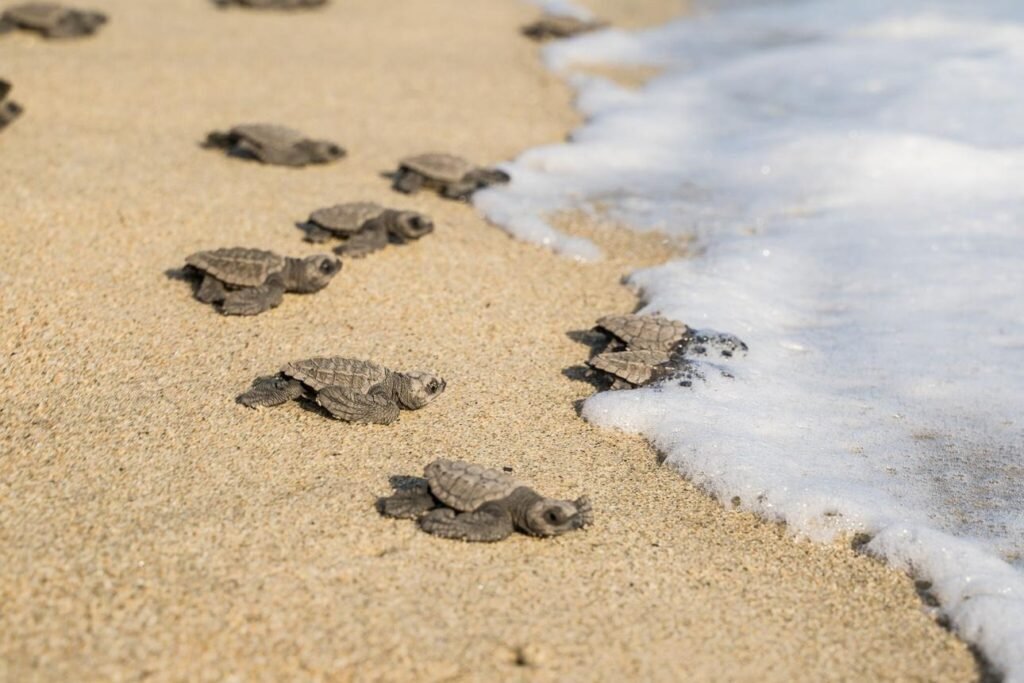
A baby sea turtle may symbolize a new beginning, vulnerability, potential, or the early stages of personal growth.
Its small size can evoke the idea that something meaningful may begin modestly and require care before it develops.
For someone starting a business, learning a skill, or rebuilding confidence, the image may serve as a reminder to protect early progress and allow development to happen gradually.
Dreaming of a Sea Turtle in Clear Water
Clear water may evoke clarity, openness, or emotional understanding in a personal dream interpretation. Combined with a sea turtle, it might suggest a desire for a calmer perspective or greater confidence in your direction.
However, dream images do not have fixed meanings. The feelings you experienced during the dream and the events occurring in your life are more useful starting points than a generic interpretation.
Dreaming of an Injured or Dead Sea Turtle
An injured sea turtle might evoke vulnerability, concern, or a sense that something important needs attention. A dead sea turtle might symbolize perceived loss, disappointment, or the end of a meaningful chapter.
Such dreams do not predict death, disaster, or bad luck.
If a dream feels upsetting, consider whether it connects to an actual concern, a recent experience, or something you are struggling to process. You do not need to interpret every dream as a warning or spiritual message.
Sea Turtle Symbolism in Religion and Mythology
Sea turtle symbolism intersects with religion and mythology through broader turtle traditions, creation stories, cosmological imagery, and contemporary spiritual practices.
The distinction between a sea turtle and a turtle or tortoise in a religious narrative is important. Many famous stories involve turtles without specifying a marine species, so they should not be treated as direct evidence of sea turtle symbolism.
Turtles as Symbols of Cosmic Support
In several mythological traditions, turtles appear in stories that explain the structure or origins of the world.
The Hindu Kurma narrative is one example of a tortoise supporting Mount Mandara during the churning of the ocean. Some Indigenous North American creation narratives also involve turtles in relationships between land, water, and the formation of the world.
Although these stories differ substantially, they demonstrate how an animal’s physical form can become part of a larger account of cosmic order and the origins of life.
In contemporary reflection, these narratives may inspire themes of stability, support, and interconnectedness. Their original religious meanings, however, should not be reduced to generic self-help messages.
Are Sea Turtles Sacred Animals?
Sea turtles are culturally significant to some communities, but they are not universally considered sacred.
Whether a sea turtle has a sacred role depends on the specific community, its traditions, and the animal’s place in its cultural or religious worldview. In some contexts, a turtle may be connected to ancestry, ceremonial practice, identity, or traditional ecological knowledge. In others, it may have no particular sacred status.
A responsible discussion should identify the tradition involved rather than claiming that all spiritual systems assign the animal the same meaning.
Are Sea Turtles Signs from the Universe?
Some contemporary spiritual practitioners interpret animal encounters as signs that encourage reflection, gratitude, or a reassessment of personal priorities.
Within that framework, seeing a sea turtle might be interpreted as a reminder to slow down, protect your peace, or remain committed to a long-term goal.
These interpretations are matters of personal belief. There is no reliable scientific evidence that sea turtles are sent by the universe to deliver individualized messages.
You can still find personal meaning in an encounter while acknowledging ordinary explanations, such as the animal’s habitat, feeding behavior, or migration patterns.
Sea Turtle Symbolism in Art, Literature, and Storytelling
Sea turtles are visually distinctive and culturally adaptable symbols. Their shells, flippers, streamlined bodies, and association with the ocean make them recognizable across illustration, sculpture, jewelry, film, and written storytelling.
Artists can use a sea turtle to communicate ideas about endurance, travel, nature, and the passage of time without needing to explain every association in words.
Sea Turtles in Visual Art and Iconography

12
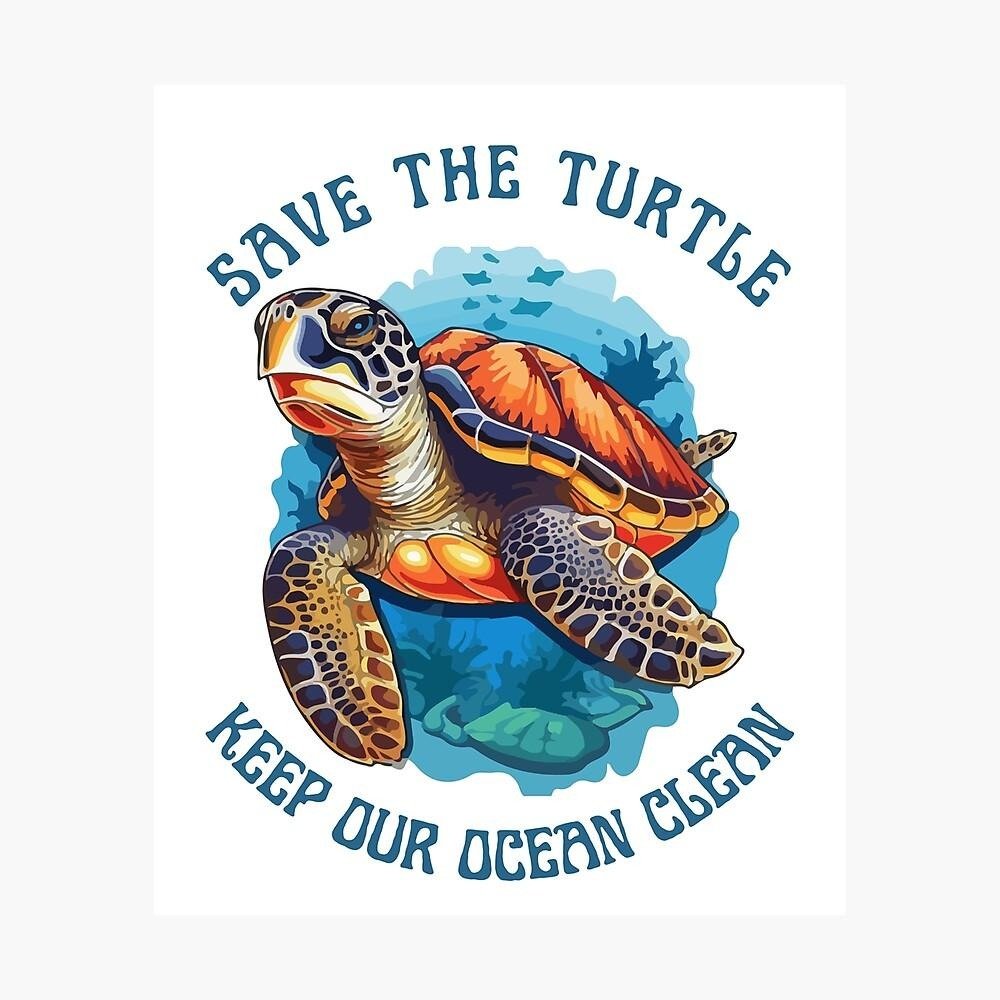
In visual art, the sea turtle can communicate different meanings through its pose, color, setting, and relationship to other objects.
- A turtle swimming through open water may emphasize freedom and exploration.
- A turtle surrounded by coral may highlight ecological relationships and biodiversity.
- A turtle carrying a detailed shell pattern may draw attention to endurance, identity, or natural complexity.
- A turtle swimming toward the horizon may suggest a journey or an unknown future.
- A turtle depicted alongside plastic waste may communicate the dangers of marine pollution.
These meanings emerge through visual communication. The viewer interprets the animal together with its surroundings, composition, and cultural associations.
Sea Turtles in Literature and Children’s Stories
In literature, turtle characters often serve as symbols of patience, persistence, or the relationship between speed and wisdom. These associations are frequently connected with turtles generally rather than sea turtles specifically.
Writers can adapt the familiar image of a turtle to explore identity, migration, environmental responsibility, belonging, or the challenges of growing up.
For example, a children’s story about a young sea turtle traveling toward the ocean might explore courage, independence, and the transition from dependence to exploration. A novel about a sea turtle returning to its nesting region might use migration as a metaphor for memory, family, or cultural continuity.
The symbolic value depends on the narrative rather than on a single prescribed meaning.
Sea Turtle Symbolism in Film and Media
In film and digital media, sea turtles can communicate environmental themes quickly because viewers already recognize their connection with the ocean.
A documentary featuring sea turtle nesting may emphasize the vulnerability of wildlife and the importance of protecting coastal ecosystems. An animated film might use a turtle character to represent calmness, experience, or a different pace of life.
Social media images often simplify these associations into short messages about patience, peace, or personal growth. Such messages can be effective, but they may omit important cultural distinctions or ecological facts.
A thoughtful interpretation considers both what the image communicates and what it leaves out.
Sea Turtle Symbolism in Modern Life
Sea turtle symbolism remains relevant because the animal connects personal values with visible, real-world concerns. It can function as a symbol of individual resilience, cultural identity, creative expression, and environmental responsibility.
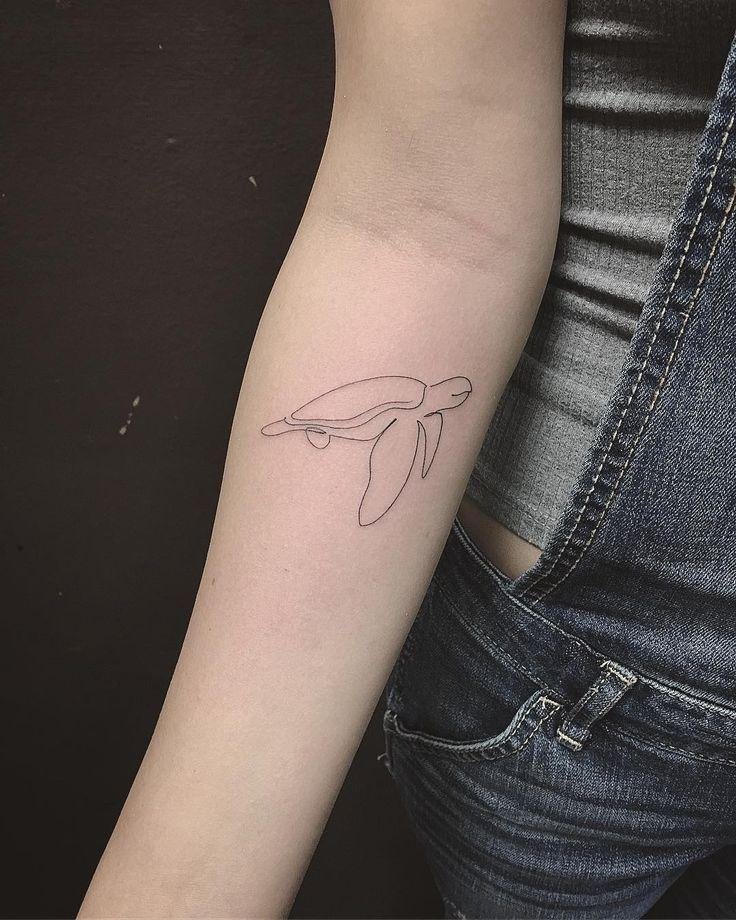
Sea Turtle Tattoos and Their Meanings
11
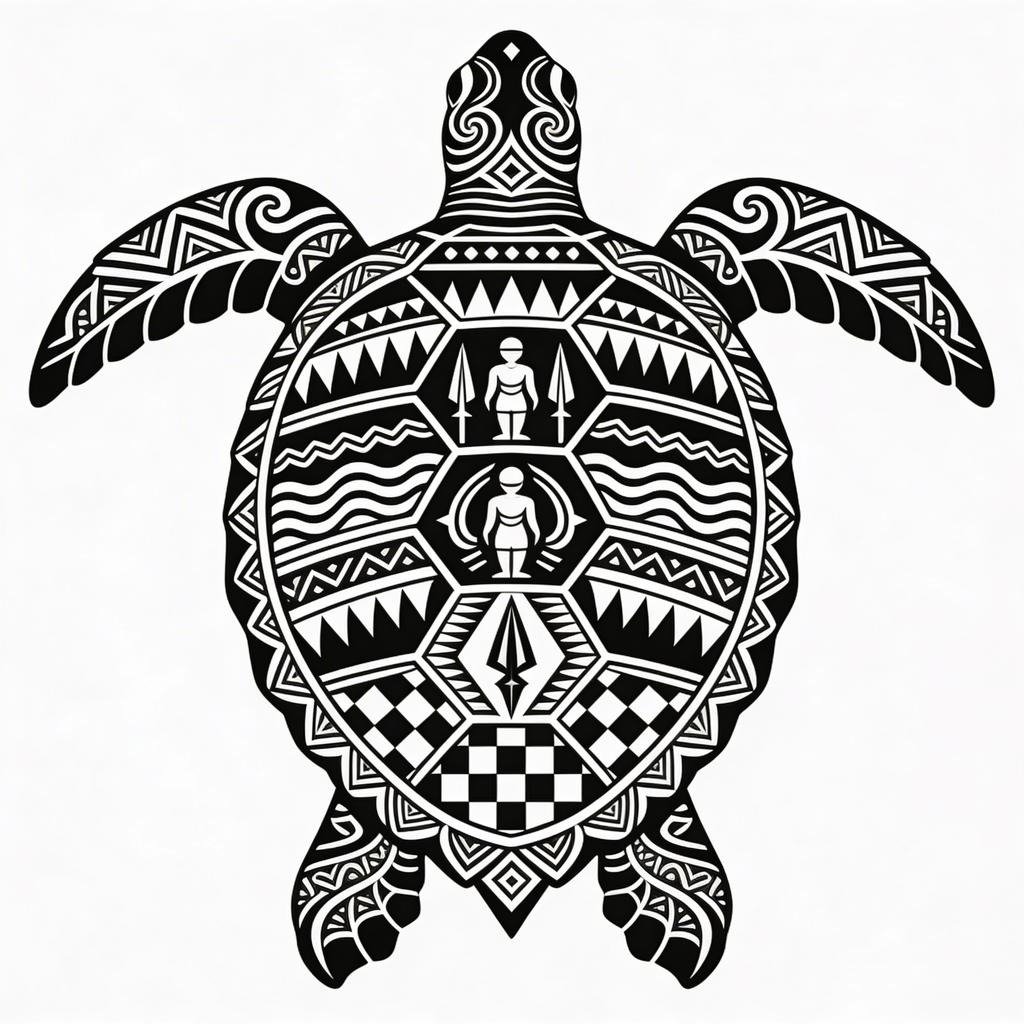
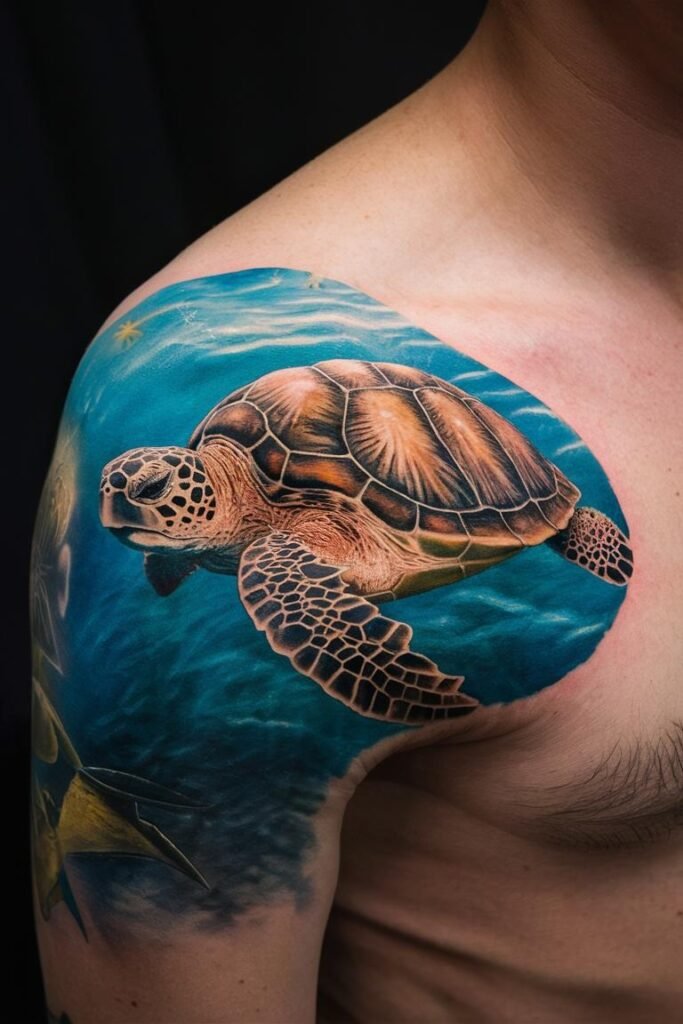
A sea turtle tattoo may represent patience, protection, longevity, freedom, connection with the ocean, or an important personal journey.
| Tattoo design | Possible interpretation | Context to consider |
| Minimalist sea turtle | Calmness, simplicity, personal meaning | Often chosen for its clean, understated appearance |
| Sea turtle with ocean waves | Adaptability, freedom, connection with nature | The waves may emphasize movement and change |
| Baby sea turtle | New beginnings, growth, vulnerability | May commemorate a new stage of life |
| Sea turtle with a compass | Direction, travel, purpose | Often reflects an individual’s journey |
| Sea turtle with a detailed traditional motif | Cultural identity or heritage | The design’s specific cultural origin matters |
| Sea turtle with a conservation theme | Environmental responsibility | May express support for marine protection |
Important cultural consideration: Some turtle motifs used in contemporary tattoo designs draw inspiration from Polynesian or other Indigenous visual traditions. Such designs can carry meanings specific to particular communities. Before using a traditional pattern, learn about its origin and significance rather than assuming that a generic online explanation accurately represents it.
Sea Turtles in Jewelry and Personal Gifts
Sea turtle jewelry is often chosen to express affection, remembrance, resilience, or a shared love of the ocean.
A sea turtle pendant may remind its wearer of a memorable trip, a family member, or an important life transition. A turtle-themed gift might communicate encouragement to someone beginning a new chapter.
The meaning of the gift depends on the relationship and the story behind it. A symbol does not need a universal interpretation to be valuable to the people who share it.
Sea Turtle Symbolism in Branding and Design
Businesses, conservation organizations, and travel brands may use sea turtle imagery to communicate environmental awareness, coastal identity, or a connection with marine life.
In branding, the animal can evoke:
- Trust and continuity: Through associations with longevity and persistence.
- Nature and sustainability: Through its direct relationship with marine ecosystems.
- Travel and exploration: Through its migrations and ocean habitat.
- Calmness and well-being: Through its graceful appearance and underwater setting.
- Conservation: Through public awareness of the threats faced by sea turtles.
However, a sea turtle logo alone does not demonstrate that a company operates sustainably. Environmental claims should be supported by transparent practices, credible evidence, and measurable commitments.
Sea Turtles in Education and Environmental Awareness
Sea turtles are valuable subjects for environmental education because their life cycles connect several important ecological concepts, including nesting beaches, marine food webs, migration, coastal development, and biodiversity.
Their image can help explain how human activities affect wildlife. For example, artificial lighting near nesting beaches can disorient hatchlings, while discarded fishing gear and plastic debris can harm marine animals.
A conservation campaign that uses a sea turtle can therefore connect an emotionally recognizable symbol with specific actions, such as reducing plastic waste, following responsible wildlife-viewing guidance, and supporting credible marine conservation programs.
In this context, the sea turtle represents more than a personal spiritual meaning. It becomes a way to communicate the relationship between individual behavior and environmental health.
Sea Turtle Symbolism and Environmental Conservation
Sea turtles have become important symbols of ocean conservation because their survival depends on healthy marine habitats, suitable nesting beaches, and conditions that allow young turtles to reach the ocean.
Several sea turtle species face threats from habitat degradation, accidental capture in fishing gear, pollution, climate change, and other human activities. Their conservation status varies by species and population, so it is important not to assume that every sea turtle faces exactly the same risks.
Why Sea Turtles Matter to Marine Ecosystems
Sea turtles occupy different ecological roles depending on their species and life stage. Green sea turtles, for example, can graze on seagrasses as adults, while hawksbill turtles feed heavily on sponges in many reef environments. Leatherback sea turtles specialize in eating gelatinous animals, including jellyfish.
These differences show why sea turtles should not be treated as one ecologically identical group.
Their symbolic connection with balance and interconnectedness has a practical foundation: their lives are linked with marine food webs, coastal habitats, and broader ocean conditions.
How Sea Turtle Symbolism Encourages Conservation
A sea turtle can make an abstract environmental problem more understandable. An image of a hatchling navigating a beach, for instance, can help audiences recognize how coastal lighting, human disturbance, and habitat changes affect wildlife.
Practical ways to support sea turtle conservation include:
- Reducing single-use plastic consumption and disposing of waste responsibly.
- Keeping a respectful distance from sea turtles and never touching or feeding them.
- Following local rules for nesting beaches and wildlife encounters.
- Choosing responsible wildlife-tourism operators.
- Supporting credible conservation organizations and habitat-protection initiatives.
- Avoiding bright lights and disturbances near nesting areas where local guidance requires it.
The broader lesson is that a symbol becomes more meaningful when it inspires informed action. Sea turtle imagery can communicate hope, but effective conservation also requires science, habitat protection, community participation, and responsible policy.
Common Misconceptions About Sea Turtle Symbolism
Sea turtle symbolism is rich, but popular explanations sometimes present spiritual beliefs as universal facts. The following distinctions help preserve both cultural respect and factual accuracy.
| Common claim | More balanced interpretation |
| Every sea turtle sighting is a spiritual message. | Some people interpret sightings spiritually, while others experience them as memorable encounters with wildlife. |
| Sea turtles always symbolize good luck. | Good fortune is one possible modern interpretation, not a universal belief. |
| All cultures associate sea turtles with wisdom and longevity. | These associations appear in some contexts, but meanings vary across cultures and traditions. |
| Sea turtles and tortoises have identical cultural meanings. | They share some broader symbolism, but their habitats, biology, and cultural roles can differ. |
| A sea turtle dream predicts a future event. | Dream interpretation is subjective, and no universal predictive meaning has been established. |
| A turtle tattoo always represents the same spiritual message. | Its meaning depends on the design, the wearer, and any relevant cultural context. |
| Sea turtle imagery proves that a business is environmentally responsible. | Sustainability claims require evidence of actual practices, not just nature-inspired branding. |
Myth vs. Fact
Myth: Seeing a sea turtle means your problems will soon disappear.
Fact: Some people find hope in the encounter, but it cannot guarantee a particular outcome.
Myth: The sea turtle is a universal symbol of divine protection.
Fact: Protection is a common symbolic interpretation, but religious and spiritual beliefs differ.
Myth: A sea turtle always tells you to slow down.
Fact: Patience is one possible lesson. In another context, the turtle may represent exploration, resilience, environmental responsibility, or cultural identity.
Myth: Every turtle symbol originates in the same ancient tradition.
Fact: Turtle imagery has developed through many distinct cultural histories. Similar meanings do not necessarily indicate a shared origin.
Practical Applications: How to Use Sea Turtle Symbolism in Everyday Life
Sea turtle symbolism can be useful when it encourages reflection, clearer communication, or constructive decisions. You do not need to believe in supernatural signs to find value in its associations.
1. Use the Sea Turtle as a Reminder of Long-Term Goals
If you are working toward a demanding goal, keep a sea turtle image in a journal, workspace, or planner.
Use it as a reminder to focus on consistent progress rather than expecting immediate results. Pair the symbol with a specific action, such as practicing a skill for 20 minutes each day or reviewing your progress every week.
2. Reflect on Personal Boundaries
The shell can represent the importance of protecting your time and energy.
When you feel overwhelmed, consider which responsibilities genuinely require your attention and which boundaries might help you manage your commitments more effectively.
The purpose is not to withdraw from every difficult situation, but to create enough security to respond thoughtfully.
3. Mark a Personal Transition
A sea turtle image can commemorate graduation, a career change, a move, or another significant transition.
Its association with migration and return may help you express both independence and continuity: the willingness to explore something new while retaining the values that matter to you.
4. Communicate Environmental Values
Sea turtle imagery can be incorporated into educational materials, community campaigns, or creative projects about marine conservation.
To make the message effective, combine the image with accurate information and a clear action. For example, a poster might explain how to observe marine wildlife responsibly rather than simply presenting the turtle as a general symbol of peace.
5. Explore Personal Meaning Through Journaling
If you repeatedly notice sea turtles or feel drawn to their symbolism, write down what the animal means to you.
Consider these questions:
- Which quality do I associate most strongly with the sea turtle?
- What current experience makes that quality meaningful?
- Is there a cultural story or personal memory influencing my interpretation?
- What practical action could help me express this value?
This approach treats symbolism as a tool for self-reflection rather than a substitute for evidence or decision-making.
Did You Know? Five Fascinating Facts About Sea Turtles
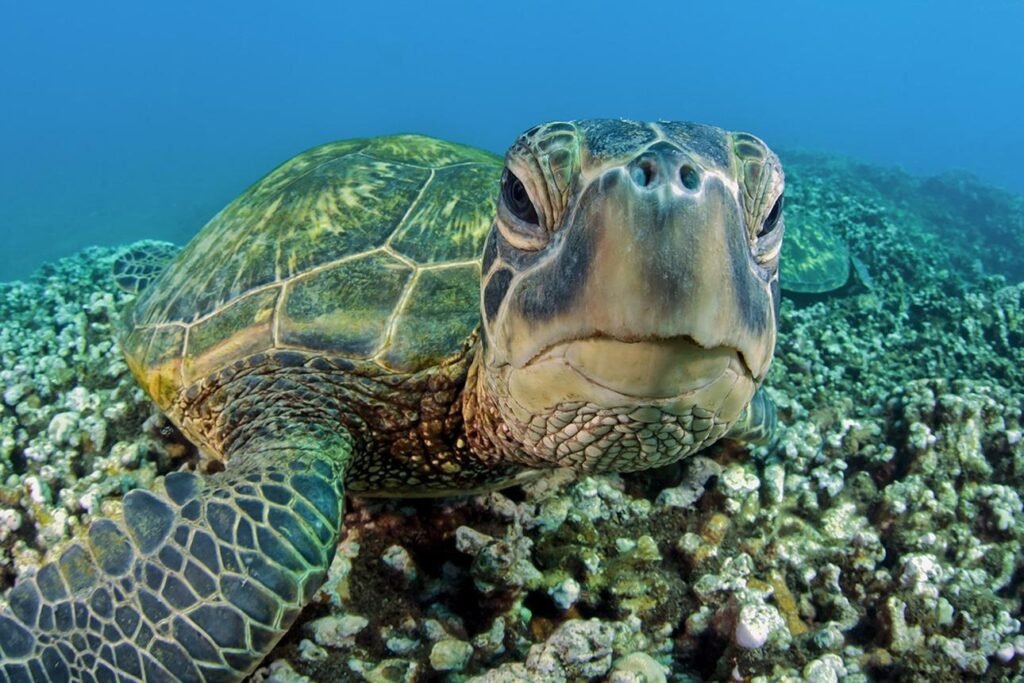
1. Sea turtles are reptiles, not fish.
They breathe air with lungs and must surface to breathe, even though they spend much of their lives in the ocean.
2. Many sea turtles undertake long migrations.
Some travel vast distances between feeding grounds and nesting regions, making them natural examples of navigation and endurance.

3. Females often return to familiar nesting regions.
Many return to the general areas where they hatched, although the timing and precision of this behavior vary.

4. Not all sea turtles have the same kind of shell.
The leatherback has a distinctive leathery carapace rather than the hard, bony shell typical of most other sea turtles.
5. A sea turtle’s journey begins on land.
Hatchlings emerge from nests on beaches and make their way toward the sea, linking coastal and marine environments during a critical stage of their lives.
These natural-history facts help explain why sea turtles inspire associations with journeys, endurance, adaptation, and the connection between different environments. Their biology offers a foundation for symbolism without proving that any particular spiritual interpretation is objectively true.
Key Insights: What Sea Turtle Symbolism Teaches Us
Sea turtle symbolism brings together natural history, cultural traditions, personal reflection, and environmental awareness. Its meaning becomes clearer when we distinguish established facts about the animal from interpretations people have developed around it.
The most important insights include:
- Patience and perseverance: The sea turtle can represent consistent effort and long-term growth.
- Protection and security: Its shell offers a metaphor for personal boundaries and emotional safety.
- Wisdom and experience: Its long life inspires reflection on learning and thoughtful decisions.
- Freedom and exploration: Its ocean journeys can symbolize independence and the willingness to enter unfamiliar territory.
- Cultural diversity: Turtle symbolism differs across communities, and traditions involving tortoises or freshwater turtles should not automatically be attributed to sea turtles.
- Personal spirituality: A sighting or dream can be meaningful without being treated as a guaranteed supernatural message.
- Environmental responsibility: Sea turtles connect symbolic ideas about harmony with practical concerns about marine ecosystems and conservation.
Ultimately, the sea turtle’s meaning is not limited to a single definition. It can represent a personal journey, a cultural relationship with the ocean, a spiritual reflection, or a commitment to protecting wildlife.
Frequently Asked Questions About Sea Turtle Symbolism
1. What does a sea turtle symbolize spiritually?
Spiritually, a sea turtle is commonly interpreted as a symbol of patience, wisdom, protection, longevity, resilience, and harmony with nature. Some people also associate it with grounding, renewal, and trust in life’s natural rhythms. These meanings vary among spiritual traditions and individuals rather than representing a universal religious teaching.
2. Is seeing a sea turtle a sign of good luck?
Some contemporary spiritual interpretations associate seeing a sea turtle with good luck, protection, hope, or positive change. However, there is no scientific evidence that a sea turtle sighting predicts good fortune. You can interpret the experience as a personal reminder to remain hopeful or appreciate nature without assuming it guarantees a particular outcome.
3. What does a sea turtle symbolize in different cultures?
Sea turtle symbolism varies across cultures. In Hawaiʻi, the green sea turtle, or honu, has cultural and ecological significance. Some Pacific Island traditions incorporate turtles into cultural expression and relationships with the sea. In Chinese and Japanese traditions, turtles more broadly are associated with longevity and other auspicious meanings. Hindu mythology features Kurma, Vishnu’s tortoise incarnation, while certain Indigenous North American traditions include turtles in creation narratives. These examples concern different species, traditions, and historical contexts and should not be treated as one universal sea turtle belief.

Discover symbolism in art, literature, and creativity with Amelia Rhodes’ insightful articles.
