Introduction: What Does Camellia Symbolism Mean?
Camellia symbolism explores the meanings associated with one of the world’s most admired flowering plants.
Known for its graceful petals, glossy evergreen leaves, and elegant appearance, the camellia flower often represents love, admiration, devotion, beauty, and inner strength.
Whether it appears in a romantic bouquet, a traditional garden, a painting, or a piece of jewelry, this flower can communicate emotions that are sometimes difficult to express in words.
The meaning of a camellia depends on its color, cultural background, historical associations, and the circumstances in which it is given or displayed.
A red camellia may suggest romantic passion, while a white camellia can evoke purity, sincerity, or remembrance.
Pink varieties are frequently associated with affection, tenderness, and admiration.
These meanings are not universal rules, but they offer a useful starting point for understanding the flower’s cultural and emotional significance.
In a world filled with visual messages, flowers remain a powerful form of communication.
Camellias are particularly interesting because they combine delicate beauty with an evergreen character, creating associations with both tenderness and resilience.
Their symbolism connects botanical history, cultural traditions, floral language, psychology, art, literature, spirituality, and modern design.
Camellia Symbolism: A Quick Definition
Camellia symbolism refers to the meanings people associate with camellia flowers, especially love, admiration, devotion, elegance, beauty, and resilience. Depending on the flower’s color and cultural context, camellias may also represent purity, longing, gratitude, or remembrance. Their symbolic significance appears in floral traditions, gardens, art, literature, fashion, and personal gifts, although interpretations vary across societies and individuals.
1. The Core Meaning of Camellia Flowers
Camellias are commonly associated with affection, admiration, refined beauty, and devotion. Their symbolic appeal comes partly from their appearance: layered petals form a balanced bloom, while the plant’s glossy green foliage remains attractive beyond its flowering season.
Several major themes help explain why camellias have become meaningful in different settings.
Love and romantic devotion
Camellias can represent deep affection, romantic interest, and appreciation for a partner. Their full, symmetrical blossoms create a visual impression of completeness, making them suitable for expressing feelings that go beyond casual attraction.
A red camellia may be chosen to communicate passionate love, while a pink one can convey gentle affection or admiration. The message becomes more personal when the giver explains why that particular flower was chosen.
Beauty and elegance
The camellia’s carefully arranged petals and polished leaves have made it a favorite in ornamental gardens, decorative arts, and fashion. Symbolically, it can suggest beauty that feels composed rather than extravagant.
This association is especially useful in visual design. A camellia illustration can communicate sophistication without relying on elaborate ornamentation or an overly complicated composition.
Devotion and loyalty
Evergreen foliage offers a natural metaphor for continuity. Although the flowers bloom seasonally, the plant remains leafy, encouraging associations with enduring affection, commitment, and relationships that persist through changing circumstances.
This is a symbolic interpretation of the plant’s appearance, rather than proof that camellias have one fixed meaning in every culture.
Resilience and renewal
Many camellias bloom in late autumn, winter, or early spring, depending on the species and local climate. Flowers appearing when much of the garden is quiet can suggest hope, renewal, patience, and the ability to maintain beauty through challenging seasons.
This makes the camellia a thoughtful emblem for a new beginning, a personal milestone, or encouragement during a difficult period.
2. Camellia Symbolism by Color
The color of a camellia can influence its perceived message. However, color meanings depend on cultural traditions, floral conventions, and personal associations. They should be treated as useful interpretations rather than universal codes.
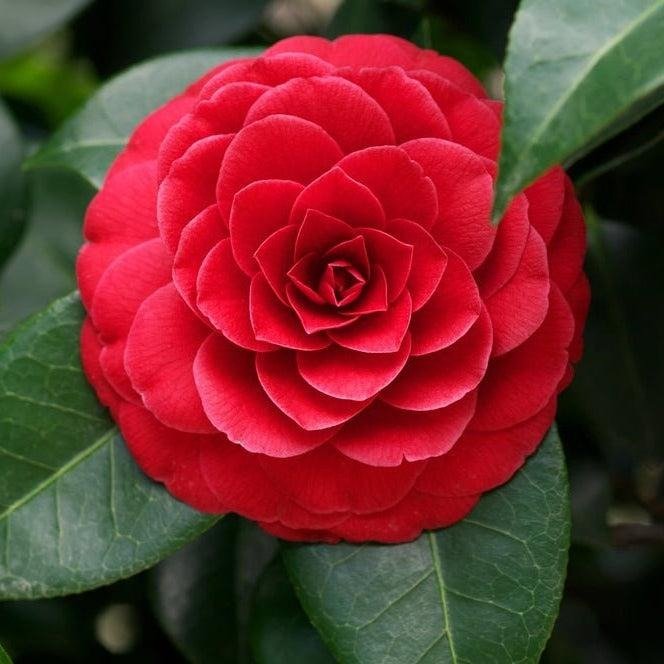
Red camellia: Passion and deep affection
Red camellias are often associated with romantic love, courage, strong feelings, and admiration. Their rich color makes them an expressive choice for anniversaries, romantic gifts, and designs intended to communicate emotional intensity.
Best suited for: Romantic occasions, meaningful gifts, and artwork about love or devotion.
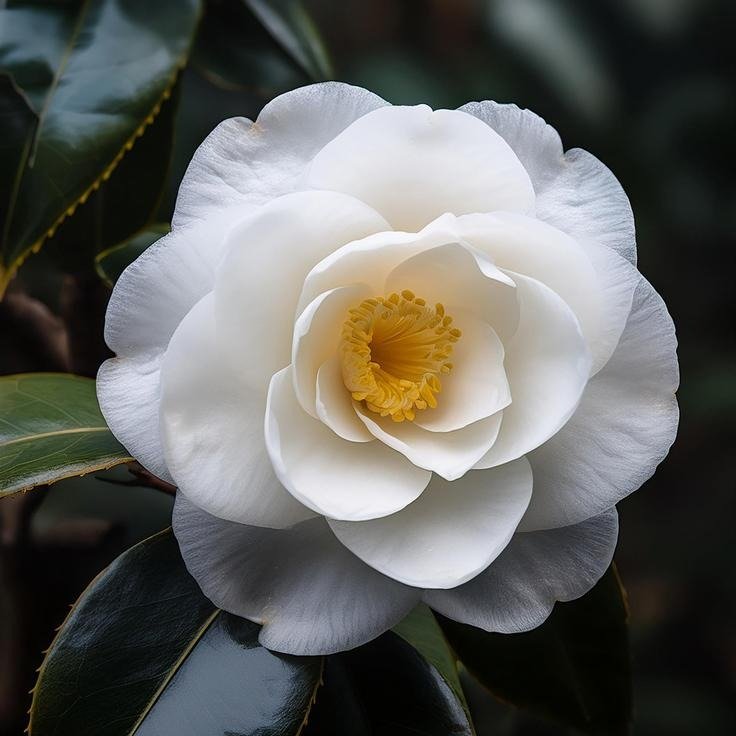
White camellia: Purity and sincerity
White camellias can suggest honesty, simplicity, respect, and peaceful intentions. Their restrained appearance also lends itself to themes of reflection and remembrance. In some Japanese contexts, however, camellias may be unsuitable as gifts for sick or injured people because of the way their blossoms fall intact.
Nippon
+1
Best suited for: Thoughtful arrangements, minimalist design, and expressions of sincere respect, when culturally appropriate.
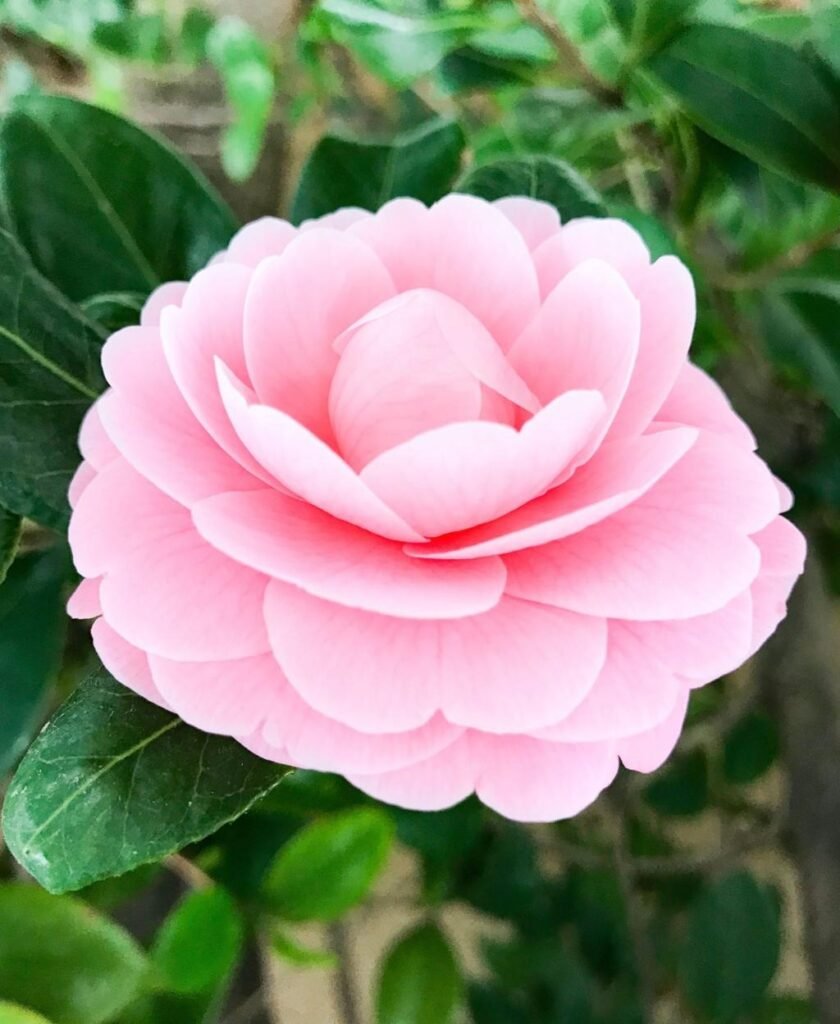
Pink camellia: Tenderness and admiration
Pink camellias commonly evoke warmth, affection, gratitude, and gentle appreciation. They can communicate emotional closeness without the intensity sometimes associated with deep red flowers.
Best suited for: Friendship, family appreciation, birthdays, and affectionate gestures.
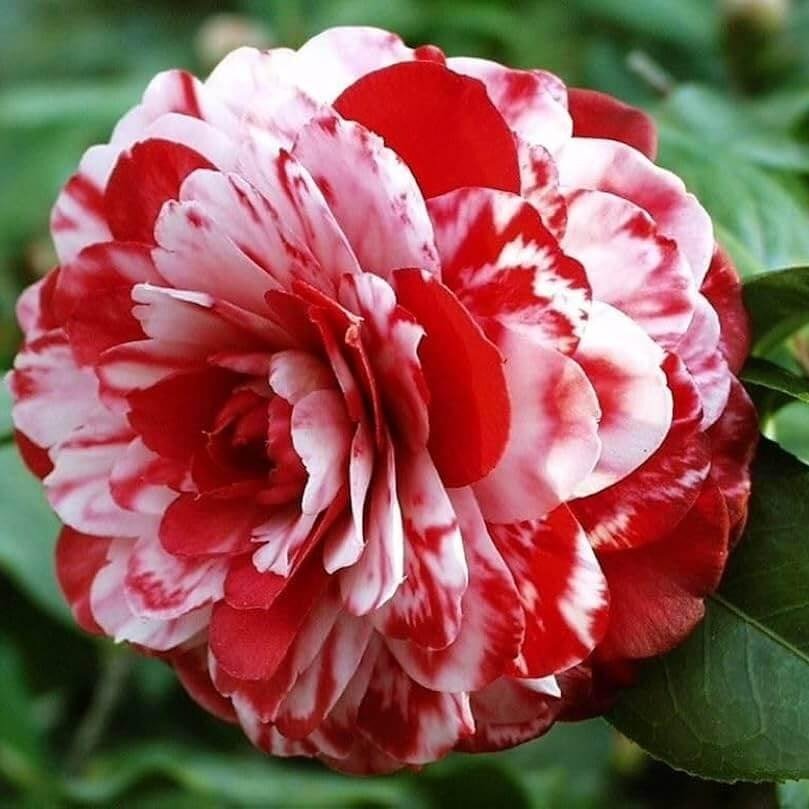
Variegated camellia: Individuality and contrast
Red-and-white or pink-and-white varieties can inspire interpretations involving contrast, complexity, and the coexistence of different emotions. These are creative interpretations of their appearance, not a standardized historical flower-language definition.
Best suited for: Artistic compositions, distinctive gifts, and designs celebrating individuality.
Camellia color meaning at a glance
| Color | Common symbolic associations | Possible use |
| Red | Passion, romantic affection, courage | Romantic gifts |
| White | Purity, sincerity, peace, remembrance | Reflective or elegant arrangements |
| Pink | Tenderness, admiration, gratitude | Friendship and appreciation |
| Variegated | Individuality, contrast, complexity | Creative and decorative projects |
Expert tip: If you are giving camellias to someone from a different cultural background, consider the recipient’s traditions and the occasion before relying on a color-based interpretation.
3. The History and Origins of Camellia Symbolism
Camellia symbolism developed through a combination of cultivation, seasonal observation, literature, religious customs, and artistic representation. The flower did not acquire all its meanings at one moment; its significance evolved as different communities encountered and cultivated it.
Ancient and historical China
Camellias have a long cultivation history in China, where they were appreciated well before their introduction to European horticulture. Botanical and historical scholarship shows that Chinese representations often placed plants within a wider cultural framework of poetry, descriptive writing, and traditional knowledge.
Wiley Online Library
+1
This context matters because a flower in traditional Chinese art was not necessarily a decorative object alone. Its appearance, season, literary associations, and relationship to other plants could contribute to the meaning of an image.
Modern interpretations often connect camellias with vitality, refinement, affection, and longevity. Such associations should not be assumed to apply identically across every Chinese region or historical period.
Japan: The tsubaki tradition
In Japan, the camellia is known as tsubaki. It has appeared in poetry, gardens, decorative arts, and traditional flower arrangements for centuries.
The Japanese National Diet Library documents camellia imagery in early literary and artistic traditions and describes the popularity of numerous cultivated varieties during the Edo period (1603–1868).
Digital Exhibitions
+1
The flower’s importance was not merely aesthetic. Its glossy evergreen leaves and seasonal blossoms gave it a distinctive place in Japanese gardens and artistic compositions. Its role in tea-room decoration also reflects the cultural importance of seasonal flowers and carefully chosen natural details.
Europe and the Victorian language of flowers
Camellias reached European horticultural circles as trade with East Asia expanded during the seventeenth and eighteenth centuries. They became prized ornamental plants, and their cultivated varieties attracted gardeners and collectors.
Wiley Online Library
+1
During the nineteenth century, the Victorian language of flowers, or floriography, made it fashionable to communicate feelings through floral gifts. Flower dictionaries assigned meanings to particular plants and suggested ways to combine them into messages. The tradition was especially popular in Britain and North America after developing in France.
Google Arts & Culture
Camellias consequently became associated with cultivated taste, fashionable elegance, and romantic expression. These Western associations grew alongside, rather than replacing, the flower’s established Asian histories.
4. Camellia Symbolism in Japanese Culture
The Japanese relationship with camellias illustrates an important principle of symbolism: the same object can inspire admiration in one context and caution in another.
Beauty, seasonal change, and refinement
Camellias are appreciated for their ability to flower during cooler seasons, when many other garden plants are not in bloom. In Japanese poetry and art, this seasonal quality has helped connect the flower with the changing year and the gradual arrival of spring.
Camellias are also associated with the tea ceremony and ikebana, the Japanese art of flower arrangement. Their placement can help express seasonal awareness, simplicity, and attention to natural form.
TJJ ONLINE
+1
Why can a camellia be considered unlucky?
One of the most distinctive aspects of camellia symbolism is the flower’s tendency to drop as a whole bloom rather than shedding individual petals.
In some historical Japanese warrior contexts, this was associated with decapitation, making the flower an unwelcome presence for certain samurai households. Some contemporary Japanese customs also discourage giving camellias to people who are sick or injured. These beliefs are not universal, and the flower is also admired and used in positive cultural settings.
American Camellia Society
+1
The contrast is revealing: a gardener may see a beautiful, cleanly falling blossom, while someone familiar with the historical association may see an unsettling image.
Did you know? A flower’s physical behavior can influence its cultural meaning just as much as its color or shape. Camellias demonstrate how a simple botanical feature can inspire very different interpretations.
5. Camellia Symbolism in Spirituality and Religion
Camellias can carry spiritual meaning through their relationship with nature, seasonal cycles, and established cultural practices. However, it is important to distinguish documented religious traditions from modern personal interpretations.
Shinto and sacred nature
Shinto traditions in Japan recognize the spiritual significance of the natural world and the presence of kami, a term often translated as deities or spirits. The American Camellia Society describes historical associations between camellia plants and Shinto beliefs, including the idea that divine spirits could inhabit the flowers during visits to the earthly world.
American Camellia Society
This account belongs to a particular cultural and religious context. It should not be generalized into a claim that all Japanese people view camellias as sacred or that every camellia planting has a religious purpose.
Renewal and the cycles of life
For contemporary readers, a camellia blooming during a cool season can serve as a reminder that growth continues even when the surrounding environment appears dormant.
In personal spiritual practice, someone might use the flower as a symbol of:
- Hope during a period of uncertainty.
- Gratitude for relationships that endure.
- Renewal after a major life change.
- Appreciation of beauty in ordinary experiences.
- Acceptance of life’s changing seasons.
These are reflective interpretations, not scientifically established effects or universal religious doctrines.
Are camellias associated with Christianity?
Camellias are not a universal or central Christian symbol comparable to the cross or the lily’s established associations with purity in Christian art. Nevertheless, a Christian individual may interpret a white camellia as a personal reminder of sincerity, hope, or God’s creation.
The distinction is important: a meaning can be personally meaningful without being an established doctrine of a religion.
6. Camellia Symbolism in Psychology and Human Perception
Why do flowers communicate emotions so effectively? Part of the answer lies in visual perception, learned associations, and cultural experience.
The camellia’s rounded petals, rich colors, and orderly structure can create an impression of balance and refinement. Its evergreen leaves provide a contrasting visual signal of continuity. These features offer material for symbolic interpretation, but they do not prove that every observer experiences the flower in the same way.
Color psychology and emotional associations
Color can influence how people interpret a visual design, but its effects depend on context, personal experience, and cultural learning.
- Red may evoke passion, energy, or importance.
- White may suggest simplicity, cleanliness, or peace.
- Pink may evoke softness, warmth, or affection.
- Green often appears in designs about nature, growth, and renewal.
These are common associations, not guaranteed psychological responses. The meaning of a camellia arrangement also depends on its setting, accompanying flowers, and the viewer’s memories.
Semiotics: How a flower becomes a sign
Semiotics is the study of signs and how meaning is produced. From this perspective, the camellia is more than a botanical object: it can become a sign through its use in a particular social or artistic context.
For example, a red camellia in a romantic illustration may suggest love because its color, placement, and surrounding imagery reinforce that interpretation. The same flower in a historical Japanese artwork might invite a different reading based on the period and cultural setting.
This explains why understanding symbolism requires more than memorizing a list of flower meanings.
7. Camellias in Art, Literature, and Fashion
Camellias have a long visual history, from East Asian botanical illustrations to European garden imagery and modern fashion.
Traditional art and botanical illustration
Chinese and Japanese artists have depicted camellias in paintings, illustrated plant collections, decorative objects, and seasonal compositions. These images may combine botanical observation with literary references and cultural associations.
In Japan, the camellia also became a motif in costume decoration, architectural ornament, and theatrical design.
TJJ ONLINE
+1
A camellia in a work of art can therefore perform several roles at once: identifying a season, communicating refinement, suggesting a character’s emotional state, or connecting the image to a recognizable cultural tradition.
Literature and storytelling
Writers can use camellias as visual motifs without explicitly explaining their significance. A flower appearing during a reunion might reinforce affection; one blooming in winter could suggest hope; a blossom falling intact might foreshadow loss or draw attention to mortality.
These interpretations depend on the individual text. Readers should examine the flower’s placement, the narrator’s perspective, and the broader themes rather than assume that every literary camellia has the same meaning.
Fashion and the iconic camellia
The camellia became a prominent decorative motif in modern fashion, most famously through the house of Chanel. Its association with elegance and simplicity makes it well suited to jewelry, clothing details, accessories, and cosmetic packaging.
In fashion branding, the flower can function as a recognizable emblem. Its meaning emerges not only from botanical symbolism but also from repeated use, design choices, and the reputation of the brand using it.
8. Camellia Symbolism in Modern Life
Today, camellias appear in gifts, tattoos, wedding styling, gardens, illustrations, digital media, and commercial design. Their appeal lies in their ability to feel both traditional and contemporary.
Weddings and meaningful gifts
Camellias can be included in bouquets or floral arrangements to suggest affection, admiration, and beauty. Their suitability depends on the couple’s preferences, the event’s cultural background, and practical availability.
For a wedding, red or pink camellias might complement a romantic theme. White flowers can create a restrained aesthetic, although local customs should be considered before choosing them for a particular occasion.
Tattoos and personal symbolism
A camellia tattoo may represent love, personal growth, elegance, resilience, or an important relationship. The design can become more personal through the choice of color, the inclusion of leaves, or the addition of another meaningful element.
For someone drawn to Japanese aesthetics, researching the flower’s cultural history can help avoid reducing a complex tradition to a generic decorative motif.
Branding, logos, and digital communication
The camellia works well as a visual identity element because its recognizable petals can be simplified into a compact icon. It may suit businesses or projects associated with beauty, floristry, hospitality, fashion, or creative services.
In digital communication, an illustrated camellia can add warmth to a greeting card, social media graphic, or personal message. However, the intended audience matters: a flower that communicates romance to one viewer may communicate refinement or cultural heritage to another.
9. Camellia Symbolism Across Cultures
Although love and beauty are common modern interpretations, the flower’s historical meanings differ across regions and traditions.
| Cultural context | Important associations | Historical perspective |
| China | Refinement, vitality, affection, cultivated beauty | Longstanding cultivation and integration into botanical and literary art |
| Japan | Seasonal beauty, refinement, tea culture, and sometimes ill fortune | The whole-bloom fall has inspired both admiration and negative associations |
| Victorian Europe | Romantic expression, elegance, fashionable taste | Flower dictionaries helped popularize coded floral messages |
| Contemporary Western culture | Love, admiration, luxury, and personal expression | Meanings are shaped by floral gifting, fashion, gardening, and popular culture |
| Personal spiritual practice | Renewal, devotion, resilience, and reflection | Individual interpretations inspired by the flower’s appearance and seasonal cycle |
These categories are broad summaries, not complete descriptions of entire cultures. A person’s region, generation, family traditions, religious background, and personal experiences may influence how they interpret a camellia.
The historical record also cautions against treating flowers as universal symbols. Research into camellia representations in China and the West shows that the same plant could be embedded in rich literary and cultural references in one setting while being approached primarily as a botanical specimen in another.
Wiley Online Library
+1
10. Camellia Symbolism in Philosophy and the Meaning of Impermanence
Camellias offer an interesting starting point for reflecting on the relationship between beauty and impermanence.
Their flowers are temporary, while their evergreen leaves can remain throughout the year. This contrast makes it possible to interpret the plant as an image of continuity within change: individual moments pass, but life and relationships may continue to develop.
This interpretation resonates with philosophical traditions that examine transience, although it should not be mistaken for a single doctrine shared by all Buddhist, Japanese, Chinese, or other philosophical schools.
A camellia may invite three useful reflections:
- Beauty is temporary: Appreciating a flower can encourage attention to the present moment.
- Continuity matters: Evergreen foliage offers a visual metaphor for qualities that persist as circumstances change.
- Meaning depends on perspective: The same falling blossom can appear graceful, tragic, or simply natural to different observers.
In storytelling, these contrasts can help communicate the complexity of human experience without requiring a long explanation.
11. Practical Applications of Camellia Symbolism
Understanding the symbolism of camellias is useful when selecting flowers, developing a visual identity, writing about nature, or creating a meaningful gift.
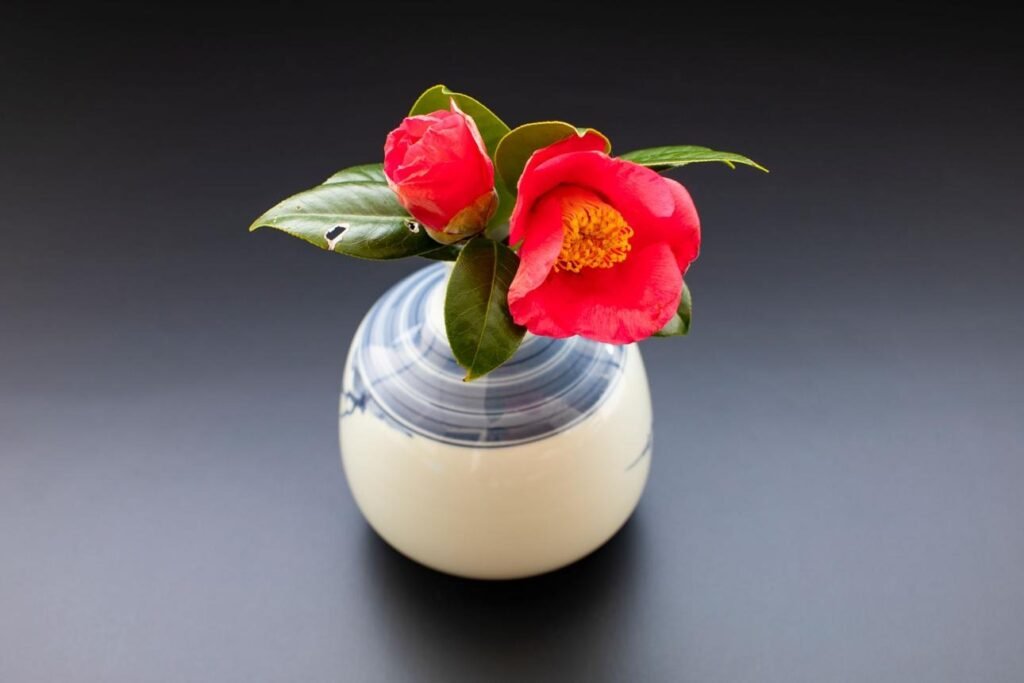
Floral gifting
Choose a color that supports the message you want to communicate. Red may suggest romance, pink appreciation, and white sincerity. Consider local customs and the recipient’s preferences before deciding.

Brand identity and graphic design
A simplified camellia can communicate refinement, nature, or understated luxury. Pairing its petals with restrained typography can create a coherent visual identity for a suitable brand.
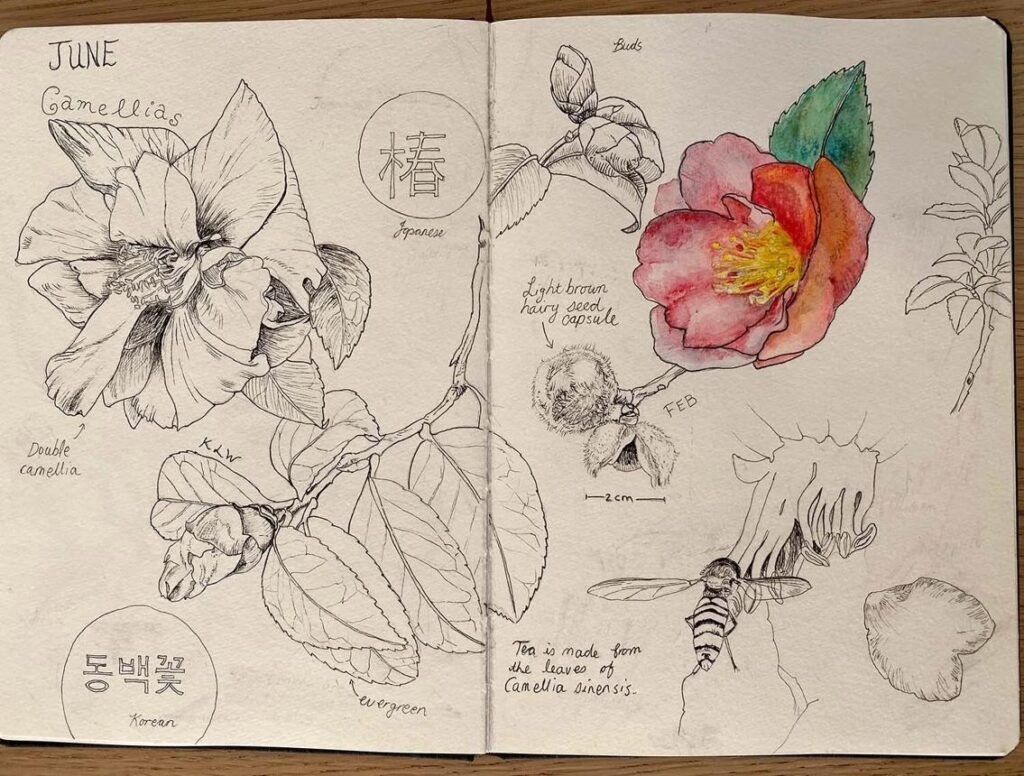
Education and creative writing
Use the camellia to explore semiotics, cultural history, metaphor, and visual storytelling. Students can compare how different artists represent the same flower and how context changes its meaning.
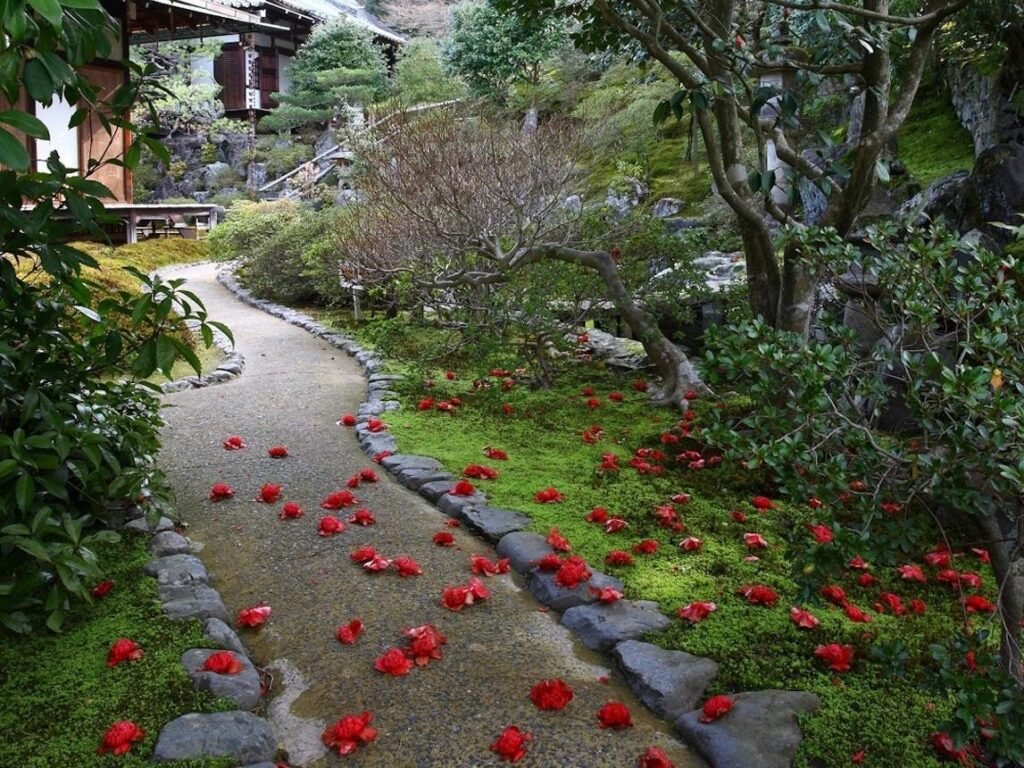
Gardens and personal reflection
Planting camellias can serve as a reminder of seasonal change, patience, and the value of caring for living things. Their symbolic meaning can complement the practical enjoyment of gardening.
Common mistakes when interpreting camellias
Mistake 1: Assuming every color has a universal meaning. Color associations vary across cultures and individuals. Explain your intended meaning rather than expecting every viewer to understand it automatically.
Mistake 2: Treating spiritual interpretations as proven facts. A camellia can inspire hope or resilience without having a scientifically established spiritual effect.
Mistake 3: Ignoring Japanese cultural context. The flower is not exclusively a positive symbol in Japan. Its association with the sudden fall of a blossom is an important part of its complex cultural history.
Mistake 4: Confusing symbolism with botanical fact. The camellia’s evergreen foliage and flowering patterns are observable characteristics. Claims about love, luck, or spiritual messages are cultural or personal interpretations.
Mistake 5: Assuming every camellia belongs to the same species. The genus Camellia contains many species, including ornamental plants and Camellia sinensis, the plant used to produce tea. Their botanical uses and flowering characteristics differ.
American Camellia Society
+1
Myth vs. Fact
| Claim | What is more accurate |
| Camellias always symbolize romantic love. | Love is a common interpretation, but cultural and personal meanings vary. |
| White camellias are universally lucky. | Associations with purity or good fortune occur in some contexts, but they are not universal. |
| Camellias have only positive meanings in Japan. | Japanese traditions include both positive associations and beliefs about misfortune. |
| A camellia tattoo guarantees spiritual protection. | This is a personal belief, not an established fact. |
| Every camellia produces tea. | Tea comes from Camellia sinensis, not every member of the genus. |
12. Key Insights: What Makes Camellia Symbolism Meaningful?
The enduring appeal of camellias comes from the combination of their visual beauty, botanical characteristics, and rich cultural history.
Their principal symbolic themes can be summarized as follows:
- Love and admiration: Camellias are frequently used to express affection and appreciation.
- Elegance and beauty: Their layered blooms and glossy foliage have inspired artists, designers, and gardeners.
- Devotion and continuity: Their evergreen character offers a metaphor for enduring relationships.
- Resilience and renewal: Seasonal flowering can inspire reflections on hope and perseverance.
- Cultural complexity: Japanese, Chinese, and Western traditions have developed different interpretations of the same flower.
- Personal expression: In tattoos, gifts, artwork, and gardens, the flower can acquire meanings shaped by individual experience.
The most useful approach is to understand camellia symbolism as a collection of interpretations shaped by history and context, rather than as a rigid dictionary of meanings.
Conclusion: The Enduring Meaning of the Camellia Flower
Camellia symbolism brings together love, beauty, devotion, elegance, resilience, and the changing nature of life.
The flower’s significance developed through centuries of cultivation and artistic representation in East Asia, later becoming part of European horticultural culture and the Victorian language of flowers.
Its meaning is not limited to romance.
In Japanese traditions, camellias can represent seasonal beauty and refinement while also carrying associations with misfortune in certain contexts.
In contemporary design and personal expression, they may communicate admiration, renewal, or understated luxury.
Understanding these different interpretations helps readers make more thoughtful choices when giving flowers, creating artwork, developing brands, or exploring cultural history.
Above all, the camellia demonstrates that symbolism is created through the relationship between an object’s physical qualities and the people who interpret it.
Whether admired in a garden, featured in a painting, or chosen as a meaningful gift, the camellia remains a compelling example of how a natural form can communicate emotions, cultural identity, and ideas about life.
Frequently Asked Questions About Camellia Symbolism
1. What does a camellia flower symbolize?
A camellia flower commonly symbolizes love, admiration, devotion, elegance, and beauty. It can also represent renewal, resilience, and sincerity. Its precise meaning depends on its color, cultural background, and the circumstances in which the flower is given or displayed.
2. What does a red camellia symbolize?
A red camellia is commonly associated with romantic love, passion, courage, and deep affection. It can be used in a bouquet, illustration, or personal gift to express strong feelings, although its meaning is influenced by cultural conventions and individual preferences.
3. What does a white camellia mean spiritually?
A white camellia may represent purity, sincerity, peace, reflection, or a fresh beginning in personal spiritual interpretation. These associations are not universal religious doctrines. In some Japanese contexts, camellias are avoided as gifts for sick or injured people because of the traditional association with blossoms falling whole.
4. What does a pink camellia symbolize?
Pink camellias often represent tenderness, admiration, gratitude, and gentle affection. They can be appropriate for expressing appreciation to a friend, family member, or romantic partner. The intended message depends on the relationship and the recipient’s preferences.
5. What is the meaning of camellias in Japanese culture?
In Japan, camellias are known as tsubaki and are associated with gardens, seasonal change, poetry, decorative arts, and traditional flower arrangements. Their beauty has inspired admiration, but the way a spent blossom falls intact has also led to associations with decapitation and ill fortune in some historical contexts.
TJJ ONLINE
+1
6. What does a camellia tattoo symbolize?
A camellia tattoo may represent love, elegance, devotion, personal resilience, or renewal. Red, pink, and white designs can emphasize different emotional associations, while leaves, composition, and additional imagery can make the design more personal. Anyone choosing a culturally inspired tattoo should research the specific tradition rather than relying on generalized symbolism alone.
Final Key Takeaways
- Camellia symbolism most often centers on love, admiration, beauty, elegance, and devotion.
- Red camellias are frequently associated with passion, pink with tenderness, and white with sincerity or purity.
- The flower has deep historical connections to China and Japan, with later popularity in European gardens and Victorian flower language.
- Japanese camellia traditions include both positive meanings and culturally specific cautions.
- Camellias are widely adaptable as motifs in literature, fashion, branding, tattoos, gardens, and personal gifts.
- Symbolic interpretations should be distinguished from botanical facts, historical evidence, and personal beliefs.
Semantic Entities, NLP Concepts, and Related Keywords
The following entities and related terms are useful for organizing a comprehensive article about camellia symbolism and connecting it to related topics on a symbolism website.
| Category | Entities and related concepts |
| Primary keyword | Camellia symbolism, camellia flower meaning |
| Botanical entities | Camellia japonica, Camellia sasanqua, Camellia sinensis, Theaceae |
| Color symbolism | Red camellia, white camellia, pink camellia, variegated camellia |
| Cultural entities | Tsubaki, Japanese tea ceremony, ikebana, Chinese botanical art, Victorian floriography |
| Emotional associations | Love, admiration, devotion, affection, elegance, sincerity, resilience |
| Spiritual concepts | Renewal, reflection, impermanence, sacred nature, seasonal cycles |
| Historical concepts | East Asian horticulture, Edo period, European ornamental gardening, language of flowers |
| Art and communication | Semiotics, iconography, visual communication, literary symbolism, cultural identity |
| Modern applications | Floral gifts, wedding flowers, tattoos, luxury branding, fashion design, garden design |
| Long-tail keywords | What does a camellia symbolize, red camellia meaning, white camellia symbolism, pink camellia meaning, camellia spiritual meaning, camellia meaning in Japanese culture |
These semantic relationships can support related articles on flower symbolism, Japanese symbolism, color symbolism, spiritual meanings of flowers, botanical art, and the language of flowers. Use them naturally in relevant content rather than inserting every term into every article.
References for Further Reading
The following sources provide useful starting points for readers interested in camellia history, cultural interpretation, and botanical background.
- Nippon.com Tea, Faith, and Gardening: Camellias and Japanese Culture. For historical and cultural interpretations of the Japanese camellia.
- National Diet Library of Japan Camellia blossoms in Japanese art and history. For literary, horticultural, and artistic history.
- American Camellia Society History of Camellias. For botanical background and the plant’s introduction to Western horticulture.
- Royal Horticultural Society via Google Arts & Culture The Language of Flowers. For the Victorian tradition of communicating through flowers.
- Nicholas K. Menzies, Curtis’s Botanical Magazine Representations of the Camellia in China and During Its Early Career in the West. For scholarly discussion of how camellia imagery differed across cultural contexts.
Editorial note: This article distinguishes established botanical and historical information from cultural traditions and personal interpretations. Symbolic meanings are not universal, and no particular search ranking can be guaranteed.

Learn about religious symbolism, cultural icons, and historical meanings with William Carter.
