
Color Symbolism in The Great Gatsby: A Complete Literary Analysis
Color symbolism in The Great Gatsby plays a crucial role in revealing the novel’s deeper meanings, from Jay Gatsby’s impossible dream of winning Daisy Buchanan to the corruption, inequality, and emotional emptiness hidden beneath the glamour of the Jazz Age.
Published in 1925, F. Scott Fitzgerald’s novel uses colors as more than decorative details.
Green lights, golden objects, white clothing, blue gardens, and the gray landscape of the Valley of Ashes create a visual language that helps readers understand the characters, their ambitions, and the society surrounding them.
Understanding the symbolism of colors in The Great Gatsby makes the novel richer and more meaningful.
Fitzgerald rarely needs to explain every character’s motivations directly.
Instead, he allows colors to suggest hope, privilege, deception, innocence, sadness, and moral decay.
These visual details connect the personal struggles of Gatsby and Daisy to broader questions about money, social class, identity, and the American Dream.
The novel’s color imagery also demonstrates how literature uses visual communication to express complicated ideas.
A single green light can represent desire and the future, while a gray industrial landscape can expose the human cost of extravagant wealth.
These meanings are not always fixed: color symbolism depends on context, character perspective, and the relationships between images throughout the story.
What Does Color Symbolism Mean in The Great Gatsby?
Color symbolism in The Great Gatsby refers to Fitzgerald’s use of colors and color-related imagery to communicate themes, emotions, character traits, and social criticism. Green represents Gatsby’s hopes and the promise of the future; gold and yellow suggest wealth and its moral complications; white evokes beauty and apparent innocence; blue suggests illusion and imagination; and gray reflects poverty, exhaustion, and spiritual emptiness.
These meanings overlap throughout the novel. Fitzgerald does not create a simple code in which every color always means one thing. Instead, he develops a network of visual associations that change depending on the scene and its characters.
Why Is Color Symbolism Important in The Great Gatsby?
Color symbolism matters because it allows Fitzgerald to connect private emotions with larger social realities. Gatsby’s longing, Daisy’s privileged position, Tom Buchanan’s dominance, and the suffering of George and Myrtle Wilson become more vivid through the novel’s contrasting colors.
The main purposes of color symbolism include:
- Character development: Colors help communicate desire, personality, status, and emotional complexity.
- Theme development: Color imagery reinforces the American Dream, class divisions, illusion, and moral corruption.
- Atmosphere: Bright, luxurious colors create glamour, while faded or gray imagery suggests decay.
- Foreshadowing: Certain images acquire darker meanings as the consequences of the characters’ choices unfold.
- Social criticism: Contrasts between glittering wealth and bleak industrial surroundings expose the inequalities beneath the Roaring Twenties.
Fitzgerald’s color symbolism remains relevant because modern readers still encounter similar visual associations in advertising, films, fashion, branding, and digital media. Colors can create expectations about success, innocence, trust, or danger before a person has examined the reality behind the image.
1. Green Symbolism: Hope, Desire, Money, and the American Dream


8
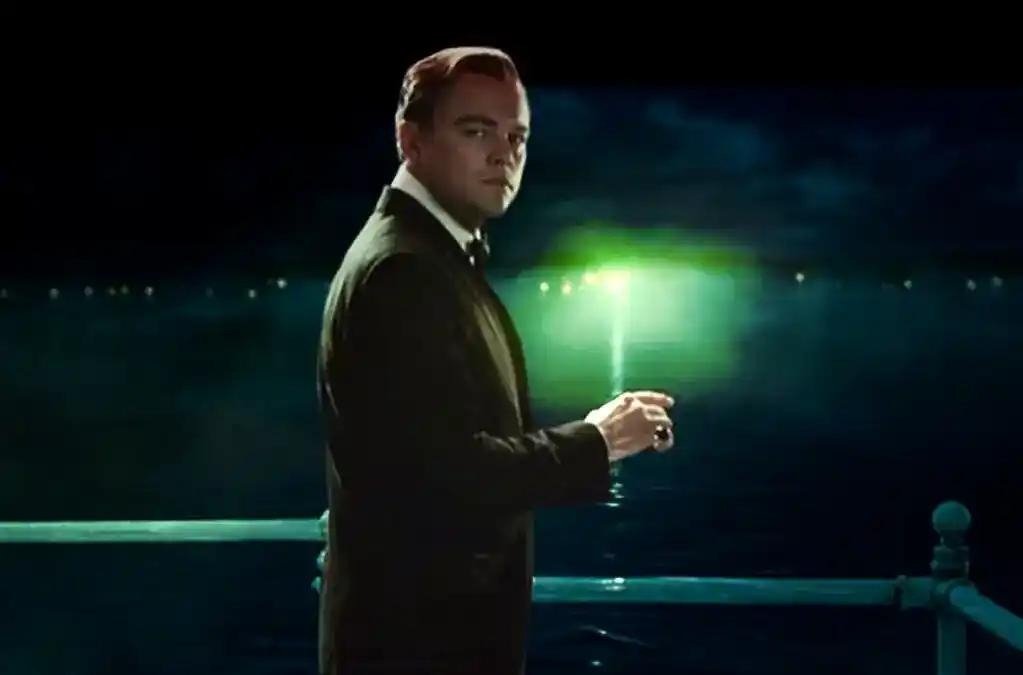
Green is the most recognizable color in The Great Gatsby because it is closely associated with the light at the end of Daisy Buchanan’s dock. For Gatsby, this small, distant light represents the future he believes he can achieve: a life with Daisy that will restore the happiness he associates with their earlier relationship.
The green light appears near the beginning of the novel, when Nick Carraway sees Gatsby reaching toward it across the water. Although Gatsby can see the light, he cannot reach the life it represents. This distance establishes one of Fitzgerald’s central concerns: the difference between imagining happiness and actually possessing it.
The green light as a symbol of hope
Gatsby’s dream is not simply to become wealthy. He wants to use his wealth to recover Daisy and recreate an idealized version of the past. The green light becomes a visual representation of that desire.
Green commonly evokes growth, spring, renewal, and new beginnings in many cultural contexts. In the novel, these associations connect with Gatsby’s belief that his future remains open and that his personal transformation can overcome the limitations of his past.
However, the light also exposes the weakness of his dream. Gatsby imagines Daisy as the perfect destination for his ambitions, but the real Daisy is a person with her own history, relationships, and limitations.
Green and the American Dream
The green light also connects romantic desire with money and economic opportunity. Gatsby has accumulated wealth in an attempt to enter Daisy’s social world, suggesting that he believes financial success can bridge the gap between West Egg’s newly wealthy residents and East Egg’s established elite.
Literary analyses of the novel frequently connect green with the promise and contradictions of the American Dream.
Journal of Language and Literature
+1
Yet Gatsby’s pursuit reveals a fundamental contradiction: even extraordinary wealth cannot guarantee acceptance by the old-money establishment or produce the perfect past he desires.
Green therefore represents both the attraction of possibility and the danger of endlessly pursuing an imagined future.
Other green imagery in the novel
Green appears in other contexts, including Gatsby’s possessions and the landscape. These references expand its associations beyond the dock light.
- Gatsby’s green surroundings: They reinforce the atmosphere of possibility surrounding his mansion and ambitions.
- Green leather in the car: This imagery connects the color with Gatsby’s luxurious lifestyle and the events leading to Myrtle Wilson’s death.
- The green landscape of the New World: Nick’s closing reflections connect the American landscape with discovery, promise, and the aspirations of earlier generations.
Green is not uniformly positive. Its meaning changes with the context, demonstrating that Fitzgerald uses color as a flexible literary device rather than a rigid symbolic code.
LitCharts
+1
Key insight: Green symbolizes Gatsby’s faith in the future, but the novel gradually reveals how easily hope can become an obsession with an unattainable ideal.
2. Yellow and Gold Symbolism: Wealth, Glamour, and Corruption

9
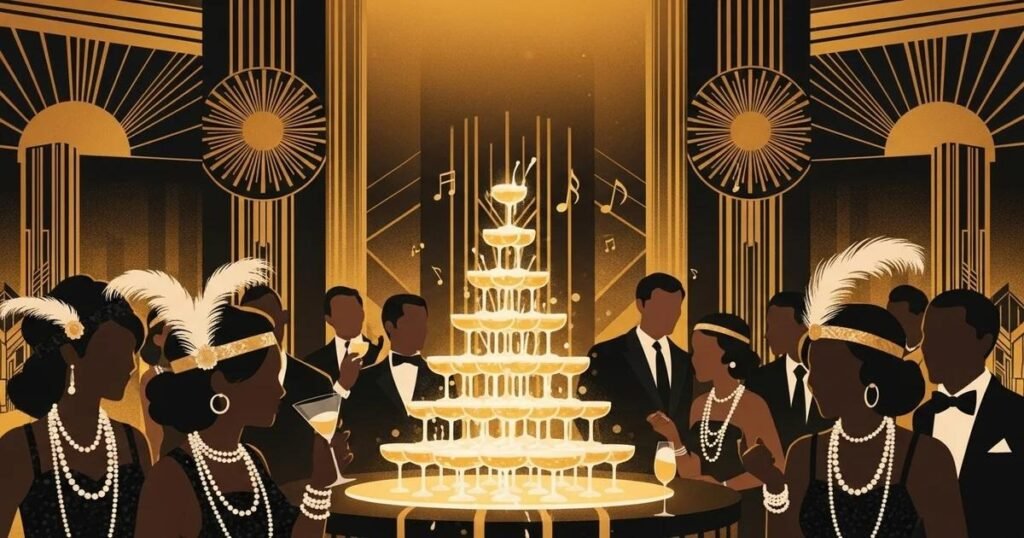
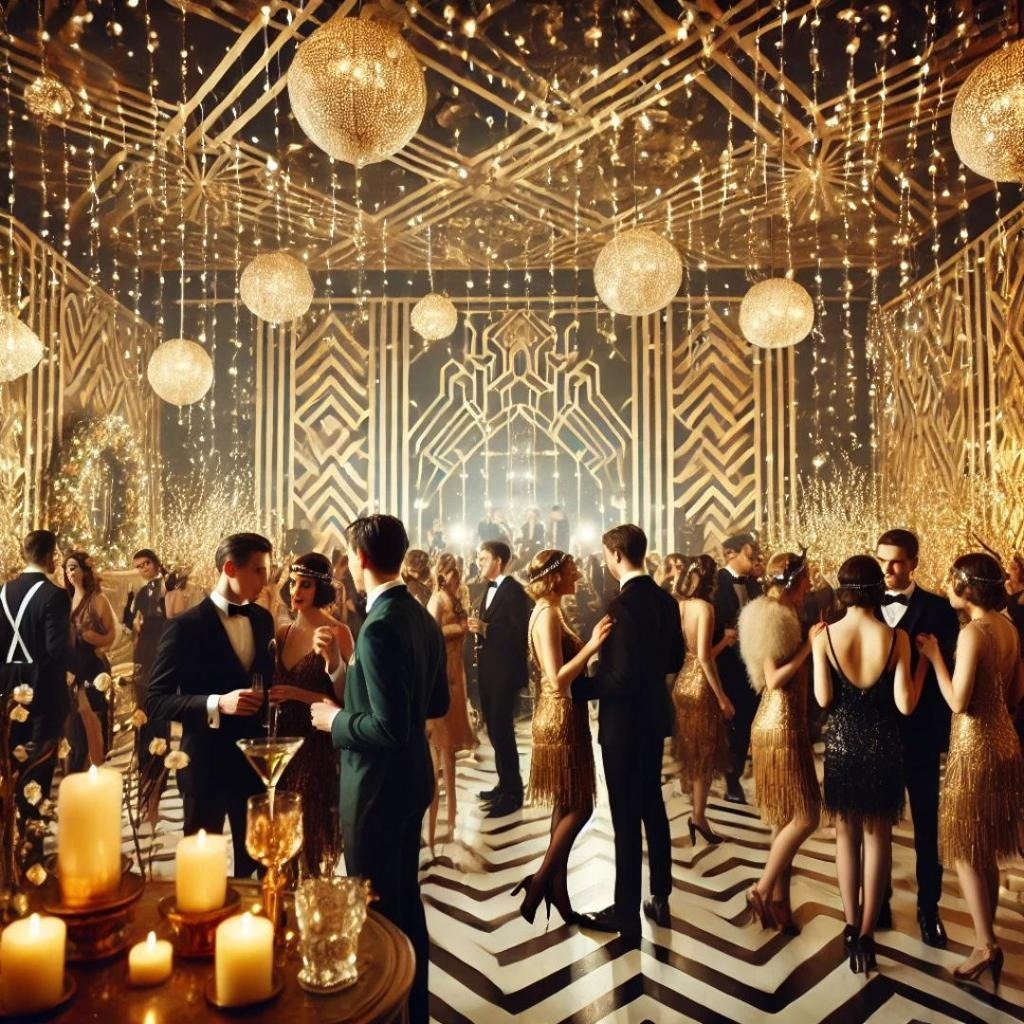
Yellow and gold are closely connected in readers’ interpretations of The Great Gatsby, but they should not be treated as completely interchangeable. Gold often suggests luxury, status, and material achievement, while yellow can acquire more troubling associations through the novel’s imagery of automobiles, artificial glamour, and moral carelessness.
Both colors help Fitzgerald question whether wealth represents genuine worth.
Gold as a symbol of prosperity
Gatsby’s mansion, extravagant parties, expensive possessions, and carefully cultivated appearance create an atmosphere of abundance. Gold-colored objects and metallic details reinforce the impression that money can transform a person’s identity.
Gold traditionally carries associations with royalty, prestige, permanence, and success in many societies. In Fitzgerald’s novel, these associations make Gatsby’s wealth appear impressive, but they also expose the theatrical quality of his self-invention.
Gatsby has built a world designed to persuade others that he belongs among the privileged. His possessions become part of that performance.
The deeper irony is that wealth gives Gatsby access to luxury without necessarily giving him the social legitimacy or emotional security he wants.
Yellow as a symbol of moral danger
The yellow automobile associated with Gatsby becomes especially significant when Myrtle Wilson is struck and killed. Daisy is driving the car, but Gatsby is prepared to take responsibility for the accident.
The vehicle’s color links wealth, speed, and spectacle with the devastating consequences of careless behavior. The car is not merely a luxury object: it becomes part of the chain of events that destroys several lives.
The distinction between yellow and gold is interpretive rather than absolute. Nevertheless, many literary readings associate yellow with corrupted wealth, while gold suggests the seductive promise of prosperity.
Journal of Education
+2
The difference between old money and new money
Fitzgerald also uses material imagery to explore the social hierarchy separating Gatsby from Tom and Daisy Buchanan.
| Feature | Gatsby’s wealth | Buchanan wealth |
| Social position | Newly acquired fortune | Inherited privilege |
| Public image | Spectacular parties and self-invention | Established status and exclusivity |
| Relationship to money | A means of achieving acceptance and recovering Daisy | A source of security and social power |
| Symbolic implication | Wealth may imitate privilege without overcoming class barriers | Privilege can protect people from consequences |
This contrast is essential to understanding the novel. Gatsby’s fortune may be enormous, but the Buchanans possess something money alone cannot easily purchase: inherited social standing.
Key insight: Gold and yellow imagery reveals the seductive appearance of wealth while questioning the moral and emotional value of the world it creates.
3. White Symbolism: Innocence, Beauty, Privilege, and Deception

White is strongly associated with Daisy Buchanan and Jordan Baker in the novel’s opening scenes. Their white clothing, the bright interiors of the Buchanan home, and the airy atmosphere of the room create an impression of elegance, delicacy, and apparent innocence.
White often represents purity, peace, or new beginnings in Western cultural traditions. Fitzgerald uses these familiar associations to establish an attractive surface, but he also complicates them.
White and Daisy Buchanan
Daisy’s white clothing contributes to her ethereal appearance. Through Gatsby’s perspective, she becomes an almost ideal figure: beautiful, desirable, and seemingly capable of fulfilling his dreams.
However, Daisy’s appearance does not fully reflect her character or circumstances. She is deeply connected to a wealthy social environment that offers protection, comfort, and opportunities unavailable to characters such as Myrtle Wilson.
Her outward delicacy can therefore obscure the advantages that sustain her position.
White and the illusion of purity
Fitzgerald’s use of white becomes more complex when readers consider the contrast between appearance and conduct.
The Buchanans’ privileged world looks refined, but Tom’s aggression, Daisy’s participation in the fatal accident, and the couple’s eventual withdrawal from responsibility reveal the moral problems beneath that surface.
White consequently becomes a symbol of apparent innocence rather than guaranteed moral goodness.
This does not mean that every white object in the novel represents deception. Its significance emerges through the contrast between the characters’ polished surroundings and their actions.
White as a symbol of social privilege
White also helps establish the Buchanans’ world as comfortable, insulated, and visually pristine. Their environment differs sharply from the dust-covered landscape of the Valley of Ashes.
The contrast highlights how social class can shape the way people experience the world. For the wealthy, comfort can make suffering appear distant; for the working poor, economic hardship is part of everyday life.
Expert tip: When analyzing white symbolism in an essay, avoid writing only that “white means purity.” Explain how Fitzgerald uses Daisy’s appearance to contrast beauty and privilege with the moral ambiguity of her decisions.
4. Blue Symbolism: Illusion, Fantasy, and Emotional Distance
Blue contributes to the dreamlike atmosphere of The Great Gatsby. Blue gardens, blue-toned imagery, and the novel’s descriptions of luxurious surroundings help create a world that feels beautiful yet strangely removed from ordinary reality.
Blue can suggest calm, distance, sadness, mystery, or imagination, depending on cultural and literary context. In Fitzgerald’s novel, its significance often emerges through atmosphere rather than a single, universally accepted definition.
Blue gardens and the world of illusion
The phrase “blue gardens” is associated with Gatsby’s extravagant parties, where guests gather in an environment of music, lights, alcohol, and social performance.
The gardens seem enchanted, as if they belong to a world outside everyday life. Yet the people attending the parties often know little about their host, and their presence does not translate into genuine loyalty.
Blue imagery therefore contributes to the novel’s contrast between visual beauty and emotional emptiness.
Blue and Gatsby’s invented identity
Gatsby’s world depends on imagination. He transforms himself from James Gatz into a wealthy figure whose public image is carefully constructed.
The blue atmosphere surrounding his social world can be interpreted as reinforcing this dreamlike quality. His parties and mansion create a fantasy that appears convincing from a distance but becomes less stable under closer examination.
However, blue should not automatically be assigned a fixed meaning of dishonesty. Its function is contextual: the color helps create an atmosphere in which reality and aspiration become difficult to separate.
Blue versus gray
Blue and gray create a useful interpretive contrast. Blue imagery can contribute to the beauty and unreality of Gatsby’s world, while gray imagery associated with the Valley of Ashes exposes the material hardship that glamour conceals.
Together, the colors reveal two different sides of the same society: the dream people want to inhabit and the consequences they would prefer not to see.
Key insight: Blue helps communicate the seductive, dreamlike atmosphere of Gatsby’s world, reminding readers that beauty and emotional truth are not always the same.
5. Gray Symbolism: Poverty, Spiritual Emptiness, and the Valley of Ashes
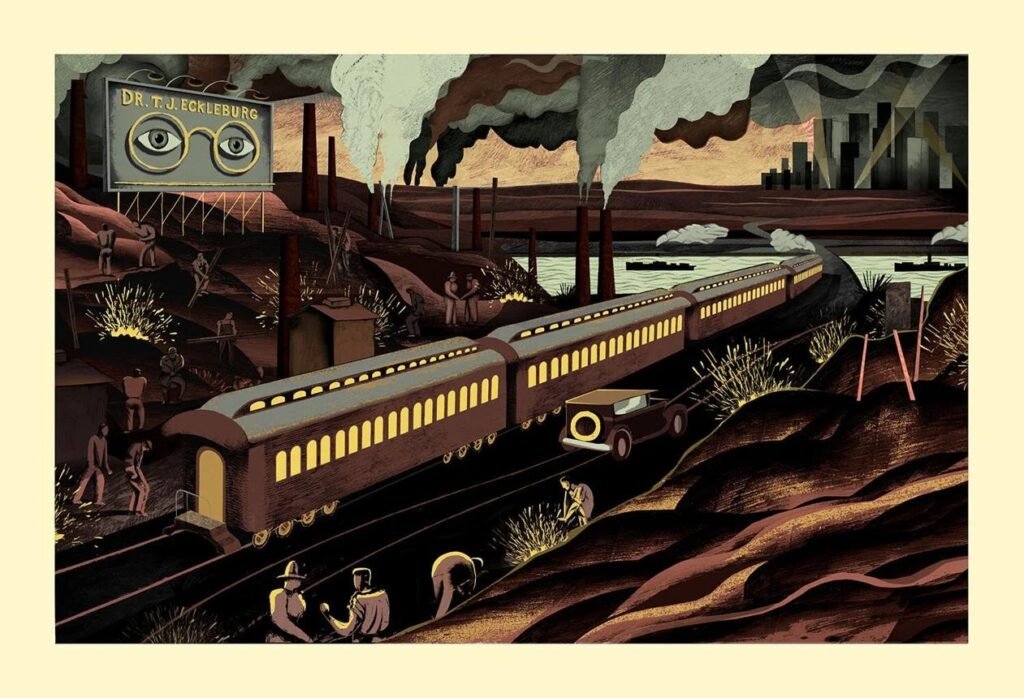
Gray is one of the novel’s most important colors because it exposes the bleak reality beneath the glitter of wealthy society. The Valley of Ashes, located between the fashionable communities of Long Island and New York City, is a landscape of industrial waste, dust, and exhaustion.
The gray imagery represents material hardship, spiritual emptiness, and the human consequences of a society organized around money and status.
The Valley of Ashes as a symbol
The Valley of Ashes is where George Wilson operates his struggling garage and where Myrtle Wilson lives a life marked by dissatisfaction and limited opportunities.
Its landscape contrasts sharply with the grand houses and elaborate parties elsewhere in the novel. While the wealthy pursue pleasure, the Valley of Ashes reveals the less attractive side of the economic system that supports their lifestyles.
Gray and ash imagery suggest a world from which vitality has been drained. The setting becomes a physical expression of social neglect and the emotional costs of pursuing wealth without regard for other people.
Gray and the American Dream
The American Dream promises that ambition and hard work can lead to prosperity. However, the characters do not have equal access to its opportunities.
Gatsby gains wealth but cannot fully overcome class barriers. Myrtle tries to escape her circumstances through her relationship with Tom. George remains trapped in economic hardship.
Their different experiences reveal that ambition alone does not guarantee success or happiness.
The gray landscape challenges the glamorous vision of prosperity by showing who remains excluded from its rewards. Scholarly discussions of Fitzgerald’s color imagery similarly emphasize the contrast between material prosperity and spiritual disillusionment.
internationalconf.org
+2
Gray and moral emptiness
Gray also suggests a lack of vitality, certainty, or emotional warmth. This association is especially effective because the characters’ lives often appear colorful and exciting on the surface while remaining morally compromised underneath.
The Valley of Ashes is not merely a place of poverty. It represents the consequences of a culture in which wealth and appearance receive more attention than human dignity.
Key insight: Gray provides the novel’s visual counterargument to the glamour of the Jazz Age, exposing the hardship and emptiness that prosperity can conceal.
6. Red Symbolism: Violence, Anger, and Uncontrolled Desire
Red is less dominant than green, yellow, or white in many interpretations of the novel, but it can still contribute to an analysis of emotional intensity, aggression, and danger.
In common Western symbolic traditions, red may represent passion, love, power, anger, blood, or violence. These associations make it a useful lens for examining the novel’s conflicts.
Red and Tom Buchanan’s aggression
Tom is physically imposing, controlling, and often aggressive. His treatment of Myrtle, including the scene in which he breaks her nose, reveals the violence underlying his privileged public identity.
Red can be interpreted as an expression of this aggressive energy, although not every reference to the color directly symbolizes Tom or his behavior.
The more important point is that Fitzgerald connects the world of wealth and social dominance with actions that cause real harm.
Red and destructive passion
The novel’s romantic relationships are far from simple. Gatsby’s desire for Daisy is idealistic in some respects, but it is also possessive and rooted in his determination to recover an earlier moment.
Tom’s affair with Myrtle similarly combines desire with entitlement. He wants access to Myrtle without accepting the responsibilities that a genuine relationship would require.
Red imagery can help readers explore how passion becomes destructive when it is shaped by control, jealousy, and disregard for others.
Key insight: Red is best understood as a supporting interpretive symbol for emotional intensity and violence, rather than a color with one fixed meaning throughout the novel.
7. Silver Symbolism: Elegance, Status, and Emotional Distance
Silver offers another way to understand the polished surfaces of Fitzgerald’s world. Unlike gold, which often suggests wealth and conspicuous achievement, silver can evoke refinement, coolness, elegance, and a more distant form of beauty.
Daisy is associated with silver imagery in literary analyses of the novel, including descriptions that make her appear luminous and almost idol-like.
Journal of Education
+1
Silver and Daisy’s idealized image
Gatsby does not simply love Daisy as she exists in the present. He has transformed her into an ideal that represents everything he believes his success should bring him.
Silver imagery can reinforce her apparent radiance and distance. She becomes an object of admiration, almost a precious figure to be possessed, rather than a person whose choices might contradict his expectations.
Silver and the appearance of refinement
Silver also fits the visual language of luxury that runs through the novel. Metallic fabrics, expensive possessions, and carefully arranged interiors create an impression of sophistication.
Yet refinement is not equivalent to virtue. Fitzgerald repeatedly separates social polish from moral responsibility.
Key insight: Silver can reinforce the elegance of the privileged world while suggesting the distance between Gatsby’s idealized Daisy and the real person.
8. How the Major Colors Work Together
The strongest analysis of color symbolism in The Great Gatsby examines relationships between colors rather than treating each one independently.
| Color | Common interpretation in the novel | Main association | Important example |
| Green | Hope, ambition, desire | The American Dream | The light at Daisy’s dock |
| Gold | Wealth, luxury, prestige | Material success | Gatsby’s extravagant possessions |
| Yellow | Glamour, corruption, danger | The destructive side of wealth | Gatsby’s yellow automobile |
| White | Apparent innocence, beauty, privilege | Social respectability | Daisy and Jordan’s clothing |
| Blue | Fantasy, atmosphere, emotional distance | The dreamlike social world | Gatsby’s blue gardens |
| Gray | Poverty, exhaustion, spiritual emptiness | Social inequality | The Valley of Ashes |
| Red | Passion, aggression, violence | Destructive desire | Interpretations of Tom’s behavior |
| Silver | Elegance, beauty, distance | Idealization and status | Imagery associated with Daisy |
These interpretations are literary readings, not a universal dictionary of colors. A color can carry several meanings at once, and its significance depends on where it appears, who observes it, and how it relates to the plot.
9. Historical and Cultural Context: Color in the Jazz Age
The Great Gatsby was published in 1925, during the period commonly called the Jazz Age. The United States was experiencing consumer expansion, changing social customs, new forms of entertainment, and conspicuous displays of wealth.
The novel’s colorful parties, automobiles, fashionable clothing, and luxurious interiors reflect this culture of spectacle.
Wealth and consumer culture
As consumer goods became increasingly visible in American life, possessions could communicate status and aspiration. Clothing, cars, houses, and entertainment were not simply practical objects; they could also function as signals of identity.
Fitzgerald turns these signals into literary imagery. Gatsby’s possessions advertise his success, but they also expose his need to prove himself.
Social class and inherited privilege
The distinction between East Egg and West Egg reflects more than geography. It represents a social divide between established wealth and newly acquired money.
The contrast helps explain why Gatsby’s apparent success does not guarantee his acceptance by Daisy’s social circle. The world he hopes to enter has rules that cannot be reduced to the amount of money someone possesses.
Cultural differences in color meanings
Color symbolism is not identical across every culture. White may signify purity and weddings in some Western settings, while in several East Asian cultural traditions it is strongly associated with mourning and funerary practices. Red can communicate celebration and good fortune in some Chinese traditions, while also suggesting danger or prohibition in other contexts.
These comparisons are useful reminders that color meanings depend on cultural history and social context. They should not be used to assume that every person within a culture interprets a color identically.
Fitzgerald’s novel is rooted in early twentieth-century American society, so its colors should primarily be interpreted through its historical setting, narrative details, and literary traditions.
10. Psychological and Literary Perspectives on Color Symbolism
Color imagery works partly because readers connect visual details with feelings, memories, and familiar cultural associations. However, the psychological effects of color are not universal laws.
A color’s meaning depends on context, personal experience, cultural learning, and the way an author uses it within a story.
Color and human perception
A green light at night is visually distinct from the darkness surrounding it. That contrast naturally directs attention toward the light and makes it memorable.
Fitzgerald uses this visual effect to make Gatsby’s distant goal emotionally significant. The light is small, but its position and the character’s response give it enormous narrative importance.
Color and semiotics
Semiotics is the study of signs and how they produce meaning. From this perspective, a color becomes symbolically meaningful through its relationship to objects, actions, cultural conventions, and narrative context.
For example, green is not inherently equivalent to the American Dream. It acquires that significance through its association with Gatsby’s longing, the dock, Daisy, money, and the novel’s broader exploration of ambition.
Color and storytelling
Color imagery can communicate several layers of meaning at once:
- It creates an atmosphere before a character explains what they feel.
- It links objects and scenes across different chapters.
- It establishes contrasts between social groups.
- It encourages readers to question the difference between appearances and reality.
This is one reason color symbolism remains a valuable subject in literary education. Students learn to move beyond identifying an image and toward explaining how it contributes to a work’s themes.
11. Practical Applications: What Modern Readers Can Learn from Fitzgerald
The color symbolism in The Great Gatsby has applications beyond literature. It offers useful lessons for understanding visual storytelling, design, advertising, education, and communication.
Visual storytelling and filmmaking
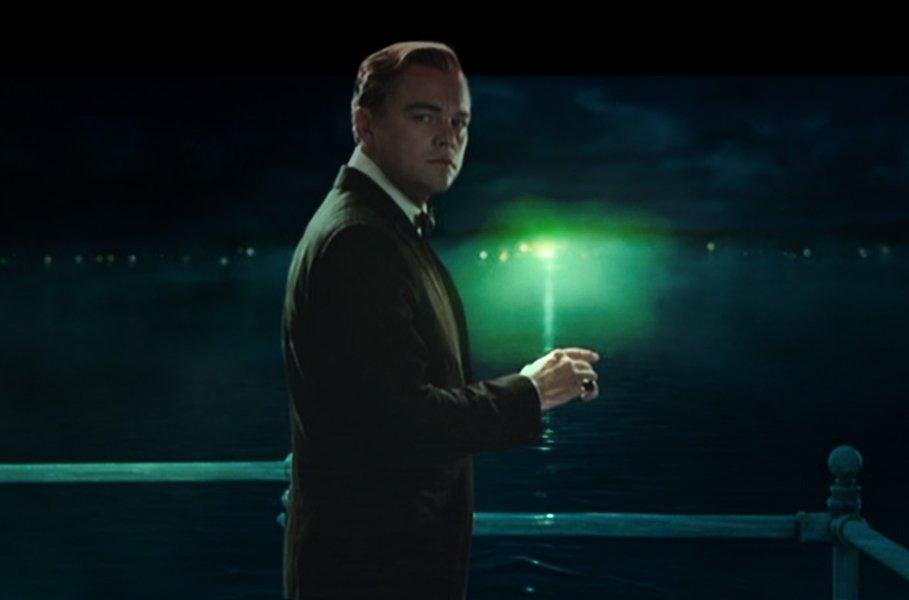
Directors can use lighting and color palettes to distinguish dreams from reality. A distant light can represent an unattainable goal, while desaturated surroundings can communicate loss or isolation.

Branding and advertising
Gold is often used to suggest luxury, while green may communicate growth or environmental awareness. As the novel demonstrates, the image a brand projects is not necessarily proof of its underlying values.
Education and literary analysis
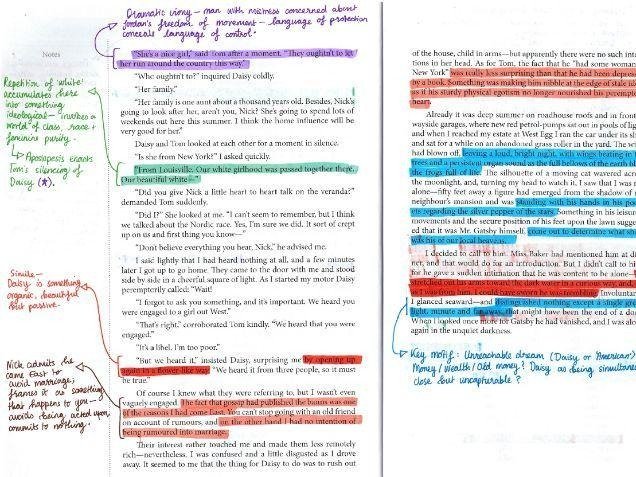
Tracking repeated colors across chapters helps students identify patterns, build evidence-based arguments, and connect imagery to themes such as social class and the American Dream.
Art and digital communication
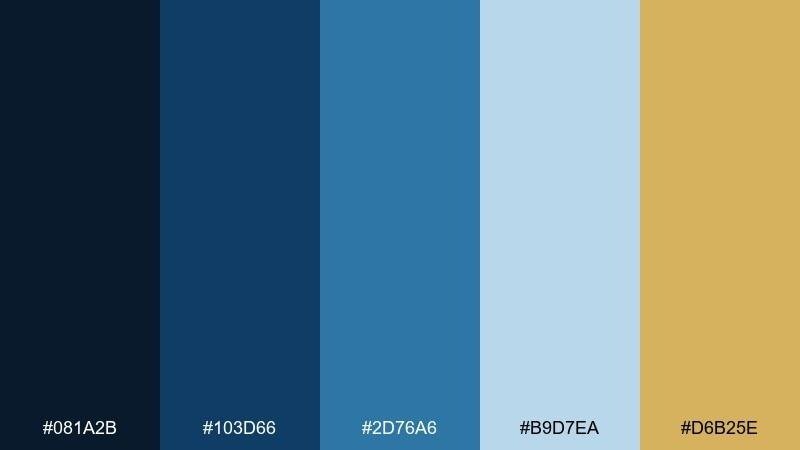
Artists, illustrators, and interface designers can use contrasting colors to guide attention, establish mood, and communicate visual hierarchy. Cultural context and accessibility should inform these choices.
Expert tip: How to analyze a color in an essay
Use a simple three-step approach:
- Identify the detail. Name the color and the object or setting in which it appears.
- Explain its context. Describe what is happening in the scene and how the character responds.
- Connect it to a theme. Explain how the image supports a larger idea, such as ambition, privilege, illusion, or moral responsibility.
For example, instead of writing, “Green represents hope,” explain how the distant green light represents Gatsby’s hope of reuniting with Daisy, while its distance emphasizes the gap between his dream and reality.
This approach produces stronger literary analysis because it connects interpretation to evidence.
12. Did You Know? Interesting Facts About Color Symbolism in the Novel
- The green light changes meaning. Initially, it represents a distant goal. When Gatsby and Daisy reunite, its symbolic power changes because the dream is no longer entirely distant, even though Gatsby’s ideal remains difficult to achieve.
- Wealth and color are closely connected. Gold, silver, fashionable clothing, and expensive cars help communicate social status without lengthy explanations.
- The Valley of Ashes challenges the glamour. Its bleak landscape creates a striking contrast with the colorful world of Gatsby’s parties.
- Colors can have contradictory meanings. Green may suggest renewal and hope in one scene but sickness or disturbing circumstances in another.
- Not every color reference is a symbol. Some descriptions simply establish a visual scene. An interpretation becomes stronger when the detail connects meaningfully to the narrative.
13. Common Mistakes When Interpreting Color Symbolism
Avoid these frequent errors when writing about The Great Gatsby.
Mistake 1: Assuming every color has one meaning
Green does not always mean hope, and white does not always mean innocence. Fitzgerald changes and complicates color associations according to context.
Mistake 2: Confusing gold with yellow
Although the colors overlap in interpretations of wealth and corruption, they are not identical. Explain the specific image and its narrative significance rather than applying the same meaning automatically.
Mistake 3: Ignoring the historical setting
The novel reflects the social tensions of 1920s America. Interpretations should account for consumer culture, inherited wealth, class divisions, and the period’s changing social expectations.
Mistake 4: Treating symbolic interpretations as proven facts
Literary criticism involves interpretation. Support your reading with textual details, and acknowledge when more than one interpretation is reasonable.
Mistake 5: Summarizing without analyzing
Saying that Gatsby sees a green light describes an event. Explaining how the light represents desire, distance, and the uncertain promise of the future analyzes its meaning.
14. Myth vs. Fact: Understanding Fitzgerald’s Use of Color
| Myth | Fact |
| Every color has one universal meaning. | Meanings depend on context, culture, and the narrative. |
| Green only represents money. | Green connects money with hope, ambition, and the future. |
| White proves Daisy is innocent. | Her appearance contrasts with the moral ambiguity of her actions. |
| Gold represents positive success. | Gold can reveal the attraction and limitations of material wealth. |
| The colors are merely decorative. | Repeated color imagery contributes to characterization, atmosphere, and thematic development. |
| Every color interpretation is equally convincing. | Strong interpretations explain specific textual details and connect them to the novel as a whole. |
15. Conclusion: Why Color Symbolism Matters in The Great Gatsby
Color symbolism in The Great Gatsby helps reveal the complicated relationship between appearance and reality in Fitzgerald’s portrayal of the American Dream.
Green expresses Gatsby’s hope and ambition, while gold and yellow expose the attractions and dangers of wealth.
White complicates the appearance of innocence, blue contributes to an atmosphere of illusion, gray reveals social hardship, red supports readings of aggression and destructive passion, and silver reinforces elegance and idealization.
These colors are most powerful when considered together.
The glamorous world of Gatsby’s parties cannot be separated from the bleakness of the Valley of Ashes, just as Gatsby’s wealth cannot be separated from his longing for a past he cannot fully recover.
Fitzgerald’s achievement lies in making ordinary visual details carry emotional, social, and philosophical significance.
His colors help readers understand not only what the characters desire but also what their desires reveal about their society.
The novel remains relevant because the same tensions continue to shape modern life. People still use possessions, fashion, imagery, and carefully constructed identities to communicate success.
Advertising still connects visual appearance with aspiration, and storytelling still uses color to distinguish dreams from reality.
Ultimately, understanding Fitzgerald’s color symbolism helps readers recognize that the most attractive image is not always the most truthful one.
Behind the novel’s brilliant surfaces lies a lasting question: what happens when people pursue the appearance of happiness at the expense of reality?
Frequently Asked Questions (FAQ)
1. What is the most important color in The Great Gatsby?
Green is generally considered the most important color because of the green light at the end of Daisy Buchanan’s dock. It represents Gatsby’s hope of reuniting with Daisy, his ambition, and the promise of a better future. It also reflects the American Dream and the danger of pursuing an ideal that reality cannot fulfill.
2. What does the green light symbolize in The Great Gatsby?
The green light symbolizes Gatsby’s desire for Daisy and his belief that he can recreate their past relationship. Its distance represents the gap between his dreams and reality. More broadly, the light reflects the American Dream: the promise of a future that continually attracts people but may remain beyond their reach.
3. What do yellow and gold symbolize in The Great Gatsby?
Gold commonly represents wealth, luxury, prestige, and material success. Yellow often takes on more troubling associations, particularly through Gatsby’s automobile and the events surrounding Myrtle Wilson’s death. Together, these colors help Fitzgerald explore how wealth can appear glamorous while concealing moral corruption and destructive consequences.
4. What does white symbolize in The Great Gatsby?
White is associated with beauty, apparent innocence, elegance, and privilege, particularly through Daisy Buchanan and Jordan Baker. However, Fitzgerald complicates these associations by contrasting their polished appearances with the moral ambiguity of the wealthy characters. White therefore helps explore the difference between social respectability and genuine goodness.
5. What does gray symbolize in The Great Gatsby?
Gray represents poverty, exhaustion, spiritual emptiness, and the destructive consequences of social inequality. Its strongest association is the Valley of Ashes, an industrial wasteland between Long Island and New York City. The landscape contrasts with the luxury of East Egg and West Egg, revealing the hardship hidden beneath the glamour of the Jazz Age.
6. How does Fitzgerald use color symbolism to criticize the American Dream?
Fitzgerald uses color contrasts to reveal the gap between the promise of prosperity and its actual consequences. Green represents the attraction of hope and ambition, gold and yellow expose the complications of wealth, and gray reveals the suffering that glamour conceals. Through these images, the novel questions whether money and social status can truly deliver happiness, belonging, or fulfillment.
Key Takeaways
- Green is central to the novel’s treatment of hope, ambition, and the American Dream.
- Gold and yellow explore material wealth, social status, and the darker consequences of luxury.
- White complicates the relationship between beauty, innocence, and privilege.
- Blue helps create a dreamlike atmosphere around Gatsby’s social world.
- Gray reveals poverty, exhaustion, and social inequality.
- Red and silver offer additional ways to interpret aggression, passion, elegance, and idealization.
- Historical context and textual evidence are essential for convincing literary analysis.
- Color symbolism continues to influence modern storytelling, visual design, branding, and communication.
Semantic Entities, NLP Concepts, and Related Keywords
The following topic clusters reflect the major entities and relationships covered in this article. They can also support internal linking and content planning for a literary symbolism website.
| Topic cluster | Entities and related keywords |
| Primary topic | Color symbolism in The Great Gatsby, symbolism in The Great Gatsby, F. Scott Fitzgerald |
| Green symbolism | Green light, Daisy Buchanan, Jay Gatsby, hope, ambition, American Dream |
| Gold and yellow | Wealth, luxury, yellow automobile, materialism, corruption, social status |
| White symbolism | Daisy Buchanan, Jordan Baker, innocence, beauty, privilege, appearance versus reality |
| Blue symbolism | Blue gardens, imagination, illusion, atmosphere, emotional distance |
| Gray symbolism | Valley of Ashes, George Wilson, Myrtle Wilson, poverty, industrial landscape, inequality |
| Red and silver | Aggression, desire, violence, elegance, idealization, metallic imagery |
| Literary concepts | Literary symbolism, imagery, motif, semiotics, characterization, foreshadowing, narrative analysis |
| Historical context | Jazz Age, Roaring Twenties, consumer culture, old money, new money, class divisions |
| Cross-disciplinary connections | Color psychology, visual communication, cultural identity, branding, advertising, design, education |
| Search-intent variations | What colors symbolize in The Great Gatsby, meaning of green light, yellow symbolism in Gatsby, white symbolism in Gatsby, meaning of the Valley of Ashes |
Suggested internal links for Symboliium.com
To build a connected topical cluster around this article, consider linking to related articles on:
- Literary symbolism and its meaning
- Green symbolism across cultures
- Gold symbolism and wealth
- White symbolism in literature
- Blue symbolism in art and storytelling
- The American Dream in American literature
- Symbolism in classic novels
- Color symbolism in film and visual communication
These related pages can help readers explore connected subjects and provide a clearer site structure. Use descriptive anchor text and link only to relevant pages that exist or that you intend to publish.
Editorial note: This article provides an original synthesis and interpretation of established literary themes. Interpretations of symbolism can differ among critics, and no article can guarantee search rankings or a particular AI-detection result. For academic publication, support quotations and detailed textual claims with the edition of The Great Gatsby you are using and include a bibliography of relevant critical sources.

Discover symbolism in art, literature, and creativity with Amelia Rhodes’ insightful articles.
