Introduction: What Does Cheetah Symbolism Mean?
Cheetah symbolism is closely associated with speed, focus, agility, independence, and the ability to act decisively when an opportunity appears.
As the fastest land animal, the cheetah represents more than physical movement.
Its extraordinary acceleration, patient observation, and precise hunting strategy offer powerful metaphors for ambition, personal growth, resilience, and knowing when to take action.
Whether you encounter a cheetah in a dream, see it represented in art, or feel drawn to its distinctive appearance, understanding its symbolism can reveal different ways people connect the natural world with human experience.
Across cultures, stories, spiritual traditions, literature, and modern visual communication, animals often become symbols of qualities that people admire, fear, or seek to understand.
The cheetah is especially compelling because its strength is expressed through a combination of speed and control rather than brute force.
Its symbolism invites us to consider how determination, awareness, timing, and adaptability can help us move toward our goals.
However, symbolic interpretations are not universal facts.
A cheetah may represent ambition to one person, freedom to another, or vulnerability and the importance of conservation to someone else.
Context, personal experience, and cultural background all influence the meaning.
Cheetah Symbolism: A Quick Definition
Cheetah symbolism refers to the meanings people associate with the cheetah, particularly speed, agility, concentration, independence, ambition, and decisive action. Its hunting behavior can symbolize strategic timing and persistence, while its place in the natural world can represent freedom, adaptability, and the need to protect vulnerable wildlife. Interpretations vary across cultures, personal beliefs, and creative contexts.
1. The Core Symbolic Meanings of the Cheetah
7
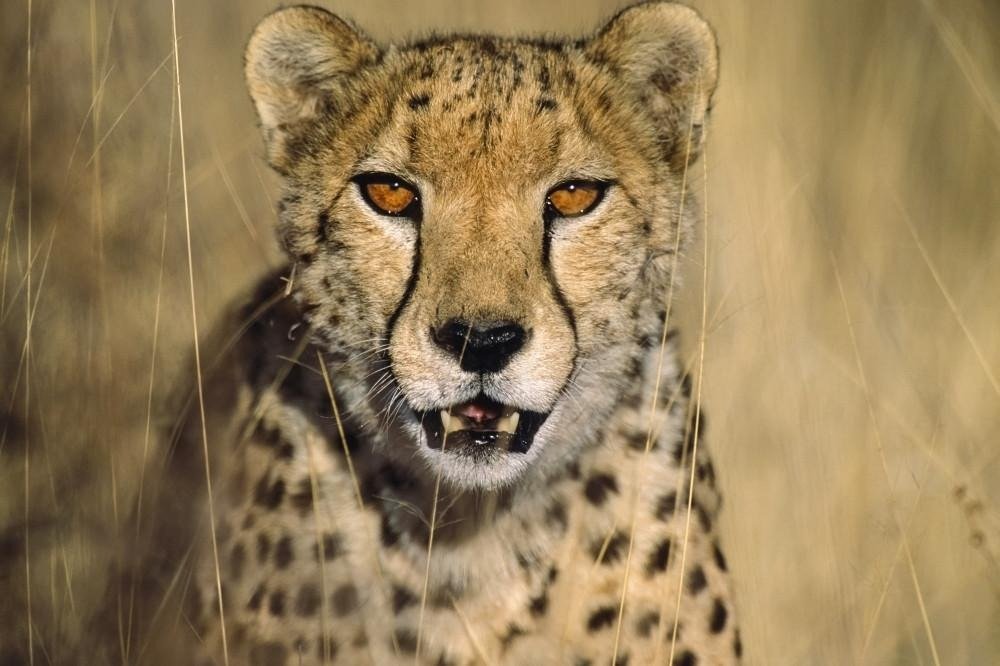
The cheetah’s physical characteristics and behavior provide the foundation for many of its symbolic associations. Its slender body, long legs, flexible spine, distinctive black tear marks, and explosive acceleration make it a natural symbol of movement, precision, and alertness.
Speed and Swi 7ft Progress
Speed is the most recognizable meaning associated with cheetah symbolism. Cheetahs can reach extraordinary speeds over short distances, although they cannot maintain their top speed for long.
Symbolically, this ability represents moving quickly toward a goal, recognizing a valuable opportunity, and making progress when circumstances are favorable.
A cheetah can serve as a reminder to:
- Act decisively when an opportunity aligns with your goals.
- Avoid unnecessary delays caused by indecision.
- Understand when rapid action is useful and when patience is wiser.
- Measure progress by meaningful achievements rather than constant activity.
Example: Someone launching a business might view the cheetah as a symbol of recognizing a market opportunity and responding quickly without abandoning careful planning.
The deeper message is not that everything must happen fast. It is that the right moment can matter as much as the effort invested.
Focus and Concentration
A cheetah’s hunting behavior depends on observation, positioning, and timing. It must identify an appropriate target and respond to changing conditions.
This makes the animal a useful symbol of concentration and purposeful attention.
In everyday life, cheetah symbolism can encourage you to reduce distractions, identify your most important objective, and direct your energy toward activities that genuinely matter.
Unlike the idea of speed alone, focus emphasizes the quality of attention behind an action.
Independence and Freedom
Cheetahs are often associated with independence because of their solitary hunting behavior and ability to navigate large territories. However, their social patterns are more nuanced: females generally live alone with their cubs, while males may live alone or form coalitions, commonly with brothers.
As a symbol, the cheetah can represent autonomy, self-reliance, and the freedom to choose your direction.
It may resonate with people who are:
- Beginning a new chapter of life.
- Developing confidence in independent decisions.
- Leaving behind expectations that no longer fit.
- Learning to trust their own abilities.
Independence does not mean rejecting every form of support. The cheetah’s real-world behavior reminds us that self-reliance can coexist with social bonds and cooperation.
Agility and Adaptability
Cheetahs must adjust their movements rapidly when pursuing prey. Their ability to accelerate, change direction, and respond to environmental conditions makes agility another central symbolic theme.
In human terms, agility represents flexibility under pressure. It means changing a strategy when circumstances change instead of stubbornly following a plan that no longer works.
For example, a student who discovers that a study method is ineffective can adapt by testing a different approach. The cheetah offers a memorable metaphor for responding intelligently rather than interpreting every change as failure.
Ambition and Determination
The cheetah’s pursuit of prey has become a natural metaphor for pursuing ambitions. Its movement appears purposeful, and its hunting strategy requires energy, attention, and timing.
This symbolism is especially relevant to career goals, creative projects, athletic development, and personal challenges.
Yet there is an important distinction between determination and relentless striving. Cheetahs do not sprint continuously. They conserve energy and depend on favorable conditions.
The symbolic lesson: Ambition works best when it combines commitment with strategic restraint.
2. Spiritual Meaning of the Cheetah
Cheetah symbolism in spiritual contexts often centers on personal direction, awareness, courage, and the relationship between patience and action. Some contemporary spiritual interpretations treat the cheetah as a reminder to trust your abilities and recognize the moment when you are ready to move forward.
These meanings belong to interpretive and belief-based traditions rather than scientifically established spiritual facts.
The Cheetah as a Symbol of Personal Growth
In contemporary spiritual writing, the cheetah can represent the process of becoming more confident in your own abilities. Its speed may symbolize progress, while its alertness can represent awareness of your surroundings.
If the cheetah feels meaningful to you, you might use it as a prompt to reflect on questions such as:
- Where in my life am I ready to make progress?
- What distractions are preventing me from concentrating?
- Am I acting too quickly, or am I waiting longer than necessary?
- Which strengths have I overlooked or underestimated?
These questions make animal symbolism useful as a reflective practice without requiring you to believe that an animal carries a supernatural message.
Cheetah Symbolism and Life Transitions
A cheetah can serve as a personal symbol during periods of change, such as starting a new career, moving to a different place, or developing a new identity.
Its association with rapid movement makes it a compelling metaphor for transition. However, the symbolism need not suggest that every change should happen immediately.
Sometimes, the most meaningful interpretation is permission to prepare carefully before making a decisive move.
The Cheetah and Inner Confidence
The cheetah’s athletic abilities and alert posture often communicate confidence in visual representations. As a personal symbol, it may encourage someone to recognize existing skills rather than constantly compare themselves with others.
A balanced interpretation also acknowledges vulnerability. Cheetahs face threats from habitat loss, human-wildlife conflict, and other ecological pressures. Their lives are not simply stories of effortless success.
This contrast makes the cheetah a richer symbol: confidence can exist alongside uncertainty, and strength does not eliminate the need for protection or support.
3. Cheetah as a Spirit Animal, Totem, or Power Animal
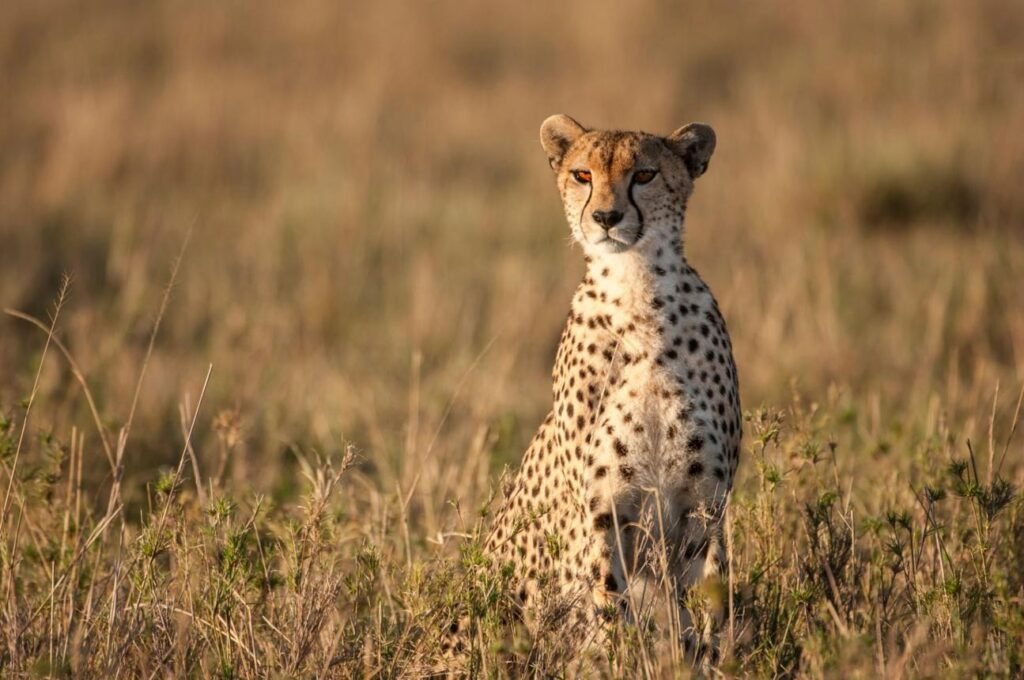
The expressions spirit animal, animal totem, and power animal are used in different spiritual and cultural settings, and they should not be treated as interchangeable universal concepts. Some Indigenous traditions have specific relationships with animal beings and totems that cannot be reduced to generic personality descriptions.
In contemporary popular spirituality, the cheetah is sometimes used as a personal animal symbol associated with speed, concentration, courage, and independence.
What Does It Mean If You Feel Connected to the Cheetah?
Feeling drawn to the cheetah may reflect qualities you admire or want to develop. You might value independence, be entering a demanding period, or be looking for a reminder to act confidently.
A practical interpretation of this connection could include:
- Focus: Choose one meaningful priority instead of scattering your attention.
- Courage: Take a calculated risk when you have prepared adequately.
- Timing: Recognize that not every opportunity deserves an immediate response.
- Rest: Allow recovery instead of treating constant productivity as success.
- Adaptability: Change your approach when new information becomes available.
These interpretations can be personally useful without implying that everyone who feels connected to a cheetah has the same personality or spiritual destiny.
Is the Cheetah a Sign of Good Luck?
Some modern symbolic interpretations associate the cheetah with favorable opportunities, success, and forward momentum. There is no established evidence that encountering a cheetah predicts good fortune.
Instead, you can understand this association as an encouraging metaphor: preparation and awareness may help you recognize opportunities that you might otherwise overlook.
4. Historical Origins and Cultural Significance of Cheetah Symbolism
The cheetah has a long relationship with human societies, particularly in parts of Africa, the Middle East, and Asia. Its cultural significance developed through wildlife encounters, hunting practices, royal imagery, trade, storytelling, and artistic representation.
It is important to distinguish documented historical practices from modern spiritual interpretations. There is no single ancient meaning of the cheetah shared by every culture.
Cheetahs in Ancient Egypt
Ancient Egyptian art and elite hunting imagery provide important context for understanding how powerful wild animals could be incorporated into representations of authority, nature, and status.
Wild cats appeared in Egyptian visual culture, but the animals depicted should not automatically be identified as cheetahs. Lions, leopards, and other felines also occupied important roles in Egyptian imagery and mythology.
Where cheetahs were recognized or depicted, their association with hunting and elite life can help explain why the animal might evoke prestige and controlled power in historical interpretations.
Historical caution: It would be inaccurate to claim that all ancient Egyptians regarded the cheetah as a universal symbol of speed or divine protection. The meaning of any particular image depends on its date, setting, and intended use.
Cheetahs in Persian and Mughal Court Culture
One of the clearest historical associations of the cheetah is with coursing and royal hunting in parts of Asia, including Persia and the Indian subcontinent.
Trained cheetahs were used to pursue game, and their ability to accelerate rapidly made them valuable in elite hunting practices. In these settings, the animal could be connected with courtly prestige, skilled animal handling, and aristocratic recreation.
During the Mughal period in South Asia, hunting formed part of courtly life and royal representation. Historical accounts and visual materials document the use of trained cheetahs in hunting contexts.
This history illustrates how animal symbolism develops through human activity. The same animal that represents untamed freedom in one context may signify wealth, privilege, or mastery in another.
Cheetahs in African Cultural Contexts
Cheetahs are native to Africa, with populations also surviving in a small region of Iran. Their presence in African environments has shaped human encounters with the animal over long periods.
However, Africa contains thousands of cultural communities, languages, histories, and belief systems. It would be misleading to assign one spiritual meaning to the cheetah across the continent.
Depending on the community and context, the animal may be understood through practical wildlife knowledge, oral traditions, artistic expression, conservation concerns, or contemporary popular culture.
When researching a specific African tradition, consult sources grounded in that community rather than relying on generalized claims about African spirituality.
How Historical Context Changes Symbolic Meaning
| Context | Possible association | Important qualification |
| Elite hunting in Persia and South Asia | Prestige, trained skill, controlled speed | Meanings depended on courtly and regional practices |
| African wildlife environments | Ecological awareness, hunting ability, adaptation | Interpretations vary among communities |
| Contemporary personal spirituality | Focus, ambition, independence | A modern interpretation, not a universal ancient belief |
| Conservation and environmental education | Vulnerability, biodiversity, coexistence | Emphasizes ecological realities rather than mystical meaning |
| Sports and commercial branding | Speed, agility, competitive performance | Meaning depends on the brand or audience |
The key historical insight is that cheetah symbolism is not fixed. People interpret animals through their relationships with nature, social structures, beliefs, and historical experiences.
5. Cheetah Symbolism Across Cultures and Belief Systems
Cheetah symbolism can change considerably according to the cultural environment in which the animal appears. Its physical characteristics are observable, but the meanings attached to those characteristics are shaped by human interpretation.
African Perspectives
In African contexts, cheetahs can be understood through wildlife observation, ecological knowledge, storytelling, and relationships between communities and their environments.
Their speed and hunting behavior offer obvious connections to agility and survival. Yet the significance of a cheetah in a particular community should be established through specific cultural evidence, not assumed from the animal’s geographic range.
Modern conservation work also gives the cheetah a powerful contemporary meaning: the importance of protecting wildlife while addressing the needs of people who share landscapes with large predators.
Middle Eastern and Persian Associations
Historical cheetah hunting in parts of Persia and neighboring regions connects the animal with elite pursuits and the relationship between humans and trained wildlife.
In this context, a cheetah may evoke controlled power, hunting skill, and prestige. These associations are grounded in particular historical practices, rather than representing a universal spiritual belief throughout the Middle East.
South Asian Historical Interpretations
Cheetahs have an important place in the history of hunting in the Indian subcontinent, including during the Mughal era. Their use in coursing demonstrates how speed and predatory ability became part of courtly spectacle and aristocratic life.
Today, the cheetah also carries significance in wildlife conservation in India, where reintroduction efforts have drawn attention to ecological restoration, species protection, and the challenges of rebuilding a population.
These modern associations differ from historical royal hunting traditions, showing how an animal’s cultural role can evolve.
Western Popular Culture
In contemporary Western media, cheetahs frequently symbolize speed, athletic performance, and competitiveness.
The animal’s recognizable silhouette and spotted coat make it useful in sports imagery, advertising, children’s media, and visual storytelling. Its associations are often direct and easy to understand: a cheetah suggests movement, performance, or the ability to get ahead.
In popular spirituality, it may also be interpreted as a symbol of personal ambition and independence. These interpretations should be distinguished from documented historical traditions.
Religious Connections
Unlike animals that occupy central roles in particular religious narratives, the cheetah does not have one universally established religious meaning across major world religions.
A cheetah might appear in religiously themed art, literature, or personal reflection, but its presence does not automatically make it a sacred animal within that tradition.
For responsible interpretation, it is useful to distinguish among:
- Scriptural symbolism: Meanings explicitly supported by religious texts.
- Historical religious imagery: Animals represented in religious or ceremonial art.
- Personal spirituality: Meanings individuals assign to an animal.
- Contemporary popular symbolism: Interpretations circulated through books, websites, and social media.
This distinction helps avoid attributing beliefs to religions or communities without reliable evidence.
6. The Psychological Meaning of Cheetah Symbolism
The psychological appeal of the cheetah can be understood through perception, association, and metaphor. Its streamlined body, alert posture, and explosive movement readily suggest action, vigilance, and competence.
This does not mean that cheetahs possess a scientifically verified psychological message for humans. Rather, people use recognizable animal characteristics to represent abstract qualities.
Speed as a Metaphor for Achievement
In everyday language, people often describe successful individuals as fast-moving, quick-thinking, or ahead of the competition. The cheetah fits these expressions because its speed is so distinctive.
This association can be motivating, but it also has limitations. Constantly chasing speed can encourage impatience, overwork, and unrealistic comparisons.
A healthier interpretation connects the cheetah with efficient progress: moving toward meaningful objectives while respecting personal limits.
Focus and Selective Attention
The cheetah’s hunting strategy offers a useful metaphor for selective attention. In a world full of competing demands, choosing where to direct attention is often more valuable than attempting to do everything simultaneously.
For example, a writer might use cheetah symbolism as a reminder to finish one article before beginning several unrelated projects.
The symbolism becomes practical when it helps someone convert a general ambition into a specific behavior.
Confidence Without Recklessness
Cheetahs must assess conditions before committing energy to a chase. A failed hunt can be costly, so timing and energy management matter.
This provides a metaphor for calculated confidence: acting decisively after evaluating the situation, rather than confusing bravery with impulsiveness.
Expert Tip: When using the cheetah as a personal symbol, pair one quality with one action. Instead of simply aspiring to be more focused, decide to spend 30 uninterrupted minutes on your highest-priority task.
Why Animal Symbols Feel Meaningful
Humans routinely use familiar images to communicate complex ideas. A bird may suggest freedom, an oak tree may suggest endurance, and a cheetah may suggest speed.
In semiotics the study of signs and meaning an animal’s visible characteristics can become signifiers through repeated cultural use. Advertising, storytelling, education, and personal experience all reinforce these associations.
However, symbols are not interpreted identically by every viewer. Someone familiar with wildlife conservation may associate the cheetah with habitat loss, while an athlete may immediately think of speed.
The surrounding context helps determine which meaning becomes most prominent.
7. Cheetah Symbolism in Dreams
Cheetah dreams are sometimes interpreted through themes of ambition, urgency, independence, competition, and personal change. However, dreams do not have universally established symbolic meanings, and a dream about a cheetah does not reliably predict future events.
The most useful interpretation begins with the details of the dream and the emotions it produced.
Dreaming of a Running Cheetah
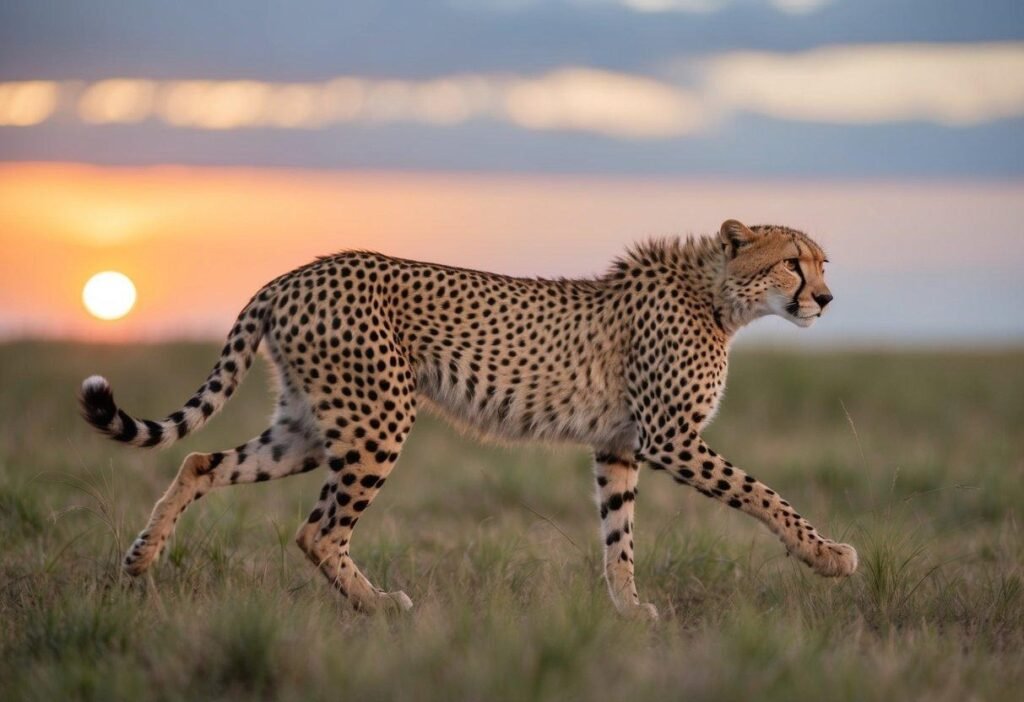
A running cheetah may bring to mind progress, urgency, competition, or the desire to reach a goal.
Consider whether you currently feel motivated to move forward or pressured to achieve something quickly. Your emotional response may provide more useful context than a generic dream dictionary.
Dreaming of a Chasing Cheetah
Being chased by a cheetah may reflect feelings of pressure or avoidance in your personal interpretation of the dream.
Ask yourself whether a deadline, responsibility, conflict, or difficult decision has been occupying your thoughts. This is a reflective possibility, not a diagnosis or a definitive explanation of the dream.
Dreaming of a Calm or Resting Cheetah
A calm cheetah may evoke controlled strength, patience, or a feeling of being comfortable with your own abilities.
Its stillness is especially interesting because the animal is commonly associated with speed. The contrast can suggest that readiness does not require constant action.
Dreaming of a Cheetah Cub
A cheetah cub may symbolize something developing, such as a new goal, emerging confidence, or a responsibility that needs protection.
It may also reflect memories of animals, wildlife documentaries, or recent experiences. The meaning depends on the dreamer’s associations and circumstances.
Dreaming of Being a Cheetah
Imagining yourself as a cheetah can provide a metaphor for wanting greater freedom, confidence, physical ability, or control over your direction.
Rather than treating the dream as a supernatural instruction, consider which quality of the animal you wanted to embody and how that quality relates to your current life.
| Dream scenario | Possible personal association | Reflective question |
| Running cheetah | Momentum or ambition | What goal am I pursuing? |
| Chasing cheetah | Pressure or urgency | What feels difficult to confront? |
| Resting cheetah | Patience or readiness | Where would rest help me perform better? |
| Cheetah cub | Growth or responsibility | What needs time and protection? |
| Friendly cheetah | Trust or confidence | What helps me feel secure in my abilities? |
These interpretations are possibilities for reflection, not universal rules of dream analysis.
8. Cheetah Symbolism in Art, Literature, and Mythology
The cheetah’s appearance makes it a visually powerful subject. Its spotted coat, distinctive tear marks, long limbs, and streamlined profile can communicate speed and alertness even in a still image.
Artists and writers can use these characteristics to create meaning without explicitly explaining the symbolism.
Cheetahs in Visual Art
A cheetah depicted mid-stride emphasizes movement, while one shown resting may communicate control, composure, or vulnerability.
Composition also affects interpretation. A cheetah placed against an expansive landscape can suggest freedom and connection with nature. A close-up portrait emphasizes its eyes, markings, and individuality.
In iconography the study of visual symbols and their meanings the surrounding objects, setting, and historical context help determine what an image communicates.
Cheetahs in Literature
In literature, a cheetah can function as a metaphor for ambition, a character’s desire for independence, or the pressure of competing in a fast-moving world.
A writer might use a cheetah to represent a protagonist who achieves success quickly but struggles to maintain it. Another story might contrast the animal’s physical speed with a character’s emotional hesitation.
The symbolism becomes more sophisticated when it develops alongside the plot rather than serving as a simple decorative reference.
For example, a character who admires the cheetah at the beginning of a novel might initially value speed above everything else. Later, an experience requiring patience could change their understanding of strength.
Cheetahs and Mythology
It is important not to assume that the cheetah occupies the same mythological role as the lion, tiger, leopard, or other large cats.
Cheetahs have appeared in historical art and cultural traditions, but claims about a universal ancient cheetah deity or a single global mythological meaning require specific evidence.
In modern fantasy and symbolic storytelling, the animal can certainly be used as an imaginative emblem of speed, awareness, and freedom. That creative use should be distinguished from a documented traditional myth.
Symbolism in Film and Digital Media
Film directors, illustrators, game designers, and social media creators can use a cheetah to communicate motion, agility, competitiveness, or a wild and independent identity.
A brief image of a cheetah accelerating across a landscape may convey urgency more efficiently than several sentences of explanation.
This is one reason animal symbols remain useful in contemporary communication: they connect a recognizable visual form with an idea that an audience can quickly understand.
9. Cheetah Symbolism in Branding, Advertising, and Design

Cheetah symbolism is especially useful in branding because the animal has a distinctive appearance and widely recognized associations with speed and athletic performance.
Businesses can use animal imagery to establish a brand personality, communicate a product’s benefits, and differentiate themselves from competitors. However, the effectiveness of a cheetah logo depends on the product, target audience, design, and cultural context.
Why Brands Use Cheetah Imagery
A cheetah can communicate several qualities at once:
- Speed: Quick service, rapid delivery, or fast performance.
- Precision: Accuracy, technical ability, and controlled execution.
- Competition: Athletic performance and the pursuit of excellence.
- Agility: Adaptability and responsiveness.
- Premium identity: A sleek, carefully designed image that may suggest exclusivity.
These are possible associations rather than guaranteed consumer responses.
Color and Visual Communication
The cheetah’s natural colors also influence its visual symbolism. Its golden coat and dark spots create a strong pattern that is recognizable at different scales.
Gold and warm tan may suggest energy, warmth, or luxury in some design contexts. Black can add contrast and communicate sophistication or strength. These meanings are culturally influenced rather than universal psychological laws.
Designers should also consider accessibility, readability, and whether the image remains recognizable on small screens.
How to Use Cheetah Symbolism in Branding
| Application | Possible symbolic message | Design consideration |
| Sports identity | Speed and competitive energy | Use a clear, dynamic silhouette |
| Delivery service | Efficiency and quick movement | Avoid promising performance the service cannot deliver |
| Technology brand | Agility and responsiveness | Pair animal imagery with a credible, modern visual system |
| Fitness business | Strength and focused effort | Consider whether the audience relates to athletic symbolism |
| Conservation organization | Wildlife protection and ecological awareness | Emphasize the real animal and its habitat |
| Luxury product | Exclusivity and distinctive style | Avoid relying on animal imagery alone to communicate quality |
Expert Tip for Designers
Use the cheetah when its associations genuinely match the brand’s values. A conservation organization might choose a naturalistic illustration to emphasize wildlife protection, while a sports team might prefer a simplified silhouette that communicates movement.
The same animal can produce very different messages depending on how it is illustrated.
10. The Symbolic Meaning of Cheetah Spots and Physical Features
The cheetah’s appearance contributes to its distinctive place in animal symbolism. Specific features can carry metaphorical meaning in art and personal interpretation, even when their biological function is different from their symbolic use.
The Spotted Coat: Individuality and Recognition
Cheetah spots make the animal immediately recognizable. Symbolically, the pattern can represent individuality, distinctiveness, and the idea that identifying features can become sources of identity.
Biologically, the spots form part of the cheetah’s coat pattern and help distinguish it from other large cats. They are not evidence of a supernatural message or a predetermined personality.
Black Tear Marks: Precision and Alertness
The dark markings that extend from the inner corners of a cheetah’s eyes toward its mouth are among its most recognizable characteristics.
These markings have a biological role: they are thought to help reduce glare and improve visual performance in bright conditions, although their exact contribution is not completely settled.
In artistic interpretation, the markings may suggest sharp perception, intensity, or concentration. These meanings are symbolic associations rather than their biological purpose.
Long Legs and Flexible Body: Movement and Efficiency
Cheetahs have adaptations that support high speed running, including long limbs, a flexible spine, and a tail that helps with balance and steering.
In visual storytelling, these features can symbolize fluidity, coordination, and efficient action.
The broader lesson is that an effective symbol often begins with a real, observable characteristic and develops meaning through cultural interpretation.
11. Cheetah Symbolism in Personal Development and Everyday Life
Cheetah symbolism becomes most useful when it moves beyond abstract descriptions and helps people think more clearly about their choices.
The animal’s combination of speed, patience, and energy management offers several practical lessons.
Set a Clear Direction
A cheetah does not benefit from expending energy without purpose. As a metaphor, it encourages people to identify a clear objective before committing their time and attention.
Instead of saying, “I want to be more successful,” define a concrete outcome, such as completing a course, finishing a project, or developing a specific skill.
Recognize the Right Moment
Timing is central to the cheetah’s hunting strategy. In everyday life, timing can influence negotiations, career changes, creative decisions, and other important choices.
This does not mean waiting for perfect conditions. It means identifying which information you need, preparing for possible outcomes, and acting when the opportunity is reasonable.
Balance Effort With Recovery
A cheetah cannot maintain maximum speed indefinitely. Its hunting behavior illustrates the importance of conserving energy and recovering after intense exertion.
People can apply the same general principle by balancing demanding work with rest, sleep, and realistic schedules.
The metaphor is particularly relevant to anyone who equates productivity with constant activity.
Adapt When Conditions Change
A successful plan must account for changing circumstances. The cheetah’s agility makes it an appropriate symbol for flexible thinking.
If a project encounters unexpected obstacles, consider whether you need to adjust the timeline, change the method, ask for help, or redefine the goal.
Adapting your approach is not necessarily abandoning your ambition.
A Simple Cheetah-Inspired Reflection Exercise
Use the following prompts to turn the symbolism into a practical plan:
1. My main goal
2. What is slowing me down?
3. My next decisive action
4. How I will protect my energy
Copy my reflection
This exercise combines the cheetah’s familiar symbolism with realistic planning. It does not require a spiritual belief; it simply uses an animal metaphor to organize your thinking.
12. Did You Know? Facts That Enrich Cheetah Symbolism
The cheetah’s real biology makes its symbolic associations more interesting.
- Cheetahs are built for acceleration. They can reach very high speeds over short distances, but their top speed cannot be sustained indefinitely.
- Their tails contribute to maneuverability. The tail helps with balance and changes in direction during fast pursuits.
- Their social lives are varied. Females generally live alone outside periods of raising cubs, while males may form coalitions.
- Their habitats are under pressure. Habitat fragmentation, declining prey, and human-wildlife conflict threaten cheetah populations in parts of their range.
- They are not simply smaller leopards. Cheetahs have a distinctive body shape and solid spots, whereas leopards typically have rosette shaped markings.
These facts are useful because responsible symbolism begins with understanding the actual animal. A symbol becomes more compelling when its interpretation respects the characteristics that inspired it.
13. Common Mistakes When Interpreting Cheetah Symbolism
Animal symbolism can be fascinating, but it is easy to overstate what an image, encounter, or dream means.
Mistake 1: Assuming the Cheetah Always Means Speed
Speed is its best-known association, but focus, patience, adaptability, energy management, and vulnerability can also be meaningful.
The surrounding context determines which interpretation is most relevant.
Mistake 2: Treating Spiritual Interpretations as Scientific Facts
Claims that a cheetah encounter predicts success or proves that someone has a particular spiritual destiny are matters of belief, not established scientific findings.
It is reasonable to find personal meaning in an encounter without presenting that meaning as an objective prediction.
Mistake 3: Assigning One Meaning to Every Culture
Cultural meanings develop through specific histories and practices. A cheetah associated with royal hunting in one historical context may represent wildlife protection in a contemporary conservation campaign.
Avoid describing one interpretation as the universal meaning of the animal.
Mistake 4: Confusing Cheetahs With Other Big Cats
Cheetahs, leopards, and lions have different physical characteristics and cultural histories. Their symbolism can overlap, but they should not be treated as interchangeable.
Mistake 5: Interpreting Every Dream Literally
Dreams can be influenced by memories, emotions, recent experiences, and personal associations. There is no reliable universal code proving that a particular animal predicts a particular event.
Use dream symbolism as a starting point for reflection rather than a substitute for evidence based judgment.
14. Myth vs. Fact: Understanding the Cheetah
| Myth or assumption | More balanced explanation |
| A cheetah symbolizes only speed. | It can also represent concentration, timing, agility, and energy management. |
| Seeing a cheetah guarantees good luck. | Some people interpret it positively, but no evidence establishes it as a predictor of fortune. |
| The cheetah has the same spiritual meaning everywhere. | Meanings vary according to cultural history, personal belief, and context. |
| Cheetahs are powerful because they are physically strongest. | Their hunting success depends on specialized adaptations, strategy, and favorable conditions. |
| Rest means weakness in cheetah symbolism. | Rest and energy conservation are important parts of a sustainable approach to effort. |
| Every cheetah image is a spiritual sign. | Images may be artistic, commercial, educational, or simply depictions of wildlife. |
The distinction between fact and interpretation is essential. It allows people to appreciate symbolism without confusing metaphor with biology, documented history, or scientific evidence.
15. Cheetah Symbolism in Conservation and Environmental Awareness
Cheetah symbolism also has a meaningful ecological dimension. The animal can represent the beauty of wildlife, the complexity of ecosystems, and the responsibility humans have toward species whose survival is threatened.
Cheetahs face several pressures, including habitat loss and fragmentation, reduced prey availability, and conflict with people who raise livestock. Conservation organizations work to address these challenges through habitat protection, research, community engagement, and other measures.
The Cheetah as a Symbol of Vulnerability
Because the cheetah is widely recognized for its speed, people may associate it primarily with strength and success. Its conservation challenges reveal a more complex reality.
An animal can be exceptionally adapted to its environment and still be vulnerable when that environment changes.
Symbolically, this contrast can represent the limits of individual strength. Skills and abilities matter, but they cannot always overcome structural problems without broader support.
The Importance of Human-Wildlife Coexistence
Cheetah conservation also raises questions about how humans share land and resources with wildlife. Effective conservation requires consideration of ecological needs and the livelihoods of local communities.
In educational materials, the cheetah can therefore represent more than speed or ambition. It can encourage responsibility, respect for biodiversity, and recognition of the connections between human activity and natural ecosystems.
This ecological interpretation is grounded in real conservation concerns rather than supernatural claims.
Conclusion: What Cheetah Symbolism Teaches Us
Cheetah symbolism brings together speed, focus, independence, agility, ambition, and the importance of timing.
The animal’s remarkable physical abilities make it a compelling metaphor for decisive action, while its hunting behavior highlights the value of observation, preparation, and energy management.
Historical associations with hunting in Persia and South Asia demonstrate how the cheetah became connected with prestige and skilled pursuit in particular settings.
Contemporary spirituality, literature, art, branding, and personal reflection have developed additional interpretations, although these meanings are not universal across cultures or belief systems.
The cheetah also reminds us that strength is not the same as invulnerability.
Its conservation challenges show why adaptability, cooperation, and environmental protection matter alongside individual ability.
Ultimately, the most useful lesson of cheetah symbolism is not to move as quickly as possible.
It is to understand your direction, recognize meaningful opportunities, prepare carefully, and act with purpose.
By combining ambition with patience and self-awareness, we can apply the cheetah’s symbolic qualities to personal development, creative expression, communication, and everyday decisions.
Frequently Asked Questions About Cheetah Symbolism
1. What does a cheetah symbolize spiritually?
In contemporary spiritual interpretations, the cheetah commonly symbolizes focus, speed, independence, confidence, and decisive action. Some people use it as a reminder to trust their abilities, recognize opportunities, and pursue personal goals. These are interpretive beliefs rather than universally established spiritual meanings.
2. Is a cheetah a symbol of good luck?
A cheetah can symbolize good fortune or favorable opportunities in some modern interpretations. However, there is no scientific evidence that seeing a cheetah predicts luck or future success. Its symbolism can instead serve as a reminder to prepare for opportunities and act when circumstances are favorable.
3. What does it mean when you dream about a cheetah?
Dreaming about a cheetah may bring up themes of ambition, urgency, independence, competition, or confidence. A running cheetah might remind you of a goal, while a resting cheetah might evoke patience. Dream meanings are personal, and no single interpretation applies to everyone.
4. What does a cheetah symbolize in love and relationships?
In personal interpretations, the cheetah can represent independence, passion, confidence, and the desire for freedom within a relationship. It may also serve as a reminder to respect personal boundaries while pursuing shared goals. These meanings are symbolic, not established predictions about romantic compatibility.
5. What is the difference between cheetah and leopard symbolism?
Cheetah symbolism commonly emphasizes speed, agility, concentration, and decisive action. Leopard symbolism is often associated in popular interpretations with stealth, adaptability, secrecy, and strength. These associations vary across cultures and creative contexts, and neither animal has one universal symbolic meaning.
6. What does a cheetah symbolize in dreams or personal life transitions?
A cheetah may represent momentum, readiness, or the desire to move into a new phase of life. If you encounter its image during a transition, you can use it as a prompt to consider which goal deserves your attention and what preparation you need before acting. It does not necessarily predict that a major change is coming.
Key Takeaways
- Speed: Making progress and recognizing opportunities.
- Focus: Directing attention toward meaningful goals.
- Independence: Developing self-reliance while respecting the value of support.
- Agility: Adapting when circumstances change.
- Ambition: Pursuing goals with purpose and determination.
- Timing: Knowing when to act and when to wait.
- Energy management: Balancing effort with rest and recovery.
- Cultural significance: Understanding that historical and symbolic interpretations differ across societies.
- Conservation: Recognizing that even highly adapted animals can be vulnerable.
- Personal growth: Using animal symbolism as a reflective tool rather than treating it as a prediction.
Semantic SEO: Related Entities, NLP Concepts, and Topical Relationships
The following terms connect the article’s main subject with related concepts for topical organization and internal linking.
| Category | Related terms and concepts |
| Primary keyword | Cheetah symbolism |
| Core semantic keywords | Cheetah meaning, cheetah spiritual meaning, cheetah symbol, cheetah significance |
| Speed and movement | Acceleration, agility, quick action, maneuverability, momentum |
| Personal development | Focus, confidence, independence, ambition, resilience, self-awareness |
| Spiritual and reflective concepts | Spirit animal interpretations, animal symbolism, personal meaning, dream interpretation |
| Historical entities | Ancient Egypt, Persia, Mughal Empire, Indian subcontinent |
| Cultural and academic concepts | Anthropology, iconography, semiotics, cultural identity, folklore, visual communication |
| Art and literature | Animal imagery, literary symbolism, visual storytelling, mythology, character development |
| Design and branding | Brand identity, sports logos, advertising, consumer perception, visual design |
| Ecological entities | African savanna, wildlife conservation, biodiversity, habitat fragmentation, human-wildlife coexistence |
| Long-tail keywords | What does a cheetah symbolize, cheetah spiritual meaning, cheetah symbolism in dreams, cheetah meaning in different cultures, cheetah symbolism in art |
| Related topic clusters | Animal symbolism, big cat symbolism, African wildlife symbolism, animal dreams, nature symbolism |
Suggested Internal Linking Opportunities
For a symbolism website, relevant supporting articles could include:
- Animal Symbolism: Meanings of Animals Across Cultures
- Leopard Symbolism: Stealth, Strength, and Adaptability
- Lion Symbolism: Courage, Leadership, and Power
- Tiger Symbolism: Confidence, Passion, and Personal Strength
- Falcon Symbolism: Vision, Focus, and Freedom
- Symbolism of Speed and Movement in Art and Literature
- Wildlife Conservation Symbolism: Nature, Vulnerability, and Responsibility
These topics create a natural topical cluster around animal symbolism. Internal links should be added where they help readers explore a related concept, rather than simply inserting keywords into every paragraph.
Editorial note: This article distinguishes observable cheetah biology and documented historical practices from contemporary spiritual interpretations. It is written to support reader understanding and semantic relevance, but no article can guarantee a particular search ranking or claim to be undetectable by AI-detection tools.

Explore folklore, anthropology, and global symbolism with Noah Whitmore’s research-based articles.
