
The symbolism of figs reaches across ancient civilizations, religious traditions, mythology, literature, and everyday life.
For thousands of years, the fig has represented nourishment, fertility, prosperity, wisdom, peace, and the connection between humanity and nature.
Its significance comes not only from its sweet fruit but also from the fig tree’s longevity, generous growth, and place in some of the world’s oldest agricultural and cultural traditions.
Figs occupy a distinctive position in human history.
They appear in sacred texts, ancient stories, traditional foodways, paintings, and modern visual design.
Depending on the cultural or religious context, a fig may symbolize abundance and fulfillment, spiritual knowledge, modesty, temptation, or personal growth.
Understanding fig symbolism helps explain how an ordinary fruit can become a powerful cultural sign. It also reveals how people use the natural world to express ideas about life, family, faith, identity, and the passage of time.
What Is the Symbolism of Figs?
Featured-snippet definition: Fig symbolism refers to the meanings associated with figs and fig trees across cultures, religions, literature, and art. Figs commonly symbolize abundance, fertility, nourishment, prosperity, wisdom, peace, and spiritual growth. Their meanings vary by context, with biblical stories also connecting fig leaves to modesty and awareness, while some traditions associate the tree with sacred knowledge and renewal.
The fig’s symbolic power develops from several interconnected qualities:
- Nourishment: The fruit has sustained people for generations, linking it with food security, generosity, and the rewards of cultivation.
- Fertility and abundance: Its productive growth and many seeds make it a natural metaphor for fruitfulness and potential.
- Wisdom and knowledge: Religious narratives and philosophical traditions connect the fig tree with spiritual insight, contemplation, or sacred understanding.
- Peace and prosperity: The image of people enjoying the fruits of their own land can represent security, stability, and a flourishing community.
- Transformation: The fruit’s development from flower structures hidden within its interior to a ripe, seed-filled form offers a useful metaphor for unseen growth and fulfillment.
- Modesty and vulnerability: In the biblical story of Adam and Eve, fig leaves become associated with awareness of nakedness and the desire for concealment.
These meanings are related, but they are not interchangeable. A fig in a religious painting may communicate something different from a fig used in a wedding arrangement, a poem, or a business logo. The surrounding imagery, historical setting, and intended audience all shape its interpretation.
1. The Historical Origins of Fig Symbolism
The history of fig symbolism begins with the relationship between humans, agriculture, and the natural environment. The common fig, Ficus carica, has a long history of cultivation in the Mediterranean and western Asia. Its nutritional value, ability to be dried for storage, and importance in traditional farming helped establish the fig as a symbol of sustenance and prosperity.
The Met Blog
+1
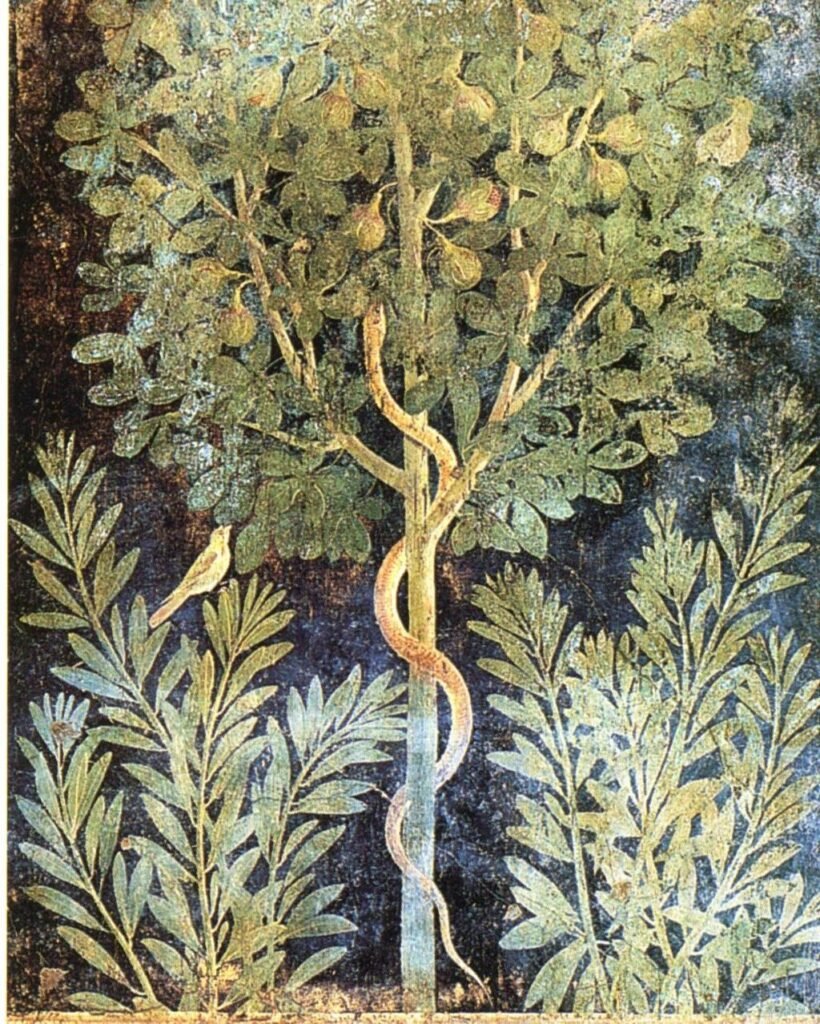
Figs in ancient civilizations


7
Ancient Egypt: Fig trees, including the sycamore fig, appeared in religious and funerary imagery. The sycamore was associated with divine nourishment, protection, and the afterlife. These connections reflected broader Egyptian beliefs about trees as sources of life and renewal. The sycamore fig should not be confused with the common edible fig, even though both belong to the genus Ficus.
PMC
+1
Ancient Greece: Figs were valued as food and featured in Greek writing and cultural life. Their abundance and association with fertility helped give them symbolic importance. The fruit could represent the rewards of agriculture, bodily vitality, and the pleasures of ordinary life. Ancient Greek attitudes toward figs also reflected their economic importance, rather than spirituality alone.
The Met Blog
+1
Ancient Rome: The fig tree became associated with Rome’s legendary origins. According to Roman tradition, the twins Romulus and Remus were discovered beneath a fig tree and later became the legendary founders of the city. In this story, the tree represents protection, nourishment, maternal care, and the beginnings of a civilization.
The Met Blog
+1
The ancient Near East: Fig trees were important agricultural resources in the region where many biblical narratives developed. Because they provided fruit and shade, they became familiar images of settled life, security, and prosperity. Their symbolic importance grew naturally from their practical value to households and communities.
Bible Gateway
+1
Why the fig became a lasting symbol
Three factors help explain the fig’s enduring cultural importance:
- Practical usefulness: The fruit could be eaten fresh or dried, making it valuable across seasons.
- Visible productivity: A mature fig tree could produce abundant fruit, providing a natural metaphor for prosperity and fertility.
- Religious and cultural storytelling: Sacred texts, myths, and works of art connected the tree with ideas that extended beyond food.
These factors do not prove that every culture developed the same interpretation. Rather, they help explain why different societies repeatedly found the fig meaningful.
2. The Spiritual Meaning of Figs
The spiritual meaning of figs often centers on nourishment, growth, wisdom, gratitude, and the relationship between the visible world and deeper truths.
A fig may represent spiritual abundance: the idea that a fulfilling life involves more than material possessions. Its fruit can serve as a metaphor for inner development, while the tree suggests patience, stability, and the conditions needed for growth.
Figs as symbols of spiritual nourishment
Food is a recurring metaphor in spiritual traditions because eating is a universal human experience. Just as fruit sustains the body, wisdom, compassion, and reflection can sustain a person’s inner life.
A fig used in a devotional illustration or contemplative setting may therefore suggest:
- Gratitude for life’s ordinary gifts.
- Appreciation for nature and the cycles of growth.
- The importance of patience and cultivation.
- The relationship between physical nourishment and spiritual well-being.
- The value of sharing resources with others.
These are interpretive possibilities, not universal religious rules. A fig does not automatically carry a spiritual message simply because it appears in a painting or photograph.
Figs and hidden wisdom
The fig has an unusual botanical structure. What appears to be the fruit is technically a specialized structure called a syconium, containing numerous tiny flowers internally. This feature can inspire a metaphor about inner richness: what matters most is not always visible from the outside.
In symbolic writing, this idea can represent personal depth, quiet intelligence, or wisdom that develops privately before becoming apparent to others.
For example, a story about someone who spends years learning a craft might use a fig tree as an image of gradual, unseen development. The fruit represents the eventual expression of knowledge cultivated over time.
This is a modern literary interpretation of the plant’s structure, not evidence that ancient cultures universally understood the fig in this way.
3. Fig Symbolism in Religion
Figs and fig trees appear in several major religious traditions, but their significance differs according to each tradition’s scriptures, practices, and historical background.


9
Fig symbolism in the Bible
In the Bible, fig symbolism includes nourishment, peace, prosperity, concealment, spiritual fruitfulness, and judgment. The meaning depends on the specific passage.
Bible Gateway
+1
The fig leaves of Adam and Eve
In Genesis 3:7, Adam and Eve use fig leaves to cover themselves after becoming aware of their nakedness. This episode connects fig leaves with modesty, vulnerability, and the human desire to conceal oneself.
Later European art adopted fig leaves as coverings for nude figures. In this context, the leaf became a visual convention for modesty and censorship, sometimes reflecting changing social attitudes toward the human body.
The Met Blog
+1
The fig tree as a symbol of peace
In 1 Kings 4:25, the image of people living safely beneath their own vines and fig trees evokes security and prosperity. The tree becomes more than a food source: it represents a stable home, reliable harvests, and freedom from danger.
This association remains useful when interpreting fig imagery in biblical art or literature. A fig tree beside a house may suggest a peaceful, established life, although the artist’s broader context matters.
Good and bad figs
Jeremiah 24 uses good and bad figs as a metaphor for the fate of different groups of people. The contrast shows that figs can represent judgment and differing outcomes, not merely blessings.
Bible Gateway
+1
The barren fig tree
In the New Testament, Jesus uses fig-tree imagery in teachings and encounters that have been interpreted in different theological ways. In the parable of the barren fig tree, the absence of fruit raises questions about responsibility, patience, repentance, and the expectation of meaningful change.
The lesson is not simply that a tree without fruit is bad. The narrative’s meaning depends on its literary and theological setting.
Fig symbolism in Islam
The fig is explicitly named in the Quran’s Surah At-Tin, often translated as “The Fig.” The chapter opens with an oath by the fig and the olive, placing both within a solemn religious passage.
Wikipedia
+1
For readers exploring Islamic symbolism, the fig can therefore evoke reflection on creation, divine signs, and the moral and spiritual themes of the surah. However, it is important not to assign a single definitive symbolic meaning to every mention of the fruit.
Islamic traditions and individual interpretations may differ, and the Quranic passage should be read in its wider context rather than reduced to a generic claim about luck or wealth.
Fig symbolism in Buddhism
One of the most important sacred trees in Buddhism is the Bodhi tree, a sacred fig species known botanically as Ficus religiosa. Buddhist tradition holds that Siddhartha Gautama attained enlightenment while meditating beneath this tree. The tree consequently represents awakening, insight, and liberation from ignorance.
Biodiversity at LUMS
+1
The Bodhi tree is not the same species as the common edible fig, Ficus carica. This distinction matters when discussing fig symbolism because the two plants have related botanical identities but different cultural associations.
In Buddhist imagery, leaves or depictions of the Bodhi tree may remind practitioners of the Buddha’s awakening and the possibility of developing wisdom through disciplined practice.
Fig symbolism in Hinduism and Jainism
The sacred fig also holds religious importance in Hinduism and Jainism. In South Asian settings, the peepal tree may be associated with worship, meditation, sacred presence, and continuity of life. Practices vary across communities and traditions.
Biodiversity at LUMS
+1
Its significance comes primarily from the sacred tree itself, not simply from the edible fruit. Treating every fig-related plant as interchangeable would overlook the distinct religious meanings attached to particular species.
4. Fig Symbolism Across Cultures
The following table summarizes recurring interpretations while distinguishing the contexts in which they arise.
| Culture or tradition | Symbolic association | Context |
| Ancient Egypt | Nourishment, protection, renewal | Sacred trees and funerary imagery |
| Ancient Greece | Fertility, abundance, vitality | Agriculture, mythology, and cultural life |
| Ancient Rome | Maternal care, protection, origins | Legend of Romulus and Remus |
| Biblical tradition | Peace, prosperity, modesty, judgment | Fig trees and leaves in scripture |
| Islamic tradition | Religious reflection and divine signs | The Quran’s Surah At-Tin |
| Buddhism | Enlightenment and wisdom | The Bodhi tree, Ficus religiosa |
| Hinduism and Jainism | Sacred presence and contemplation | Reverence for the peepal or sacred fig |
These associations are supported by historical, religious, and cultural sources, but they should not be treated as exhaustive descriptions of entire civilizations. Individual communities have diverse practices, and meanings can change over time.
The Met Blog
+3
5. The Psychological Meaning of Figs
Psychologically, fig symbolism can be explored through nourishment, sensory experience, memory, and the meanings people attach to familiar objects. There is no established psychological rule that a fig universally represents a particular emotion or personality trait.
Abundance and a sense of security
A fruit-bearing tree can suggest that basic needs are being met. Its shade offers shelter, while its fruit represents a source of nourishment. These practical associations make the fig a compelling image of comfort, home, and security.
In a painting, for example, a basket of ripe figs beside a family table may communicate hospitality and the pleasure of sharing food. The emotional effect comes partly from the scene’s context and the viewer’s own associations with meals, family, and belonging.
Fertility, creativity, and potential
The many seeds inside a fig make it a natural metaphor for fertility and the possibility of new beginnings. In a broader, nonliteral sense, fertility can refer to creative ideas, personal projects, or a period of productive growth.
A writer might describe an idea as a fig waiting to ripen, suggesting that inspiration needs time before it can become something complete.
This interpretation is particularly useful in literature and visual storytelling, where a familiar natural object can communicate a complex idea without extensive explanation.
Sensory memory and personal meaning
Smell, taste, texture, and visual appearance can connect food with personal memories. Someone who associates figs with a grandparent’s garden may interpret them as symbols of family continuity. Another person may associate them with travel, hospitality, or a particular season.
These interpretations are personal rather than universal. Understanding this distinction is important when using symbolism in education, psychology-related writing, or cross-cultural communication.
6. Fig Symbolism in Art and Literature
Figs and fig leaves have served different purposes in artistic traditions, from representing ordinary prosperity to expressing religious ideas about knowledge, temptation, and modesty.



9
Figs in visual art
In still-life paintings, ripe figs can communicate abundance, seasonal change, hospitality, or the pleasures of the senses. When combined with bread, grapes, olives, or other foods, they may contribute to a larger theme of nourishment and domestic prosperity.
In religious art, the interpretation may be more complex. A fig leaf can refer to the Genesis narrative, while a fruit-bearing tree may suggest life, spiritual expectation, or judgment depending on the scene.
During the medieval and Renaissance periods, artists sometimes used fig leaves to cover nude figures. The practice connected an ordinary botanical form with a broader visual language of modesty and moral convention.
The Met Blog
+1
Figs in literature
Writers often use fruit as a metaphor because it brings together physical experience and abstract meaning. Figs are especially versatile because they can suggest sweetness, ripeness, hidden contents, abundance, sensuality, or decay.
Common literary interpretations include:
- Ripeness: A person or opportunity reaching maturity.
- Sweetness: Pleasure, reward, or the enjoyment of life.
- Seeds: Potential, multiplication, or future possibilities.
- A damaged or spoiled fig: Disappointment, decline, or a lost opportunity.
- A fig tree: Stability, home, continuity, or a place of reflection.
These are interpretive devices, not a fixed dictionary of meanings. A fig may carry several meanings at once, and the author’s use of imagery, tone, and narrative determines which associations are most relevant.
How to analyze a fig in a story
When studying a poem, novel, painting, or film, ask three questions:
- Is the fig presented as food, a plant, a religious symbol, or a decorative object?
- Does the surrounding scene emphasize nourishment, concealment, growth, temptation, or loss?
- Does the fig’s meaning change as the story develops?
This method is more reliable than assuming that every appearance of a fig has the same symbolic significance.
7. Fig Symbolism in Dreams and Spiritual Reflection
Some people interpret figs in dreams as symbols of prosperity, fulfillment, fertility, or personal growth. These interpretations belong to spiritual traditions and popular dream symbolism rather than to a scientifically established system of prediction.
The details of a dream can shape its personal meaning.
| Dream image | Possible symbolic interpretation |
| Eating a ripe fig | Enjoyment, satisfaction, or appreciating an opportunity |
| Seeing a fruit-laden fig tree | Abundance, security, or a sense of possibility |
| Planting a fig tree | Patience, planning, or investing in the future |
| Finding an unripe fig | A goal that needs more time |
| Seeing a damaged fig | Disappointment or concern about something valued |
| Sitting beneath a fig tree | Rest, safety, or a desire for stability |
These interpretations are reflective prompts, not predictions of future events. Dream imagery can be influenced by everyday experiences, emotions, memories, and personal beliefs.
Expert tip: If a fig appears in a dream, consider the emotion you experienced and what figs mean in your own life. A personal association is often a more useful starting point than a universal dream dictionary.
8. Fig Symbolism in Modern Life, Design, and Branding
Today, fig symbolism can be applied in graphic design, packaging, hospitality, fashion, interior decoration, and digital storytelling.
Its usefulness comes from the combination of natural beauty, historical depth, and associations with food and abundance.
Branding and marketing
A brand that uses fig imagery may wish to communicate natural ingredients, craftsmanship, warmth, or Mediterranean-inspired living.
For example, a specialty food company could feature a fig illustration to emphasize traditional ingredients and a connection with agriculture. A wellness brand might use a fig tree as a metaphor for growth and balance.
However, the image does not automatically establish that a product is healthy, sustainable, or ethically produced. Those claims require evidence beyond visual symbolism.
Interior design and visual communication
Fig leaves and branches can be used in prints, textiles, wall art, and decorative patterns. Their organic shapes may contribute to a calm, natural aesthetic.
A fig tree in an illustration could communicate rootedness and continuity, while a close-up of a ripe fig might emphasize texture, sensory pleasure, and abundance.
The design should match the intended audience. Religious imagery, culturally specific symbols, and suggestive classical references may be interpreted differently by different viewers.
Digital content and storytelling
In digital media, fig imagery can help establish a mood or theme quickly. A photograph of figs on a wooden table may suggest slow living, seasonal cooking, or hospitality. An illustration of a fig tree may serve as a visual metaphor for growth and long-term development.
For educational content, captions should explain the relevant cultural context rather than implying that all traditions share one interpretation.
Practical applications
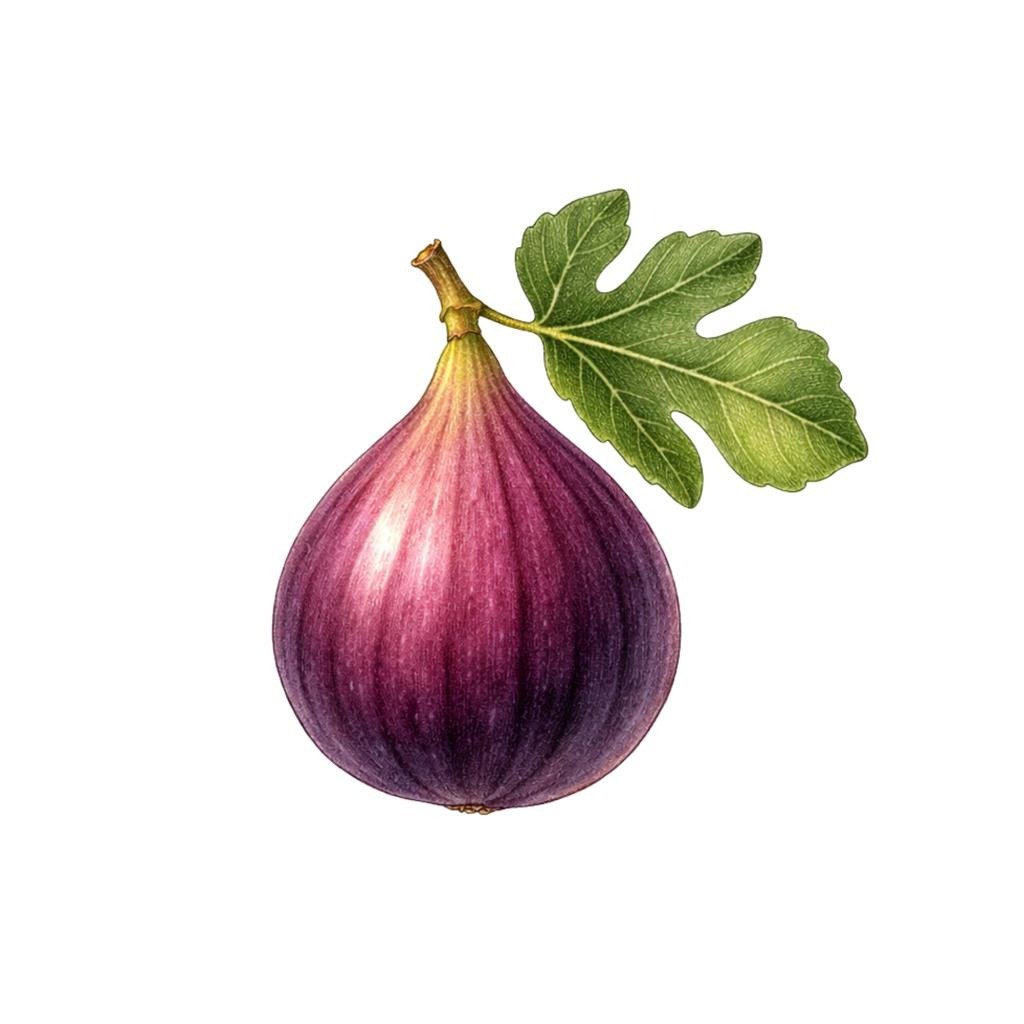
Food and lifestyle branding
Use fig imagery to communicate natural ingredients, traditional food culture, sensory richness, or seasonal abundance. Support any product claims with accurate information.

Interior decoration
Use fig leaves or tree motifs to evoke nature, continuity, and calm. Choose the visual style to suit the room and audience.

Literature and education
Use figs as an example of how ordinary objects acquire meaning through cultural history, metaphor, and context.
9. Did You Know? Facts About Figs and Their Symbolism
-
The common fig and the Bodhi tree are different species. The edible common fig is Ficus carica, while the sacred Bodhi tree is Ficus religiosa. Both belong to the same genus.
Biodiversity at LUMS
+1 -
Fig leaves have a long artistic history. In European art, they were sometimes added to nude figures to cover the body, drawing on the biblical association with Adam and Eve.
The Met Blog
+1 -
The fig tree appears in a story about Rome’s legendary founders. Roman tradition links the Ficus Ruminalis with Romulus and Remus, giving the tree associations with protection and the city’s origins.
tovima.com -
Figs can represent both prosperity and judgment. Biblical passages use fig imagery in different ways, so the surrounding narrative matters.
Bible Gateway
+1 - The fruit is botanically unusual. Its internal flower structure makes it an interesting example of how natural characteristics can inspire symbolic interpretations about hidden depth and inner potential.
10. Common Mistakes When Interpreting Fig Symbolism
Understanding fig symbolism requires attention to context, history, and the difference between belief and evidence.
Mistake 1: Assuming every fig represents wealth.
Abundance and prosperity are recurring associations, but figs may also symbolize modesty, spiritual knowledge, judgment, or vulnerability.
Mistake 2: Confusing all fig species.
The common edible fig and the sacred Bodhi tree are botanically distinct species. Their symbolism overlaps only in some broad ways; their religious histories are different.
Mistake 3: Treating spiritual interpretations as scientific facts.
Claims about dream meanings, luck, or spiritual energy should be identified as cultural or personal interpretations rather than established scientific conclusions.
Mistake 4: Assuming a symbol means the same thing everywhere.
A fig leaf in Renaissance painting, a Bodhi tree in Buddhist art, and a fruit basket in a modern advertisement have different cultural and visual contexts.
Mistake 5: Ignoring negative meanings.
A barren fig tree or spoiled fruit may communicate disappointment, judgment, or decline. Symbolism is not always positive.
11. Myth vs. Fact: Understanding Fig Symbolism
| Claim | More accurate explanation |
| Figs always symbolize fertility. | Fertility is a recurring association, especially in some historical traditions, but not the only meaning. |
| The fruit eaten today is the same tree under which the Buddha attained enlightenment. | The common edible fig and the sacred Bodhi tree are different species. |
| Every fig mentioned in a sacred text represents prosperity. | Scriptural meanings depend on the passage and its theological context. |
| Fig dreams predict financial success. | Dream interpretations are symbolic or personal, not reliable predictions. |
| Fig leaves have always represented modesty. | Their association with covering the body developed through particular religious and artistic traditions. |
12. Fig Symbolism and the Deeper Meaning of Nature
Fig symbolism illustrates how natural objects can become part of a society’s shared vocabulary. A tree can be a practical source of food and shade while also becoming an image of security, sacred knowledge, family continuity, or spiritual reflection.
From biblical references to the Bodhi tree, fig imagery shows how different traditions use familiar elements of the natural world to express ideas that are difficult to communicate directly. These meanings develop through religious narratives, historical experiences, agricultural practices, artistic conventions, and personal memories.
For modern readers, the fig offers a useful reminder that symbols are not fixed codes. Their meanings emerge from the relationship between an object, its cultural setting, and the people interpreting it.
13. Frequently Asked Questions About Fig Symbolism
1. What does a fig symbolize spiritually?
A fig can symbolize spiritual nourishment, wisdom, abundance, gratitude, and personal growth. In Buddhist contexts, the sacred fig tree is associated with the Buddha’s enlightenment. In other traditions, figs may evoke divine signs, peace, or the blessings of creation. The precise meaning depends on the religious and cultural context.
2. What does a fig symbolize in the Bible?
In the Bible, figs can represent food, prosperity, peace, modesty, spiritual fruitfulness, and judgment. Fig leaves are associated with Adam and Eve’s attempt to cover their nakedness in Genesis, while the image of living beneath one’s own fig tree represents security in the Hebrew Bible.
3. Are figs a symbol of fertility and abundance?
Yes. Figs are associated with fertility and abundance in several cultural traditions. Their productive growth, many seeds, and importance as a food source make them natural symbols of fruitfulness and prosperity. However, these associations are culturally shaped and do not apply to every appearance of the fruit.
4. What does a fig tree symbolize in Buddhism?
The Bodhi tree, a sacred fig (Ficus religiosa), symbolizes enlightenment, wisdom, and spiritual awakening in Buddhism. Buddhist tradition identifies it as the tree beneath which Siddhartha Gautama attained enlightenment. It represents the potential for insight and liberation through spiritual practice.
5. What does it mean to dream about figs?
Dreaming about figs may be interpreted as a symbol of satisfaction, opportunity, growth, or abundance. For example, ripe fruit might suggest fulfillment, while unripe fruit could serve as a personal metaphor for patience. These are possible interpretations, not scientifically established meanings or predictions.
6. Why are fig leaves associated with modesty?
Fig leaves became associated with modesty through the biblical account of Adam and Eve, who used leaves to cover themselves after recognizing their nakedness. European artists later used fig leaves to cover nude figures in paintings and sculptures. This convention connected the plant with modesty, concealment, and changing cultural attitudes toward the body.
14. Key Takeaways: The Symbolism of Figs
- Abundance: Figs represent nourishment, prosperity, and the rewards of cultivation.
- Fertility: Their many seeds and productive growth make them symbols of fruitfulness and potential.
- Wisdom: The sacred fig tree is associated with enlightenment in Buddhist tradition.
- Peace and security: Biblical imagery connects fig trees with stable homes and peaceful living.
- Modesty: Fig leaves became a lasting symbol of concealment through the story of Adam and Eve.
- Transformation: In literature and contemporary design, figs can represent maturity, creativity, and inner development.
- Cultural diversity: Fig symbolism varies across religious traditions, historical periods, and individual experiences.
Ultimately, the meaning of fig symbolism lies in the connection between nature and human interpretation. Whether encountered in a sacred text, a classical painting, a garden, a poem, or a modern brand identity, the fig can communicate ideas about nourishment, growth, knowledge, and the complexity of human life.
15. Semantic SEO and NLP Entities Covered
The following entities and related concepts provide a topical map for an article about fig symbolism. They are included naturally to help readers and search systems understand the relationships between the subject’s botanical, historical, religious, and cultural dimensions.
| Semantic category | Entities and related terms |
| Primary keyword | Fig symbolism, fig meaning, fig tree symbolism |
| Botanical entities | Ficus carica, Ficus religiosa, Ficus sycomorus, Moraceae, syconium |
| Core symbolic meanings | Abundance, fertility, nourishment, prosperity, wisdom, peace, modesty, transformation |
| Religious entities | Bible, Genesis, Surah At-Tin, Buddhism, Hinduism, Jainism, Bodhi tree |
| Historical contexts | Ancient Egypt, ancient Greece, ancient Rome, ancient Near East, Mediterranean agriculture |
| Mythological associations | Romulus and Remus, Ficus Ruminalis, Roman foundation legend |
| Psychological concepts | Personal associations, sensory memory, perception, emotion, metaphor |
| Artistic concepts | Iconography, still-life painting, Renaissance art, fig-leaf motif, literary symbolism |
| Modern applications | Branding, packaging, interior design, visual communication, storytelling |
| Related search queries | What do figs symbolize, spiritual meaning of figs, fig symbolism in the Bible, fig tree meaning in Buddhism, fig dream meaning |
Editorial note: These terms represent relevant entities and topic relationships, not a requirement to repeat keywords throughout the article. Use them where they contribute meaningfully to the discussion.
The article distinguishes botanical facts from religious traditions, historical narratives, and interpretive symbolism. It is structured for readability and search intent, but no article can guarantee a particular search ranking or reliably promise that AI-generated text will be undetectable.

Discover symbolism in art, literature, and creativity with Amelia Rhodes’ insightful articles.
