An obelisk is more than a tall, pointed monument. Its distinctive shape has carried powerful meanings across thousands of years, connecting ancient Egyptian religion, solar worship, royal authority, architectural achievement, and humanity’s desire to leave a lasting legacy.
Understanding obelisk symbolism reveals how a simple geometric form became an enduring expression of light, life, power, memory, and the relationship between earth and heaven.
From the temples of ancient Egypt to the public squares of Rome, Paris, Washington, D.C., and other major cities, obelisks have continued to attract attention.
Their meanings have changed as monuments have moved between cultures, political systems, and religious traditions.
Some people see them as symbols of spiritual elevation, while others interpret them as reminders of imperial power, historical memory, or human ambition.
What Is the Symbolism of an Obelisk?
Featured-snippet answer: Obelisk symbolism represents the sun, divine power, spiritual elevation, eternal life, authority, and remembrance. Originating in ancient Egypt, the tall, tapering stone monument was associated with solar worship and the sacred power of the creator deity. Its enduring form later became a symbol of political achievement, public memory, architectural grandeur, and humanity’s connection between earth and heaven.
Although these meanings are interconnected, an obelisk does not have one universal interpretation. Its symbolism depends on its original purpose, inscriptions, cultural setting, religious associations, and modern use.
For example, an obelisk erected beside an ancient Egyptian temple may communicate devotion to a solar deity and the authority of a pharaoh. A modern memorial obelisk might instead honor people who died in a war or commemorate an important historical event.
The monument’s meaning therefore emerges from two sources: its inherited visual language and the context in which people encounter it.
The Main Symbolic Meanings of an Obelisk

1. The sun, light, and creation
In ancient Egyptian religious traditions, obelisks were associated with solar worship. Their pointed tops and polished surfaces could evoke sunlight, making them visual expressions of divine radiance, renewal, and the life-giving power of the sun.

2. Royal authority and divine legitimacy
Egyptian rulers commissioned obelisks to honor deities and record royal achievements. Their scale, inscriptions, and placement in temple precincts connected political leadership with sacred authority.

3. Spiritual elevation and aspiration
The monument’s upward-pointing shape naturally suggests ascent, ambition, transcendence, and the movement from earthly concerns toward higher ideals. These are visual interpretations rather than universal religious doctrines.

4. Memory and lasting legacy
Modern obelisks often commemorate leaders, historical events, and collective sacrifice. Their monumental scale communicates that a person, event, or public value deserves to be remembered across generations.
5. Power, prestige, and cultural identity
Because obelisks are conspicuous and historically associated with powerful rulers, they can communicate civic pride and prestige. Their relocation can also raise questions about conquest, colonial history, and who has the right to possess cultural heritage.
The Historical Origins of Obelisk Symbolism

7
Obelisk symbolism began in ancient Egypt, where these monuments were closely connected to the sun, creation, royal power, and sacred temple spaces. Their development reflects the importance of solar religion in Egyptian civilization and the ability of monumental architecture to communicate religious and political ideas.
Ancient Egypt: The Obelisk as a Solar Symbol
Ancient Egyptian obelisks were tall, four-sided stone monuments that tapered toward a pyramid-shaped top known as a pyramidion. Many were carved from a single block of granite and placed in temple precincts, often in pairs near monumental gateways.
The Egyptian word commonly associated with an obelisk is tekhen. Its form was not simply decorative. The monument’s shape and placement connected it to the worship of the sun god Ra, also written Re, and to Egyptian ideas about creation. The pyramidion was especially significant because of its association with solar imagery and the sacred primordial mound known as the benben.
Ministry of Tourism and Antiquities
+1
The benben concept was connected to Heliopolis, an important center of Egyptian solar theology. In creation traditions associated with this city, the emergence of the primordial mound represented the beginning of ordered existence. The obelisk’s pointed top could therefore evoke the first appearance of creation and the sun’s life-giving light.
Some obelisks had metal-covered tips, including electrum, a naturally occurring or manufactured gold-silver alloy. When sunlight struck these reflective surfaces, the monument could visually dramatize the relationship between the sun and the sacred world.
University College London
+1
This association explains why the obelisk became a powerful symbol of:
- Solar energy and divine radiance.
- Creation, renewal, and the continuity of life.
- The relationship between the pharaoh and the gods.
- Sacred space and the authority of religious institutions.
Importantly, not every obelisk had precisely the same purpose. Smaller monuments could appear in funerary contexts, while monumental temple obelisks were particularly associated with solar worship and royal dedications.
Obelisks and the Authority of the Pharaohs
In ancient Egypt, monumental architecture was a form of communication. A ruler who commissioned a massive stone monument demonstrated access to resources, skilled workers, religious institutions, and the organizational power required to complete an extraordinary project.
Obelisks often carried hieroglyphic inscriptions recording the ruler’s names, titles, dedications, and relationships with the gods. These inscriptions made the monument both a religious offering and a statement of kingship.
Ministry of Tourism and Antiquities
+1
Their symbolic significance was reinforced by their physical presence. A towering granite shaft could remain visible long after the ruler’s death, making the monument a lasting reminder of royal authority.
The symbolism was therefore not limited to personal pride. Egyptian kingship was embedded in a religious worldview in which the pharaoh had responsibilities toward the gods and the maintenance of cosmic order. An obelisk dedicated to a deity expressed that relationship in enduring stone.
From Egypt to Rome: A Symbol of Imperial Power
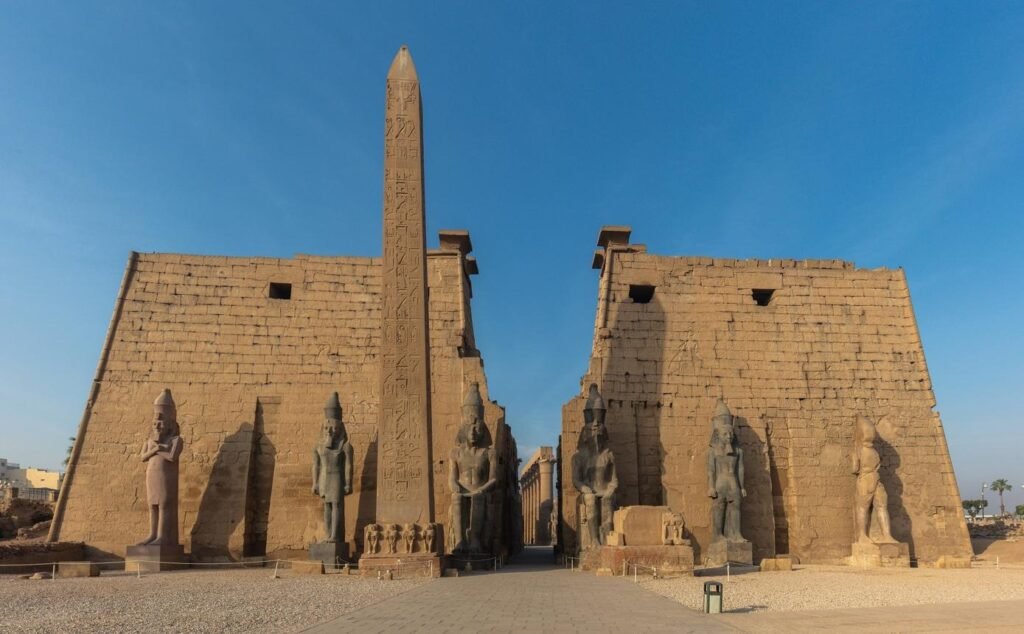


The meaning of obelisks changed significantly when Roman rulers transported Egyptian monuments to Rome.
Following Rome’s incorporation of Egypt into its empire under Augustus, Egyptian obelisks became prized additions to Roman public spaces. Roman leaders used them in settings that communicated imperial prestige, including monumental squares and the Circus Maximus. The monuments’ Egyptian origins gave them an association with an ancient civilization whose history and religious traditions fascinated Roman elites.
The Metropolitan Museum of Art
+1
The change in meaning is important. In Egypt, an obelisk could honor a deity and celebrate a pharaoh. In Rome, the same monument could also serve as evidence of conquest, imperial reach, and the ability to transport extraordinary objects from distant territories.
The Flaminio Obelisk, for example, was originally erected in Heliopolis and later brought to Rome. Today it stands in Piazza del Popolo. Its continued presence illustrates how a monument can acquire multiple historical identities without losing its earlier associations.
Turismo Roma
+1
During the Renaissance, interest in ancient monuments grew again. Popes arranged for obelisks to be raised in prominent locations in Rome, where they became part of a renewed urban and religious landscape. Their placement near major churches and public squares gave them additional associations with Christian authority and the continuity of institutional power.
The Metropolitan Museum of Art
+1
This history demonstrates a central principle of symbolism: an object can retain its visual identity while its cultural meaning evolves.
Spiritual Meaning of an Obelisk
The spiritual meaning of an obelisk depends on the tradition in which it is interpreted. Its strongest historical religious associations come from ancient Egyptian solar worship, while ideas such as spiritual ascent and universal energy are often later interpretations of its form.
1. Connection Between Earth and Heaven
The obelisk rises vertically from a broad base to a narrow point. Visually, this movement suggests a journey upward, making the monument a useful symbol for aspiration, transcendence, and the search for higher understanding.
In a contemporary spiritual setting, a person might interpret the obelisk as a reminder to look beyond immediate concerns and consider larger questions about purpose, existence, and responsibility.
However, this is a symbolic reading of its geometry, not proof that every ancient obelisk was designed to represent a universal spiritual pathway.
2. Light, Awareness, and Renewal
Because of its historical connection with the sun, an obelisk can evoke illumination, clarity, vitality, and the return of light after darkness.
These associations also work metaphorically. Light frequently serves as an image of knowledge in religious writing, philosophy, and literature. A sun-associated monument can therefore be interpreted as representing insight or the movement from confusion toward understanding.
The ancient Egyptian foundation of this interpretation is stronger than the claim that an obelisk automatically possesses a particular spiritual energy.
3. Eternity and Enduring Presence
Stone monuments survive across generations, sometimes for thousands of years. This durability makes the obelisk a natural symbol of permanence, continuity, and the desire to preserve meaningful experiences.
In spiritual reflection, it can represent the enduring influence of ancestors, the persistence of memory, or the search for something that extends beyond an individual lifetime.
Such meanings are particularly common in modern commemorative settings, although the specific significance depends on the monument’s history.
Obelisk Symbolism in Religion and Mythology
Ancient Egyptian Religion
The most historically grounded religious interpretation of the obelisk comes from ancient Egypt. Solar theology, the sacred pyramidion, temple architecture, and royal inscriptions all contribute to its significance.
The association with Ra was particularly important, although certain monuments were connected with other deities or composite divine forms. For example, the Metropolitan Museum of Art documents smaller obelisks from Elephantine associated with Khnum-Re, a deity combining aspects of Khnum and the sun god.
The Metropolitan Museum of Art
+1
This variation reminds us that Egyptian religion was complex. It is more accurate to discuss a strong solar association than to claim every obelisk represented exactly the same god or doctrine.
Christianity and the Obelisk
Obelisks also appear in Christian-majority cities, especially Rome. Their presence near churches and in major public squares reflects the later history of ancient monuments being incorporated into new religious and urban environments.
In some cases, Christian authorities gave these monuments a new role within a Christian city. The obelisk’s location could communicate the prominence of the church, the organization of public space, or the relationship between religious and civic authority.
That later use should not be confused with the monument’s original Egyptian purpose. An ancient Egyptian obelisk displayed in a Christian setting retains evidence of its earlier history even when its surroundings give it new significance.
Modern Spiritual Interpretations
Some contemporary spiritual interpretations associate obelisks with personal transformation, concentration, vitality, or the movement of energy upward.
These meanings can be meaningful to individuals, but they should be identified as modern spiritual interpretations rather than established facts about ancient Egyptian belief or scientifically demonstrated properties of stone monuments.
A balanced reading distinguishes three things: historical evidence, the cultural meanings assigned to monuments over time, and the personal significance an individual discovers in their form.
Psychological Meaning of an Obelisk
Why do obelisks often feel powerful, impressive, or even intimidating?
Part of the answer lies in visual perception. Their height, symmetry, sharp apex, and monumental scale direct the viewer’s attention upward. They are difficult to ignore when placed in open squares or along major public approaches.
Height and Human Perception
Vertical forms can suggest strength, ambition, hierarchy, and aspiration. A monument towering over people creates a visible difference in scale, emphasizing the distinction between an individual observer and a larger institution, community, or historical legacy.
This is a design interpretation, not a fixed psychological law. The meaning a person assigns to a monument also depends on personal experience and cultural knowledge.
Symmetry and Order
An obelisk’s four-sided shaft and carefully controlled proportions communicate visual order. Its clear geometry makes it recognizable from a distance, which helps explain its continuing appeal in civic architecture and memorial design.
The monument can consequently suggest stability, discipline, precision, and permanence.
Awe and Monumentality
Very large structures can inspire awe by exceeding everyday expectations of scale. An obelisk’s height and apparent simplicity create a memorable contrast: its form is easy to understand, but its construction and historical survival may be difficult to comprehend.
For some viewers, that contrast inspires admiration. For others, especially when a monument is associated with conquest or oppressive power, the same scale may feel intimidating.
Expert Tip: When interpreting an obelisk, consider three elements together: its shape, its physical location, and the historical story attached to it. Looking at the geometry alone may miss the monument’s most important cultural meanings.
Obelisk Symbolism Across Cultures and Regions
Obelisks are especially useful for studying how symbols change as they travel. Their visual form may remain recognizable, but the ideas associated with them depend on the people who commissioned, relocated, preserved, or reinterpreted them.
| Cultural context | Primary symbolic associations | Historical context |
| Ancient Egypt | Solar worship, creation, royal authority | Temple monuments and religious dedications |
| Ancient Rome | Imperial strength, prestige, conquest | Egyptian monuments incorporated into Roman public spaces |
| Renaissance Rome | Religious authority, urban order, continuity | Ancient obelisks re-erected in prominent squares |
| Modern civic architecture | National identity, remembrance, public achievement | Monuments designed to honor leaders or historical events |
| Contemporary spiritual interpretation | Aspiration, illumination, personal growth | Individual or modern symbolic readings |
These categories describe broad patterns, not universal beliefs shared by everyone in each culture. The meaning of an individual monument can differ substantially from the general associations listed here.
Turismo Roma
+2
Obelisks in Europe
European interpretations of obelisks developed through centuries of contact with Egyptian antiquities, Roman imperial culture, Christian urban planning, and later archaeological interest.
In Rome, obelisks are prominent landmarks that connect ancient Egypt with Roman history and the development of the city. Their placement in major squares also shows how monuments can organize public space and create visual focal points.
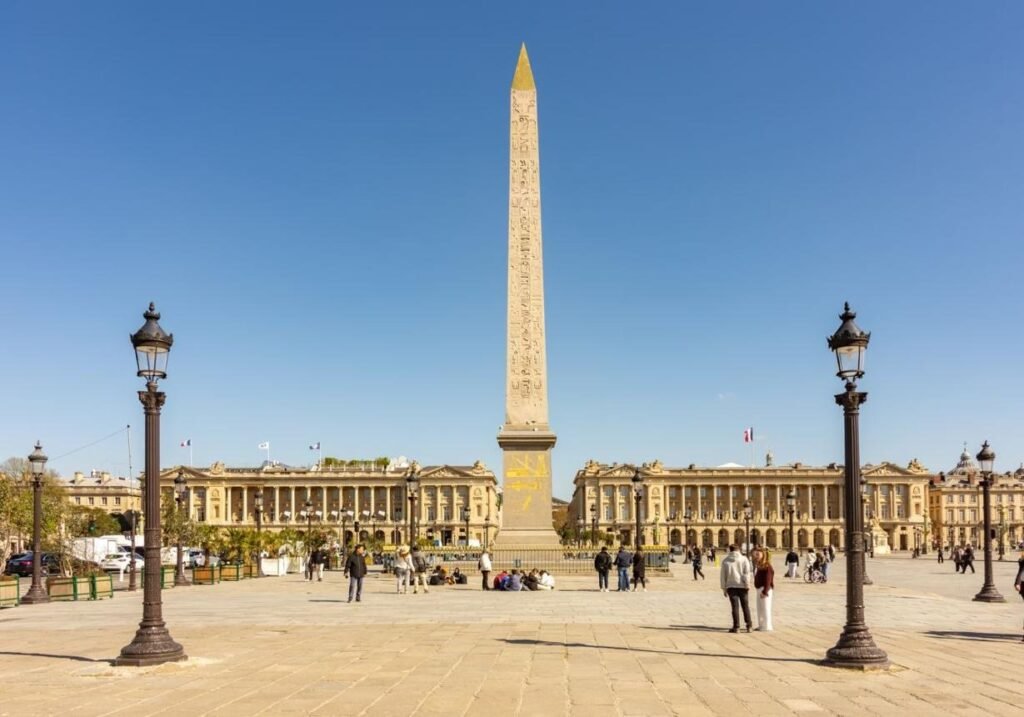
In Paris, the Luxor Obelisk in Place de la Concorde represents another stage in this history: an ancient Egyptian monument now embedded in a modern European capital.
These monuments can inspire appreciation for ancient craftsmanship while also raising questions about cultural heritage, ownership, and the movement of historic objects between countries.
Obelisks in the United States

The Washington Monument is one of the world’s most recognizable modern obelisk-shaped structures. Built to honor George Washington, it uses a form associated with the grandeur and endurance of ancient civilizations to commemorate a foundational figure in American history.
The National Park Service explains that the monument’s Egyptian-inspired form was intended to evoke the timelessness of ancient civilizations. It stands 555 feet, 5⅛ inches tall.
Washington Monument (U.S. National Park Service)
+1
Its meaning differs from that of an ancient Egyptian temple obelisk. Rather than serving primarily as a dedication to a solar deity, it functions as a national memorial and an architectural landmark.
The example shows how designers can adapt an inherited visual form to communicate a new message.
Obelisk Symbolism in Art, Literature, and Architecture
Obelisks are powerful visual elements because their form is simple, distinctive, and easy to recognize. Artists, writers, and architects can use them to communicate ideas without explaining every historical detail.
In Visual Art and Iconography
In painting, sculpture, photography, and illustration, an obelisk can provide a strong vertical axis. Its height draws the eye, while its pointed top can contrast with horizontal buildings, open landscapes, or human figures.
Depending on the surrounding imagery, an artist might use an obelisk to evoke:
- Ancient civilizations and archaeological discovery.
- Monumentality and political power.
- The passage of time and historical memory.
- The contrast between human life and enduring structures.
- Mystery, sacred space, or the unfamiliar.
The context is essential. An obelisk in a carefully researched historical painting communicates something different from one used as a fictional monument in a fantasy setting.
In Literature and Storytelling
In literature, an obelisk can function as a setting, a historical reference, or a metaphor. Its durability makes it suitable for stories about memory, legacy, lost civilizations, and the passage of generations.
A writer might describe a solitary obelisk in a ruined city to emphasize the disappearance of the society that built it. Another might place one in a crowded modern square to explore how old histories survive within contemporary life.
These are literary applications rather than fixed traditional meanings. The author’s descriptions, narrative, and cultural references determine the symbol’s role.
In Architecture and Public Design
The obelisk’s geometry has influenced monuments, memorials, landscape design, and civic spaces. Its tapering form offers a recognizable silhouette without requiring elaborate ornament.
Architects and urban planners may use an obelisk-shaped structure to establish a landmark, mark an important axis, or give a public square a central focal point.
The design is effective partly because it can be understood from far away. Its vertical emphasis helps distinguish a significant location from its surroundings.
Obelisk Symbolism in Modern Life
Obelisks remain relevant because the qualities they communicate—visibility, permanence, hierarchy, and remembrance—continue to matter in public life.
1. Memorials and Remembrance
An obelisk-shaped memorial can represent collective memory and respect for people or events. Its enduring material reinforces the idea that a community wishes to preserve a story beyond the lifetime of any one individual.
The monument’s inscription and setting usually determine the specific meaning.
2. Branding and Visual Identity
Brands, institutions, and organizations often use geometric forms to communicate their identity. A simplified obelisk silhouette could suggest precision, heritage, ambition, stability, or prestige.
However, an obelisk is not automatically a good branding choice. Its historical associations may be useful for a museum, architecture firm, cultural institution, or heritage project, but less suitable for a brand whose identity depends on warmth, informality, or accessibility.
A designer should consider whether the intended audience recognizes the symbol and whether its historical associations fit the brand’s values.
3. Education and Cultural Heritage
Obelisks provide a practical way to teach history, religious studies, anthropology, architecture, and semiotics. Students can investigate how the same object acquires different meanings across time.
A lesson comparing an Egyptian temple obelisk with the Washington Monument, for example, can explore how visual forms are reused to express different political and cultural values.
4. Photography and Digital Communication
In photography, an obelisk provides a strong compositional line and an easily identifiable landmark. In digital illustration, it can quickly establish a historical, monumental, or mysterious atmosphere.
But visual shorthand can also create confusion. An illustration that labels every obelisk as a symbol of secret societies or supernatural power risks replacing documented history with unsupported assumptions.
Did You Know? Five Facts About Obelisks

1. Some obelisks were never completed.
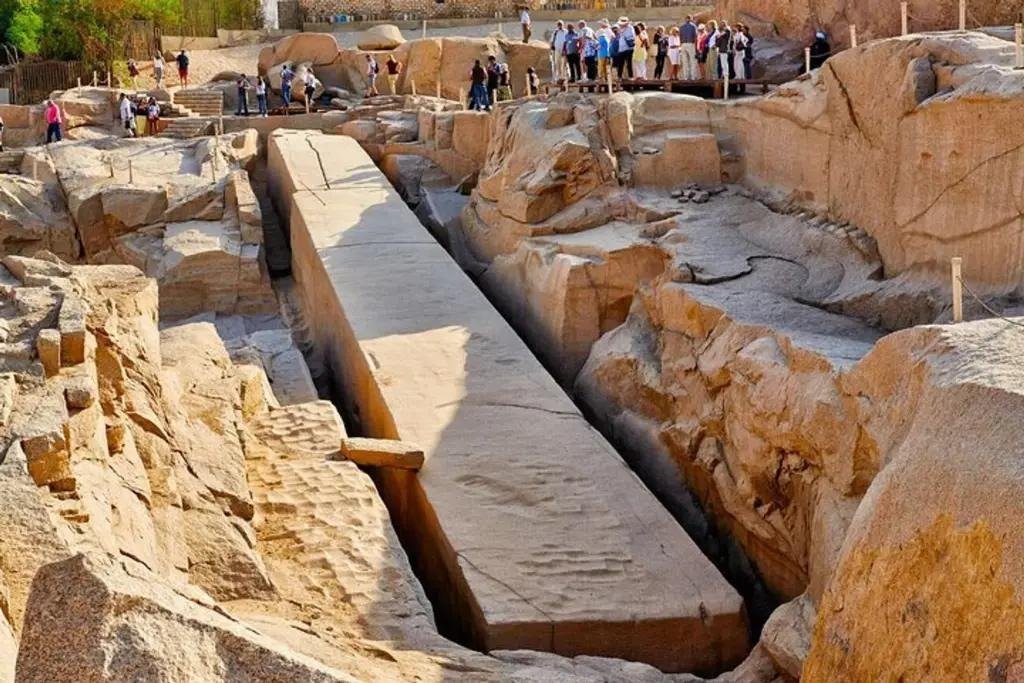
The Unfinished Obelisk remains in an Aswan quarry. It offers evidence of the challenges involved in carving monumental stone and helps explain why fractures could cause work to be abandoned.
Ministry of Tourism and Antiquities

2. Many were carved from one stone.
Ancient Egyptian monumental obelisks were generally monolithic, meaning their shafts were carved from a single piece of stone. Transporting and erecting them required considerable technical skill.
Ministry of Tourism and Antiquities
+1

3. The top has a special name.
The pointed, pyramid-shaped top is called the pyramidion. Its form was associated with solar imagery in ancient Egyptian monuments.
Pyramidion
+1

4. Their meanings changed when they moved.
Egyptian monuments transported to Rome became symbols of imperial prestige as well as reminders of their original religious and royal contexts.
Turismo Roma
+1

5. The obelisk form still serves modern memorials.
The Washington Monument demonstrates how an ancient architectural form can be adapted to honor a modern political figure and express national remembrance.
Washington Monument (U.S. National Park Service)
+1
Myth vs. Fact: Understanding Obelisk Symbolism
| Claim | More accurate interpretation |
| Every obelisk represents the same deity. | Many ancient Egyptian temple obelisks were associated with solar worship, but their dedications and religious contexts varied. |
| Obelisks were invented as modern symbols of secret societies. | Their documented history reaches back to ancient Egypt, long before modern organizations. |
| Every pointed monument has an Egyptian religious meaning. | Similar shapes can be used independently or assigned new meanings in different cultures. |
| An obelisk always represents positive spiritual energy. | People may interpret it positively, negatively, or neutrally depending on its history and context. |
| Obelisks have no significance outside ancient Egypt. | They have served as Roman imperial monuments, Christian-era landmarks, civic memorials, and modern architectural symbols. |
A responsible interpretation distinguishes historical evidence from modern speculation. An obelisk’s shape alone cannot establish that it represents a hidden doctrine, supernatural force, or secret intention.
Common Mistakes When Interpreting Obelisk Symbolism
Understanding an obelisk requires more than recognizing its shape. Several common mistakes can lead to misleading interpretations.
- Ignoring historical context: An ancient Egyptian temple monument and a modern memorial may look similar but serve different purposes.
- Treating personal interpretations as historical facts: Seeing an obelisk as a symbol of spiritual awakening can be personally meaningful without proving that this was its original purpose.
- Assuming all cultures share the same symbolism: Meanings evolve as monuments move between societies and historical periods.
- Overlooking political significance: Obelisks can commemorate achievements, but they can also reflect conquest, imperial ambitions, or contested cultural ownership.
- Confusing visual resemblance with historical connection: A pointed monument is not necessarily an Egyptian obelisk or a reference to Egyptian religion.
The most reliable approach combines architectural observation, historical research, inscriptions, cultural context, and awareness of modern interpretations.
Practical Applications: How to Interpret an Obelisk
You can apply the principles of symbolism to a real monument, a work of art, a photograph, or an architectural design.
A five-step interpretation guide
- Identify the monument. Determine whether it is an ancient Egyptian obelisk, a later imitation, or a modern memorial.
- Examine its form. Look at its height, tapering shaft, pointed top, material, inscriptions, and decorative features.
- Investigate its original setting. Was it created for a temple, public square, tomb, or commemorative site?
- Consider who commissioned it. A pharaoh, emperor, religious authority, or modern government may have had different objectives.
- Compare past and present meanings. Consider how its significance changed after relocation, restoration, or reinterpretation.
For example, when examining the Washington Monument, its obelisk-like form evokes ancient architectural traditions, while its dedication and national setting establish its specific role as a memorial to George Washington. The combination of form and context provides a more complete interpretation than either element alone.
Washington Monument (U.S. National Park Service)
+1
Key Insights: What Obelisk Symbolism Teaches Us
Obelisk symbolism demonstrates how visual forms preserve cultural memories while acquiring new meanings over time.
Its most important lessons include:
- Symbols have histories. The obelisk’s association with solar religion is grounded in ancient Egyptian traditions.
- Shape communicates ideas. Verticality, symmetry, and monumental scale can evoke authority, aspiration, and permanence.
- Context determines interpretation. The same form can honor a deity, demonstrate imperial power, or commemorate a national leader.
- Cultural exchange transforms meaning. The movement of obelisks from Egypt to Rome and later European and American settings illustrates how monuments become part of new cultural narratives.
- Interpretation requires evidence. Historical facts, established cultural traditions, and personal spiritual beliefs should be distinguished rather than treated as interchangeable.
Ultimately, the obelisk’s enduring appeal comes from the combination of a recognizable geometric form, a remarkable history, and its capacity to represent ideas larger than an individual human life.
Frequently Asked Questions About Obelisk Symbolism
1. What does an obelisk symbolize spiritually?
An obelisk can symbolize light, renewal, spiritual aspiration, permanence, and the connection between earthly life and higher ideals. Its strongest historical spiritual association comes from ancient Egyptian solar religion, particularly the symbolism of the sun and the sacred pyramidion. Other interpretations, including personal transformation or spiritual energy, depend on modern beliefs and individual perspectives.
2. Why were obelisks important in ancient Egypt?
Obelisks were important because they connected religious devotion, solar symbolism, royal authority, and monumental architecture. They were frequently erected in temple precincts and dedicated to deities. Their inscriptions recorded royal names and religious dedications, while their scale and carefully shaped stone demonstrated the technical and organizational abilities of Egyptian society.
Ministry of Tourism and Antiquities
+1
3. What does an obelisk represent in modern architecture?
In modern architecture, an obelisk commonly represents remembrance, civic identity, prestige, ambition, and permanence. Its tall, tapering form creates a recognizable landmark and draws attention to an important location. The Washington Monument is a prominent example of the form being adapted to commemorate a historical figure rather than serving its original Egyptian religious function.
Washington Monument (U.S. National Park Service)
+1
4. Are obelisks religious symbols or political symbols?
They can be both. In ancient Egypt, many monumental obelisks expressed solar worship and royal devotion to the gods. Roman rulers also used Egyptian obelisks to communicate imperial power and prestige. Modern monuments may emphasize national identity, public memory, or political history. The specific meaning depends on the monument’s origin, inscriptions, placement, and historical use.
5. What is the spiritual significance of an obelisk’s pointed top?
The pointed top, known as the pyramidion, was associated with solar imagery in ancient Egyptian tradition. It could evoke the sun’s rays and the sacred symbolism of creation. In contemporary interpretations, the upward-pointing shape may suggest aspiration, illumination, or transcendence. These modern readings should be distinguished from documented ancient Egyptian religious meanings.
Pyramidion
+1
6. Do obelisks have negative or controversial symbolism?
Yes. Although obelisks may symbolize beauty, remembrance, and cultural achievement, they can also represent imperial power, conquest, or contested cultural heritage. Ancient Egyptian monuments transported to other countries carry histories that extend beyond their present locations. Their interpretation can therefore involve both appreciation for their artistic and historical significance and questions about ownership, preservation, and the legacy of empire.
Final Conclusion
Obelisk symbolism brings together ancient Egyptian religion, solar imagery, royal authority, architectural design, cultural exchange, and modern commemoration. Originally associated with sacred temple spaces and the sun, obelisks later became symbols of imperial prestige, religious authority, civic identity, and enduring memory.
Their significance is not fixed. A monument’s inscriptions, location, historical journey, and cultural reception all influence what it represents. Recognizing these differences allows us to appreciate obelisks not simply as impressive stone structures, but as lasting records of how societies express their beliefs, power, aspirations, and collective memories.
Whether encountered in an ancient Egyptian temple, a Roman square, a modern capital, a work of literature, or a contemporary design, the obelisk remains a compelling example of how architecture can communicate meaning across generations.
Semantic SEO and Topical Entity Coverage
The article naturally covers the following related entities and concepts to support a comprehensive understanding of obelisk symbolism.
| Semantic cluster | Related entities and keywords |
| Core topic | Obelisk symbolism, obelisk meaning, obelisk definition, symbolic meaning of an obelisk |
| Ancient Egyptian history | Ancient Egypt, pharaohs, Heliopolis, Karnak, Aswan, Egyptian temples |
| Religion and mythology | Ra, Re, solar worship, benben, pyramidion, Khnum-Re, Egyptian creation traditions |
| Historical development | Roman Empire, Augustus, Roman imperial power, Renaissance Rome, cultural heritage |
| Architecture | Monolithic stone, red granite, monumental architecture, temple gateways, civic monuments |
| Psychology and philosophy | Human perception, visual hierarchy, permanence, aspiration, collective memory |
| Art and communication | Iconography, semiotics, visual communication, literary symbolism, storytelling |
| Modern applications | Washington Monument, memorial design, urban planning, branding, education |
| Related search queries | What does an obelisk symbolize, spiritual meaning of an obelisk, Egyptian obelisk history, obelisk symbolism in architecture, obelisk meaning across cultures |
Publication note: This article is structured for search intent, semantic coverage, and reader comprehension. No one can guarantee a particular ranking or verify a text as “AI-undetectable.” For stronger publication quality, verify any site-specific internal links, add original photographs or illustrations where appropriate, and link historical claims to reputable museum or heritage sources.

Learn about religious symbolism, cultural icons, and historical meanings with William Carter.
