
Introduction: What Does Mushroom Symbolism Mean?
Mushroom symbolism explores the meanings people associate with mushrooms in nature, spirituality, mythology, art, literature, and everyday life.
Often connected with transformation, renewal, mystery, interconnectedness, and the hidden power of nature, mushrooms have fascinated human beings for centuries.
Their sudden appearance after rainfall, unusual shapes, underground connections, and remarkable diversity make them powerful symbols of life’s mysteries and the cycles of growth and decay.
The symbolism of mushrooms is especially interesting because these organisms occupy a unique place in the natural world.
They can emerge seemingly overnight, grow in forests and fields, break down decaying matter, and form relationships with the roots of living plants.
Some are edible, some are poisonous, and others contain compounds that have influenced religious, medical, and cultural discussions.
These different characteristics have inspired a wide range of interpretations. In spiritual traditions and contemporary symbolic practices, mushrooms may represent personal growth, enlightenment, abundance, or a connection with the unseen world.
In fairy tales, they can suggest enchantment and otherworldly experiences. In ecological discussions, fungi can symbolize cooperation, decomposition, and the interconnectedness of life.
Understanding mushroom symbolism requires more than assigning one universal meaning to the mushroom.
Its interpretation depends on cultural background, historical period, artistic context, and the particular species being represented.
What Does Mushroom Symbolism Mean? A Quick Definition
Mushroom symbolism refers to the meanings and associations people attach to mushrooms in cultural traditions, spirituality, mythology, psychology, art, and literature. Mushrooms commonly symbolize transformation, renewal, mystery, abundance, and interconnectedness because of their distinctive growth patterns and ecological roles. Their meaning varies across cultures and contexts rather than following one universal interpretation.
The Core Meanings of Mushroom Symbolism
Mushrooms can communicate several ideas simultaneously. Their symbolism often comes from their physical appearance, their biological functions, and the stories people have built around them.
1. Transformation and Personal Growth
Mushrooms are strongly associated with transformation because they participate in the continuous process of decomposition and renewal.
Many fungi break down dead organic material, helping return nutrients to ecosystems. Through this process, what once belonged to a living organism becomes part of the conditions that support new growth.
Symbolically, this cycle can represent the idea that endings may create opportunities for beginnings.
For someone navigating a personal transition, mushroom symbolism may offer a reminder that change is not always visible immediately. Personal development can happen quietly before its results become apparent.
For example, a person learning a new skill may spend months practicing without noticing significant improvement. Like a mushroom developing from a hidden fungal network, progress can occur beneath the surface before becoming visible.
This interpretation makes mushrooms useful symbols of resilience, adaptation, and gradual personal transformation.
2. Mystery and the Unknown
Mushrooms often appear suddenly after rain, sometimes emerging from places where nothing seemed to be growing. Their unfamiliar shapes and unusual colors can make them appear mysterious.
This association is particularly strong in folklore, fantasy illustrations, and fairy tales.
A mushroom growing in a shadowy forest may represent a hidden doorway into an unfamiliar world. In a painting or story, it can suggest that ordinary landscapes contain secrets waiting to be discovered.
Mushroom symbolism therefore connects naturally with curiosity, imagination, and the limits of human understanding.
However, mystery does not necessarily imply supernatural activity. The appearance of a mushroom may seem magical while having an entirely natural explanation involving moisture, temperature, and the development of fungal fruiting bodies.
3. Renewal and the Cycles of Nature
Mushrooms are often interpreted as symbols of renewal because fungi contribute to nutrient cycling and ecological regeneration.
Their role in breaking down organic material makes them especially meaningful in discussions of life, death, and rebirth.
In symbolic terms, renewal does not always mean returning to an earlier state. It can mean creating something different from the materials left behind by a previous experience.
This idea appears in personal reflection, environmental education, visual art, and storytelling.
A mushroom growing on a fallen log, for example, can communicate the relationship between decay and new life. The log is no longer a living tree, yet it continues to support organisms and ecological processes.
The deeper message: an ending may become part of a new beginning, even when the transition is difficult to recognize.
4. Interconnectedness and Cooperation
Many fungi form relationships with plants through underground networks of fungal threads called hyphae. Some fungi establish mycorrhizal associations with plant roots, exchanging nutrients and other resources within these relationships.
These ecological connections have made fungi popular symbols of cooperation and interdependence.
In contemporary ecological writing, mushrooms and fungal networks can represent the idea that individual organisms exist within larger systems.
This symbolism also has practical applications. A company may use a mushroom-inspired visual identity to communicate sustainability, collaboration, or a connection with nature. An educational illustration may use fungal networks to introduce concepts such as ecosystems, mutualism, and biodiversity.
One important distinction is necessary: fungal networks do not demonstrate that nature always operates through perfect cooperation. Ecological relationships vary, and some fungi are parasites or pathogens. The symbol is most useful when it reflects the complexity of natural relationships rather than presenting every organism as inherently cooperative.
5. Abundance and Fertility
In suitable conditions, mushrooms can appear in large numbers across lawns, woodland floors, and decaying wood.
Their rapid emergence has encouraged associations with abundance, fertility, and the productive power of nature.
In some symbolic interpretations, mushrooms represent the possibility of growth in places that initially appear empty or unproductive.
A cluster of mushrooms in artwork may communicate prosperity, flourishing, or the richness of the natural environment.
These meanings are contextual rather than universal. A mushroom can suggest abundance in one design and danger or uncertainty in another.
6. Hidden Knowledge and Inner Discovery
Because most of a fungus may exist as an underground or otherwise concealed network, its visible mushroom can suggest that unseen processes support what people observe on the surface.
This makes mushrooms useful symbols of hidden knowledge, introspection, and discovery.
In a novel, a mushroom appearing at a significant moment might represent a character beginning to understand something previously overlooked. In personal symbolism, it may prompt someone to explore an overlooked feeling, question, or possibility.
The interpretation is metaphorical, but its underlying idea is powerful: what is visible does not always reveal the entire story.
Historical Origins of Mushroom Symbolism
Mushroom symbolism developed through people’s encounters with fungi in food, medicine, religious practice, folklore, and the natural environment.
Because mushrooms are biologically diverse and vary greatly in their effects on humans, different societies developed different ways of understanding them.
Mushrooms in Ancient Societies
People in many ancient societies gathered and consumed mushrooms, although the available evidence varies by region and historical period.
Edible fungi could represent nourishment and the resources provided by the environment. Unfamiliar or poisonous species, meanwhile, could inspire caution and uncertainty.
Some archaeological and historical discussions explore the possibility that particular fungi were used in ritual or ceremonial settings. However, evidence for specific practices must be evaluated individually. It would be inaccurate to assume that every ancient culture regarded mushrooms as sacred or used them for spiritual purposes.
The broader historical lesson is that mushrooms acquired meaning through practical experience as well as through religious and imaginative traditions.
Mushrooms in European Folklore

12
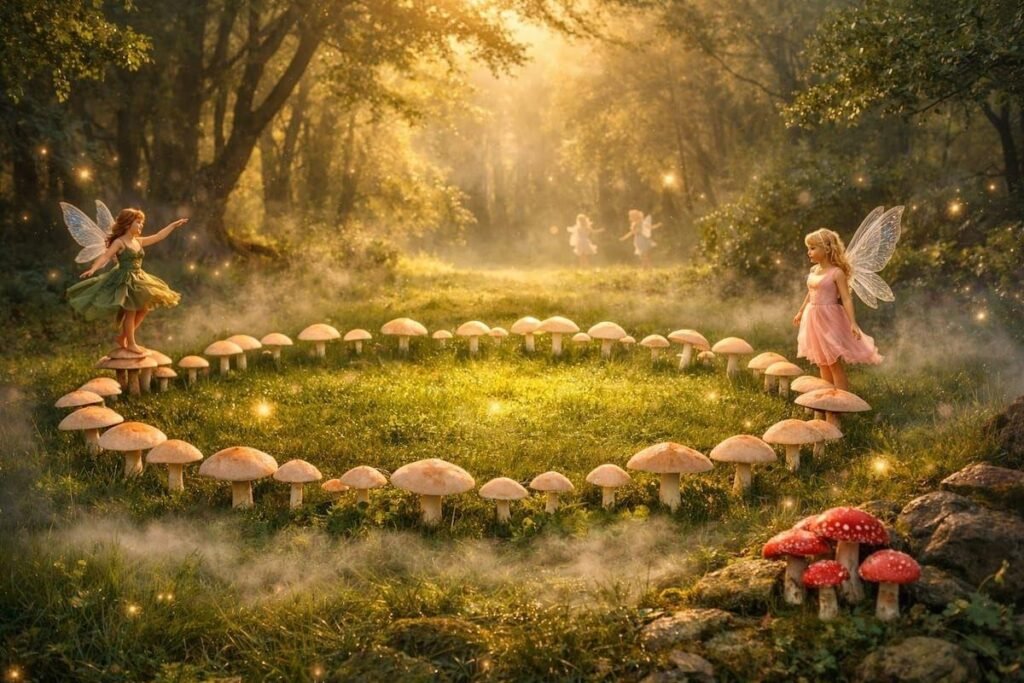
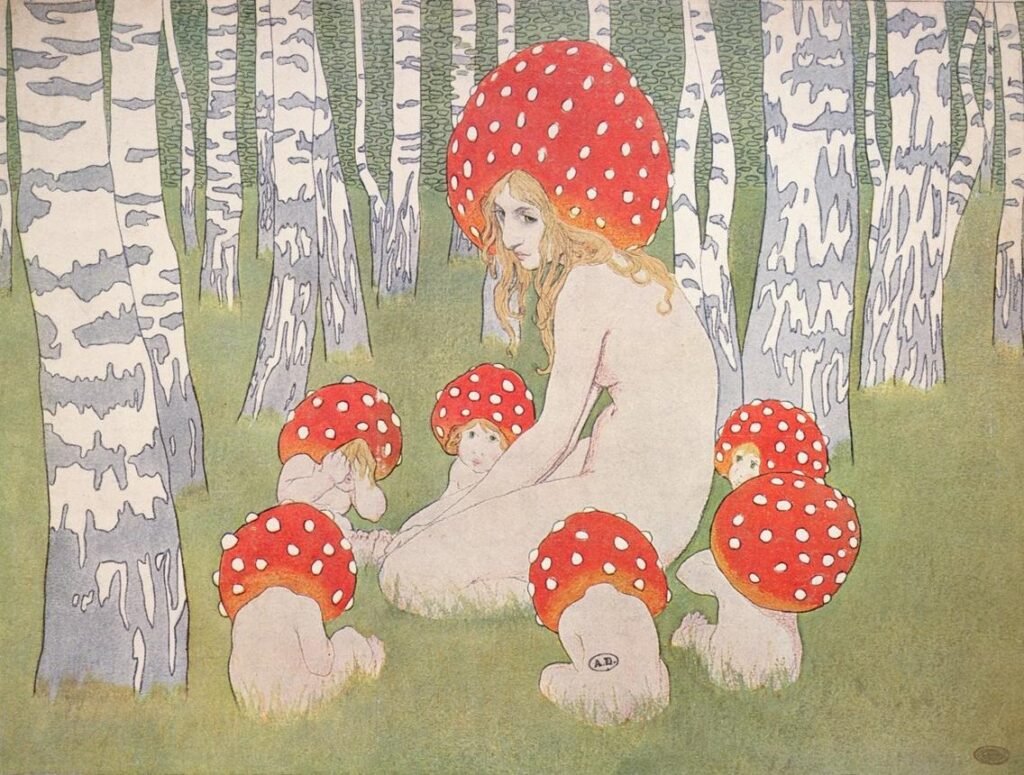
European folklore and later fairy-tale illustrations helped establish mushrooms as recognizable symbols of enchanted forests.
The red mushroom with white spots, commonly associated with the fly agaric (Amanita muscaria), became especially prominent in popular depictions of magical woodland settings.
Mushrooms sometimes appear in illustrations of fairies, miniature houses, forest spirits, and mysterious woodland gatherings. The familiar image of a fairy sitting on a mushroom is largely a product of folklore-inspired art and popular visual culture rather than evidence of a single universal ancient belief.
Fairy rings circular or arc shaped patterns of mushrooms also contributed to stories about supernatural gatherings. These patterns have natural explanations related to fungal growth, but their unusual appearance encouraged imaginative interpretations.
In this context, mushroom symbolism often involves:
- Enchantment and fantasy.
- Hidden worlds and secret gatherings.
- The boundary between ordinary and extraordinary experiences.
- The mystery of woodland environments.
Mushrooms in East Asian Cultural Contexts
Mushrooms have important roles in several East Asian cultural and artistic traditions, but their meanings differ according to the species and context.
The lingzhi mushroom, commonly identified with Ganoderma lucidum in traditional East Asian usage, has been associated with longevity, vitality, and auspiciousness in Chinese art and cultural traditions.
It appears in traditional imagery, decorative objects, and representations connected with longevity and immortality. Its symbolic significance developed alongside historical medicinal traditions and ideas about health and long life.
It is important not to confuse this cultural symbolism with proof that consuming a particular mushroom guarantees longevity. Traditional associations and modern medical evidence are different kinds of claims.
In Japanese visual culture, mushrooms can also appear in contemporary illustration, seasonal imagery, crafts, and playful depictions of the natural world. Their meanings depend on the artwork rather than on a single national symbolism.
Mushrooms in Indigenous Knowledge Systems
Indigenous communities across the world possess diverse relationships with fungi, including food gathering, ecological knowledge, medicine, and cultural practices.
These relationships should not be reduced to one generalized Indigenous mushroom symbolism. Different peoples have distinct languages, histories, traditions, and systems of knowledge.
When studying a specific Indigenous tradition, it is best to consult reliable sources associated with that community and distinguish documented practices from outside interpretations.
This approach respects cultural identity and avoids assigning spiritual beliefs to communities without evidence.
Mushroom Symbolism Across Cultures
The same mushroom can communicate very different ideas depending on the context in which it appears.
| Cultural or interpretive context | Possible symbolic meanings | Important distinction |
| European fairy-tale imagery | Magic, enchantment, hidden worlds | Strongly influenced by folklore and modern illustration |
| Chinese traditional imagery featuring lingzhi | Longevity, vitality, auspiciousness | Cultural symbolism does not establish guaranteed medical effects |
| Ecological interpretation | Interdependence, decomposition, renewal | Based on fungi’s biological roles, expressed metaphorically |
| Contemporary spiritual practices | Transformation, introspection, connection | Personal interpretations are not universal religious doctrines |
| Modern fantasy and gaming | Mystery, unusual powers, discovery | Meanings are shaped by fictional worlds |
| Environmental art and design | Biodiversity, regeneration, sustainability | The message depends on the surrounding visual context |
These examples demonstrate why cultural context matters. A mushroom painted on a traditional longevity-themed object may communicate auspiciousness, while a mushroom in a dark fantasy illustration may suggest danger or uncertainty.
Neither meaning is automatically more correct. Each must be interpreted in relation to its intended setting.
The Spiritual Meaning of Mushrooms
In contemporary spiritual symbolism, mushrooms are often associated with transformation, grounding, awareness, and the relationship between visible and invisible aspects of life.
These interpretations may be personally meaningful, but they should not be presented as universal spiritual laws.
Mushrooms as Symbols of Spiritual Growth
A mushroom’s development can serve as a metaphor for spiritual growth that occurs gradually and privately.
People often associate spiritual development with dramatic revelations, but the mushroom offers a different image: quiet change that becomes visible only when conditions allow it.
This interpretation may appeal to someone who is reflecting on their values, rebuilding confidence, or developing a deeper understanding of their life.
For example, a person who has begun practicing mindfulness may see a mushroom as a reminder that meaningful change can emerge from small, consistent habits.
Mushrooms and the Unseen World
Fungal growth is not always visible above the ground. The mushroom is only one visible part of a larger organism in many familiar fungi.
This characteristic has inspired metaphors for hidden dimensions of experience, including intuition, memory, subconscious processes, and spiritual mystery.
However, a mushroom’s appearance is not reliable evidence of a supernatural message. Such interpretations belong to personal belief, creative expression, or spiritual reflection.
Mushroom Symbolism and Enlightenment
Some contemporary interpretations connect mushrooms with enlightenment, expanded awareness, or a change in perspective.
These associations can be influenced by modern psychedelic culture, personal narratives, and representations of altered consciousness.
They should not be treated as the meaning of mushrooms in every spiritual tradition. Many mushrooms are not psychedelic, and different societies have approached particular fungi in different ways.
A balanced interpretation recognizes the cultural influence of these associations without treating them as universal truths.
Mushroom Symbolism in Religion and Mythology
Mushrooms do not have one standardized meaning across world religions. Their significance depends on particular texts, rituals, local traditions, and historical circumstances.
Mushrooms and Sacred Experiences
Some historical and contemporary religious or ceremonial traditions have involved specific psychoactive fungi. Other religious communities have no comparable mushroom-centered practices.
Researchers continue to investigate the historical relationship between certain psychoactive substances and religious experience. Specific claims about ancient rituals must be assessed using archaeological evidence, historical records, and careful interpretation rather than speculation.
It is therefore misleading to describe mushrooms as universally sacred, universally forbidden, or universally associated with divine communication.
Mushrooms in Mythological Storytelling
Mushrooms can function as narrative symbols even when a story does not belong to a formal religious tradition.
They may mark a boundary between familiar and unfamiliar spaces, introduce an unusual encounter, or signal that a character is entering a world governed by different rules.
In fantasy stories, an oversized mushroom can suggest that the landscape has become strange or that ordinary expectations no longer apply.
Such imagery draws on the mushroom’s distinctive appearance and its established place in woodland folklore.
A Note on Sacred and Psychoactive Fungi
Certain fungi have played important roles in some documented cultural and ceremonial settings. Their use is species-specific and culturally situated.
This history should not be generalized to all mushrooms or used to assume that a particular modern spiritual interpretation represents an ancient universal tradition.
Cultural respect requires understanding the actual community, historical period, and practice involved.
The Psychological Meaning of Mushroom Symbolism
Psychologically, mushrooms can represent uncertainty, curiosity, change, hidden processes, or the relationship between conscious awareness and what remains outside immediate perception.
These are interpretive possibilities, not scientifically established meanings that apply to everyone.
Why Mushrooms Capture Human Attention
Mushrooms have visual characteristics that stand out: caps, stems, unusual textures, striking colors, and forms that differ from familiar flowering plants.
Human perception tends to notice objects that are distinctive, unexpected, or relevant to a situation. A bright red mushroom on a green forest floor, for example, creates a strong visual contrast.
This contrast can make mushrooms effective in illustrations, advertising, and storytelling.
The human tendency to search for patterns and meaning also helps explain why unusual natural forms can become associated with magic, danger, luck, or mystery.
Mushrooms as Symbols of the Subconscious
Because fungi frequently grow in concealed environments, they can be used as metaphors for thoughts or feelings that are not immediately apparent.
In a painting, a mushroom growing from a dark patch of earth might represent an emotion emerging into awareness.
In a personal journal, a mushroom could symbolize a realization that has been developing quietly over time.
There is no single psychological dictionary that can establish what a mushroom means in every dream or artwork. Interpretation depends on the person’s experiences, emotions, and surrounding circumstances.
Mushrooms in Dreams
A mushroom appearing in a dream may remind someone of growth, uncertainty, nourishment, fear, or an experience from nature.
Its meaning depends on the dream’s emotional tone and the dreamer’s associations.
| Dream image | Possible personal interpretation |
| A mushroom growing after rain | A new opportunity or a period of recovery |
| A cluster of healthy mushrooms | Abundance, community, or several emerging possibilities |
| A poisonous-looking mushroom | Caution, uncertainty, or concern about a decision |
| A mushroom growing on a fallen tree | Renewal following an ending |
| A mushroom hidden beneath leaves | Something overlooked or not yet understood |
These are reflective prompts rather than predictions. Dreams do not provide a scientifically reliable method for forecasting future events.
Mushroom Symbolism in Art, Literature, and Storytelling
Artists and writers use mushrooms because their forms and biological associations allow them to communicate multiple ideas without extensive explanation.
Mushrooms in Visual Art


8
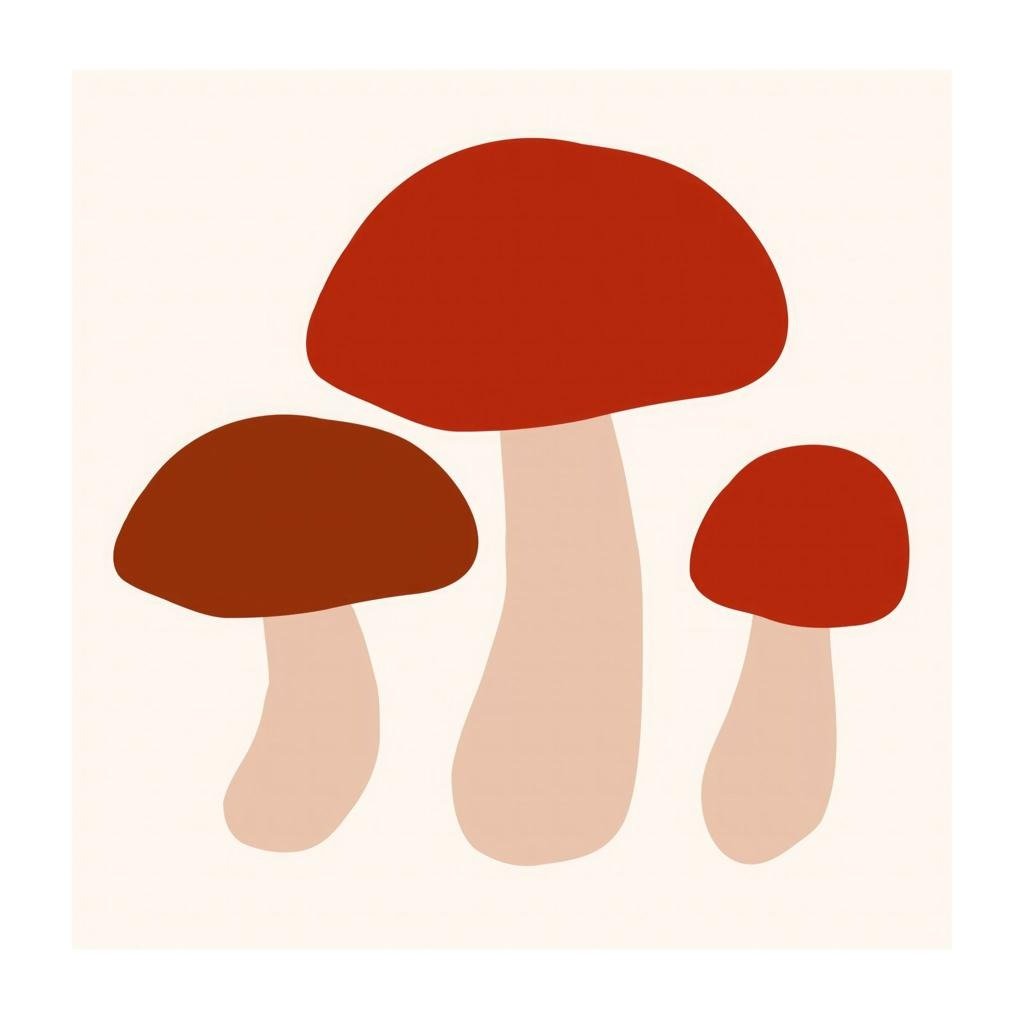
Mushrooms can appear in botanical illustration, fantasy art, children’s books, ceramics, textiles, and contemporary design.
Their visual meaning often depends on color, scale, placement, and surrounding objects.
A small mushroom in a realistic botanical illustration may emphasize scientific observation. A gigantic mushroom in a surreal painting can disrupt the viewer’s sense of scale and make a familiar landscape feel unfamiliar.
Artists may use mushrooms to communicate:
- The beauty and complexity of nature.
- The contrast between fragility and resilience.
- The presence of hidden life.
- The relationship between decay and renewal.
- The imaginative possibilities of unfamiliar environments.
The surrounding composition determines which interpretation becomes most prominent.
Mushrooms in Fairy Tales and Fantasy
In fairy tales, mushrooms frequently function as visual shorthand for an enchanted landscape.
Their unusual shapes can make a forest appear inhabited by creatures smaller or stranger than humans. A mushroom may become a seat, a house, a meeting place, or a landmark leading into an unfamiliar environment.
In fantasy games and fictional worlds, mushrooms can also represent discovery, unusual abilities, danger, or resources that players must learn to identify.
These meanings are created by the story’s rules. A mushroom that grants special powers in a game does not imply that real mushrooms have the same effects.
Mushrooms in Literature
Writers can use mushrooms to introduce atmosphere, foreshadow a change, or develop a theme.
For example, a mushroom growing in a neglected garden might symbolize the persistence of life despite abandonment. A poisonous mushroom could become a metaphor for an attractive but harmful choice.
A cluster of mushrooms in a forest scene may suggest abundance, while a single mushroom appearing in an unexpected place can draw attention to isolation or discovery.
Strong literary analysis considers the whole passage rather than assuming that every mushroom represents the same concept.
The Meaning of Mushroom Colors
Color is an important part of mushroom symbolism, particularly in illustration, branding, folklore, and popular culture.
However, color meanings are influenced by culture and context. A red mushroom in a fairy-tale image may evoke wonder, while a similarly colored specimen in a field guide may signal the need for careful identification.
| Color | Possible symbolic associations | Common contexts |
| Red | Energy, visibility, danger, enchantment | Fairy tales, fantasy art, visual warnings |
| White | Simplicity, purity, fragility | Minimalist illustration, decorative design |
| Brown | Earthiness, stability, natural cycles | Botanical art, ecological themes |
| Orange | Warmth, creativity, vitality | Autumn imagery, colorful nature illustrations |
| Purple | Mystery, imagination, rarity | Fantasy artwork, contemporary design |
| Yellow | Brightness, caution, optimism | Illustration, educational graphics |
| Black | Secrecy, darkness, uncertainty | Gothic art, horror, dramatic storytelling |
These are common design associations, not fixed symbolic rules.
Why the Red-and-White Mushroom Is So Recognizable
The fly agaric, Amanita muscaria, is famous for its red cap and white spots. Its distinctive appearance has helped make it one of the most recognizable mushrooms in popular culture.
In fantasy imagery, it often evokes woodland magic and enchanted environments.
In nature education, however, the same mushroom can prompt discussions of identification, toxicity, and responsible observation.
The difference illustrates a broader principle of visual communication: the same object can convey wonder in one context and caution in another.
Mushroom Symbolism in Modern Culture
Today, mushrooms appear across environmental communication, fashion, illustration, social media, product design, and popular entertainment.
Their symbolism has expanded as public interest in ecology, fungi, traditional knowledge, and psychedelic culture has grown.
Sustainability and Environmental Awareness
Mushrooms are useful symbols for environmental education because fungi contribute to decomposition, nutrient cycling, and ecological relationships.
A sustainability campaign might use fungal imagery to communicate regeneration, waste reduction, or the value of interconnected systems.
For example, a composting initiative could feature mushrooms growing from decomposing plant matter. The image would visually connect discarded organic material with the natural processes that help recycle nutrients.
This is an effective metaphor when the campaign’s message reflects the actual biology of fungi.
Mushrooms in Branding and Graphic Design
Businesses may use mushroom imagery to suggest natural ingredients, ecological awareness, craftsmanship, creativity, or a whimsical identity.
A woodland-inspired café might use small mushroom illustrations to establish a welcoming, nature-oriented atmosphere. A sustainable packaging company might use fungal forms to connect its visual identity with biological materials and circular systems.
However, mushroom imagery alone does not prove that a product is sustainable, organic, safe, or ethically produced. Branding communicates associations; product claims require independent support.
Expert tip: When using mushroom symbolism in a logo or campaign, choose a species, color palette, and illustration style that fit the intended message. A realistic botanical mushroom communicates something different from a cartoon mushroom or an abstract fungal network.
Mushrooms in Digital Communication
Mushroom imagery is common in digital stickers, avatars, emojis, online illustrations, and fantasy-themed communities.
Depending on the surrounding conversation, a mushroom image may communicate affection for nature, playful creativity, fantasy aesthetics, or interest in fungi.
Digital symbolism is particularly flexible because meanings can develop within individual communities. An image used humorously in one online group may have a more serious environmental meaning elsewhere.
Mushrooms and Psychedelic Culture
Certain psychoactive fungi have influenced contemporary discussions about consciousness, spirituality, mental health research, and drug policy.
In this context, mushroom imagery may symbolize altered perception, exploration of consciousness, or challenges to conventional perspectives.
These associations apply to specific cultural contexts and species rather than to mushrooms as a whole.
Research into psychedelic substances is a separate scientific topic, and symbolic interpretations should not be mistaken for evidence of medical benefit or a recommendation to use these substances.
Practical Applications of Mushroom Symbolism
Understanding mushroom symbolism can help people interpret images, create more meaningful artwork, communicate environmental concepts, and reflect on personal experiences.
1. Personal Reflection and Journaling
Use a mushroom as a prompt for thinking about a period of change.
Consider these questions:
- What is developing in my life that I cannot fully see yet?
- Is there an ending that might eventually support something new?
- What relationships or resources help me grow?
- What uncertainty am I ready to explore?
The value comes from reflection, not from treating the mushroom as a guaranteed supernatural message.
2. Art and Creative Writing
Writers and artists can choose mushroom imagery to establish a mood or reinforce a theme.
A cluster of mushrooms may suggest abundance or a hidden community. A single mushroom emerging through cracked ground can represent persistence. A brightly colored mushroom in a dark setting can introduce an element of wonder or unease.
These visual choices become more effective when they support the larger narrative.
3. Education and Science Communication
Mushrooms can help teachers explain decomposition, food webs, fungal biology, and biodiversity.
A diagram showing fungal growth on a fallen log can connect an easily recognized object with larger ecological processes.
Educators should distinguish the biological facts from symbolic interpretations, particularly when discussing poisonous species or traditional medicinal claims.
4. Branding and Product Design
Designers can use mushroom imagery to suggest a connection with nature, creativity, or sustainability.
The symbol works best when the visual identity matches the organization’s actual values and practices.
A company promoting compostable materials, for instance, can use fungal imagery to reinforce a broader explanation of material life cycles. It should still substantiate specific environmental claims.
5. Cultural and Literary Analysis
When analyzing a mushroom in a painting, novel, or historical object, begin with the immediate context.
Ask which species is represented, whether its appearance is realistic or exaggerated, which other symbols surround it, and what the audience would likely have understood at the time.
This approach produces a stronger interpretation than assigning a generic meaning without examining the evidence.
Did You Know? Five Fascinating Facts About Mushrooms
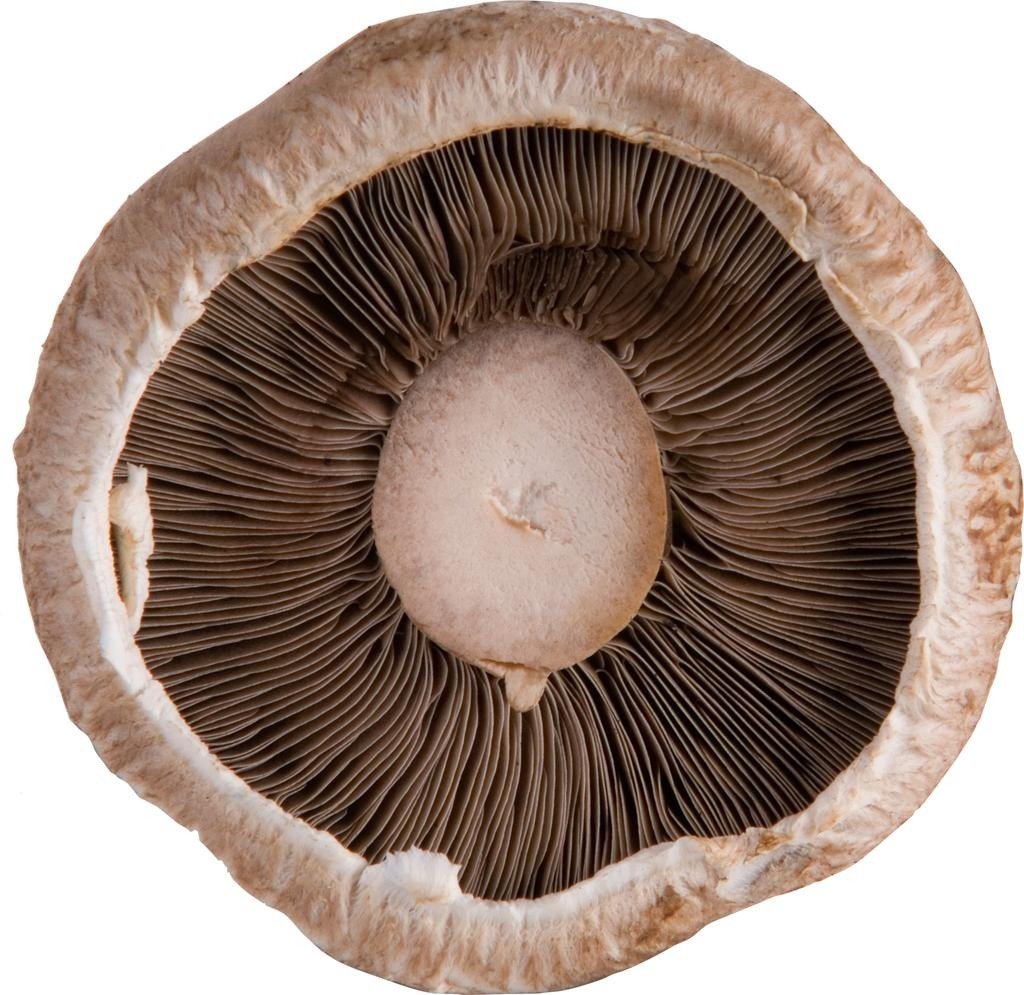
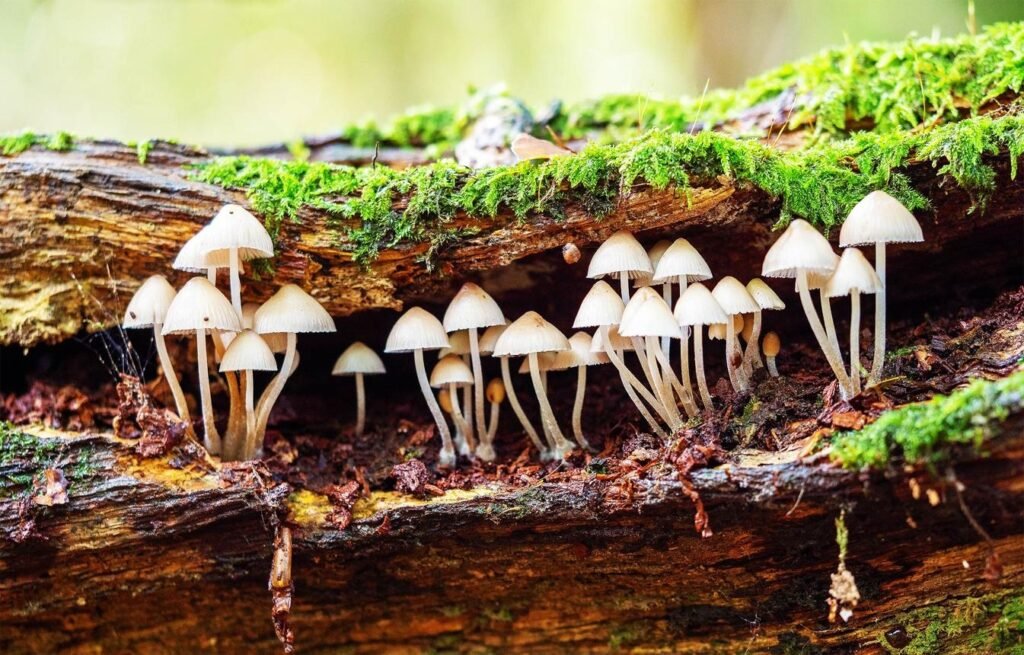
1. A mushroom is often only part of a larger organism.
In many fungi, the visible mushroom is a reproductive structure, while much of the organism consists of a network of microscopic filaments.
2. Many fungi recycle nutrients.
Decomposer fungi break down organic material and help return nutrients to ecosystems, making them important participants in natural cycles.

3. Fairy rings have biological explanations.
Circular or arc-shaped mushroom growth can occur as fungal colonies expand outward under suitable conditions.
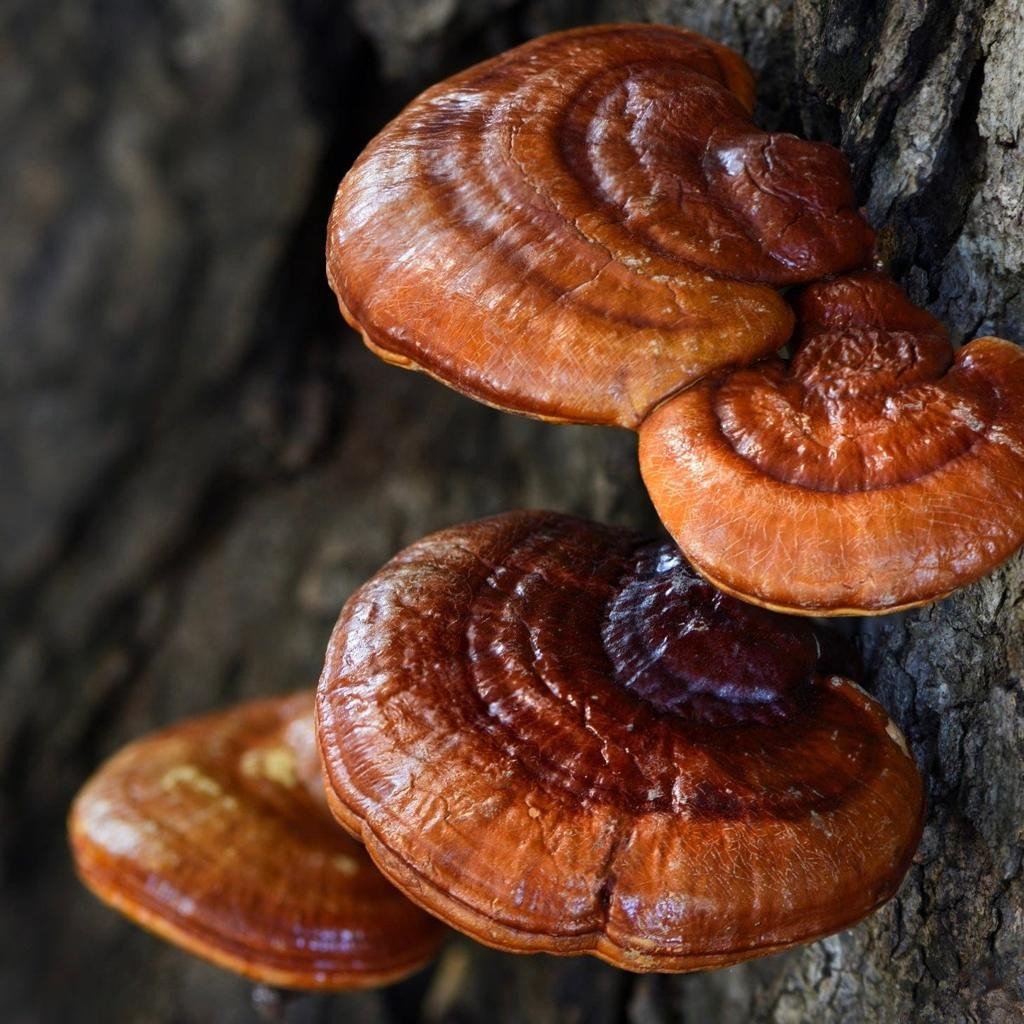
4. Some mushrooms have longstanding cultural associations.
Lingzhi imagery in Chinese traditions is associated with longevity and auspiciousness, illustrating how particular fungi acquire specific cultural meanings.
5. One species can carry several meanings.
Fly agaric may evoke fairy-tale magic in an illustration and caution in a natural-history setting. Context changes the interpretation.
Common Mistakes When Interpreting Mushroom Symbolism
Understanding symbolism requires attention to context, evidence, and cultural variation.
Mistake 1: Assuming every mushroom symbolizes transformation.
Transformation is a common interpretation, but mushrooms can also suggest danger, nourishment, mystery, or simply the natural world.
Mistake 2: Treating spiritual beliefs as established scientific facts.
A person may interpret a mushroom as a sign of spiritual awakening. That interpretation can be personally meaningful without proving that the mushroom carries a supernatural message.
Mistake 3: Treating all cultures as having the same mushroom traditions.
Cultural meanings vary significantly. Claims about specific communities should be supported by reliable historical or cultural evidence.
Mistake 4: Assuming every mushroom is safe.
Mushrooms vary greatly in toxicity. A species that resembles an edible mushroom may be dangerous, and symbolic associations provide no reliable guide to identification.
Mistake 5: Confusing popular imagery with historical evidence.
A mushroom commonly shown in modern fairy illustrations does not automatically represent an ancient religious belief. The history of an image must be distinguished from the history of the tradition it supposedly represents.
Mushroom Symbolism: Myth vs. Fact
| Claim | Myth or fact? | Balanced explanation |
| All mushrooms symbolize spiritual awakening. | Myth | This is one possible modern interpretation, not a universal meaning. |
| Mushrooms can symbolize renewal. | Context-dependent | Their ecological roles make renewal a meaningful metaphor. |
| Mushrooms are important in ecosystems. | Fact | Many fungi contribute to decomposition, nutrient cycling, and relationships with plants. |
| Every mushroom appearing in a dream predicts the future. | Myth | Dream interpretations are subjective and are not reliable forecasts. |
| Mushrooms have cultural significance in some societies. | Fact | Particular species have documented roles in specific artistic, historical, medicinal, or ceremonial contexts. |
| A mushroom symbol proves a product is sustainable. | Myth | Environmental claims require evidence beyond visual branding. |
Key Insights: How to Understand Mushroom Symbolism Correctly
The most useful way to interpret mushroom symbolism is to combine observation with context.
First, examine the mushroom itself. Its shape, color, location, and condition may influence the meaning an artist or storyteller intends to communicate.
Second, consider its environment. A mushroom growing on a fallen tree may reinforce themes of renewal, while a brightly colored mushroom in an imaginary forest may signal enchantment.
Third, investigate the cultural or historical setting. A lingzhi motif in a traditional Chinese artwork should be interpreted differently from a mushroom appearing in a modern fantasy game.
Finally, distinguish biological facts from symbolic beliefs. Fungi’s ecological functions can inspire powerful metaphors, but those metaphors do not automatically establish spiritual, psychological, or medical claims.
This method is useful for readers, educators, designers, writers, and anyone interested in the relationship between nature and human meaning.
Conclusion: Why Mushroom Symbolism Still Matters
Mushroom symbolism reveals how a small but remarkable part of the natural world can inspire complex ideas about transformation, mystery, renewal, abundance, and interconnectedness.
Historically, mushrooms have been connected with practical knowledge, folklore, artistic traditions, and specific cultural beliefs.
Today, they continue to appear in spiritual reflection, environmental education, literature, fashion, branding, digital communication, and contemporary art.
Their significance depends on context.
A mushroom may represent an enchanted forest in a fairy tale, ecological regeneration in an environmental campaign, or longevity in a traditional artistic motif. No single interpretation explains every species or cultural tradition.
The most important insight is that symbolism develops through the relationship between an object and the people who interpret it.
Mushrooms offer a particularly rich example because their visible forms reveal only part of their biological story.
By understanding both their natural characteristics and their cultural associations, we can appreciate mushroom symbolism without confusing metaphor with scientific evidence.
This balanced approach makes the subject more meaningful and helps us recognize how nature continues to shape human imagination, communication, and everyday life.
Frequently Asked Questions About Mushroom Symbolism
1. What does a mushroom symbolize spiritually?
Spiritually, mushrooms are often interpreted as symbols of transformation, renewal, hidden wisdom, interconnectedness, and personal growth. These associations draw on their underground growth, sudden appearance, and role in natural cycles. However, spiritual meanings vary between individuals and traditions, and there is no single universal interpretation.
2. What does it mean when you see a mushroom?
Seeing a mushroom can be interpreted symbolically as a reminder of growth, change, mystery, or the relationship between visible and hidden processes. Its meaning depends on your personal associations and the context in which it appears. From a scientific perspective, mushrooms commonly emerge when environmental conditions support the development of their reproductive structures.
3. What do mushrooms symbolize in dreams?
Mushrooms in dreams may prompt reflection on new opportunities, uncertainty, abundance, personal change, or something developing outside immediate awareness. A dream’s emotional atmosphere and the dreamer’s experiences matter more than a fixed symbolic dictionary. Dream interpretations are subjective and should not be treated as reliable predictions.
4. What does the red mushroom with white spots symbolize?
The red mushroom with white spots is commonly associated with enchantment, fantasy, woodland magic, and fairy-tale imagery. It is usually modeled on the fly agaric, Amanita muscaria. Its cultural meaning depends on context: it may suggest wonder in an illustration, while a nature guide may emphasize accurate identification and toxicity.
5. What do mushrooms symbolize in Chinese culture?
In traditional Chinese cultural imagery, the lingzhi mushroom is associated with longevity, vitality, auspiciousness, and ideas of immortality. It has appeared in traditional art and decorative objects connected with long life. These are cultural and historical associations, not evidence that consuming a mushroom guarantees health or longevity.
6. Why are mushrooms associated with transformation and rebirth?
Mushrooms are associated with transformation and rebirth partly because many fungi break down dead organic matter and help recycle nutrients into ecosystems. Their sudden emergence can also make growth seem mysterious. Symbolically, these characteristics support the idea that endings can contribute to new beginnings, although the meaning remains metaphorical.
Key Takeaways
- Transformation: Mushrooms can represent change, adaptation, and new beginnings.
- Mystery: Their unusual appearance and hidden growth inspire associations with the unknown.
- Renewal: Their ecological roles offer a metaphor for regeneration and the cycles of life.
- Interconnectedness: Fungal relationships can illustrate ecological interdependence.
- Cultural significance: Specific species have distinct meanings in particular historical and artistic traditions.
- Modern relevance: Mushrooms remain influential in environmental communication, art, literature, branding, and digital culture.
- Context matters: No single symbolic meaning applies to all mushrooms, cultures, or situations.
- Evidence matters: Cultural beliefs and spiritual interpretations should be distinguished from established biological facts.
Semantic Entities, NLP Concepts, LSI Keywords, and Topical Relationships
The following related terms reflect the article’s natural subject coverage and can help organize supporting content on a mushroom symbolism website.
| Topic cluster | Related entities and keywords |
| Primary keyword | Mushroom symbolism, symbolism of mushrooms, mushroom meaning |
| Spiritual symbolism | Spiritual meaning of mushrooms, mushroom spiritual symbolism, spiritual growth, renewal, enlightenment |
| Psychological interpretation | Mushroom dream meaning, subconscious symbolism, introspection, perception, personal transformation |
| Cultural history | Mushroom folklore, Chinese cultural symbolism, lingzhi mushroom, European fairy tales, traditional beliefs |
| Mythology and fantasy | Fairy ring symbolism, enchanted forest, fly agaric symbolism, magical mushrooms, fantasy literature |
| Natural science | Fungi, mycelium, hyphae, fungal fruiting bodies, decomposition, nutrient cycling, mycorrhizal relationships |
| Color symbolism | Red mushroom meaning, white mushroom symbolism, brown mushroom meaning, mushroom color psychology |
| Art and literature | Mushroom symbolism in art, mushroom symbolism in literature, visual storytelling, iconography, semiotics |
| Modern applications | Mushroom branding, ecological design, sustainability symbolism, digital communication, environmental education |
| Related thematic concepts | Transformation, rebirth, abundance, mystery, interconnectedness, hidden knowledge, life cycles |
Suggested Topic-Cluster Relationships
For a comprehensive symbolism content strategy, mushroom symbolism can connect naturally with related articles on:
- Nature symbolism: fungi, forests, trees, moss, and decomposition.
- Spiritual symbolism: transformation, renewal, intuition, and personal growth.
- Animal and plant symbolism: woodland creatures, flowers, roots, and seeds.
- Color symbolism: red, white, brown, purple, and green.
- Literary symbolism: enchanted forests, fairy tales, fantasy narratives, and hidden worlds.
- Environmental symbolism: biodiversity, ecosystems, regeneration, and sustainability.
These relationships can support a coherent internal-linking strategy when each related article offers distinct, useful information.
Editorial note: This article is structured for readability, topical coverage, and search intent. No article can be guaranteed to rank competitively or be classified as undetectable by AI-detection tools; strong performance depends on factual review, originality, user experience, site quality, and ongoing editorial improvement.

Learn about religious symbolism, cultural icons, and historical meanings with William Carter.
