Introduction: Why Scarab Symbolism Matters
Scarab symbolism has fascinated people for thousands of years because this small beetle represents some of humanity’s most enduring ideas: rebirth, transformation, protection, renewal, and the continuation of life.
Most closely associated with ancient Egyptian civilization, the scarab became a powerful religious image, appearing in jewelry, royal seals, funerary objects, amulets, and sacred artwork. Its meaning developed from close observation of nature and the Egyptians’ understanding of the sun, death, and the afterlife.
Today, the scarab remains a compelling symbol in jewelry, tattoos, spiritual discussions, historical studies, and contemporary design.
Some people associate it with personal growth and fresh beginnings, while others appreciate its connection to ancient mythology and the mysteries of existence.
Understanding scarab symbolism reveals how a natural creature can become a cultural icon that connects the physical world with spiritual ideas.
The scarab’s significance is especially interesting because it demonstrates how symbolism develops.
A beetle’s observable behavior inspired ancient interpretations, religious traditions gave those interpretations deeper meaning, and artists and storytellers preserved them across generations.
What Does the Scarab Symbolize?
Scarab symbolism primarily represents rebirth, transformation, protection, renewal, and the cycle of life. In ancient Egypt, the scarab beetle was associated with the rising sun and the god Khepri, who embodied the sun’s daily emergence and renewal. Scarab amulets also served protective and funerary purposes, making the insect an enduring emblem of life, regeneration, and spiritual continuity.
Although ancient Egyptian beliefs provide the strongest historical foundation for the scarab’s symbolism, modern spiritual interpretations often extend these themes to personal development, resilience, and the courage to begin again.
1. What Is a Scarab? Understanding the Beetle Behind the Symbol
8
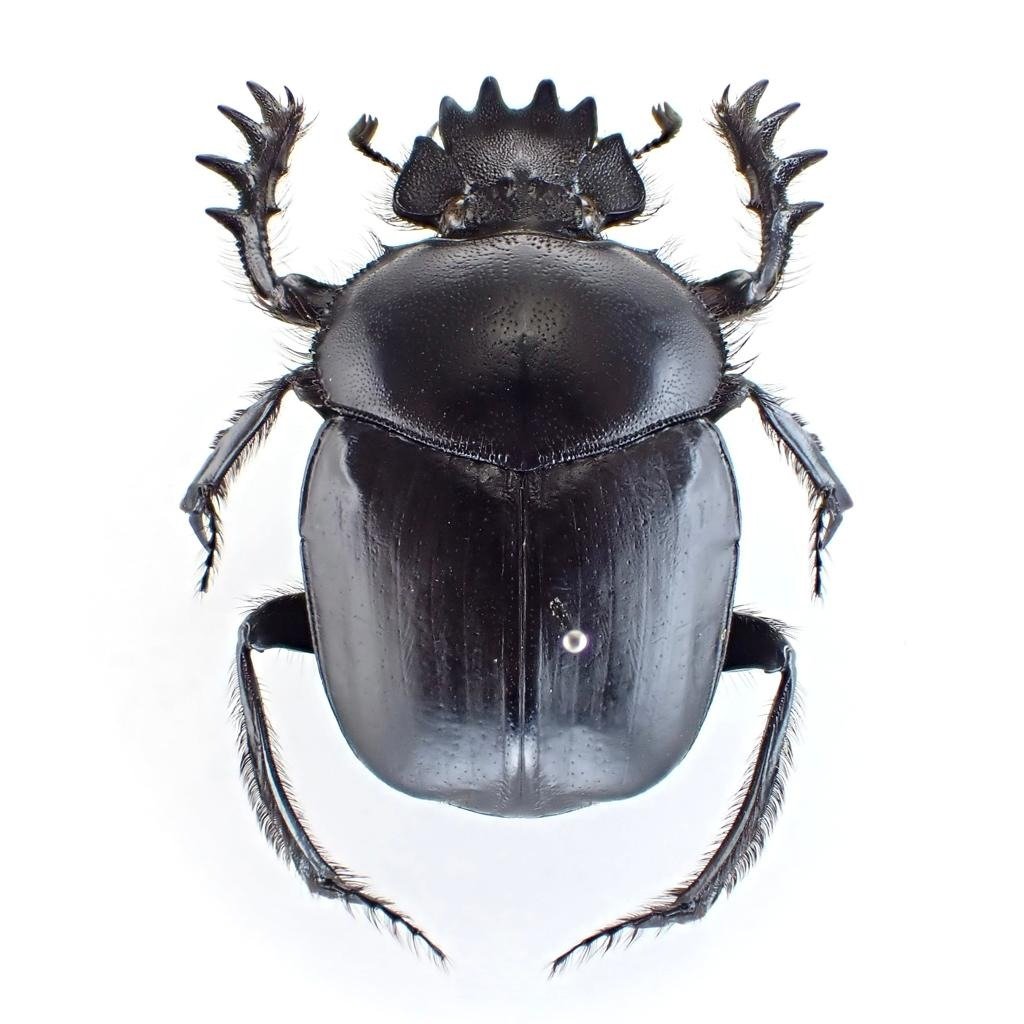
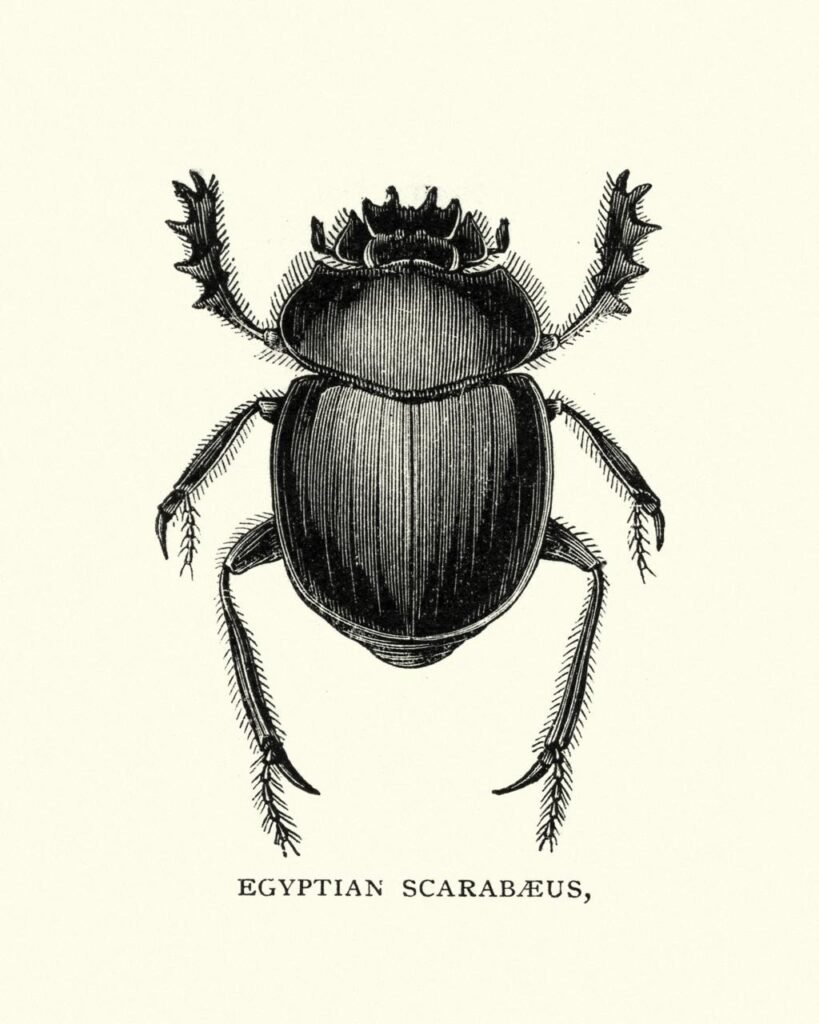
A scarab is a beetle belonging to the family Scarabaeidae. Although many species are commonly called scarabs, the sacred scarab beetle, Scarabaeus sacer, holds particular importance in ancient Egyptian symbolism.
These beetles are known for their association with dung, which certain species roll into balls and bury. The behavior provided a striking natural image for ancient observers: a small creature moving a rounded object across the ground, seemingly carrying something essential to life.
Why Did Ancient Egyptians Consider the Scarab Sacred?
Ancient Egyptians connected the scarab with the sun god Khepri, whose name is associated with becoming, coming into existence, or emerging. The beetle’s behavior offered a visual analogy for the sun’s movement across the sky and its apparent renewal at sunrise.
This connection helped turn an ordinary insect into a sacred emblem. The scarab was not simply admired for its physical characteristics; it became a way to express beliefs about cosmic order, creation, and the continuity of life.
It is important to distinguish the biological animal from its symbolic interpretation. Beetles roll and bury dung for reproductive and nutritional purposes, not to imitate the sun. The sacred meaning emerged from the human interpretation of those natural behaviors.
2. Scarab Symbolism in Ancient Egypt
8
Ancient Egyptian civilization developed one of the most influential traditions of scarab symbolism. The beetle appeared in religious imagery, personal ornaments, royal objects, and funerary practices, reflecting the importance of renewal and protection in Egyptian religious life.
The Scarab and the Sun God Khepri
Khepri was associated with the rising sun and the process of coming into being. Egyptian religious thought often represented the sun through different divine forms connected with its daily cycle. Khepri was especially associated with its emergence at dawn.
The scarab became an image of this renewal because the beetle’s movement and the appearance of young beetles from buried material could be interpreted as metaphors for creation.
The connection carried several layers of meaning:
- Creation: Life emerging from an apparently lifeless or hidden place.
- Renewal: The sun’s return each morning.
- Transformation: The movement from one state of existence to another.
- Continuity: The recurring cycles that sustain the world.
For ancient Egyptians, these were not necessarily separate ideas. They belonged to a broader religious understanding in which the sun’s movement, divine power, earthly life, and the afterlife were interconnected.
Scarab Amulets and Everyday Protection
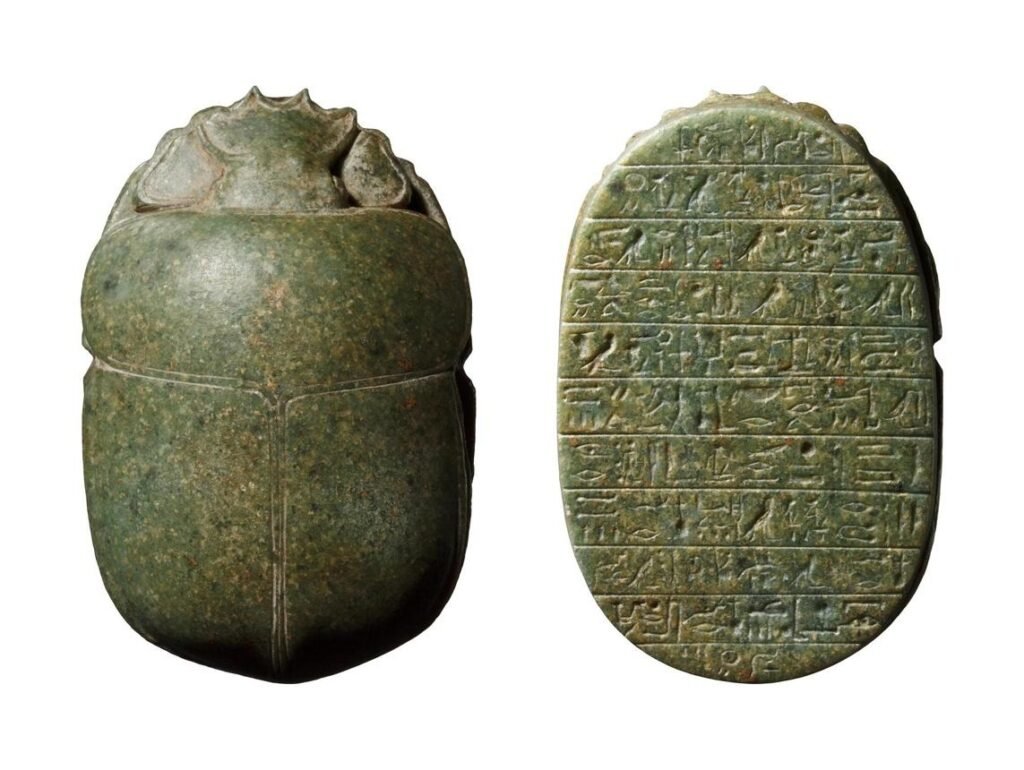
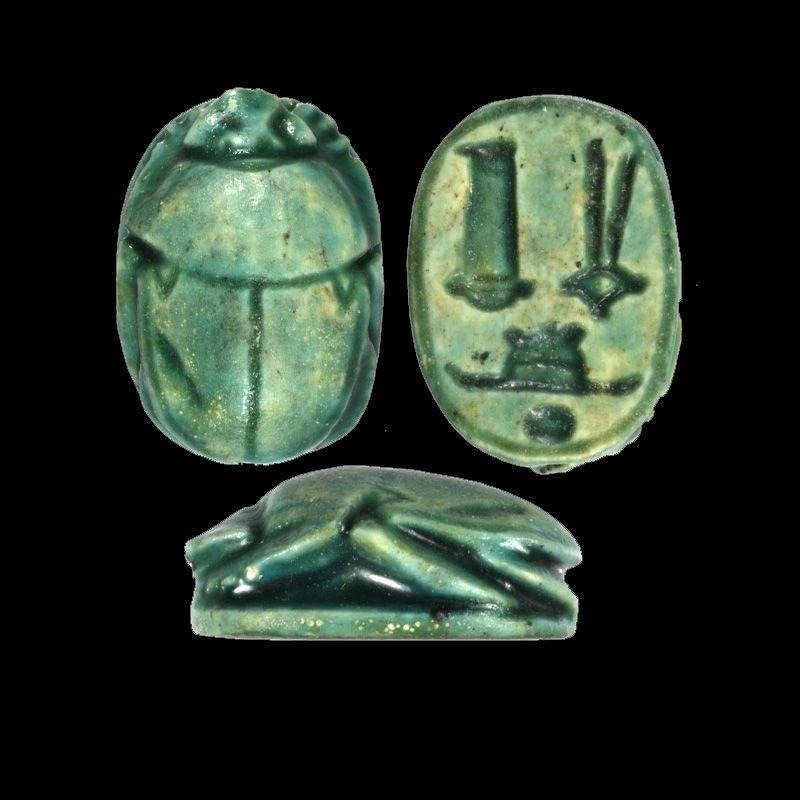
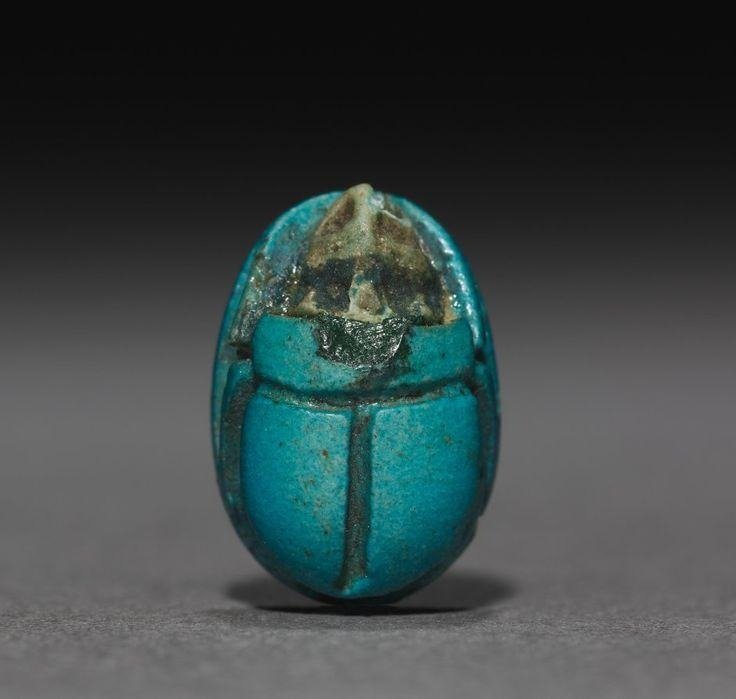
Scarab-shaped amulets were widely used in ancient Egypt. They were made from materials including stone, glazed composition known as faience, and other substances, depending on the period, purpose, and resources available.
Some scarabs carried inscriptions, names, titles, or royal associations. Others functioned as seals, with flat undersides that could be engraved and pressed into a soft material.
Their use demonstrates that symbolism was not limited to temples or elaborate ceremonies. Small objects could carry religious, social, administrative, and personal significance.
A scarab amulet might express a desire for protection, good fortune, renewal, or a connection with divine authority. Its exact meaning depended on the object’s design, inscription, archaeological context, and historical period.
Heart Scarabs and the Afterlife
One of the most important forms was the heart scarab, a funerary object associated with the deceased person’s heart and judgment in the afterlife.
In ancient Egyptian belief, the heart played a central role in moral identity and the evaluation of a person’s life. Certain heart scarabs were inscribed with a version of Spell 30B from the Book of the Dead, which appealed to the heart not to testify against its owner during judgment.
This practice reveals a deeper dimension of scarab symbolism. The beetle was not merely a sign of physical survival; it became part of a religious effort to secure the deceased person’s continued existence.
The scarab therefore connected the daily renewal of the sun with the hoped-for renewal of the individual beyond death.
3. The Spiritual Meaning of the Scarab
In contemporary spiritual interpretations, scarab symbolism frequently represents the possibility of renewal after difficulty. Its association with ancient Egyptian beliefs makes it a popular emblem of transformation, protection, perseverance, and the movement toward a new stage of life.
These modern interpretations can be meaningful, but they should not automatically be treated as universal ancient beliefs or established supernatural facts.
Rebirth and New Beginnings
The scarab is often interpreted as a symbol of rebirth because of its relationship with Khepri and the sun’s daily emergence.
In everyday life, this idea can apply to recovering after disappointment, changing careers, rebuilding confidence, or starting a new chapter after a major transition.
For example, someone beginning a new career after years in an unfulfilling role might choose a scarab pendant as a reminder that change can create opportunities for growth.
The symbolism does not promise that every ending will lead to success. Instead, it offers a visual reminder that an ending can become the beginning of another process.
Spiritual Protection
Protection is another prominent aspect of scarab symbolism. Ancient Egyptian amulets were used within religious practices that sought to protect the wearer, including protection associated with the afterlife.
Modern wearers may interpret the scarab as a reminder to maintain personal boundaries, act thoughtfully, and remain grounded during uncertain periods.
The historical practice of wearing protective amulets is well documented as a cultural and religious tradition. However, there is no established scientific evidence that a scarab object provides supernatural protection.
Transformation and Personal Growth
A scarab can also symbolize the ability to move through change without losing a sense of identity.
Its life cycle from egg to larva, pupa, and adult beetle provides a natural analogy for development through distinct stages. Although ancient Egyptian scarab symbolism is particularly tied to solar renewal, this biological life cycle offers a useful modern metaphor for personal transformation.
Consider a student who struggles with a difficult subject. Progress may be gradual and sometimes invisible, but repeated effort can eventually produce a meaningful change in ability.
In this interpretation, the scarab represents patience, development, and the value of continuing a process even when its results are not immediately apparent.
Resilience and Persistence
Scarab symbolism can encourage resilience by emphasizing movement, effort, and renewal.
Its message is not that hardship should be ignored or that perseverance always guarantees success. Rather, the scarab can serve as a reminder that people may adapt, seek support, and make new choices when circumstances change.
This interpretation is particularly relevant in contemporary self-development, where symbolic objects can act as personal reminders of values and goals.
4. Scarab Symbolism Across Cultures and Belief Systems
The scarab has a particularly well-documented symbolic history in ancient Egypt. Other cultures and modern communities may interpret beetles differently, and not every meaning associated with the scarab has a shared historical origin.
| Context | Common association | Important distinction |
| Ancient Egyptian religion | Solar renewal, creation, and divine becoming | Closely associated with Khepri |
| Ancient Egyptian funerary practice | Protection and continued existence after death | Heart scarabs had specific ritual functions |
| Ancient Egyptian administration | Names, titles, and seals | Some scarabs served practical as well as symbolic purposes |
| Modern spirituality | Personal renewal, resilience, and transformation | Interpretations vary among individuals |
| Contemporary jewelry and tattoos | Strength, identity, history, and change | Meaning often depends on the wearer |
| Modern art and design | Ancient civilization, mystery, and visual symbolism | Artistic use does not necessarily reflect ancient religious beliefs |
Egyptian Religious Tradition
Egyptian religious symbolism provides the historical foundation for most discussions of the sacred scarab. Its connection with Khepri linked the beetle to solar cycles and the emergence of life.
Scarab objects could also express political authority, social identity, and religious devotion. Their meanings were shaped by their inscriptions and settings, not solely by their beetle-shaped form.
Greek and Roman Encounters With Egyptian Symbolism
Greek and Roman societies encountered and adapted many Egyptian religious and artistic traditions. Egyptian imagery, including scarab-shaped objects, circulated beyond Egypt through trade, cultural exchange, and changing political relationships.
However, a scarab found outside Egypt should not automatically be interpreted as evidence that its owner followed Egyptian religion. Objects could be traded, collected, imitated, or used as decorative pieces.
This distinction matters when interpreting archaeological evidence: the movement of a symbol across regions does not mean that its original meaning remained unchanged.
Contemporary Spiritual Interpretations
Today, people may connect the scarab with personal awakening, new opportunities, inner strength, or spiritual guidance.
Some interpret finding or repeatedly noticing a scarab as a meaningful personal coincidence. Others appreciate the beetle as a historical emblem without assigning it a spiritual role.
Neither response is universal. Personal meaning can be valuable while remaining distinct from claims about what an event objectively predicts.
Why Cultural Context Matters
A symbol does not possess one fixed meaning in every society. Its interpretation develops through religion, history, artistic conventions, social practices, and individual experience.
The scarab illustrates this principle especially well. Its ancient Egyptian associations are historically specific, while its modern meanings can be adapted to contemporary ideas about identity and personal growth.
5. The Psychological Meaning of Scarab Symbolism
From a psychological perspective, scarab symbolism can be understood as a visual representation of change, hope, and continuity. Rather than assuming that the beetle has an inherent psychological effect, it is more useful to examine how people use meaningful objects to interpret experiences and express their values.
The Scarab as a Symbol of Change
People often use images to make abstract experiences easier to understand. A sunrise can represent hope, a bridge can suggest transition, and a scarab can represent renewal.
The scarab’s association with rebirth makes it particularly useful for expressing a personal turning point. Someone recovering from a difficult experience might associate it with the decision to move forward.
This is an example of symbolic thinking: a concrete object communicates an idea that would otherwise require a longer explanation.
Personal Identity and Emotional Meaning
Jewelry, artwork, and tattoos sometimes become reminders of important life events. A scarab might represent a new beginning, a connection to ancient history, or a personal commitment to perseverance.
Its emotional significance depends partly on the story attached to it.
For example, two people may wear identical scarab pendants for entirely different reasons. One might appreciate Egyptian mythology, while the other might associate the beetle with overcoming a personal challenge.
The physical object is the same, but its personal meaning differs.
The Scarab and the Idea of Hope
The scarab’s connection with sunrise provides a natural metaphor for hope after uncertainty. Dawn does not eliminate every difficulty, but it marks the beginning of another day.
Likewise, a person might use the scarab to remember that difficult circumstances can change and that new responses remain possible.
Expert tip: When using a scarab as a personal symbol, identify the specific value you want it to represent. A clear connection to resilience, renewal, or learning makes the symbol more meaningful than relying on vague promises of good luck.
6. Scarab Symbolism in Mythology and Religion
Ancient Egyptian mythology provides the clearest religious explanation for the scarab’s enduring importance. The beetle’s connection with Khepri brought together ideas about creation, solar movement, and the continuity of existence.
Creation and the Cycle of the Sun
The sun’s daily movement was central to ancient Egyptian religious imagery. Sunrise, daytime, sunset, and the sun’s journey through the night could be understood as parts of a recurring cosmic process.
Khepri represented the sun in its emerging or becoming aspect. The scarab therefore offered a compact visual expression of the idea that creation was not simply a past event but something renewed through recurring cycles.
This interpretation helped connect an ordinary animal with a much larger understanding of the universe.
Death, Judgment, and Rebirth
Egyptian funerary traditions often focused on preserving the deceased person’s identity and enabling continued existence after death.
The heart scarab played a specific role within this religious setting. Its inscriptions could invoke the deceased person’s heart in connection with the judgment described in Egyptian funerary texts.
The symbolism was therefore practical within the framework of religious belief: the scarab was not only an image of hope but also an object used in a ritual intended to support the deceased.
It would be misleading to reduce this complex tradition to a generic idea of positive energy. Its significance came from a particular understanding of death, moral judgment, and the afterlife.
Is the Scarab a Universal Religious Symbol?
No. Although scarab imagery appears in different regions and has influenced modern spiritual practices, it is not a universal religious emblem with an identical meaning everywhere.
Its strongest historical religious association is ancient Egyptian. Other interpretations may result from cultural exchange, later artistic adaptation, or individual spiritual beliefs.
Recognizing this distinction allows readers to appreciate the scarab’s wider appeal without erasing the culture that gave it its most influential symbolic meaning.
7. Scarab Symbolism in Art, Literature, and Popular Culture
7
The scarab’s recognizable shape and rich history have made it useful in visual communication. Its image can suggest ancient Egypt, mystery, transformation, sacred knowledge, or an interest in the natural world.
Scarabs in Ancient Egyptian Art
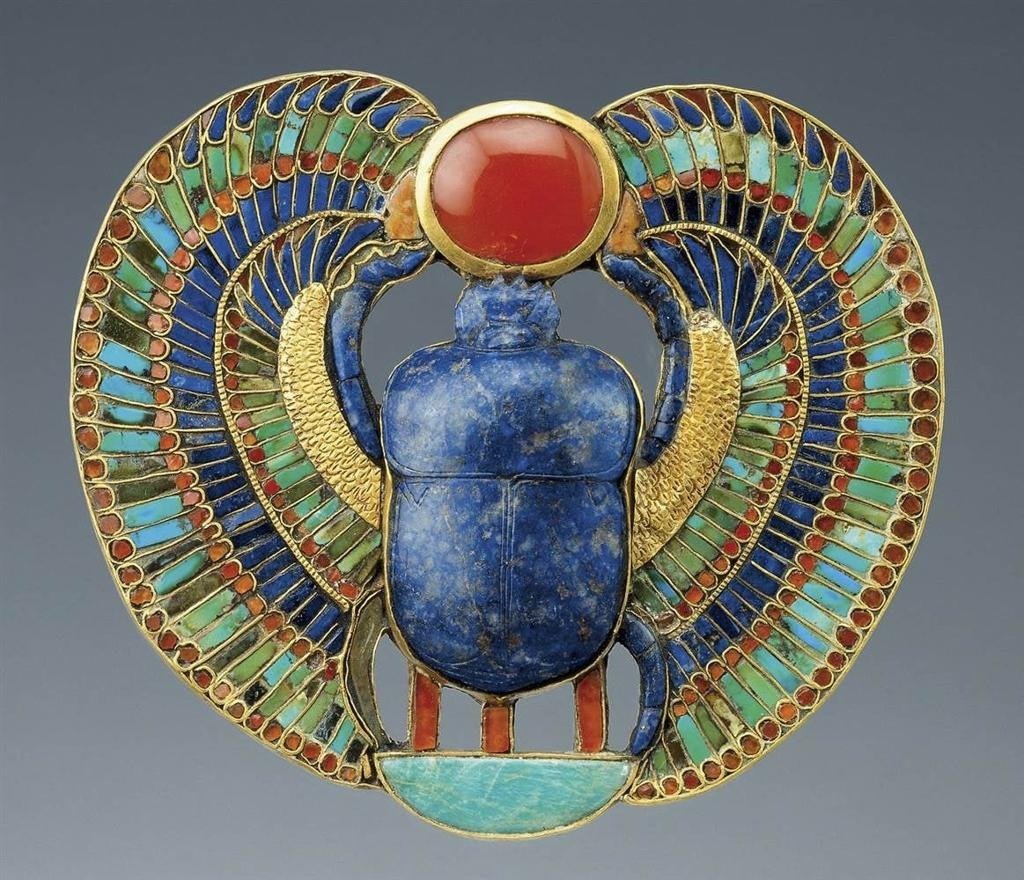
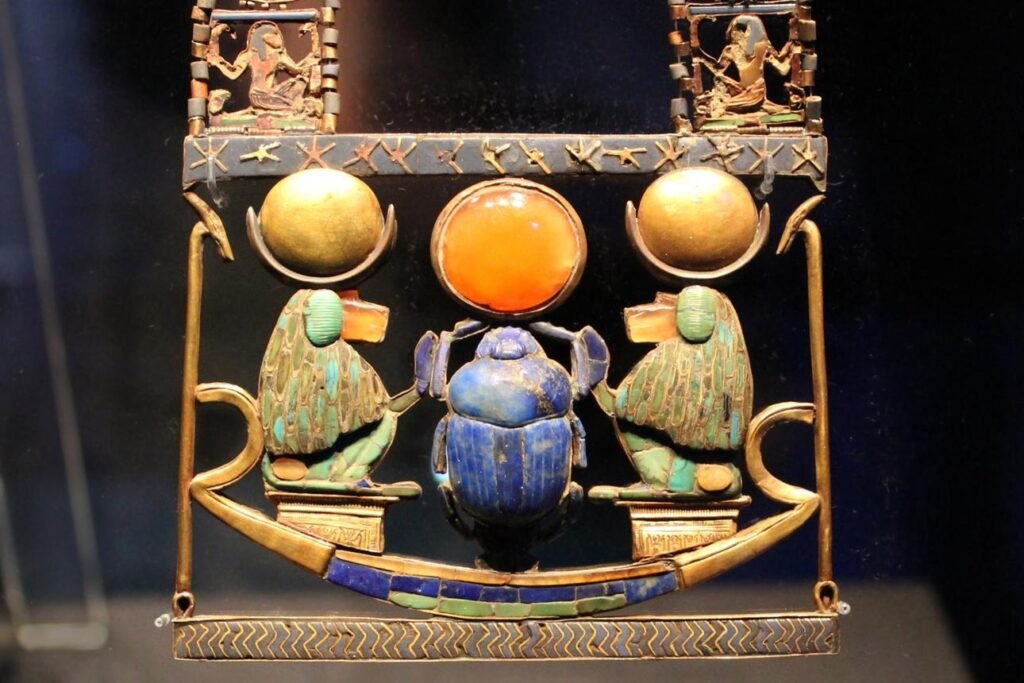
Artists represented scarabs in carved stone, faience, jewelry, amulets, and other objects. Some designs emphasized the beetle’s body, while others incorporated wings, inscriptions, or decorative patterns.
Winged scarabs were particularly important in certain funerary objects, where the imagery could connect the beetle with solar renewal and the hoped-for continuation of life.
These objects demonstrate how iconography communicates meaning through recognizable forms, materials, inscriptions, and placement.
Scarabs in Literature and Storytelling
In literature, scarab imagery can evoke ancient civilizations, hidden knowledge, mortality, or the mystery of transformation.
A writer might use a scarab artifact to connect a contemporary character with the distant past. Another might employ the beetle as a metaphor for emerging from a difficult period.
The meaning depends on the surrounding narrative. A scarab in a historical novel may function primarily as an archaeological object, while one in a fantasy story might carry invented magical properties.
Readers should distinguish these literary choices from actual Egyptian religious traditions.
Scarabs in Film and Popular Entertainment
Popular entertainment often uses Egyptian imagery to establish an atmosphere of mystery or supernatural danger. Scarabs may appear in adventure films, fantasy stories, games, or horror settings.
Such portrayals can be entertaining, but they sometimes simplify or distort ancient Egyptian beliefs. A fictional scarab that behaves as a supernatural threat should not be treated as evidence of the beetle’s historical religious meaning.
Modern Jewelry and Tattoos
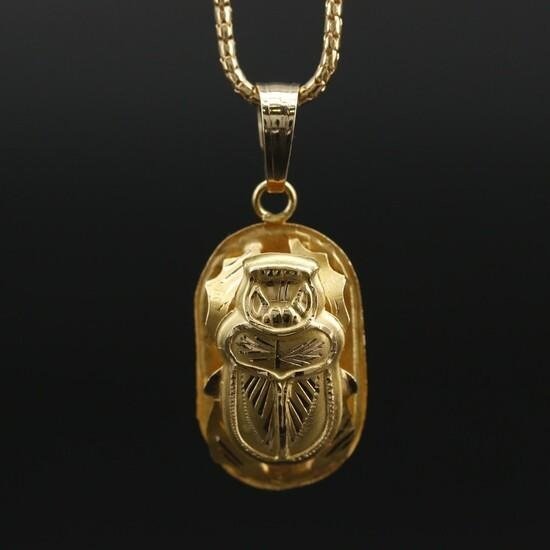
Scarab jewelry and tattoos are popular ways to express individuality and connect with the past.
Common motivations include:
- Celebrating personal transformation.
- Expressing interest in ancient Egyptian history.
- Representing resilience or a fresh start.
- Appreciating the beetle’s shape and natural beauty.
- Creating a distinctive design with historical associations.
A scarab tattoo may also combine the beetle with a sun disk, wings, geometric patterns, or other imagery. Each additional element can change the overall message.
For example, a scarab paired with a rising sun may emphasize renewal, while one rendered as a naturalistic insect may focus on nature and entomology.
8. Scarab Symbolism in Branding, Design, and Communication
Scarab imagery can be effective in branding because it combines a recognizable natural form with strong historical associations. Its visual identity can communicate heritage, craftsmanship, transformation, or mystery, depending on how it is presented.
Visual Identity and Brand Storytelling
A jewelry business might use scarab imagery to communicate its interest in historical design and symbolic meaning. A museum exhibition might use the same image to introduce visitors to ancient Egyptian religious objects.
The intended audience changes how the symbol is understood.
For a history museum, archaeological accuracy may be essential. For a contemporary fashion label, aesthetic appeal and brand identity may be more important, although the design should still avoid misleading historical claims.
Design Principles and Visual Recognition
The scarab has a compact silhouette that can be adapted to small or large formats. Its oval body and recognizable legs make it suitable for engraved jewelry, logos, decorative motifs, and illustrations.
However, effective design requires more than an attractive shape. Designers should consider legibility, cultural context, audience expectations, and whether the surrounding imagery supports the intended meaning.
Consumer Behavior and Symbolic Products
Consumers often choose symbolic products because the objects communicate something about their identity or aspirations.
A person buying a scarab necklace may be interested in its appearance, its historical significance, or the meaning of renewal. These motivations can overlap, but they should not be assumed to apply to every buyer.
For ethical branding, businesses should describe the scarab’s Egyptian history accurately and distinguish historical evidence from modern spiritual interpretations.
9. Practical Applications: How to Use Scarab Symbolism Meaningfully
Scarab symbolism becomes most useful when its interpretation is connected to a clear purpose.
| Application | Possible meaning | Practical example |
| Personal jewelry | Renewal or resilience | Wearing a pendant as a reminder of a fresh start |
| Tattoos | Identity and transformation | Marking a significant life transition |
| Education | Ancient Egyptian religion | Teaching the relationship between Khepri and the sun |
| Art and illustration | Creation and continuity | Using a scarab to represent an emerging process |
| Branding | Heritage and transformation | Developing historically informed visual identity |
| Writing | Change or historical mystery | Using scarab imagery as a meaningful narrative motif |
| Reflection or journaling | Growth through experience | Writing about a change one wants to make |
A Simple Reflection Exercise
If the scarab appeals to you as a personal symbol, consider three questions:
- What does renewal mean in my current circumstances?
- What experience has changed the way I understand myself?
- What action would help me move toward the next stage of my life?
The purpose is not to predict the future. It is to turn a symbolic image into a practical prompt for reflection.
Common Mistakes When Interpreting Scarab Symbolism
Mistake 1: Assuming every scarab means good luck. Ancient Egyptian scarabs had several roles, including religious, funerary, administrative, and personal uses.
Mistake 2: Treating all spiritual interpretations as ancient Egyptian beliefs. Ideas about manifestation, personal energy, or modern spiritual awakening may reflect contemporary interpretations rather than documented ancient practices.
Mistake 3: Confusing the scarab with a specific species in every context. Many beetles are called scarabs, but not every scarab-shaped object depicts the same species with scientific precision.
Mistake 4: Ignoring the object’s historical setting. Inscriptions, materials, date, and archaeological context can change how a particular scarab should be interpreted.
Mistake 5: Assuming symbolic objects have proven supernatural powers. Their cultural, historical, and personal significance can be meaningful without demonstrating supernatural effects.
10. Did You Know? Fascinating Facts About Scarab Symbolism
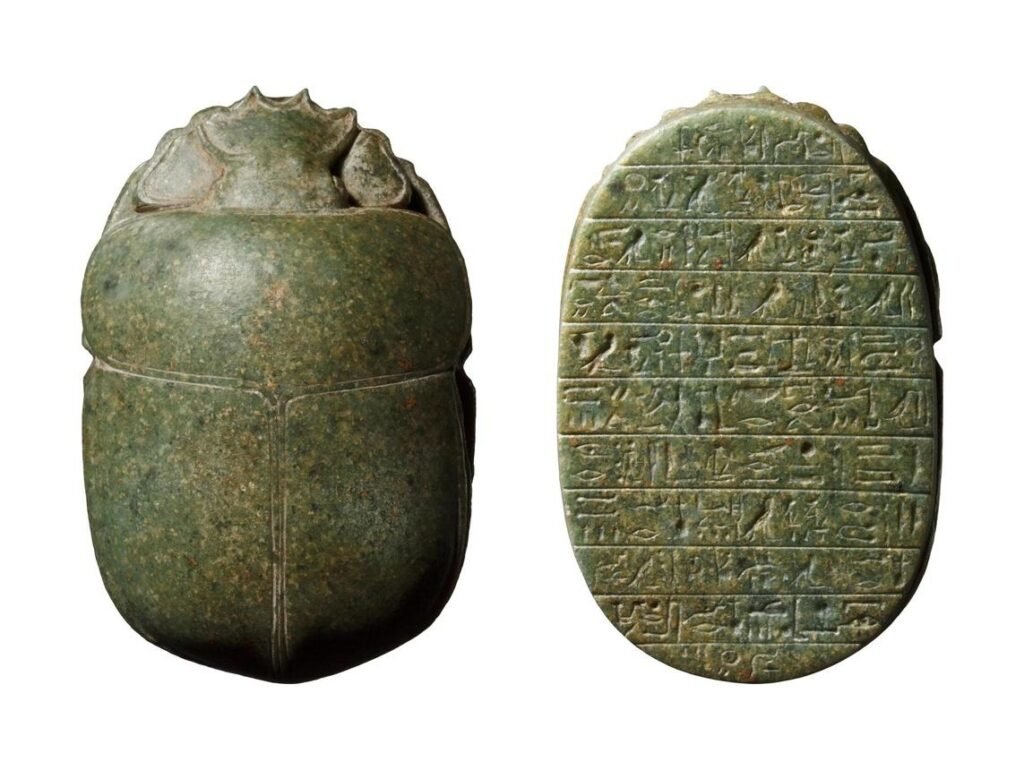
Scarab amulets could also function as seals.
Some scarabs had engraved flat undersides that could be pressed into a soft material, combining decorative, administrative, and symbolic functions.
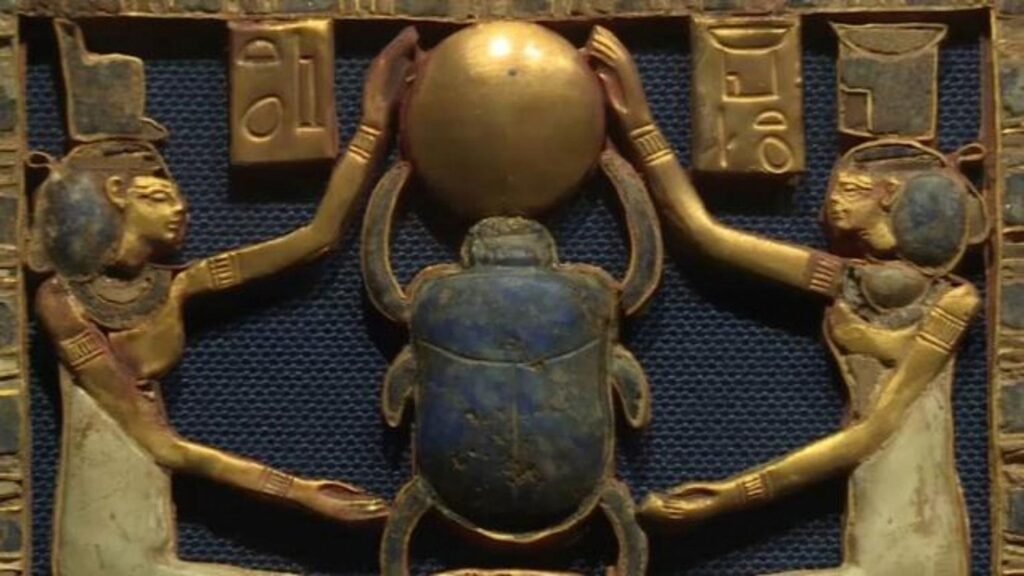
The scarab was connected with the rising sun.
Its association with Khepri made the beetle an image of emergence, becoming, and the renewal of the solar cycle.
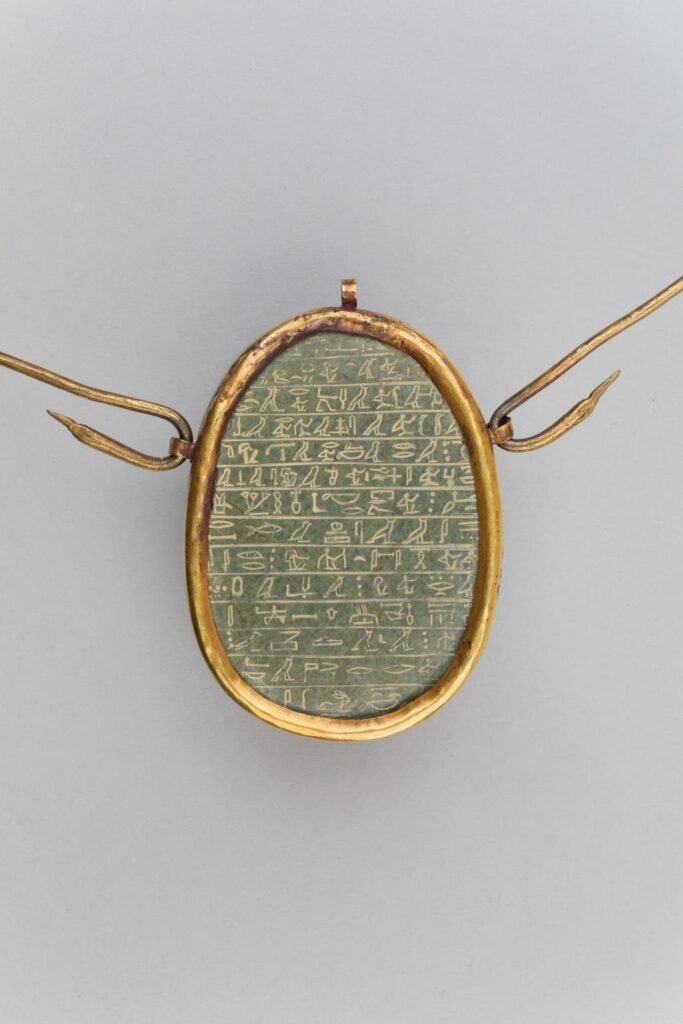
Some scarabs were designed for funerary use.
Heart scarabs could carry inscriptions associated with the deceased person’s judgment and hoped-for continued existence in the afterlife.
11. Scarab Symbolism: Myth vs. Fact
Understanding the difference between historical evidence and symbolic interpretation makes scarab symbolism more meaningful.
| Claim | Myth or fact? | Explanation |
| The scarab was sacred in ancient Egypt. | Fact | It had documented religious and funerary associations. |
| The scarab was associated with Khepri. | Fact | Khepri represented becoming and the rising sun. |
| Every scarab amulet served the same purpose. | Myth | Uses varied by design, inscription, period, and context. |
| A scarab guarantees protection or success. | Unsupported claim | Protective powers belong to religious or personal beliefs, not established scientific evidence. |
| The scarab can symbolize personal transformation today. | Modern interpretation | People can adopt historical imagery for contemporary personal meanings. |
| Every beetle called a scarab is the sacred Egyptian scarab. | Myth | Scarab is a broad common name associated with numerous beetle species. |
12. Philosophical Meaning: What the Scarab Can Teach Us
The scarab offers a way to explore several enduring philosophical questions: What does it mean to begin again? How do people understand change? Why do humans attach meaning to the natural world?
Change Is Part of Existence
The scarab’s association with the sun reflects the idea that existence unfolds through recurring processes. In modern philosophical reflection, this can encourage people to recognize that circumstances and identities may change over time.
Meaning Depends on Interpretation
The beetle is a biological creature, but its religious significance developed through human observation and cultural understanding.
This distinction illustrates a central principle of semiotics, the study of signs and meaning: an object can communicate ideas beyond its physical characteristics because people interpret it within shared systems of meaning.
The Past Continues to Shape the Present
Modern scarab jewelry, art, and literature show how historical symbols can survive through reinterpretation. Their meanings may evolve, but knowledge of their origins helps preserve the cultural history that made them significant.
The scarab therefore connects natural history, religious imagination, artistic expression, and contemporary identity.
13. Frequently Asked Questions About Scarab Symbolism
1. What does a scarab symbolize spiritually?
Spiritually, the scarab is commonly associated with rebirth, renewal, protection, transformation, and perseverance. These meanings are strongly influenced by ancient Egyptian religion, particularly the connection between the scarab and Khepri, the deity associated with the rising sun. Contemporary spiritual interpretations may also connect it with personal growth and new beginnings.
2. Why was the scarab important in ancient Egypt?
The scarab was important because it represented ideas about creation, solar renewal, and the continuity of life. Its association with Khepri made it a significant religious image. Scarab-shaped objects also served as amulets, seals, and funerary items, including heart scarabs associated with judgment in the afterlife.
3. Does seeing a scarab beetle mean good luck?
Some modern spiritual traditions interpret seeing a scarab as a positive sign of renewal, opportunity, or transformation. However, there is no established evidence that encountering a scarab predicts good luck or future events. Its significance depends on the observer’s cultural background, beliefs, and personal associations.
4. What does a scarab tattoo mean?
A scarab tattoo can represent transformation, resilience, rebirth, protection, or an interest in ancient Egyptian history. Some people choose it to mark a significant life change, while others appreciate its distinctive appearance. The meaning depends on the wearer’s intentions and any additional design elements, such as a sun disk or wings.
5. What is the difference between a scarab and Khepri?
A scarab is a beetle, while Khepri is an ancient Egyptian deity associated with becoming and the rising sun, commonly represented in scarab form or with a scarab head. The beetle served as an image of the deity, but the animal and the god are not the same thing.
6. Is scarab symbolism still relevant today?
Yes. Scarab symbolism remains relevant in jewelry, tattoos, historical education, museum displays, visual art, literature, and contemporary design. Its historical associations with renewal and continuity also make it useful as a modern metaphor for personal change. Understanding its Egyptian origins helps distinguish documented cultural meanings from newer interpretations.
14. Key Takeaways About Scarab Symbolism
- Rebirth and renewal: The scarab’s strongest symbolic association is with the recurring emergence of life and the rising sun.
- Ancient Egyptian mythology: The scarab was closely connected with Khepri, a deity associated with becoming and solar renewal.
- Protection and the afterlife: Scarab amulets and heart scarabs played roles in ancient Egyptian religious and funerary practices.
- Transformation and resilience: Contemporary interpretations often use the scarab to represent personal growth and the ability to move through change.
- Cultural context matters: The scarab’s meanings vary according to historical period, object type, religious setting, and modern interpretation.
- Modern applications: Scarab imagery appears in jewelry, tattoos, art, literature, branding, and educational materials.
- Evidence over exaggeration: Historical symbolism is well established, but claims of guaranteed luck or supernatural protection are matters of belief rather than demonstrated fact.
Conclusion: The Enduring Power of Scarab Symbolism
Scarab symbolism demonstrates how a small creature can become one of the most recognizable images of an ancient civilization.
In ancient Egypt, the beetle’s association with Khepri connected it with creation, the rising sun, renewal, and the continuation of life. Scarab amulets and funerary objects extended these ideas into personal, religious, and ceremonial practices.
Today, the scarab continues to inspire people through its associations with transformation, resilience, protection, and new beginnings.
Its presence in art, literature, jewelry, tattoos, education, and branding shows how historical imagery can remain meaningful long after its original cultural setting has changed.
Ultimately, understanding the scarab means recognizing both its historical roots and its evolving interpretations.
Its enduring appeal lies in its ability to connect the natural world with human questions about identity, change, mortality, and the possibility of renewal.
15. Semantic SEO, NLP Entities, and Topical Relationships
The following concepts are naturally covered in this article and can support a broader content cluster about animal symbolism, ancient Egyptian mythology, and cultural symbols.
| Category | Entities and concepts |
| Primary keyword | Scarab symbolism |
| Primary related keywords | Scarab meaning, scarab beetle symbolism, sacred scarab, Egyptian scarab |
| Spiritual concepts | Rebirth, renewal, transformation, protection, resilience, personal growth |
| Historical entities | Ancient Egypt, Khepri, Egyptian religion, Book of the Dead, Spell 30B |
| Archaeological concepts | Scarab amulets, heart scarabs, seals, faience, funerary objects, inscriptions |
| Biological entities | Scarabaeidae, Scarabaeus sacer, beetle life cycle, dung beetles |
| Cultural concepts | Egyptian mythology, afterlife beliefs, solar symbolism, cultural identity, religious iconography |
| NLP and semantic concepts | Entity relationships, contextual meaning, semantic associations, symbolism, semiotics, iconography |
| Cross-disciplinary topics | Anthropology, psychology, philosophy, history, art, literature, visual communication |
| Modern applications | Scarab tattoos, jewelry, branding, graphic design, storytelling, personal symbolism |
Related Topics for a Scarab Symbolism Content Cluster
For a website focused on symbolism, these related subjects can help readers explore the wider context of the scarab:
- Animal symbolism and insect symbolism
- Ancient Egyptian symbols and hieroglyphs
- Egyptian gods and goddesses, including Khepri
- Sun symbolism and the meaning of sunrise
- Rebirth symbolism and transformation symbolism
- Beetle symbolism and dung beetle symbolism
- Egyptian amulets and funerary traditions
- Eye of Horus symbolism and Ankh symbolism
- Scarab tattoos and scarab jewelry meanings
These topics are related, but each deserves its own historically grounded explanation. In particular, the scarab, Ankh, and Eye of Horus have distinct histories and should not be presented as interchangeable symbols.
SEO publishing note: This article is structured for readability, semantic relevance, and answer-focused search intent. No article can be guaranteed to rank competitively or to be undetectable by AI detectors. Before publication, verify historical claims against reputable Egyptology and museum sources, add relevant internal links, and use descriptive image alt text.
Discover symbolism in art, literature, and creativity with Amelia Rhodes’ insightful articles.
