
Introduction: Why Blue Rose Symbolism Matters
Blue rose symbolism is fascinating because the blue rose represents something that feels both beautiful and impossible.
Unlike naturally occurring red, white, or yellow roses, a true blue rose does not occur naturally in the same way.
Its unusual color has made it a powerful symbol of mystery, unattainable dreams, extraordinary love, individuality, and the desire to achieve what once seemed beyond reach.
Throughout history, roses have communicated emotions that words sometimes struggle to express.
Red roses are widely associated with romantic love, white roses with purity or remembrance, and yellow roses with friendship or joy.
The blue rose, however, occupies a more mysterious place in the language of flowers.
It can represent a love that defies expectations, a dream that seems impossible, a secret waiting to be discovered, or the courage to pursue something unconventional.
Understanding the symbolism of a blue rose can help readers interpret flowers in literature, art, dreams, personal gifts, spiritual practices, and modern visual communication.
Its meaning also demonstrates how humans transform color, nature, and imagination into symbols that express complex feelings and cultural values.
What Does a Blue Rose Symbolize?
Blue rose symbolism primarily represents mystery, the unattainable, impossible love, individuality, and hope. Because blue roses are not naturally produced in the same way as many other rose colors, they often symbolize extraordinary desires, rare beauty, and dreams that appear beyond reach. Depending on context, a blue rose can also suggest spiritual curiosity, emotional depth, or personal transformation.
The meaning is not universal. A blue rose given as a romantic gift may communicate unusual affection, while one appearing in a fantasy story may represent magic, a hidden truth, or an extraordinary quest.
What Is the Deeper Meaning of a Blue Rose?
8
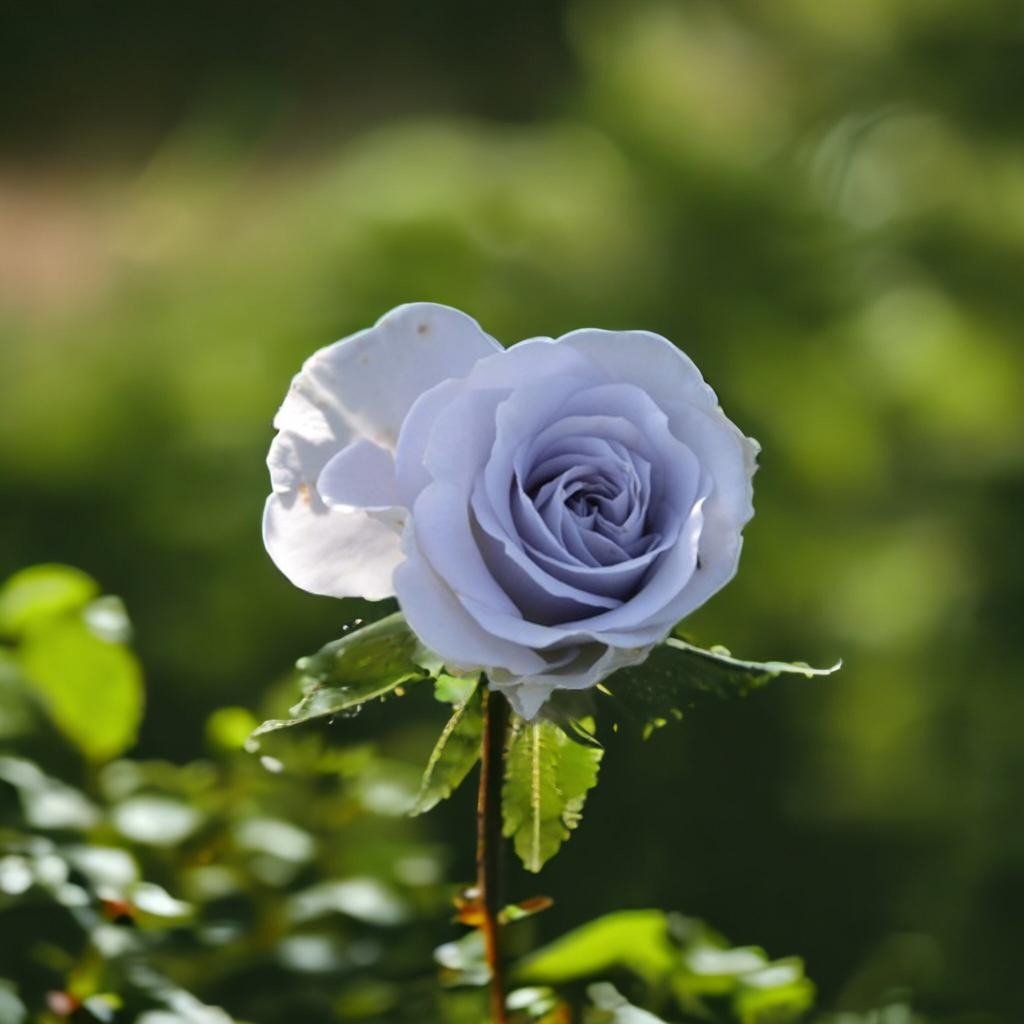
The deeper meaning of a blue rose comes from the relationship between its familiar floral form and its unusual color. Roses are recognizable symbols of affection, beauty, and human emotion, but blue roses introduce an element of the unexpected. They combine the emotional associations of a rose with the mystery and distance often associated with the color blue.
Several related meanings help explain why this flower remains compelling.
1. Mystery and the Unknown
A blue rose can symbolize something that has not yet been understood. Its unusual appearance suggests hidden possibilities, secrets, and questions without easy answers.
In storytelling, a blue rose might appear as a mysterious object, a clue to an ancient secret, or a sign that a character is entering an unfamiliar world. In everyday life, it may represent a person whose individuality and inner life cannot be easily explained.
This interpretation is particularly useful in art and design, where an unusual image can encourage viewers to pause and consider what lies beneath the surface.
2. Impossible Love and Unattainable Desires
One of the most recognizable interpretations of a blue rose is impossible love. The traditional association developed from the flower’s historical rarity and the difficulty of producing a genuinely blue rose through conventional breeding.
A blue rose can therefore represent affection that faces significant obstacles, longing for someone distant, or a relationship that challenges social expectations.
However, impossible love does not always mean hopeless love. It may also symbolize devotion that persists despite uncertainty, separation, or circumstances that appear unfavorable.
For example, a writer might give a character a blue rose to represent love for someone they cannot be with. The flower becomes a visual shorthand for longing without requiring a lengthy explanation.
3. Hope and Extraordinary Possibilities
Although blue roses often represent the unattainable, they can also communicate hope. The idea that something seemingly impossible might eventually become possible gives the flower an optimistic dimension.
Scientific advances in flower coloration illustrate this interpretation particularly well. Although naturally occurring blue roses are not established as a common rose form, researchers and horticultural specialists have explored ways to create blue-toned roses through breeding, pigmentation research, and genetic engineering.
The symbolic lesson is not that every impossible dream will come true. Rather, the blue rose can remind us that the boundaries of possibility sometimes change as knowledge, creativity, and technology develop.
4. Individuality and Unconventional Beauty
A blue rose can represent a person who refuses to fit conventional expectations. Its unusual appearance distinguishes it from more familiar rose colors, making it a natural emblem of originality and self-expression.
This meaning can be especially relevant in fashion, personal gifts, tattoos, and contemporary art. Someone may choose a blue rose because it expresses a distinctive identity rather than a traditional romantic message.
The flower can also symbolize acceptance of differences and appreciation for forms of beauty that do not conform to familiar standards.
5. Emotional Depth and Calm
Blue is frequently associated with calmness, distance, reflection, and emotional depth in contemporary color symbolism. When combined with the rose, these associations can suggest thoughtful affection, quiet longing, or a relationship built on understanding rather than dramatic passion.
These associations are influenced by culture, context, and individual experience. Blue does not mean the same thing to everyone, and the symbolism of a flower should not be treated as a fixed psychological rule.
Nevertheless, a blue rose can communicate a quieter, more contemplative kind of beauty than the intensity often associated with a red rose.
Historical Origins and Evolution of Blue Rose Symbolism
The history of blue rose symbolism is closely connected to the history of flower cultivation, the language of flowers, and humanity’s fascination with rare natural forms.
Roses have been cultivated for thousands of years, with different species and varieties becoming important in gardens, ceremonies, poetry, and visual art. Blue roses, by contrast, were historically associated with an ideal that gardeners could imagine more easily than they could achieve.
The Search for a True Blue Rose
Traditional rose pigmentation does not readily produce a clear, naturally occurring blue flower. Rose colors arise from pigments and their interactions with plant chemistry, genetics, and cellular conditions. The absence of the necessary combination of pigments and biological mechanisms has made the development of genuinely blue roses a significant horticultural challenge.
For generations, gardeners experimented with crossing rose varieties to produce unusual colors. Although lavender, lilac, mauve, and purple roses became available, a distinctly blue rose remained elusive.
This distinction matters because many flowers marketed as blue roses are dyed white roses or cultivated varieties that appear blue-violet rather than genuinely blue.
The long-standing difficulty of producing a true blue rose helped establish its association with the impossible, the extraordinary, and the rare.
Blue Roses in the Language of Flowers
During the Victorian era, the language of flowers, commonly called floriography, became a popular way to communicate feelings through floral arrangements. Different flowers and colors could carry messages of affection, friendship, grief, devotion, and admiration.
The meanings were not governed by one universal dictionary. They varied between publications, regions, and social settings, and modern flower symbolism often combines Victorian conventions with newer interpretations.
Blue roses fit naturally into this tradition because their unusual appearance invites imaginative meanings. Their associations with mystery, unattainable love, and extraordinary beauty developed from the flower’s rarity and the symbolic possibilities of its color.
Historical distinction: The blue rose’s association with the impossible is closely connected to its horticultural history. Its more specific spiritual, romantic, and psychological meanings are interpretations that developed through cultural expression rather than one universally established historical doctrine.
From Horticultural Impossibility to Scientific Innovation
In the modern era, biotechnology has changed the story of the blue rose.
Researchers have explored genetic engineering to introduce pigment-production pathways associated with blue flowers. A widely reported milestone came in 2004, when a research team announced a genetically engineered rose designed to produce delphinidin, a pigment associated with blue coloration in many other flowers.
The resulting rose was not a pure, vivid blue in the everyday sense; its appearance was closer to lavender or mauve. Achieving a strong blue color in roses remains complicated by the interaction of pigments, cellular chemistry, and other biological factors.
This development adds another layer to the symbol. A blue rose can represent the transition from an apparently impossible ideal to a difficult but partially achievable scientific goal.
Blue Rose Symbolism Across Cultures and Traditions

11
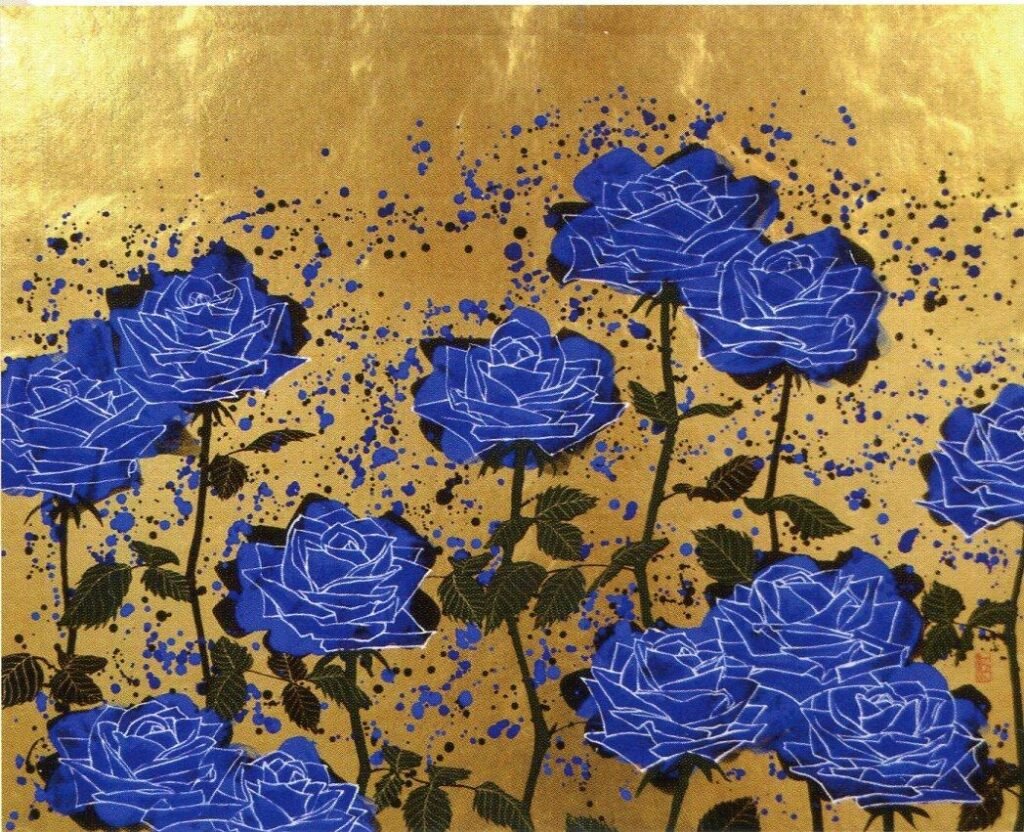
Blue rose symbolism does not have one universally agreed meaning across every culture. Its interpretation depends on local floral traditions, the symbolism of blue, religious or artistic context, and whether the flower appears in a real arrangement or an imagined world.
| Cultural or interpretive context | Possible meaning | Important qualification |
| European floral traditions | Mystery, rare beauty, unattainable love | Associations vary across flower dictionaries and periods |
| Contemporary Western romance | Unusual affection, individuality, extraordinary love | The giver’s intention matters more than a fixed code |
| Japanese-inspired popular culture | Mystery, longing, fantasy, or rare beauty | These meanings are not universal Japanese traditions |
| Fantasy and folklore-inspired storytelling | Magic, hidden knowledge, quests, impossible tasks | Meaning depends on the fictional world |
| Contemporary spiritual interpretation | Intuition, inner exploration, transformation | Personal beliefs differ; these are not universal religious teachings |
| Modern design and branding | Innovation, exclusivity, originality | Meaning is shaped by the brand and its audience |
European Traditions and Floral Communication
In European floral culture, roses have long been used to express affection, admiration, and emotional significance. The blue rose extends these associations by introducing rarity and mystery.
A blue rose in a romantic arrangement might communicate, “You are unlike anyone else,” or “My feelings for you are difficult to explain.” In a more somber context, it might symbolize longing for something that remains beyond reach.
These are contemporary interpretive possibilities, not universal translations that every recipient will recognize.
Japanese Cultural Contexts
In Japan, flowers can carry nuanced meanings in art, gifts, seasonal customs, and popular culture. However, it would be inaccurate to claim that the blue rose has one fixed traditional Japanese meaning.
In contemporary Japanese media and fictional settings, a blue rose may be used to suggest rarity, extraordinary beauty, mystery, or a difficult quest. Such meanings depend on the specific story, artwork, or cultural reference.
When interpreting a blue rose in Japanese literature or animation, it is useful to examine how the flower functions in the narrative rather than assuming that its meaning comes from an ancient, universally accepted tradition.
Fantasy, Folklore, and Imaginary Worlds
In fantasy storytelling, blue roses are particularly effective because they look familiar yet unusual. They can serve as magical objects, clues, symbols of hidden identity, or rewards for accomplishing an apparently impossible task.
A blue rose growing in an enchanted garden, for example, might signify that the garden operates according to different rules from the ordinary world.
Its power comes from the contrast between what audiences recognize and what they do not expect. This makes the blue rose a useful symbol in fairy tales, fantasy novels, games, and visual storytelling.
The Spiritual Meaning of a Blue Rose
In contemporary spiritual interpretations, a blue rose may symbolize intuition, inner wisdom, transformation, serenity, and the search for a deeper understanding of life.
These meanings arise primarily from the combination of the rose’s established associations with beauty and emotional significance and the symbolic qualities often attributed to blue. They should be understood as personal or cultural interpretations, not as scientifically established effects or universally shared spiritual doctrines.
Blue Rose Symbolism in Personal Spirituality
A person who uses a blue rose as a meditation image might associate it with:
- Inner reflection: Looking beyond immediate appearances to explore personal values.
- Spiritual curiosity: Remaining open to questions that do not have simple answers.
- Transformation: Moving from uncertainty toward a new understanding.
- Serenity: Finding a visual reminder of stillness during a demanding period.
- Hope: Maintaining faith in possibilities that have not yet become clear.
For example, someone beginning a new chapter of life might keep a blue rose illustration in a journal as a reminder to remain curious and open to change.
The meaning comes from the individual’s reflective practice rather than a guaranteed supernatural property of the flower.
Blue Rose Symbolism and the Search for Meaning
The blue rose can also represent the human desire to understand what remains unknown. In philosophy and spiritual reflection, the unknown is not necessarily something to fear; it can be an invitation to question assumptions and explore new perspectives.
Its rarity makes the flower a fitting metaphor for an insight that is difficult to express or a truth that takes time to discover.
Expert tip: If you use a blue rose in a spiritual practice, define what it means to you. A personal symbol becomes more useful when it connects to a specific intention, memory, or value rather than relying on an assumed universal meaning.
Religious Connections: What Can and Cannot Be Claimed
Roses have recognizable roles in several religious traditions, including Christian art and devotional imagery. Depending on the context, roses may represent love, beauty, martyrdom, purity, or divine grace.
However, blue roses do not have a single established religious meaning shared across Christianity, Islam, Hinduism, Buddhism, and other faiths.
A blue rose appearing in religious-inspired artwork may symbolize mystery, transcendence, devotion, or an extraordinary ideal, but the interpretation depends on the artwork and the beliefs of the person creating or viewing it.
It is important to distinguish established religious iconography from modern spiritual symbolism. A personal interpretation can be meaningful without being an official teaching of a religious tradition.
The Psychological Meaning of a Blue Rose
The psychological interpretation of a blue rose involves visual perception, color associations, emotional memory, and the meanings people learn from culture.
A flower’s color can influence the impression it creates, but there is no single psychological response that applies to every person. Someone may associate blue with peace, while another person may connect it with sadness, distance, or a meaningful memory.
Why Blue Feels Different From Red
The contrast between blue and red roses helps explain why the blue rose can communicate a different emotional message.
| Feature | Blue rose | Red rose |
| Common association | Mystery and individuality | Romantic love and passion |
| Emotional impression | Reflective, unusual, contemplative | Intense, warm, expressive |
| Romantic message | Unconventional or extraordinary affection | Passionate or established romantic love |
| Symbolic emphasis | The rare, unknown, or unattainable | Desire, devotion, or affection |
| Common creative use | Fantasy, distinctive gifts, imaginative art | Romance, celebrations, anniversaries |
These distinctions describe common cultural associations rather than fixed psychological laws.
Color Psychology and Emotional Interpretation
Blue is frequently used in design to communicate calmness, trust, professionalism, or depth. Its meaning can change depending on shade, contrast, surrounding colors, and cultural expectations.
When blue appears in a rose, the familiar shape of the flower interacts with the less typical color. This combination may produce an impression of elegance, novelty, or unreality.
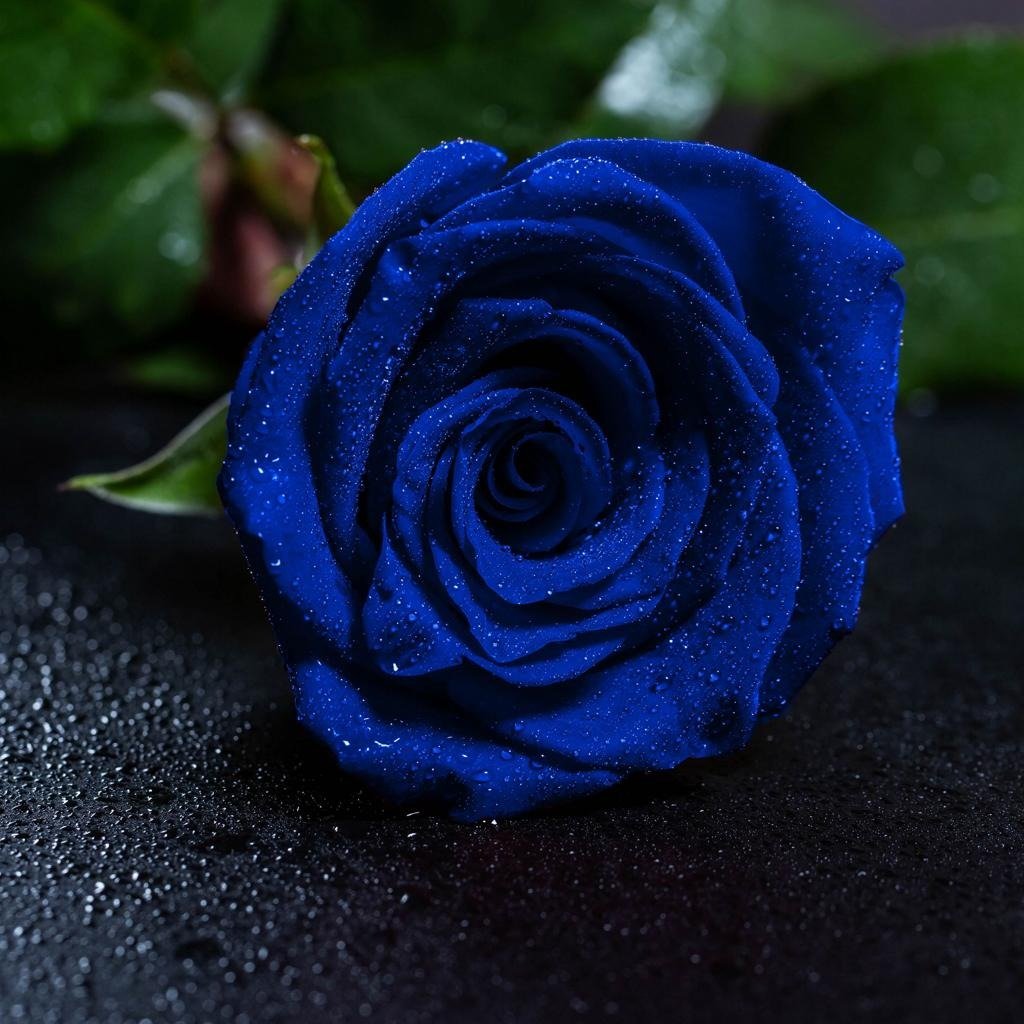
A pale blue rose might feel gentle and dreamlike, while a deep blue rose against a dark background may suggest secrecy or dramatic intensity.
This is an example of visual communication: meaning is created not only by the object itself but also by its color, setting, and relationship to other visual elements.
Memory, Emotion, and Personal Associations
Personal experience also shapes symbolic meaning. Someone who received a blue rose during a significant life event may associate it with a specific person or memory rather than the conventional meanings of mystery or impossible love.
This explains why a symbol can feel deeply meaningful to one individual while seeming merely decorative to another.
In psychology-informed communication, it is therefore more accurate to ask what a symbol evokes for a particular person than to assume that its meaning can be decoded with certainty.
Blue Rose Symbolism in Dreams
A blue rose in a dream may be interpreted as a symbol of unusual affection, longing, personal growth, mystery, or a desire to achieve something difficult.
However, dream symbolism is subjective. There is no reliable scientific basis for claiming that a blue rose always predicts a specific event or carries one universal message.
The context of the dream is more useful than the flower alone.
| Dream scenario | Possible personal interpretation |
| Receiving a blue rose | Feeling appreciated, different, or emotionally understood |
| Giving someone a blue rose | Wanting to express unusual or difficult-to-explain feelings |
| Finding a blue rose in a garden | Discovering a new interest or possibility |
| Watching a blue rose wilt | Reflecting on disappointment, change, or a fading hope |
| Searching for a blue rose | Pursuing an elusive goal or seeking answers |
| Seeing a blue rose bloom | Experiencing renewal, creativity, or a change in perspective |
These interpretations are prompts for reflection, not predictions.
If a blue rose appears in a dream, consider three questions: What emotion did the flower create? What was happening around it? Does it connect to something in your waking life that feels rare, uncertain, or difficult to achieve?
The answers may help you understand the dream’s personal significance without treating it as a supernatural message.
Blue Roses in Art, Literature, and Storytelling

12
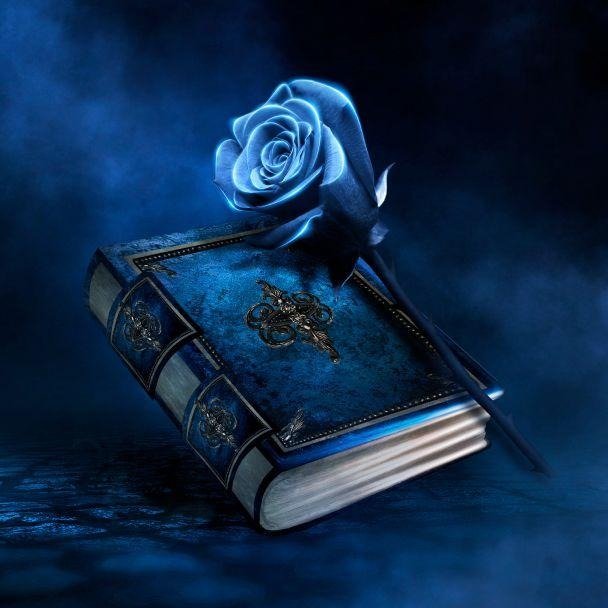
Blue roses are visually powerful in creative work because they combine a familiar symbol with an unusual feature. This contrast allows artists and writers to communicate complicated ideas through a single recognizable image.
Blue Rose Symbolism in Literature
In literature, a blue rose may represent an unattainable ideal, an extraordinary person, hidden knowledge, or a longing that cannot easily be satisfied.
A novelist might use a blue rose as a recurring motif. Initially, it could represent a character’s impossible dream. Later, as the character changes, the same flower might represent acceptance, creativity, or a new understanding of what is possible.
This development illustrates how symbolism can change throughout a narrative. An object does not need to carry the same meaning in every scene; its significance can evolve alongside the characters.
Blue Roses in Poetry
Poetry often uses flowers to express emotions indirectly. A blue rose can suggest love that has no easy name, beauty that exists outside conventional expectations, or a desire that survives despite uncertainty.
For example, a poet might contrast a blue rose with a field of ordinary red flowers to explore individuality and belonging.
The contrast works because readers recognize the familiar rose while noticing the unexpected color. The image communicates difference without requiring the poet to explain it explicitly.
Blue Roses in Visual Art
Artists can use blue roses to explore contrasts such as reality and imagination, nature and technology, or beauty and impossibility.
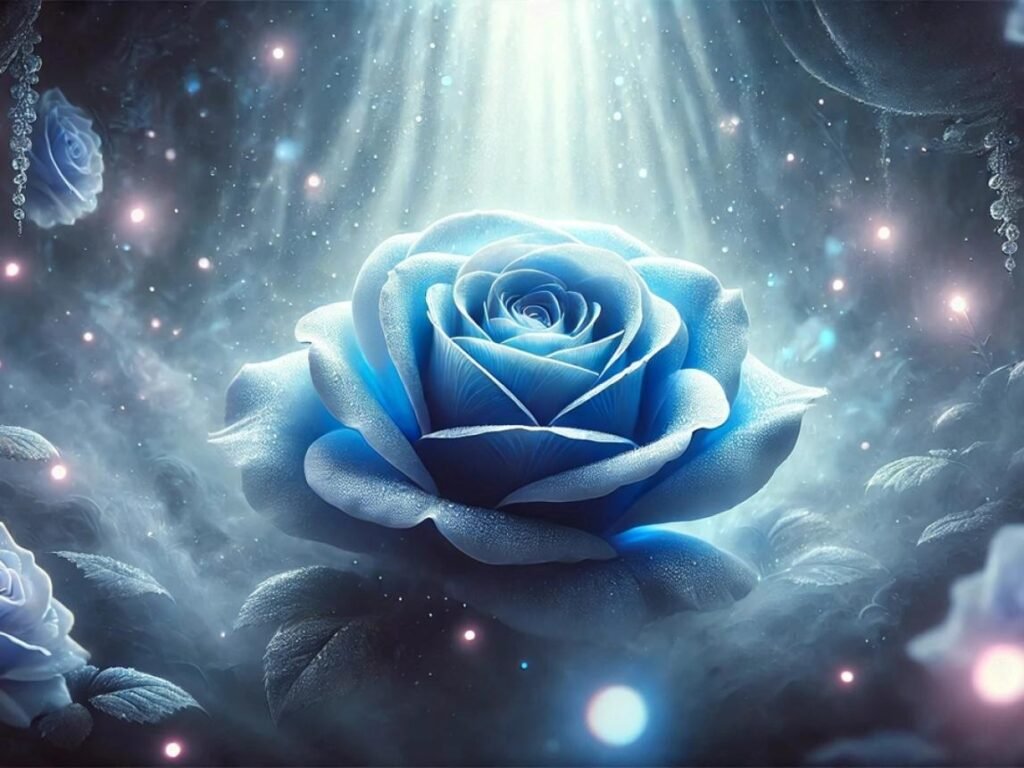
A realistic blue rose placed in an otherwise ordinary setting may create a sense of quiet strangeness. A luminous blue rose floating in a surreal landscape may suggest magic or a world beyond everyday experience.
Artists can also change the flower’s meaning through composition:
- A rose surrounded by darkness may suggest secrecy or longing.
- A rose in bright sunlight may suggest hope and discovery.
- A blue rose beside a broken object may suggest loss or resilience.
- A blue rose growing among wildflowers may represent individuality within a community.
These interpretations depend on the full composition, not merely the flower’s color.
Blue Roses in Film, Animation, and Video Games
In visual media, unusual flowers can function as memorable narrative devices. A blue rose may serve as a quest objective, a magical resource, a sign of a character’s identity, or a clue that something extraordinary is happening.
Because viewers can recognize the flower immediately, the symbol can communicate quickly. Its rarity also makes it suitable for stories involving discovery, transformation, or difficult achievements.
This is an important principle of iconography: an image can acquire a recognizable role within a particular fictional universe, even when that role does not correspond to a universal cultural tradition.
Modern Uses of Blue Rose Symbolism
Today, blue roses appear in floral arrangements, personal gifts, tattoos, digital artwork, event styling, and branding. Their meaning is often shaped by the purpose of the object and the expectations of its audience.
1. Romantic Gifts
A blue rose can be a thoughtful gift for someone who values originality or enjoys unusual flowers. It may express admiration, rare affection, or the idea that a relationship is distinctive.
Unlike a conventional red rose, a blue rose may feel more mysterious or unconventional.
If you are giving one as a romantic gift, a short note can clarify your intention. This is especially useful because the meaning of blue roses is less universally recognized than the traditional association between red roses and romantic love.
2. Tattoos and Personal Identity
Blue rose tattoos can represent individuality, an elusive dream, emotional depth, or a meaningful personal transformation.
A design that combines a blue rose with a compass, for example, might express the pursuit of an unconventional path. A blue rose with a broken stem might symbolize recovery or the persistence of hope after difficulty.
These meanings are personal rather than standardized. The most effective tattoo design is one that communicates something important to the person wearing it.
3. Weddings and Special Events
Blue roses can create distinctive floral arrangements for weddings, celebrations, and themed events. They may complement blue-and-white color palettes, winter themes, fantasy-inspired decorations, or contemporary designs.
They can also represent a couple’s preference for an unconventional celebration.
Because some blue roses are dyed, it is worth confirming the flower’s treatment and availability with a florist. If natural appearance and sustainability matter to you, ask about the production method, dyeing process, and alternatives.
4. Branding and Marketing
In branding, a blue rose can suggest exclusivity, creativity, innovation, or an unusual approach to a familiar product category.
For example, a boutique creative studio might use a stylized blue rose to convey artistic originality. A luxury gift company could use it to communicate rarity and distinctive taste.
However, the symbol should fit the broader brand identity. If the intended audience associates blue primarily with sadness or artificiality, the design may produce a different impression.
Effective branding considers color, typography, cultural context, audience expectations, and the message the company wants to communicate.
5. Social Media and Digital Communication
In digital communication, a blue rose emoji or illustration can serve as a decorative expression of mystery, admiration, individuality, or unusual beauty.
Its interpretation may differ between communities. One person might use it to express romantic longing, while another might use it simply because it matches a visual theme.
When the intended meaning is important, accompanying words or context help prevent misunderstandings.
Blue Rose Symbolism in Design, Education, and Visual Communication
The blue rose is useful beyond decorative art because it demonstrates how people interpret visual signs. In semiotics, the study of signs and meaning, an object can communicate ideas through its recognizable form, cultural associations, and context.
A rose may suggest affection because of established floral conventions. Blue adds a different layer of meaning, perhaps mystery or rarity. Together, they form a symbol whose interpretation depends on the viewer’s experience.
Visual Communication and Iconography
Designers can use a blue rose to make an idea memorable. Its unusual color distinguishes it from familiar floral imagery, while its recognizable shape allows audiences to identify the object immediately.
The principle can be applied to posters, book covers, product packaging, illustrations, and educational materials.
For instance, an educational poster about scientific innovation might use a blue rose to illustrate how an apparently impossible goal can inspire research and experimentation. The flower provides a visual entry point for discussing the relationship between imagination and scientific progress.
Using Blue Roses in Education
Teachers can use the blue rose as a case study in symbolism, cultural interpretation, creative writing, and scientific communication.
Students might compare the meanings of blue, red, and white roses, then investigate how a symbol changes when it moves from a cultural tradition into a modern advertisement or fictional story.
This exercise demonstrates that symbols are not simply objects with fixed definitions. Their meanings emerge from the relationship between the object, the audience, and the context in which it appears.
Common Mistakes When Interpreting Blue Rose Symbolism
Blue rose symbolism is rich, but several common mistakes can lead to inaccurate interpretations.
Mistake 1: Assuming blue roses have one universal meaning. They may symbolize mystery, hope, impossible love, or individuality, but the meaning depends on context.
Mistake 2: Treating spiritual interpretations as scientific facts. Intuition, transformation, and spiritual awakening are possible symbolic associations, not proven properties of the flower.
Mistake 3: Claiming that every blue rose is naturally blue. Many commercially available blue roses are dyed, while some cultivated varieties have lavender or purple tones. The production method matters when discussing the flower botanically.
Mistake 4: Assuming blue roses belong to one religious tradition. A blue rose may appear in religious-inspired art, but it does not have one universally accepted religious meaning.
Mistake 5: Interpreting every dream as a prediction. Dreams can reflect memories, emotions, and personal concerns. A blue rose does not reliably predict love, success, or a future event.
Mistake 6: Using symbolism without considering the audience. A flower’s meaning may be clear to the creator but unfamiliar to the viewer. Context and explanation can make the intended message easier to understand.
Myth vs. Fact: Blue Rose Symbolism
| Myth | Fact |
| Blue roses have one official symbolic meaning. | Their meanings vary across contexts and interpretations. |
| Every blue rose is naturally blue. | Many are dyed, and some varieties are blue-toned rather than truly blue. |
| A blue rose always represents impossible love. | It can also suggest hope, individuality, mystery, or unusual affection. |
| Seeing a blue rose in a dream predicts a future event. | Dream interpretations are subjective and are not reliable predictions. |
| Blue roses have a universal spiritual meaning. | Spiritual associations depend on personal beliefs and cultural context. |
| A blue rose means a dream can never be achieved. | Its symbolism can also emphasize innovation and the possibility of overcoming challenges. |
Did You Know? Interesting Facts About Blue Roses
- The blue rose has a botanical story as well as a symbolic one. The difficulty of producing a truly blue rose helped reinforce its association with rarity and the unattainable.
- Color alone does not determine meaning. A blue rose can communicate very different ideas depending on the setting, accompanying objects, and audience.
- Science has influenced its symbolism. Research into rose pigmentation has made the boundary between impossible ideal and scientific challenge more complex.
- Blue roses can communicate unconventional affection. Their unusual appearance makes them an alternative to more traditional romantic flowers.
- A symbol can change over time. The blue rose may begin as an image of impossibility in a story and later become a symbol of discovery or hope.
Practical Guide: How to Choose the Right Blue Rose Meaning
If you want to use a blue rose in a gift, artwork, tattoo, or personal project, start with the message you want to express.
| Your intention | Suitable interpretation | Suggested approach |
| Express unusual affection | Rare or extraordinary love | Give a blue rose with a personal note |
| Celebrate originality | Individuality and unconventional beauty | Use a distinctive floral or graphic arrangement |
| Mark a new chapter | Hope and transformation | Pair the flower with imagery suggesting growth |
| Explore a mystery | The unknown and hidden knowledge | Use a blue rose in a story, illustration, or symbolic design |
| Remember an important goal | An ambitious or elusive dream | Incorporate the flower into a journal or personal artwork |
| Communicate calm reflection | Serenity and emotional depth | Choose softer blue tones and a simple composition |
The best interpretation is the one that fits the intended message and the recipient’s understanding of the symbol.
Frequently Asked Questions About Blue Rose Symbolism
1. What does a blue rose symbolize in love?
A blue rose commonly symbolizes unusual affection, mystery, longing, and impossible or unattainable love. It may express the feeling that someone is rare or extraordinary. Unlike a red rose, which conventionally represents romantic passion, a blue rose often suggests love that is unconventional, difficult to explain, or beyond ordinary expectations. The meaning ultimately depends on the giver and recipient.
2. What is the spiritual meaning of a blue rose?
In contemporary spiritual interpretations, a blue rose can represent intuition, inner wisdom, serenity, transformation, and the search for deeper understanding. Some people use it as a personal symbol during meditation or reflection. These meanings are interpretive rather than universal religious teachings, so the flower’s spiritual significance depends on individual beliefs and cultural context.
3. Does a blue rose symbolize hope or impossibility?
It can symbolize both. Historically, the difficulty of producing a truly blue rose contributed to its association with unattainable desires and extraordinary ideals. At the same time, scientific advances in flower pigmentation allow the blue rose to represent persistence, creativity, and the possibility of approaching goals that once seemed impossible. The surrounding context determines which interpretation is most appropriate.
4. What does a blue rose mean when you dream about it?
A blue rose in a dream may invite reflection on mystery, unusual affection, personal ambitions, or a desire for change. Receiving one might reflect a wish to feel appreciated, while searching for one could mirror the pursuit of an elusive goal. However, dream symbols do not have scientifically established universal meanings, and a blue rose should not be treated as a reliable prediction of future events.
5. Why are blue roses considered rare or special?
Blue roses are considered special because rose plants do not naturally produce the strong, true-blue coloration that people commonly imagine. Traditional rose varieties can display lavender, mauve, and purple tones, while many vivid blue roses sold commercially are dyed. Genetic engineering has also produced blue-toned roses, although achieving a clear, vivid blue remains challenging. This botanical difficulty contributes to the flower’s symbolic associations with rarity, mystery, and the unattainable.
6. What is the difference between blue rose and red rose symbolism?
A red rose traditionally symbolizes romantic love, passion, and devotion, while a blue rose is more often associated with mystery, unusual affection, individuality, and impossible dreams. Red roses communicate a familiar romantic message, whereas blue roses can suggest a more unconventional or imaginative emotional experience. Neither meaning is absolute, and the intended message should be considered alongside the occasion and the recipient’s preferences.
Conclusion: The Enduring Meaning of Blue Rose Symbolism
Blue rose symbolism brings together beauty, mystery, human imagination, and the desire to reach beyond familiar boundaries.
Its most recognizable meanings include the unattainable, extraordinary love, individuality, hope, and the unknown.
Yet its significance extends beyond romance into art, literature, spirituality, design, branding, and personal expression.
The flower’s history helps explain its enduring appeal.
The difficulty of creating a genuinely blue rose made it a powerful image of something rare and seemingly impossible.
scientific advances have added a new dimension, showing how an ideal that once appeared out of reach can inspire experimentation and innovation.
Cultural context remains essential.
A blue rose might represent an elusive dream in a poem, unusual affection in a gift, mystery in a fantasy story, or originality in a brand identity.
Its spiritual and psychological interpretations can be meaningful, but they should not be mistaken for universal rules or scientific facts.
Ultimately, the blue rose demonstrates how symbolism works:
a familiar object acquires deeper meaning through its history, appearance, cultural associations, and personal significance.
Understanding these layers makes it easier to interpret the flower thoughtfully and use it to communicate ideas that ordinary words may struggle to express.
Key Takeaways
- Mystery: A blue rose often represents the unknown, secrets, and unexplained beauty.
- Impossible love: It can symbolize longing, unattainable affection, or unconventional relationships.
- Hope: It may express the possibility of achieving something that once seemed impossible.
- Individuality: Its unusual appearance makes it a symbol of originality and self-expression.
- Spiritual reflection: Some people associate it with intuition, serenity, and personal transformation.
- Cultural context: Its meaning varies by tradition, artistic setting, and individual experience.
- Scientific significance: Research into blue rose pigmentation reinforces its connection to innovation and the pursuit of difficult goals.
- Practical value: Blue roses can communicate distinctive messages in gifts, tattoos, literature, visual design, and branding.
Semantic SEO and Topical Entity Coverage
The following related concepts help organize the subject into a broader topical framework for Symboliium.com.
| Topic cluster | Semantic entities and related concepts |
| Primary topic | Blue rose symbolism, blue rose meaning, meaning of a blue rose |
| Floral symbolism | Language of flowers, floriography, rose symbolism, flower meanings |
| Emotional meanings | Impossible love, longing, rare beauty, hope, mystery, individuality |
| Color psychology | Blue color meaning, emotional associations, visual perception, color symbolism |
| Spiritual interpretations | Intuition, inner wisdom, serenity, personal transformation, reflection |
| Cultural context | Cultural identity, folklore, traditions, religious iconography, symbolic variation |
| Art and literature | Literary symbolism, poetry, visual art, fantasy, storytelling, iconography |
| Scientific context | Rose pigmentation, flower cultivation, genetic engineering, delphinidin |
| Communication and design | Semiotics, visual communication, graphic design, branding, consumer perception |
| Practical applications | Romantic gifts, tattoos, weddings, digital communication, educational activities |
Related Long Tail Keywords
- What does a blue rose symbolize?
- Blue rose meaning in love
- Blue rose spiritual meaning
- Blue rose symbolism in dreams
- Blue rose meaning in different cultures
- Blue rose meaning in literature
- Blue rose meaning for gifts
- Blue rose symbolism for tattoos
- Blue rose vs. red rose meaning
- Why are blue roses considered impossible?
- Blue rose symbolism and hope
- Psychological meaning of blue roses
These phrases represent relevant search intents and related topics rather than a guarantee of search rankings. For stronger topical authority, connect this article to related content about red rose symbolism, white rose symbolism, purple rose symbolism, flower symbolism, and the psychology of color using natural, relevant internal links.

Understand color meanings, psychology, and visual symbolism with Charlotte Monroe.
