
Introduction: Why Symbolism in Of Mice and Men Matters
The symbolism in Of Mice and Men by John Steinbeck gives the novella much of its emotional power, transforming a simple story about two migrant ranch workers into a deeper exploration of friendship, loneliness, dreams, prejudice, power, and the fragility of human life.
Published in 1937, the novella follows George Milton and Lennie Small as they travel through Depression era California in search of work and hope for a better future.
Beneath the events of their journey, Steinbeck uses animals, settings, objects, and recurring images to reveal the characters’ desires and the harsh realities that threaten them.
Understanding these symbols helps readers recognize that the story is about more than George and Lennie’s relationship.
The dream farm represents independence and security, rabbits symbolize Lennie’s longing for comfort, and Candy’s aging dog foreshadows the tragic ending. Meanwhile, the riverbank establishes a sense of peace that contrasts with the violence of the ranch.
Steinbeck’s symbolism also reflects the social and economic conditions of the Great Depression, when poverty, unemployment, and insecure living conditions made the American Dream difficult to achieve for many ordinary people.
Through carefully chosen details, he explores what happens when vulnerable individuals attempt to preserve hope in a world that offers them few opportunities.
This guide examines the most important symbols in Of Mice and Men, explaining their meanings, historical context, literary techniques, and connections to the novella’s central themes.
What Is the Symbolism in Of Mice and Men?
Symbolism in Of Mice and Men refers to Steinbeck’s use of objects, animals, settings, and recurring images to represent larger ideas about human experience. The dream farm symbolizes hope and independence, rabbits represent comfort and innocence, Candy’s dog reflects the vulnerability of the weak, and the riverbank symbolizes both peaceful beginnings and tragic endings.
These symbols help readers understand the characters’ motivations while revealing the destructive effects of poverty, isolation, prejudice, and unrealized dreams.
1. The Dream Farm: Symbolism of Hope and the American Dream
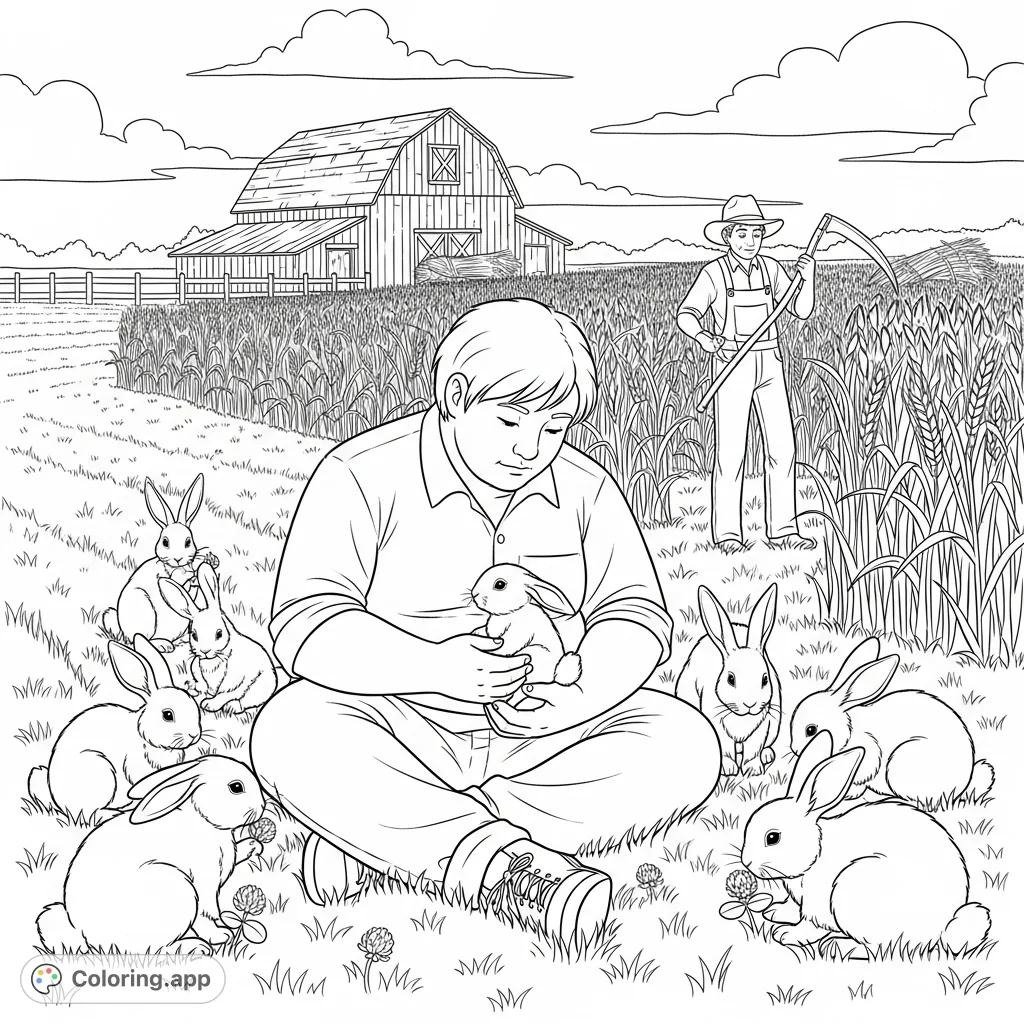
The dream farm is one of the most important symbols in Of Mice and Men. It represents freedom, economic independence, personal dignity, and the possibility of escaping the insecurity of migrant labor.
George repeatedly describes a small piece of land where he and Lennie will live independently. They imagine growing their own food, raising animals, and avoiding the uncertainty of traveling from ranch to ranch. Candy eventually offers his savings to help make the dream financially possible, transforming their fantasy into something that briefly appears achievable.
What does the dream farm symbolize?
The farm represents several interconnected ideas:
- Hope: It gives George and Lennie something positive to anticipate.
- Independence: Owning land would free them from dependence on ranch owners and temporary employment.
- Security: The farm promises food, shelter, and a stable home.
- Friendship: Their shared goal distinguishes their relationship from the isolation experienced by other ranch workers.
- The American Dream: It reflects the belief that hard work can lead to prosperity and a better life.
The farm is especially meaningful because the characters possess very little control over their present circumstances. Their dream gives purpose to lives dominated by physical labor, low wages, and uncertainty.
The farm and the American Dream
The American Dream traditionally emphasizes opportunity, self-reliance, and the possibility of improving one’s circumstances. Steinbeck questions how realistic this ideal is for people without wealth, social status, or reliable employment.
George and Lennie work hard, yet their dream remains vulnerable to circumstances beyond their control. Candy has money but fears becoming useless because of his age. Crooks possesses intelligence and experience but faces racial discrimination. Curley’s wife has personal ambitions but is restricted by gender expectations.
These characters reveal that success does not depend on effort alone. Social inequality, economic hardship, disability, prejudice, and chance can prevent people from achieving their goals.
The farm therefore symbolizes both the power of hope and the difficulty of realizing it.
Expert insight: The dream becomes emotionally powerful because Steinbeck allows readers to imagine its fulfillment before revealing how fragile it is. The contrast between possibility and reality intensifies the novella’s tragedy.
2. Rabbits: Innocence, Comfort, and Lennie’s Dreams

Rabbits symbolize Lennie’s desire for comfort, security, and a life free from fear. They are also closely connected to his limited understanding of consequences and his dependence on George.
Throughout the novella, Lennie looks forward to tending rabbits on the dream farm. George promises that Lennie will be able to feed them and care for them, giving him a simple and reassuring goal.
The rabbits are more than animals in Lennie’s imagination. They represent a future in which he belongs somewhere and can enjoy something he loves.
Why are rabbits important to Lennie?
Lennie is physically powerful but has difficulty understanding the consequences of his actions. He enjoys touching soft objects, particularly mice, and dreams of caring for rabbits because their fur appeals to him.
However, his affection can become dangerous. He handles small animals too roughly, unintentionally killing them. This recurring pattern introduces one of the novella’s central conflicts: the difference between intention and consequence.
Lennie does not generally intend to cause harm, but his strength and limited judgment make his behavior unpredictable.
The rabbits consequently symbolize both innocence and danger. They embody his longing for tenderness while reminding readers that innocent intentions cannot always prevent destructive outcomes.
Rabbits and the loss of the dream
Near the conclusion, Lennie’s dream of tending rabbits becomes increasingly distant from reality. His actions make the peaceful future imagined by George progressively harder to achieve.
The rabbits are also part of George’s strategy for calming Lennie. Recounting their future life helps George maintain Lennie’s attention and provides reassurance during moments of distress.
This repetition gives the rabbits an almost ritualistic significance: they are a familiar image of safety in an unstable world.
Did you know? Lennie’s fascination with soft animals appears well before the ending. The pattern prepares readers to recognize that his behavior, even when affectionate, can have serious consequences.
3. Candy’s Dog: Aging, Disability, and the Value of Human Life
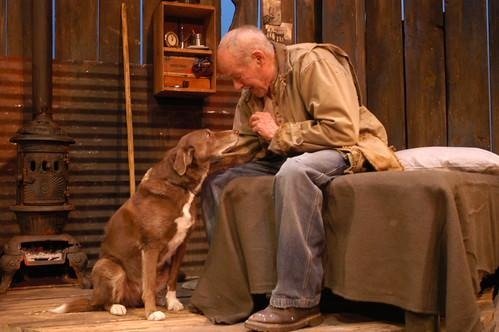
Candy’s old dog is one of the novella’s most disturbing and significant symbols. The animal represents aging, vulnerability, social rejection, and the fear of becoming useless in a society that values people primarily for their productivity.
Candy is an elderly ranch worker who has lost one hand. His dog has accompanied him for years, providing companionship and emotional comfort. However, Carlson argues that the dog is too old and unpleasant to keep alive, eventually persuading Candy to allow it to be shot.
What does Candy’s dog symbolize?
The dog’s fate reflects several major themes:
| Symbolic meaning | Explanation |
| Aging | The dog is considered undesirable because it is old. |
| Vulnerability | It cannot defend itself against the decisions of stronger individuals. |
| Social rejection | Its former usefulness no longer protects it from being discarded. |
| Loyalty and companionship | Candy’s attachment reveals the emotional importance of long-term relationships. |
| Foreshadowing | The dog’s death anticipates the moral dilemma George faces near the end. |
Candy’s regret and the importance of companionship
After the dog is killed, Candy expresses regret that he did not make the decision himself. His remorse suggests that he believes he should have retained responsibility for his longtime companion.
Candy’s response reveals a painful distinction between a practical decision and an emotionally meaningful one. Other ranch workers assess the dog according to usefulness, smell, and physical condition. Candy sees an irreplaceable companion.
The episode also intensifies Candy’s fear about his own future. Like the dog, he worries that age and disability may make him disposable in a world where employment is tied to physical labor.
His decision to contribute his savings to the farm dream can therefore be understood as an attempt to secure a future in which he will still belong.
Candy’s dog as foreshadowing
The dog’s death prepares readers for George’s final decision concerning Lennie.
Both situations involve a vulnerable figure, a stronger companion, and the question of whether an act of violence can be interpreted as mercy. The parallels encourage readers to examine the circumstances of Lennie’s death without reducing it to a simple moral lesson.
However, the situations are not identical. Candy’s dog is killed after others decide it should no longer live, whereas George’s decision occurs under the pressure of an immediate crisis and an approaching threat of violence.
Steinbeck creates a deliberate parallel while leaving room for ethical debate.
4. Lennie’s Mice: Innocence, Power, and Unintended Consequences
The mice symbolize Lennie’s need for physical comfort and companionship, but they also introduce the danger created by his inability to control his strength.
At the beginning of the novella, George discovers that Lennie has been carrying a dead mouse. Lennie likes stroking its soft fur, yet he handles it too roughly and kills it. Similar incidents recur throughout the story.
Why does Steinbeck use mice as a symbol?
The mice connect three important aspects of Lennie’s character:
- A desire for comfort: Lennie seeks reassurance through soft objects.
- Limited understanding: He struggles to recognize when his actions become harmful.
- Uncontrolled strength: His physical power creates consequences he does not fully comprehend.
The mice also establish a pattern that becomes increasingly serious. What begins with a small animal eventually connects to the larger tragedies of the novella.
Steinbeck uses this progression to build tension without making Lennie a straightforward villain. Lennie’s intentions and the outcomes of his actions frequently conflict.
The mice and the novel’s tragic structure
The dead mice are important because they foreshadow later events. Readers gradually learn that Lennie’s affection can become destructive when he cannot regulate his behavior.
This recurring image encourages readers to consider the difference between moral intention and actual impact. Lennie may want to protect or comfort something, but the result can still be harmful.
The symbolism also adds complexity to George’s responsibility. George cares for Lennie, but he must repeatedly manage the risks created by Lennie’s actions.
5. The Riverbank: Peace, Safety, and the Cycle of the Story

downstairsinhblock.blogspot.com
The riverbank near the Salinas River is a central setting in Of Mice and Men. It symbolizes refuge, temporary freedom, and the natural world beyond the restrictions of ranch life.
Steinbeck introduces the location before George and Lennie arrive at the ranch. George instructs Lennie to return to the clearing and hide if trouble occurs. This instruction establishes the riverbank as both a safe place and an important part of the story’s structure.
What does the riverbank represent?
The riverbank offers a temporary escape from the social world. Unlike the bunkhouse, where men compete for status and employment, the clearing is relatively peaceful. Natural imagery creates an atmosphere of calm that contrasts with the conflicts that follow.
The setting represents:
- Safety: George identifies it as a place Lennie can return to in an emergency.
- Freedom: The natural environment contrasts with the restrictions of ranch life.
- Isolation: The clearing is separated from the community where the main conflict develops.
- Foreshadowing: George’s early instructions become crucial at the conclusion.
- Structural unity: The story begins and ends in the same location.
The circular structure
Returning to the riverbank at the end creates a circular structure. Although the characters travel to a new ranch and imagine a different future, the story ultimately returns them to the place where their journey began.
This structure emphasizes the limits of their freedom. Their circumstances change, but they cannot escape the underlying conflict between Lennie’s needs, his behavior, and the harsh social environment.
The peaceful natural setting also heightens the emotional contrast of the final scene. Its quiet atmosphere stands against the fear and violence that have overtaken the characters’ lives.
Key insight: The riverbank does not simply symbolize safety. It represents the fragile boundary between a hoped-for refuge and a reality that cannot be controlled.
6. Curley’s Wife: Loneliness, Gender, and Unfulfilled Ambition
Curley’s wife symbolizes loneliness, frustrated ambition, and the restricted opportunities available to women in the social environment of the 1930s. Although she is often presented through the judgments of the male ranch workers, her conversations reveal a more complicated character than those judgments initially suggest.
She is the only prominent female character in the ranch setting, and Steinbeck initially leaves her unnamed. This absence of a personal name can reinforce the way she is defined by her relationship to Curley rather than recognized as an individual with her own aspirations.
The symbolism of Curley’s wife’s dreams
Curley’s wife recalls her ambition to become an actress. She believes she might have had a different life if she had received an opportunity to enter the entertainment industry.
Her story mirrors George and Lennie’s dream of owning a farm. Both sets of ambitions are connected to the desire to escape an unsatisfying present and gain control over one’s future.
| Curley’s wife’s experience | Connection to the novella |
| Her acting ambitions | The desire for a different life |
| Her isolation on the ranch | The loneliness experienced by other characters |
| Her dependence on Curley’s social position | The limitations imposed by gender and marriage |
| Her conversations with Lennie | The brief possibility of connection and recognition |
| Her death | The devastating consequences of a vulnerable person’s circumstances |
Her ambitions remain unrealized, just as George and Lennie’s farm never becomes a reality.
Loneliness as a recurring symbol
Curley’s wife spends much of her time searching for conversation. The men interpret her behavior with suspicion, but her interactions also reveal a need for attention and human connection.
Her situation parallels Crooks’s isolation because of racism, Candy’s anxiety about aging, and Lennie’s dependence on George. Each character experiences a different form of exclusion, yet all share a desire to be recognized and valued.
Steinbeck’s portrayal encourages readers to question simplistic judgments. Curley’s wife can behave provocatively and create tension, but she is also a person whose opportunities and relationships are severely limited.
Why does Steinbeck leave her unnamed?
The absence of a name has several possible interpretations. It can highlight the way the ranch community defines her through marriage, while also illustrating how little individual identity she possesses within the social structure of the story.
However, readers should not assume that the naming choice has only one meaning. Its significance emerges from the broader treatment of women, power, and isolation in the novella.
7. Crooks’s Room: Racial Segregation and Social Exclusion
Crooks’s room symbolizes racial discrimination, enforced separation, and the psychological effects of exclusion. Crooks is the Black stable hand who lives apart from the other ranch workers because of racism.
His physical separation is important because it turns an abstract social prejudice into a visible feature of the ranch’s organization.
What does Crooks’s room represent?
Crooks’s room is a private space, but it is also evidence of his exclusion. He has some independence within it, including books and personal belongings, yet that limited independence does not erase the wider discrimination he experiences.
The room represents:
- Racial segregation: Crooks is kept apart from the white ranch workers.
- Isolation: He lacks the ordinary companionship enjoyed by many of the other men.
- Knowledge and independence: His belongings suggest a private intellectual life beyond his social role.
- Powerlessness: His limited status makes him vulnerable to threats from people with greater social power.
- The desire for connection: His response to the possibility of joining the farm dream reveals a longing for belonging.
Crooks and the dream farm
When Lennie and Candy discuss the farm, Crooks initially treats the idea skeptically. He has seen many workers pursue similar dreams without achieving them.
Nevertheless, he briefly entertains the possibility of joining them. This moment is important because it shows that even a deeply skeptical character can be drawn toward the promise of inclusion.
His hope disappears when Curley’s wife threatens him. Her ability to intimidate Crooks exposes the uneven distribution of power on the ranch: a socially marginalized Black man is vulnerable to the consequences of a white woman’s accusation in the racial climate of 1930s America.
The scene shows how race, gender, class, and status interact rather than operating independently.
Crooks’s room therefore symbolizes not just loneliness but a social system that determines who may participate, who may speak freely, and who is permitted to dream.
8. The Ranch and the Bunkhouse: Poverty, Instability, and Isolation
The ranch represents the economic conditions of migrant labor during the Great Depression. It provides temporary employment and shelter, but it does not offer the workers lasting security or a strong sense of community.
The bunkhouse, where the men sleep, reflects the repetitive and impersonal nature of their lives. Workers move between jobs, accumulate little property, and often lack meaningful relationships.
The symbolism of the bunkhouse
The bunkhouse represents a life organized around work rather than personal fulfillment. The men share physical space, but their proximity does not eliminate loneliness.
Many of them are focused on earning wages and maintaining their positions. Their conversations reveal how difficult it is to establish lasting relationships in an environment where employment can end suddenly.
This setting contrasts with the dream farm, where the characters imagine living according to their own needs rather than the demands of an employer.
The ranch as a symbol of social hierarchy
The ranch is also a place where status determines behavior and opportunity.
Curley uses his position as the boss’s son to intimidate others. Slim commands respect through experience and competence rather than inherited authority. Crooks is segregated because of race, while Candy fears that his age and disability will diminish his value.
Through these differences, Steinbeck illustrates how economic dependence and social prejudice shape relationships.
The ranch is not simply a backdrop for the plot. It is a miniature social system that reflects broader inequalities in American life.
9. The Setting Sun, Darkness, and Foreshadowing
Steinbeck frequently uses descriptions of light, darkness, and the natural environment to establish mood and prepare readers for changes in the story.
The novella’s descriptive passages create contrasts between peaceful landscapes and threatening human situations. These contrasts are particularly important because the natural world can appear calm even when the characters are approaching disaster.
What does darkness symbolize?
Darkness can suggest uncertainty, vulnerability, isolation, or danger, depending on the scene. It can also create privacy, allowing characters to reveal thoughts they might otherwise conceal.
Rather than assigning one fixed meaning to every mention of darkness, readers should examine how Steinbeck uses the setting in relation to character and action.
Foreshadowing through imagery
Foreshadowing occurs when a detail hints at an event that happens later. In Of Mice and Men, the dead mice and the fate of Candy’s dog establish a pattern of vulnerable creatures being harmed. George’s instructions about returning to the riverbank anticipate the final scene.
These details encourage readers to recognize that the tragedy develops through recurring patterns rather than appearing without warning.
10. Symbolism of Strength and Weakness
Strength and weakness form one of the novella’s most important symbolic contrasts. Steinbeck repeatedly shows that physical strength does not guarantee social power, emotional security, or moral control.
Lennie is physically powerful but vulnerable because he struggles to understand consequences. Candy is physically impaired and economically insecure. Crooks is intelligent and capable, yet racism limits his social freedom. Curley is physically smaller than Lennie but uses aggression and status to assert authority.
How strength and weakness shape the story
The characters reveal different kinds of power:
- Physical strength: Lennie can perform demanding labor but cannot always control his movements.
- Social power: Curley benefits from his family position.
- Economic power: Candy’s savings briefly give him a chance to participate in the farm dream.
- Intellectual strength: Crooks understands the social and economic realities that threaten the workers.
- Emotional strength: George demonstrates loyalty while facing painful choices.
Steinbeck challenges the assumption that the strongest person is necessarily the most powerful or secure.
The novella also asks readers to consider how societies treat people who cannot meet their expectations. Individuals who are old, disabled, racially marginalized, or socially isolated often face additional barriers to safety and belonging.
11. The Symbolism of Friendship Between George and Lennie
George and Lennie’s relationship symbolizes companionship in a world where migrant workers frequently experience isolation. Their friendship is unusual because they travel together, share a goal, and accept responsibilities toward one another.
George sometimes complains about the burdens of caring for Lennie, but he continues to protect him. Lennie, meanwhile, depends on George for guidance, reassurance, and practical decisions.
Why is their friendship symbolic?
Their relationship challenges the idea that every worker must live entirely for himself. George explains that most ranch workers are alone, without anyone who genuinely cares whether they succeed or fail.
The shared dream distinguishes the two men from this pattern. Their hope is not merely financial: it is connected to the belief that they can build a life in which they belong together.
Yet the relationship is unequal. George has greater independence and understanding, while Lennie relies heavily on him. Their friendship therefore combines affection with responsibility, frustration, and fear.
This complexity is essential to understanding the ending. George’s final decision cannot be interpreted adequately without considering both his longstanding care for Lennie and the danger surrounding them.
12. The Ending: Mercy, Violence, and Moral Ambiguity
The ending of Of Mice and Men brings together many of Steinbeck’s major symbols. The riverbank returns as the setting, the dream farm remains unrealized, and the earlier episode involving Candy’s dog provides a troubling parallel.
George finds Lennie at the place where he had told him to hide. Rather than describing the farm dream as a distant possibility, George recounts it one final time while Lennie imagines the life they might have shared.
The scene combines comfort and tragedy. George offers Lennie reassurance at the moment when their shared future is about to disappear.
Is George’s decision an act of mercy?
Readers disagree about the moral meaning of George’s decision. Some interpret it as an act intended to spare Lennie from a violent death at the hands of Curley and the pursuing group. Others focus on the irreversible nature of the act and question whether George had the right to make that choice.
The parallel with Candy’s dog encourages this debate, but it does not resolve it. Steinbeck places the reader in a difficult ethical position rather than providing an uncomplicated answer.
How the symbols come together
The ending connects the novella’s central ideas:
- The riverbank returns as both refuge and the setting of tragedy.
- The dream farm survives only as an imagined future.
- The rabbit motif recalls Lennie’s longing for safety and comfort.
- Candy’s dog provides a parallel that complicates the meaning of mercy.
- George and Lennie’s friendship reaches its most painful point.
Together, these symbols show how the desire to protect another person can collide with fear, responsibility, and circumstances that seem impossible to control.
13. Historical Context: The Great Depression and the Dust Bowl Era
The historical setting of Of Mice and Men is essential to understanding its symbolism. The novella appeared in 1937, during the Great Depression, a period marked by widespread unemployment, financial insecurity, and hardship in the United States.
Migrant agricultural workers often moved between jobs in search of wages. For many, temporary employment provided little opportunity to accumulate property or establish stable homes.
Although the Dust Bowl contributed to migration in parts of the United States during the 1930s, it is important not to assume that every migrant worker in the novella has the same background or reason for traveling.
How historical conditions shape the symbolism
| Historical condition | Related symbol | Significance |
| Unstable employment | The ranch | Workers depend on employers for survival. |
| Limited economic security | The dream farm | Property represents independence and stability. |
| Social isolation | The bunkhouse | Workers struggle to establish lasting relationships. |
| Racial discrimination | Crooks’s room | Segregation limits opportunity and belonging. |
| Age-related insecurity | Candy’s dog | Physical decline can threaten a person’s place in society. |
| Restricted opportunities for women | Curley’s wife’s ambitions | Personal dreams are constrained by social expectations. |
Steinbeck’s story is not simply a historical record. It uses the circumstances of its characters to explore broader questions about economic inequality, dignity, and human connection.
The historical context makes the symbols more meaningful because readers can see how personal disappointments emerge from a larger social environment.
14. Literary Techniques That Make Steinbeck’s Symbols Effective
Steinbeck does not explain every symbol directly. Instead, he builds meaning through repetition, contrast, characterization, imagery, and foreshadowing.
Understanding these literary techniques helps students write stronger analyses of the novella.
Foreshadowing
Foreshadowing prepares readers for later developments through earlier details. The deaths of the mice and Candy’s dog establish a pattern that becomes increasingly important as the plot progresses.
Example: The repeated pattern of Lennie’s accidental harm to vulnerable creatures prepares readers for the tragic consequences of his inability to control his strength.
Motif
A motif is a recurring image, object, idea, or situation that contributes to a work’s larger meaning.
The rabbits are a motif because they repeatedly appear in Lennie’s conversations and dreams. Their recurrence reinforces his longing for comfort and the farm’s importance to him.
Contrast
Steinbeck frequently contrasts the characters’ imagined future with their difficult present.
The peaceful riverbank contrasts with the dangerous events of the story, while the dream farm contrasts with the insecurity of ranch life. These contrasts make the characters’ hopes more emotionally significant.
Natural imagery
Descriptions of trees, animals, water, light, and darkness establish mood and connect the characters’ experiences to the physical environment.
The natural world can appear peaceful and enduring, yet the characters’ lives remain vulnerable to sudden change.
Characterization
Symbols also reveal character. Candy’s reaction to his dog’s death reveals his fear of abandonment, while Crooks’s room exposes the isolation imposed on him by racial discrimination.
A strong literary analysis therefore considers not only what a symbol represents but also how characters respond to it.
15. Common Mistakes When Analyzing Symbolism in Of Mice and Men
A successful interpretation needs evidence from the text and an explanation of how that evidence supports the argument.
Avoid these common mistakes:
- Treating every symbol as having one fixed meaning. Rabbits, for example, can suggest innocence, comfort, hope, and unintended danger.
- Ignoring historical context. The characters’ economic and social limitations are central to the novella’s meaning.
- Confusing a symbol with a motif. A symbol carries a figurative meaning; a motif is a recurring element that helps develop themes.
- Summarizing instead of analyzing. Explaining what happens is not the same as explaining why Steinbeck includes it.
- Ignoring contradictions. Lennie’s innocence does not eliminate the harm caused by his actions, and George’s care does not make his final decision morally uncomplicated.
- Making unsupported cultural claims. Interpretations should be grounded in the novella rather than assumptions about universal meanings.
- Using quotations without explanation. A relevant quotation needs analysis connecting it to the symbol, character, or theme.
Expert tip for students
Use a three-part structure when writing a paragraph about symbolism:
- Identify the symbol: Name the object, character, setting, or recurring image.
- Explain its meaning: Describe the idea or theme it represents in context.
- Connect it to the wider work: Explain how Steinbeck uses it to develop characterization, conflict, or the novella’s overall message.
This method creates a clear argument rather than a list of disconnected observations.
16. Practical Applications: Why Literary Symbolism Still Matters
Symbolism in Of Mice and Men remains relevant because it illustrates how ordinary objects and familiar images can communicate complex emotions and social ideas.
The same principles appear across education, visual communication, storytelling, branding, and cultural interpretation.

Education and literary analysis
Students can use symbolic interpretation to develop arguments, analyze themes, and support interpretations with textual evidence. The dream farm, for instance, provides a useful way to examine the American Dream and economic inequality.

Film and storytelling
Writers and filmmakers use recurring objects, settings, and images to establish emotional connections without explaining every idea directly. Steinbeck’s repeated imagery demonstrates how visual and narrative patterns can reinforce a story’s themes.
Branding and visual communication
Logos, colors, and images can represent qualities such as reliability, freedom, or belonging. As in literature, these meanings depend on context, audience expectations, and cultural associations rather than a universal symbolic dictionary.
Cultural understanding
Symbolic interpretation encourages readers to consider how history, identity, economic circumstances, and lived experience influence the meaning of a story. Crooks’s room is a particularly useful example of how setting can communicate social exclusion.
The practical lesson is that symbolism works most effectively when readers connect an image to its context. An object does not need to have a universal meaning to carry powerful significance within a particular story.
17. Key Insights: What Steinbeck’s Symbols Reveal
The major symbols in Of Mice and Men work together to develop a coherent exploration of hope, vulnerability, and social inequality.
- The dream farm represents independence and the American Dream, while revealing how difficult economic security can be to achieve.
- The rabbits represent Lennie’s need for comfort and his longing for a peaceful future.
- Candy’s dog reveals the vulnerability of aging individuals and foreshadows the moral dilemma at the end.
- The mice establish the pattern of unintended harm associated with Lennie’s physical strength.
- The riverbank represents temporary refuge and creates a circular structure.
- Curley’s wife symbolizes loneliness, frustrated ambition, and gender-based restrictions.
- Crooks’s room reveals racial segregation and the exclusion of marginalized individuals.
- The ranch and bunkhouse represent economic dependence and the isolation of migrant workers.
- George and Lennie’s friendship challenges the loneliness that dominates the workers’ lives.
These symbols are most meaningful when interpreted together. The dream farm becomes more than a desire for property when readers recognize that it also promises companionship. Candy’s dog becomes more than a tragic episode when its fate is connected to aging, usefulness, and the ending. The riverbank becomes more than a location when its return reveals the circular structure of the narrative.
Frequently Asked Questions About Symbolism in Of Mice and Men
1. What is the most important symbol in Of Mice and Men?
The dream farm is arguably the most important symbol because it represents hope, independence, friendship, and the American Dream. George and Lennie’s desire to own land gives them a shared purpose, distinguishing their relationship from the loneliness experienced by other ranch workers. Its failure reveals the difficulty of achieving security in an unequal and economically unstable society.
2. What do the rabbits symbolize in Of Mice and Men?
The rabbits symbolize Lennie’s desire for comfort, innocence, and a secure future. He dreams of caring for them on the farm he imagines sharing with George. However, his repeated inability to handle small animals safely introduces a darker meaning: affection does not always prevent harm when a person cannot control their strength or understand the consequences of their actions.
3. What does Candy’s dog symbolize?
Candy’s dog symbolizes aging, vulnerability, companionship, and the fear of becoming useless. The dog’s death reflects the harsh treatment of individuals considered no longer productive. It also foreshadows George’s final decision concerning Lennie, creating a parallel that raises questions about mercy, responsibility, and the treatment of vulnerable beings.
4. What does the riverbank symbolize in the novella?
The riverbank symbolizes temporary safety, refuge, and the natural world beyond the ranch’s social restrictions. George identifies it as the place Lennie should return to if trouble occurs. Because the story begins and ends there, the setting also creates a circular structure, emphasizing the tragic limits of the characters’ hopes.
5. How does Steinbeck use symbolism to explore the American Dream?
Steinbeck uses the dream farm to represent the desire for property, independence, and a better life. The characters believe that work and cooperation may help them escape poverty, but their circumstances repeatedly undermine their plans. Their failures suggest that hard work alone cannot guarantee success when economic insecurity, prejudice, and unequal social power limit opportunities.
6. Why is symbolism important in Of Mice and Men?
Symbolism allows Steinbeck to communicate complex themes through recurring images, settings, and objects. It deepens characterization, establishes foreshadowing, connects personal experiences to historical conditions, and encourages readers to consider questions about friendship, loneliness, discrimination, and moral responsibility. Without these symbolic patterns, the novella would lose much of its thematic depth.
Final Conclusion
The symbolism in Of Mice and Men transforms John Steinbeck’s story of two migrant workers into a powerful examination of hope, friendship, loneliness, prejudice, and the limits of human control.
The dream farm represents the possibility of independence, while rabbits and mice reveal Lennie’s desire for comfort and the dangers created by his inability to regulate his strength.
Candy’s dog anticipates the tragedy of the ending, and the riverbank connects the beginning and conclusion through a circular narrative structure.
Curley’s wife and Crooks further demonstrate how social expectations, racism, gender inequality, and isolation can restrict individual freedom.
Together, these symbols reveal the tension between the lives people imagine and the circumstances they actually face.
They also demonstrate that human vulnerability cannot be understood through physical strength or economic usefulness alone.
For students, teachers, and readers, understanding these symbolic relationships makes the novella more meaningful.
The same interpretive skills are useful in literature, education, storytelling, and visual communication because they show how images and recurring details can express ideas that extend beyond their literal meaning.
Steinbeck’s symbols continue to resonate because the desire for belonging, dignity, security, and a better future remains an enduring part of human experience.
Major Semantic Entities, NLP Concepts, and Related Keywords
The following terms are naturally relevant to the article and can support a coherent topical structure for your symbolism website.
| Category | Entities and related terms |
| Primary keyword | symbolism in Of Mice and Men |
| Secondary keywords | Of Mice and Men symbols, John Steinbeck symbolism, literary symbolism, major symbols in Of Mice and Men |
| Main symbolic entities | Dream farm, rabbits, Candy’s dog, mice, riverbank, ranch, bunkhouse, Crooks’s room |
| Character entities | John Steinbeck, George Milton, Lennie Small, Candy, Crooks, Curley’s wife, Curley, Slim, Carlson |
| Literary concepts | Foreshadowing, motif, imagery, characterization, setting, contrast, circular structure, figurative meaning |
| Major themes | American Dream, friendship, loneliness, isolation, prejudice, vulnerability, power, responsibility, mercy |
| Historical context | Great Depression, migrant workers, agricultural labor, racial segregation, 1930s America |
| Long-tail keywords | What do the rabbits symbolize in Of Mice and Men; meaning of Candy’s dog; dream farm symbolism; riverbank symbolism; American Dream in Of Mice and Men |
| Semantic relationships | Rabbits and comfort; Candy’s dog and aging; Crooks’s room and racial discrimination; riverbank and refuge; dream farm and independence |
| NLP and search concepts | Named entities, contextual synonyms, semantic relevance, topic clusters, search intent, entity relationships, natural-language questions, featured-snippet answers |

Explore folklore, anthropology, and global symbolism with Noah Whitmore’s research-based articles.
