
What Is Symbolism?
Symbolism is all around us, from a red heart representing love to a white dove representing peace.
We encounter symbols in books, paintings, religious traditions, films, dreams, advertisements, and everyday conversations.
But what is symbolism, and why do ordinary objects, colors, animals, and images often communicate ideas far beyond their literal meanings?
Symbolism helps people express complex emotions, abstract concepts, cultural beliefs, and philosophical ideas through recognizable signs.
Instead of explaining every thought directly, a writer can use a storm to suggest emotional turmoil, an artist can paint a broken mirror to represent a fractured identity, and a company can use a simple logo to communicate trust or innovation.
Understanding symbolism allows us to look beyond what we see and explore the meanings people attach to the world around them.
It also helps us interpret literature, understand cultural traditions, recognize visual messages, and communicate more thoughtfully.
Featured-snippet definition: What is symbolism?
Symbolism is the use of an object, image, color, animal, action, person, or event to represent an idea, emotion, belief, or concept beyond its literal meaning. It appears in literature, art, religion, mythology, culture, psychology, and everyday communication, allowing people to express complex meanings through recognizable symbols.
What Does Symbolism Mean?
Symbolism means using something recognizable to represent something deeper or more abstract. A symbol can communicate an emotion, an idea, a value, a memory, or a cultural belief without stating it directly.
For example, a key may represent opportunity, freedom, or access. A chain might suggest restriction, obligation, or connection. A sunrise can symbolize hope, renewal, or the beginning of a new chapter.
The meaning of a symbol depends on its context. A chain can represent oppression in a political illustration but unity in a design celebrating solidarity. Similarly, darkness may suggest fear in a horror story while representing peace, privacy, or the unknown in another setting.
Symbolism therefore involves more than identifying an object and assigning a single definition to it. It requires understanding the relationship between the symbol, the idea it represents, and the context in which it appears.
Symbolism vs. Literal Meaning
Literal meaning describes what something directly is. Symbolic meaning explores what it represents.
Consider a tree. Literally, a tree is a living plant with roots, a trunk, branches, and leaves. Symbolically, it may represent growth, family history, stability, wisdom, or the connection between generations.
| Object or image | Literal meaning | Possible symbolic meaning |
| Heart | A bodily organ or heart-shaped image | Love, compassion, affection |
| Dove | A bird | Peace, hope, reconciliation |
| Bridge | A structure connecting places | Transition, cooperation, connection |
| Mirror | A reflective surface | Self-awareness, truth, identity |
| Mountain | A raised landform | Ambition, endurance, obstacles |
| Seed | A plant embryo | Potential, beginnings, future growth |
| Candle | A source of light | Hope, remembrance, guidance |
These interpretations are possibilities, not universal definitions. The surrounding story, cultural tradition, visual presentation, and personal experience can change how a symbol is understood.
A Brief History of Symbolism
Symbolism has developed alongside human communication. Long before modern writing systems, people used images, objects, gestures, and patterns to communicate ideas, record experiences, and express beliefs.
However, symbolism did not emerge at one identifiable moment. It developed in different forms across societies, and the meaning of particular symbols changed over time.
1. Early Human Symbols
Early human communities created images of animals, people, and patterns on rock surfaces and other materials. Archaeological sites containing prehistoric art demonstrate that visual representation has a long history.
The precise meaning of many ancient images remains uncertain. Some may have related to hunting, social identity, ritual activity, storytelling, or observations of the natural world. Researchers must distinguish what archaeological evidence establishes from interpretations that remain speculative.
Even so, early visual representation illustrates an important feature of symbolism: humans can use images to communicate ideas that extend beyond the immediate physical object.
2. Symbolism in Ancient Civilizations
Ancient civilizations developed elaborate symbolic systems in religion, government, architecture, and art.

Ancient Egypt
Egyptian art and hieroglyphic writing incorporated symbols associated with divine authority, protection, life, and the afterlife. The ankh, for example, is commonly associated with life, while its appearance in royal and religious imagery helped communicate ideas about divine power and continuity.
Ancient Greece
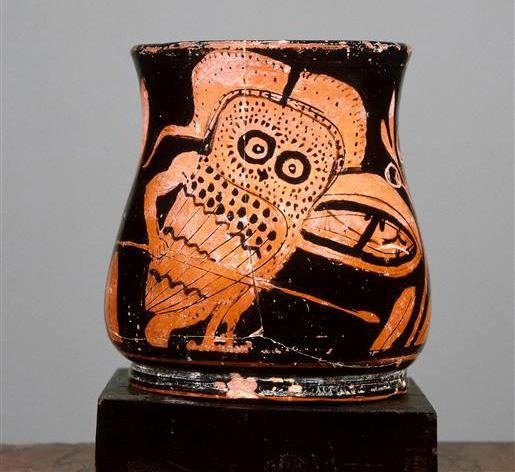
Mythology, sculpture, and pottery used symbolic imagery to express ideas about wisdom, courage, fate, and divine influence. The owl became strongly associated with Athena, the Greek goddess of wisdom, and later with knowledge more broadly.

Ancient and traditional China
Colors, animals, calligraphy, and decorative motifs have carried cultural meanings in Chinese traditions. Red, for example, is widely associated with celebration and good fortune in many Chinese festive settings, although its meaning varies with context.
These examples demonstrate that symbolism is closely connected to the beliefs, values, and social structures of the communities that use it.
3. Symbolism in Medieval and Renaissance Art
During the medieval period, religious symbolism played an important role in European Christian art and architecture. Halos could indicate holiness, lambs could refer to Christ, and particular colors or objects could communicate theological ideas.
In the Renaissance, artists continued using religious symbols while also exploring classical mythology, human identity, political authority, and philosophical questions.
A painting could therefore communicate several layers of meaning at once. Its figures and objects might tell a visible story while also expressing religious teachings or moral arguments.
4. Symbolism as a Literary and Artistic Movement
The term Symbolism is also associated with a specific artistic and literary movement that developed in late nineteenth-century Europe, particularly in France and Belgium.
Symbolist writers and artists often favored suggestion, atmosphere, dreams, mythology, and subjective experience over straightforward realism. They sought to evoke feelings and ideas that could not easily be explained through literal description.
Writers such as Charles Baudelaire and Stéphane Mallarmé influenced the development of modern poetic symbolism, while artists explored mysterious figures, imaginative landscapes, and emotionally charged imagery.
It is important to distinguish this historical movement from symbolism as a general technique. A modern novel can use symbolism without belonging to the nineteenth-century Symbolist movement.
Major Types of Symbolism
Symbolism appears in many forms because people communicate meaning through language, images, sounds, objects, and actions.
| Type of symbolism | What it communicates | Example |
| Literary symbolism | Themes, emotions, and abstract ideas | A journey representing personal transformation |
| Visual symbolism | Meaning through images and shapes | A broken chain representing freedom |
| Color symbolism | Cultural or emotional associations | Green suggesting nature or renewal |
| Animal symbolism | Qualities or ideas associated with animals | An owl representing wisdom |
| Religious symbolism | Spiritual teachings and beliefs | A cross in Christianity |
| Cultural symbolism | Shared identity, values, or traditions | A national flag |
| Natural symbolism | Ideas connected with nature | Spring representing renewal |
| Architectural symbolism | Power, identity, or spiritual meaning | A dome emphasizing grandeur or sacred space |
| Political symbolism | Ideologies, movements, and authority | A raised fist representing solidarity |
| Digital symbolism | Meaning communicated through interface signs and icons | A heart icon representing appreciation |
These categories frequently overlap. A dove in a poem, for example, can function as an animal symbol, a religious reference, a cultural image, and a visual metaphor simultaneously.
Symbolism in Literature
Literary symbolism allows authors to express themes indirectly. A recurring object, location, color, or natural event can help readers understand a character’s experiences and the larger message of a story.
Consider these common examples:
- A road: A journey, a decision, or an uncertain future.
- A locked door: Secrecy, exclusion, or an inaccessible opportunity.
- A storm: Conflict, instability, or emotional upheaval.
- A garden: Growth, care, innocence, or decline.
- A shadow: Fear, hidden motives, or aspects of the self.
In F. Scott Fitzgerald’s The Great Gatsby, the green light across the water is commonly interpreted as a symbol of Gatsby’s longing, his idealized future, and the elusive nature of the American Dream.
The green light matters not merely because of its color but because of where it appears, what Gatsby desires, and how its meaning develops throughout the novel.
Expert tip: When analyzing literary symbolism, ask three questions: Where does the symbol appear? How does its meaning change? What larger theme does it help communicate? These questions produce stronger interpretations than simply memorizing a symbol’s supposed meaning.
Symbolism in Art and Visual Communication
Artists use symbols to communicate ideas that may be difficult to express through realistic representation alone.
A wilting flower might suggest the passage of time, while an empty chair could evoke absence, grief, or expectation. The meaning depends on composition, surrounding objects, historical context, and the artist’s intentions.
Visual symbolism is especially powerful because viewers can respond to several elements simultaneously, including color, shape, scale, lighting, and placement.
For example, a small person standing beneath an enormous mountain may suggest vulnerability, determination, or humanity’s relationship with nature. The same mountain painted as a distant, peaceful landscape might instead communicate calm and freedom.
Color Symbolism
Color symbolism describes the associations people attach to colors. These associations can be influenced by cultural traditions, religious practices, social conventions, personal memories, and design choices.
| Color | Common associations | Important context |
| Red | Love, passion, danger, power | May signal celebration or warning depending on context |
| Blue | Calm, trust, sadness, stability | Branding and cultural conventions influence interpretation |
| Green | Nature, growth, renewal, prosperity | Can also suggest inexperience or jealousy in some contexts |
| White | Purity, peace, simplicity, mourning | Meanings differ across cultural and ceremonial settings |
| Black | Elegance, authority, grief, mystery | Can convey formality or danger depending on use |
| Yellow | Sunshine, optimism, caution | May communicate warmth or warning |
| Purple | Royalty, luxury, spirituality | Associations vary by historical period and society |
Color psychology does not establish a single universal emotional response to each color. People interpret colors through context and experience, and visual conditions can also affect perception.
For a website, blue may support a professional identity, while green may reinforce an environmental theme. Yet neither color automatically creates trust or communicates sustainability. Typography, layout, accessibility, wording, and actual brand behavior also matter.
Animal Symbolism
Animals are frequently used as symbols because people associate their visible characteristics and behaviors with human qualities or cultural narratives.
- Lion: Courage, authority, strength, or royalty.
- Butterfly: Transformation, renewal, or the fragility of life.
- Owl: Wisdom, observation, or mystery.
- Fox: Cunning, adaptability, or cleverness.
- Dove: Peace, reconciliation, or spiritual significance.
- Snake: Renewal, danger, healing, or wisdom, depending on tradition.
These meanings are not universal. A snake, for example, may represent temptation in one religious narrative and healing or renewal in another symbolic tradition.
Animal symbolism is particularly useful for understanding mythology, folklore, national emblems, literature, and brand identities. It should not be confused with scientific claims about animal behavior or personality.
Cultural, Spiritual, and Religious Meanings of Symbolism
Symbols can help communities express beliefs, preserve traditions, and establish a shared sense of identity. However, cultural interpretations are diverse, and no symbol should be assumed to mean the same thing to everyone.
Symbolism Across Cultures
The same object can communicate different ideas in different societies.
| Symbol | One established or common association | Contextual variation |
| Dragon | Power and supernatural significance in Chinese traditions | Dragons often function as dangerous or adversarial creatures in many European stories |
| Snake | Renewal, danger, healing, or transformation | Meaning varies considerably among religious and cultural traditions |
| White clothing | Purity or ceremonial significance in some settings | White is also associated with mourning in some cultural contexts |
| Lotus | Spiritual development and purity in several Asian religious traditions | Specific meanings differ between Buddhist, Hindu, and other contexts |
| Eagle | Strength, sovereignty, or national identity | Meaning depends on the society and emblem in which it appears |
| Tree | Life, ancestry, stability, or sacred connection | Particular trees carry different meanings in different traditions |
These are broad examples, not complete summaries of entire cultures. Historical period, regional practice, religious affiliation, and individual experience all influence interpretation.
Spiritual Symbolism
Spiritual symbolism uses images, natural elements, objects, and experiences to communicate ideas about existence, personal growth, connection, and the sacred.
A mountain may represent spiritual ascent or a place of revelation. Water can symbolize purification or renewal in particular traditions. A path may suggest a spiritual journey, while light can evoke insight or hope.
Some people also interpret recurring animals, dreams, or natural events as personally meaningful spiritual signs. These interpretations can be important to an individual’s belief system, but they should be distinguished from objectively verified explanations of why an event occurred.
Symbolism in Religion
Religious traditions use symbols to communicate teachings, remember sacred narratives, and structure rituals.

Christianity
The cross is central to Christian symbolism and is associated with the crucifixion of Jesus, sacrifice, redemption, and faith.
Buddhism
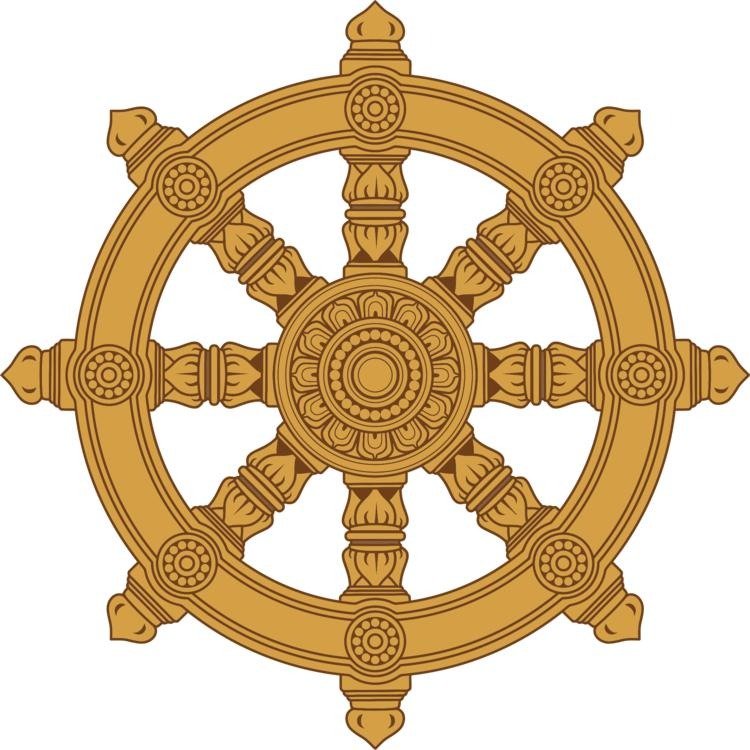
The Dharma wheel represents the Buddha’s teachings and the path toward awakening. Interpretations include the Eightfold Path and other aspects of Buddhist doctrine.
Islam
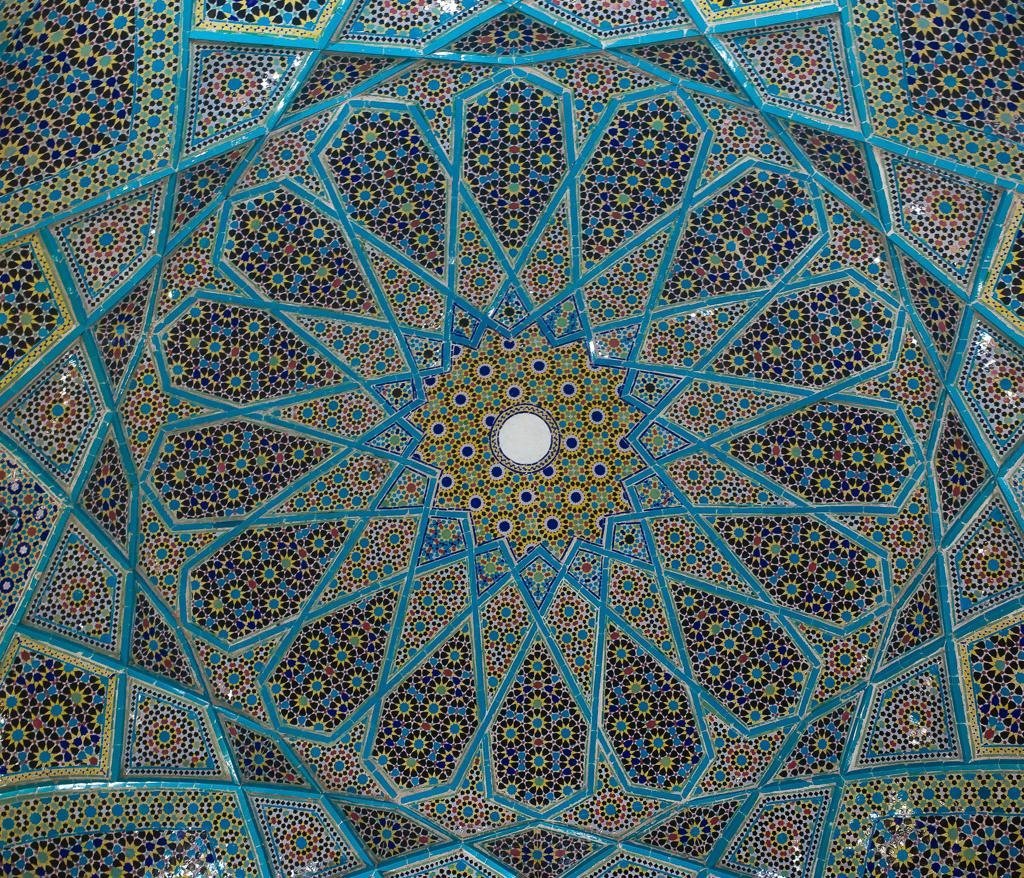
Calligraphy, geometric patterns, and architectural forms play significant roles in many Islamic artistic traditions. Their meanings depend on the text, design, and context; not every geometric motif has one fixed religious interpretation.

Hindu traditions
Om is a sacred sound and symbol associated with spiritual practice and understandings of ultimate reality. Its interpretation varies across Hindu philosophical and religious traditions.
Religious symbols often communicate meaning through repeated use in prayer, sacred texts, ceremonies, buildings, and works of art. Their significance cannot always be reduced to a short dictionary definition.
The Psychology and Philosophy of Symbolism
Symbolism also provides a way to explore how humans interpret information, remember experiences, and communicate abstract concepts.
Why Do Humans Use Symbols?
Human beings routinely use representations to stand for things that are not physically present. A photograph can represent a loved one, a flag can represent a nation, and a written word can represent an object or idea.
Symbols make communication more efficient, but they also allow meaning to become emotionally rich. A wedding ring, for example, is a small physical object that may represent commitment, shared history, family, and personal identity.
Psychological interpretations of symbols vary among research traditions. Cognitive psychology examines how people perceive and process representations, while psychoanalytic traditions have explored the possible symbolic significance of dreams and unconscious processes. Claims made within one theoretical framework should not automatically be treated as established scientific facts.
Semiotics: The Study of Signs and Meaning
Semiotics is the study of signs and the ways they create meaning. It helps explain how words, images, objects, gestures, and other forms of communication function within social systems.
A useful distinction associated with semiotic theory separates three kinds of signs:
- Icon: Resembles what it represents, such as a portrait.
- Index: Has a direct or causal connection to what it indicates, such as smoke indicating combustion.
- Symbol: Relies substantially on convention or learned association, such as a national flag representing a country.
In practice, these categories can overlap. A sign’s meaning may depend on resemblance, physical connection, social convention, or a combination of all three.
Symbolism and Philosophy
Philosophy examines how people create meaning, interpret reality, and understand abstract concepts. Symbols are important because many ideas such as justice, freedom, identity, and mortality cannot be represented by a single physical object without interpretation.
A statue of a blindfolded woman holding scales, for example, may represent justice through established visual conventions. The scales suggest weighing competing claims, while the blindfold conventionally suggests impartiality.
The image does not prove that a legal system is fair. Rather, it expresses an ideal that can be compared with actual institutions and behavior.
Symbolism in Mythology, Folklore, and History
Myths and folktales use symbols to communicate ideas about human nature, morality, creation, danger, and transformation. Symbols can make stories memorable while allowing them to carry several layers of meaning.
Symbolism in Mythology
Mythological stories often connect natural forces with human concerns.
- The phoenix: Commonly represents rebirth and renewal in modern symbolism, drawing on the legendary bird associated with cyclical renewal.
- The labyrinth: Can represent confusion, a difficult journey, or the search for understanding. The Greek myth of the Minotaur provides a famous example.
- The world tree: Appears in various mythological traditions as an image connecting different realms or dimensions of existence.
- The sun: Frequently associated with life, power, time, or divine authority in different mythologies.
These symbols should be understood within their particular narratives rather than treated as identical across every culture.
Symbolism in Historical Events
Historical movements have used symbols to communicate shared identity and political goals. Flags, emblems, colors, clothing, and gestures can make abstract principles visible.
A national flag may represent independence, collective memory, or citizenship. A protest sign may express opposition to a policy, while a particular ribbon may communicate support for a social cause.
Historical symbolism can also become contested. The meaning of an emblem may change as political circumstances shift, and a symbol celebrated by one community may be painful or threatening to another.
This is why historical context matters: interpreting a symbol accurately requires knowing who used it, when it appeared, and what it meant to different groups.
Symbolism in Branding, Marketing, and Modern Design
In contemporary life, symbolism is central to visual identity. Businesses, nonprofit organizations, governments, and digital platforms use signs and images to communicate their purpose and values.
How Brands Use Symbolism
A successful brand symbol can make an organization recognizable while communicating a particular identity.
For example, a mountain in a logo might suggest endurance or adventure. A leaf may indicate a connection with nature, while an open doorway could suggest welcome or opportunity.
However, these associations are not guarantees of consumer response. A symbol’s effectiveness depends on how it is designed, where it appears, whether people recognize it, and whether the organization’s actions support the message.
Practical Applications of Symbolism

Brand identity
A mountain, compass, or tree can help communicate adventure, direction, stability, or environmental awareness. Designers should test whether the intended audience interprets the image as expected.

Website and app design
Familiar icons can help users navigate digital interfaces. A magnifying glass commonly indicates search, while a house often represents the home page. Clear labels remain useful when an icon could be misunderstood.

Education
Visual symbols can help learners connect abstract concepts with concrete examples. Teachers can use diagrams, metaphors, and symbolic imagery to support explanation and discussion.

Film and storytelling
Repeated images, colors, objects, and locations can foreshadow events or reveal changes in a character. Their meaning often develops across the story rather than appearing all at once.
Did You Know?
A symbol does not need to be complicated to carry a great deal of meaning. A simple circle, line, or color combination can become powerful through repeated use and shared understanding.
This is one reason symbols are so common in public signs, organizational logos, maps, and digital interfaces.
Expert Tip: Design Symbols for the Intended Audience
When creating a symbol for a website or brand, start with the message you want to communicate. Then consider whether the audience recognizes the imagery, whether cultural associations could create confusion, and whether the design remains understandable at different sizes.
For international audiences, test symbols with people from the communities you intend to reach rather than assuming one interpretation will work everywhere.
Common Mistakes When Interpreting Symbolism
Symbolism can enrich understanding, but overinterpretation can lead to inaccurate conclusions.
Mistake 1: Assuming Every Symbol Has One Universal Meaning
A snake does not always symbolize danger, just as white does not always symbolize purity. Meanings differ according to culture, historical period, and situation.
Mistake 2: Ignoring Context
A red object in a romantic scene may suggest passion, while the same color in a warning sign may indicate danger. Its meaning depends on how it functions within the surrounding material.
Mistake 3: Confusing Personal Meaning With Historical Evidence
A person may associate butterflies with a deceased loved one. That personal association can be emotionally meaningful, but it does not establish that butterflies universally signify communication from the dead.
Mistake 4: Treating Symbolism as a Scientific Prediction
Dream images, repeated numbers, and animal encounters can prompt reflection, but their symbolic interpretations do not reliably establish what will happen in the future.
Mistake 5: Overanalyzing Every Detail
Not every object in a novel, painting, or film has a deliberate hidden meaning. Strong interpretation considers repeated patterns, the creator’s context, and the work as a whole rather than inventing unsupported explanations.
Myth vs. Fact: Understanding Symbolism
| Myth | Fact |
| Every symbol has one fixed meaning. | Meaning often depends on context and culture. |
| Symbolism exists only in literature. | It appears in religion, design, politics, history, and daily communication. |
| Color symbolism is universal. | Color associations vary across cultures and situations. |
| A symbol always reveals the creator’s intention. | Interpretation may differ from the creator’s intended message. |
| Spiritual symbols provide scientifically verified predictions. | Spiritual interpretations are beliefs and should be distinguished from empirical evidence. |
| Symbols are always visual. | Words, sounds, gestures, objects, and actions can function symbolically. |
How to Identify Symbolism in Everyday Life
You do not need to be a literary scholar or art historian to recognize symbolism. A simple method can help you examine how objects and images communicate meaning.
- Identify the object or image. Notice what stands out, such as a recurring color, animal, gesture, or object.
- Establish its literal meaning. Describe what you can observe before assigning an interpretation.
- Consider the context. Ask where the symbol appears, who uses it, and what is happening around it.
- Explore plausible associations. Think about relevant cultural traditions, historical references, and themes.
- Look for supporting evidence. Repetition, dialogue, surrounding imagery, or documented cultural practices may support an interpretation.
- Allow for multiple meanings. A symbol can communicate more than one idea, and some interpretations may be better supported than others.
For example, imagine that a novel repeatedly mentions an old key. Initially, the key might simply open a room. Later, it could grant access to a family secret. By the end, it might represent the main character’s growing independence.
The interpretation becomes convincing because the story develops the association over time.
Frequently Asked Questions About Symbolism
1. What is the simple definition of symbolism?
Symbolism is the use of something concrete, such as an object, image, color, animal, or action, to represent a deeper idea or feeling. For example, a dove may represent peace, and a journey may represent personal growth.
2. What are five examples of symbolism?
Five common examples are a heart representing love, a dove representing peace, a sunrise representing new beginnings, a chain representing restriction, and a seed representing potential. These are common associations rather than universal meanings, and context can change how each symbol is understood.
3. Why is symbolism important in literature?
Symbolism helps writers communicate themes, emotions, and complex ideas indirectly. It can create atmosphere, foreshadow events, reveal character development, and encourage readers to interpret a story beyond its literal plot. A recurring symbol can also connect different scenes and strengthen a work’s central message.
4. What is the difference between symbolism and metaphor?
Symbolism uses a person, object, image, action, or other sign to represent a broader idea. A metaphor directly describes one thing in terms of another to create a comparison. For example, a recurring storm may symbolize emotional conflict, while saying “anger is a storm” is a metaphor. The two techniques can overlap.
5. Does symbolism mean the same thing in every culture?
No. Symbolic meanings can vary across cultures, religions, historical periods, and individual experiences. An animal, color, or object may represent prosperity in one tradition and danger or mourning in another. Accurate interpretation requires examining the context instead of assuming a universal meaning.
6. How can I recognize symbolism in everyday life?
Look for objects, colors, images, gestures, or actions that communicate more than their literal function. Consider their context, cultural associations, and repeated use. For example, a flag may represent national identity, while a ring may represent commitment. Look for evidence supporting the interpretation rather than assuming every detail is symbolic.
Key Takeaways
- Symbolism allows concrete objects and images to communicate abstract ideas, emotions, and beliefs.
- Symbols appear in literature, art, mythology, religion, architecture, branding, politics, education, and digital communication.
- Cultural context and historical background are essential to understanding symbolic meaning.
- Color and animal symbolism offer useful associations, but these are not universally fixed.
- Semiotics helps explain how signs create meaning through resemblance, connection, and social convention.
- Effective interpretation distinguishes documented historical or cultural meanings from personal beliefs and speculative explanations.
- Understanding symbolism can improve critical thinking, creative expression, visual literacy, and communication.
Semantic Entities, NLP Concepts, and Related Keywords
The following concepts naturally connect the topic of symbolism with its wider subject area.
| Category | Related entities and concepts |
| Core keywords | What is symbolism, symbolism meaning, definition of symbolism, examples of symbolism |
| Literary concepts | Literary symbolism, metaphor, imagery, allegory, motifs, themes, foreshadowing |
| Visual communication | Visual symbols, iconography, color symbolism, signs, logos, graphic design |
| Academic disciplines | Semiotics, anthropology, cultural studies, psychology, linguistics, philosophy |
| Cultural and spiritual topics | Mythology, folklore, religious symbolism, spiritual symbolism, cultural identity |
| Natural symbols | Animal symbolism, plant symbolism, water symbolism, sun symbolism, tree symbolism |
| Historical context | Ancient symbols, historical emblems, artistic movements, cultural traditions |
| Practical applications | Brand identity, user interface design, storytelling, education, consumer behavior |
| Related search questions | Why is symbolism important, how to identify symbolism, symbolism in everyday life, symbolism across cultures |
These related concepts help establish the subject’s breadth and provide useful directions for further research. They should be incorporated into a website according to relevance rather than repeated simply to increase keyword frequency.
Conclusion: Why Symbolism Still Matters
WHAT Symbolism is a fundamental part of how people communicate meaning.
It enables an ordinary object to represent love, a natural landscape to suggest transformation, a religious emblem to express faith, and a visual design to communicate an organization’s identity.
Its significance extends from ancient civilizations to contemporary digital communication.
Writers use symbolism to deepen narratives, artists use it to evoke emotion, communities use it to preserve traditions, and designers use it to make information recognizable and memorable.
Yet symbols rarely have meanings that are completely fixed.
Their interpretation depends on culture, history, personal experience, and the circumstances in which they appear.
Recognizing these influences makes it easier to distinguish a well-supported interpretation from an assumption.
Ultimately, learning what symbolism means is about learning to look more carefully.
When we examine the relationship between an image and the idea it represents, we gain a richer understanding of literature, art, religion, history, branding, and everyday human experience.

Explore mythology, ancient symbols, and historical meanings with Benjamin Foster.
