Doves Symbolism: What Do Doves Represent?
Doves have held a special place in human imagination for thousands of years.
Their gentle appearance, soft cooing, and graceful flight have made them powerful symbols of peace, love, hope, purity, and spiritual connection.
From religious artwork and wedding ceremonies to memorials and modern branding, doves symbolism continues to influence how people communicate emotions and express ideas that words sometimes struggle to capture.
Yet the meaning of a dove is not always the same.
A white dove released at a wedding may represent lasting love, while a dove carrying an olive branch often communicates peace after conflict.
In religious traditions, the bird may represent divine presence or spiritual renewal. In literature, it can symbolize innocence, vulnerability, freedom, or the desire to escape violence.
Understanding dove symbolism means looking beyond the bird’s appearance to explore the history, cultural traditions, religious narratives, psychological associations, and artistic conventions that have shaped its meaning.
What Does a Dove Symbolize? A Quick Answer
Doves commonly symbolize peace, love, hope, purity, innocence, freedom, and spiritual renewal. In Christianity, a dove is associated with the Holy Spirit, while the biblical story of Noah connects a dove carrying an olive leaf with the return of hope after the flood. Across modern culture, doves also represent reconciliation, compassion, remembrance, and harmony.
These meanings are widely recognized, but they are not universal. A dove’s symbolism depends on its color, setting, cultural background, and role in a particular story or ceremony.
The Core Meanings of Dove Symbolism
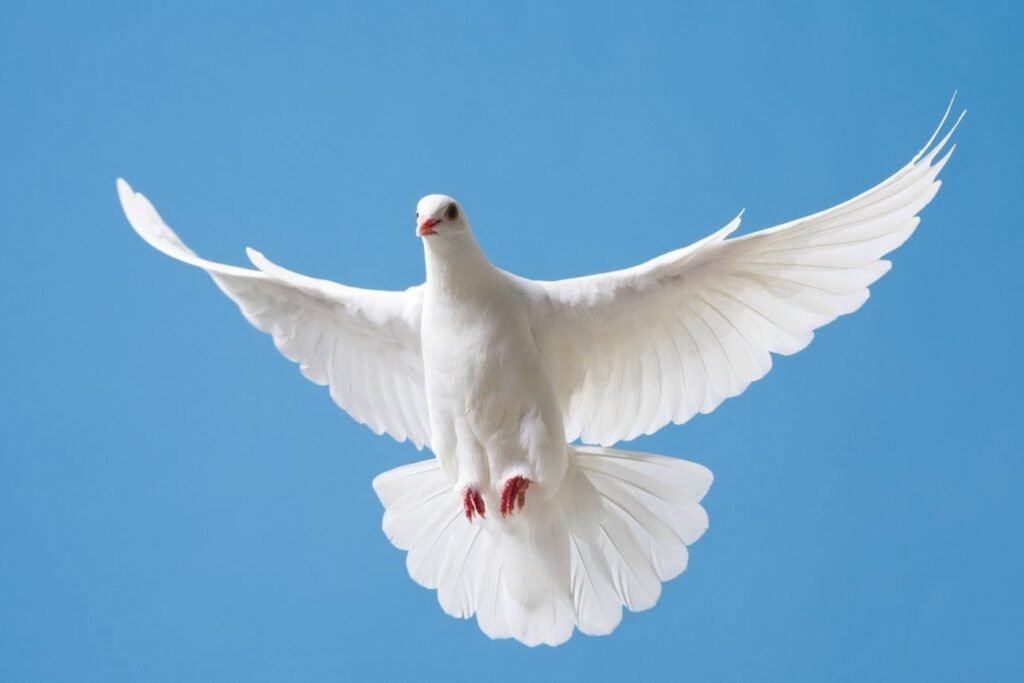
The dove is one of the most recognizable symbolic birds because it can communicate several related ideas through a single image. Its gentle appearance encourages associations with tenderness, while its ability to fly makes it a natural metaphor for freedom and transcendence.
7
1. Peace and Reconciliation
Peace is perhaps the most widely recognized meaning of a dove. The bird frequently appears in peace campaigns, diplomatic imagery, murals, protest art, and humanitarian organizations.
A dove can represent more than the absence of fighting. It may communicate a willingness to forgive, rebuild trust, negotiate disagreements, or begin again after a painful conflict.
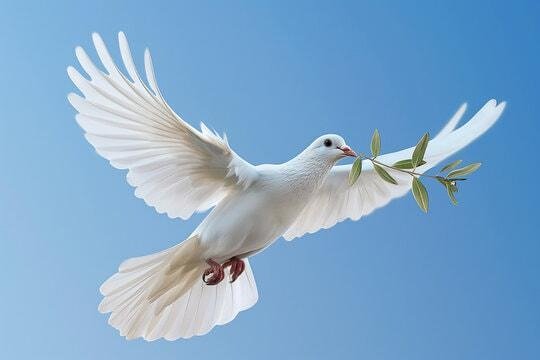
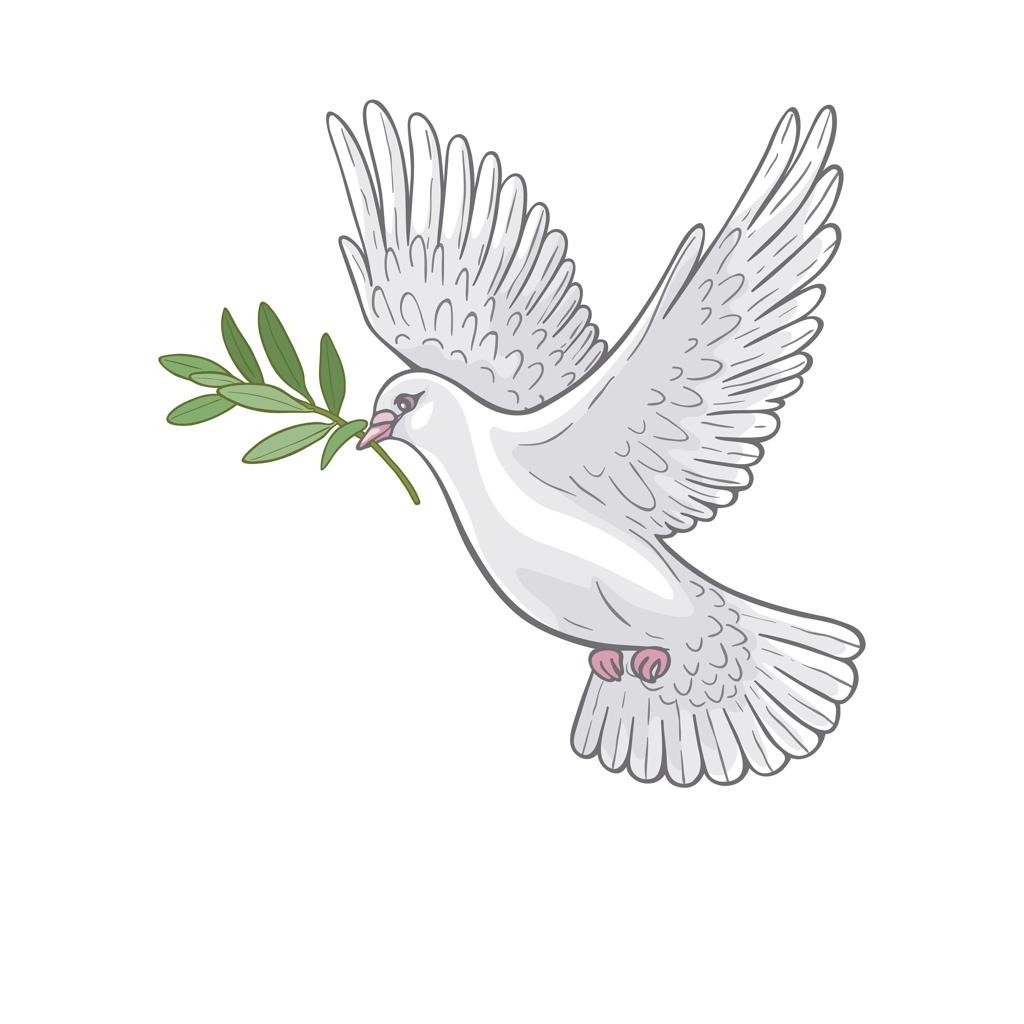
The familiar image of a dove holding an olive branch draws on the biblical account of Noah’s flood. In that story, the returning bird signals that the waters are receding and that life beyond the disaster may be possible.
Over time, the image developed into a broader visual language for reconciliation. In modern communication, it can express a desire for peaceful solutions without requiring a lengthy explanation.
Practical example: A dove in a community peace mural may symbolize cooperation between groups that have experienced conflict. On a greeting card, the same image may simply express a wish for calm and understanding.
2. Love, Devotion, and Partnership
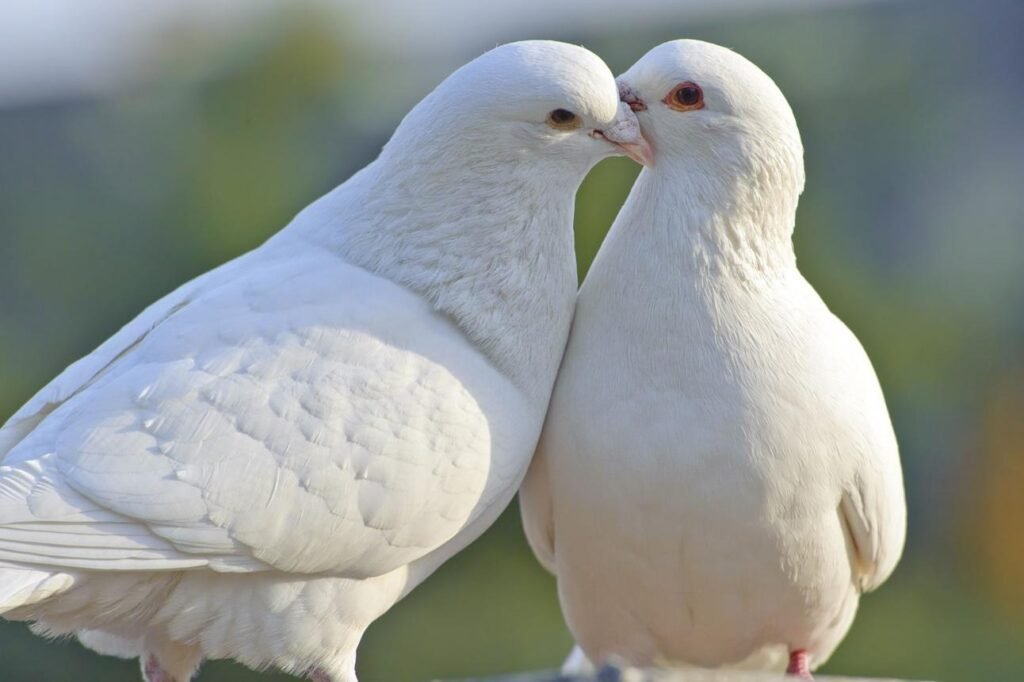
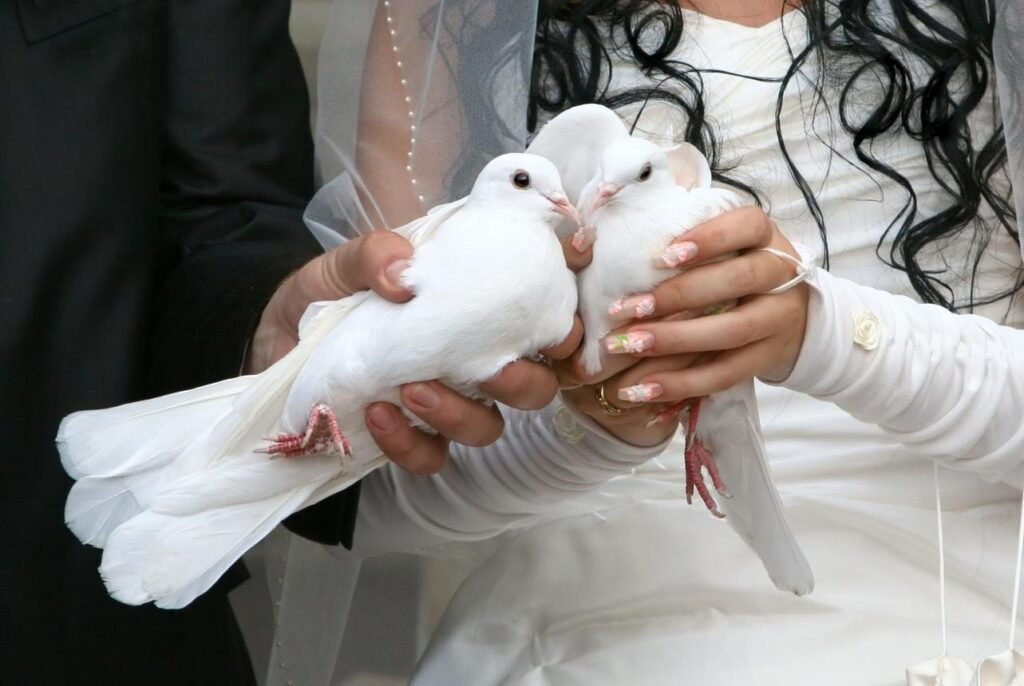
Doves often symbolize romantic love, loyalty, and emotional closeness. Images of two doves sitting together or touching beaks appear in wedding decorations, anniversary cards, romantic artwork, and decorative designs.
These associations partly reflect observations of pigeon and dove behavior. Many species form social bonds, and some form enduring pair bonds. Such natural behaviors have provided material for human interpretations of partnership and devotion.
However, it is important not to assume that every dove species behaves identically or that a bird’s behavior proves a human idea about love. The symbolic meaning emerges when people interpret natural behavior through cultural values.
In a wedding setting, a pair of doves may represent:
- Mutual commitment and companionship.
- Harmony between two people.
- The hope for a lasting relationship.
- A shared future built on trust and respect.
Doves may also represent familial affection and friendship. Their symbolism is not limited to romantic relationships.
3. Hope and New Beginnings
A dove can symbolize hope when it appears after a period of uncertainty, grief, or hardship.
The connection between doves and new beginnings is especially clear in the story of Noah’s ark. The bird’s return with fresh vegetation signals a change in circumstances and the possibility of life continuing after destruction.
This association makes dove imagery suitable for graduation cards, recovery messages, memorial artwork, and celebrations marking a new chapter.
A dove rising into the sky may suggest that a difficult period is ending. A dove resting on a branch may communicate a quieter kind of hope: the possibility of safety, stability, and peace.
4. Purity and Innocence
White doves are frequently associated with purity, innocence, sincerity, and moral goodness. Their light feathers make them visually distinct against darker backgrounds, strengthening the contrast artists use to communicate these ideas.
In religious artwork, a white dove may suggest holiness or divine presence. In weddings, it can express sincere intentions. In literature, it may represent an innocent character whose vulnerability contrasts with a corrupt or violent environment.
Purity is a cultural association rather than an inherent moral quality of a white bird. The color white itself carries different meanings across societies, and the significance of a dove changes with the context in which it appears.
5. Freedom and the Soul
Because doves can move between the ground and the open sky, they are often used to symbolize freedom, spiritual elevation, and release from limitations.
In memorial art, a dove flying upward may represent the soul’s journey after death. In political artwork, it may stand for liberation from oppression. In personal writing, it can express the desire to move beyond fear, grief, or restrictive circumstances.
These interpretations belong to symbolic and spiritual traditions; they are not scientific evidence about what happens after death.
The image remains powerful because flight offers a visible metaphor for movement beyond boundaries. A bird leaving a cage, for example, can represent the recovery of independence after a difficult experience.
6. Compassion and Gentleness
Doves are also associated with kindness, nonviolence, and a gentle approach to human relationships.
Their familiar soft cooing and relatively unthreatening appearance have helped establish this impression. In storytelling, a dove may contrast with predatory birds or aggressive animals, emphasizing tenderness over domination.
The symbol can encourage a particular attitude rather than merely describe a feeling: listen before reacting, approach disagreement without hostility, and recognize the vulnerability of others.
Nevertheless, real doves are animals with their own survival behaviors. Their symbolic gentleness should not be confused with a scientific claim that they are incapable of aggression.
Dove Symbolism in History: From Ancient Civilizations to Modern Peace Movements
Dove symbolism developed through several overlapping traditions rather than from one single origin. Ancient Mediterranean mythology, biblical narratives, early Christian art, and modern political imagery each contributed to the meanings people associate with the bird today.
Doves in Ancient Greek and Roman Culture
9
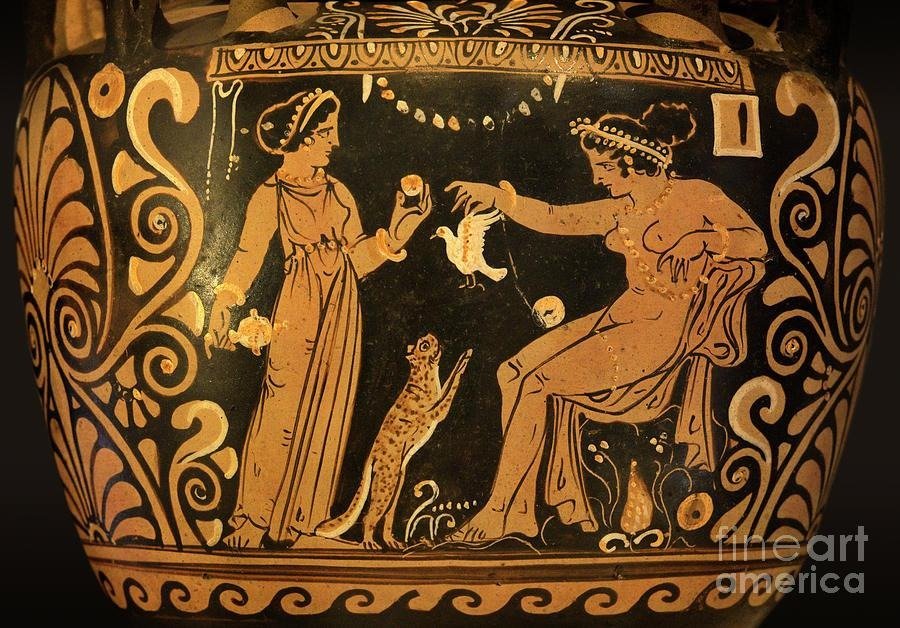
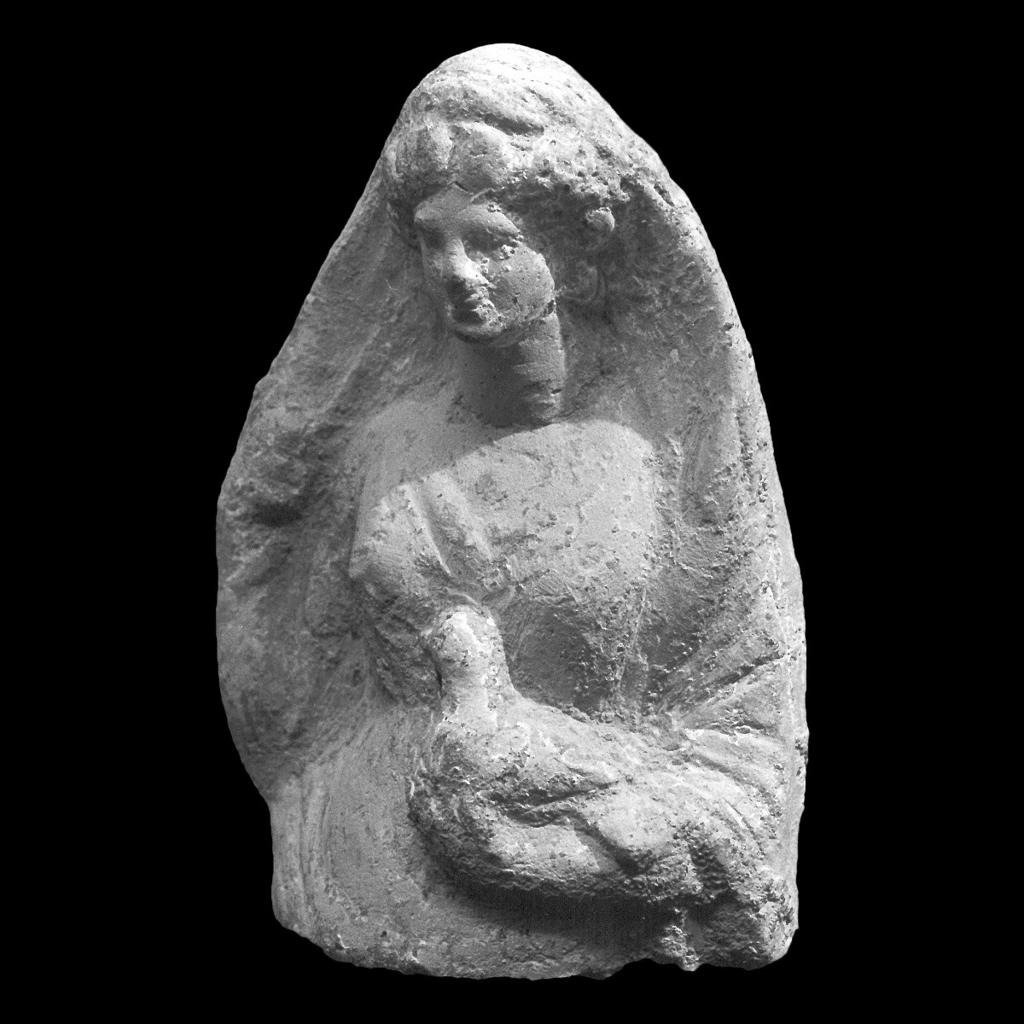
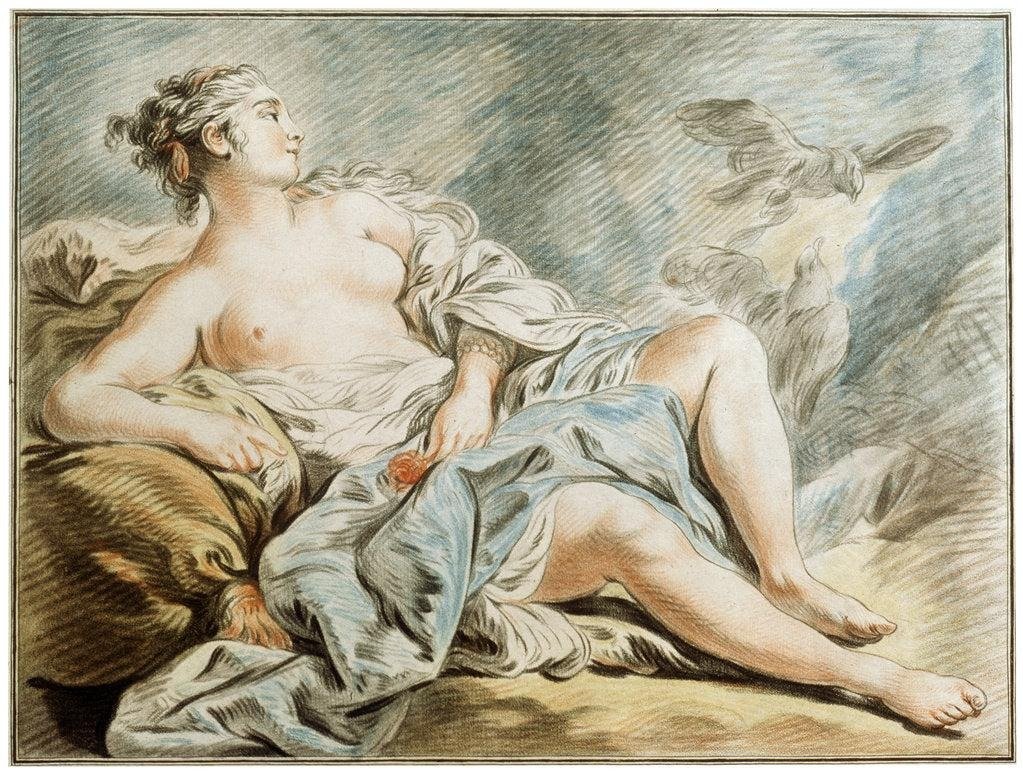
In ancient Greek and Roman traditions, doves were associated with Aphrodite and Venus, goddesses connected with love, beauty, and desire. Their presence in artistic representations reinforced the relationship between doves and affection.
This association helped establish the dove as a symbol of romantic attraction and feminine beauty in parts of the classical Mediterranean world. It also shows how a bird’s symbolic meaning can develop through mythology, ritual, and repeated artistic representation.
The olive branch had its own associations in the ancient Mediterranean, including peace and reconciliation. When these classical traditions later interacted with Judeo-Christian stories and imagery, they contributed to the familiar dove-and-olive-branch emblem.
Herald of Culturology
+1
The Dove in the Story of Noah
One of the most influential sources of dove symbolism appears in Genesis, in the Hebrew Bible and Christian Old Testament.
After the flood, Noah sends birds from the ark to discover whether the waters have receded. The dove eventually returns with a freshly plucked olive leaf, indicating that vegetation has reappeared.
The scene conveys several connected ideas:
- Renewal: The devastated world is beginning to recover.
- Hope: Evidence of new life appears after a frightening period.
- Safety: The possibility of returning to habitable land becomes more real.
- Reconciliation: In later Christian interpretation, the image becomes associated with peace between God and humanity.
An important historical distinction is that the biblical story does not simply state that the dove is a universal peace symbol. The broader association developed through subsequent interpretation, religious art, and cultural transmission.
Early Christian communities used the dove in funerary art and religious imagery. Over time, the bird carrying an olive branch became a recognizable emblem of peace, including peace beyond the immediate biblical narrative.
Wikipedia
+2
The Dove as a Modern Political Symbol
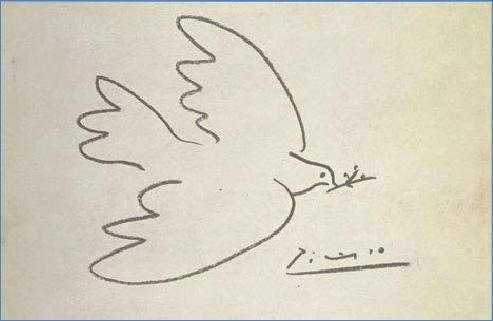
The dove became especially prominent in modern peace imagery during the twentieth century. A major moment came in 1949, when Pablo Picasso contributed a dove image for a peace conference in Paris. Related designs subsequently circulated in posters, publications, and other visual media.
SYMBOLS OF HOPE AND PEACE’
+1
Picasso’s simplified dove helped demonstrate how a familiar natural form can become a powerful visual message. A recognizable outline communicates an idea quickly, even when viewers do not share the same language.
Today, the peace dove appears in antiwar demonstrations, humanitarian campaigns, educational materials, and diplomatic messaging. Its meaning can be aspirational: it expresses the peace people want to create, not necessarily a condition that already exists.
Dove Symbolism Across Religions and Spiritual Traditions
Religious symbolism depends on scripture, theology, ritual, and artistic convention. The dove has a particularly important role in Christianity, but its significance should not be assumed to be identical across religions.

9
Christian Dove Symbolism: The Holy Spirit
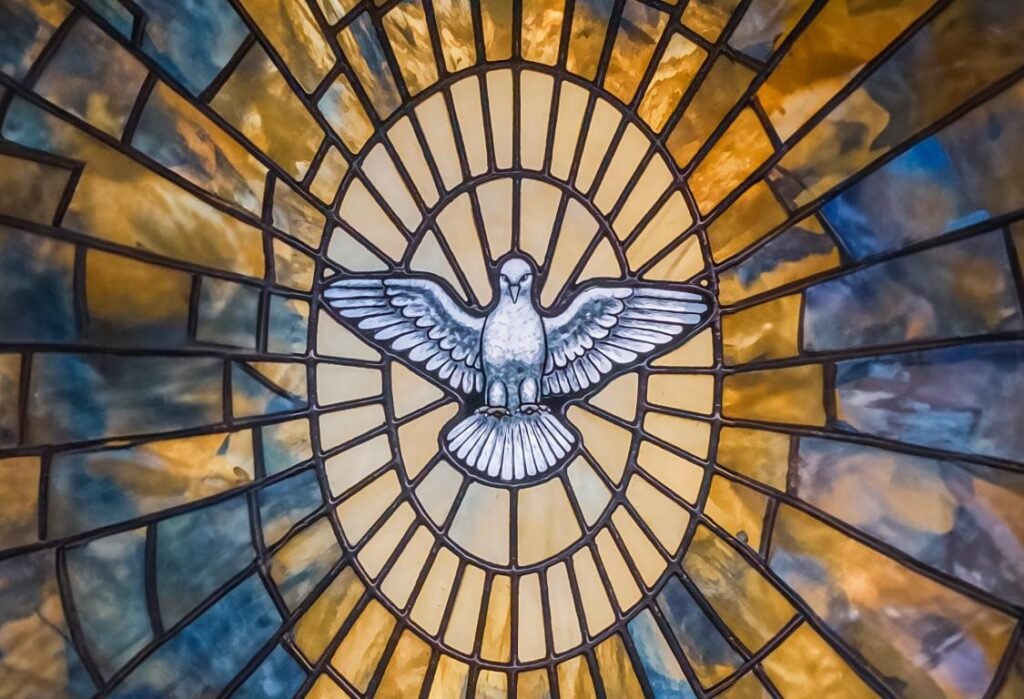
In Christianity, the dove is closely associated with the Holy Spirit because the Gospel accounts describe the Spirit descending upon Jesus at his baptism like a dove.
Christian artists have used this imagery in paintings of the baptism of Jesus, depictions of the Annunciation, stained-glass windows, church decoration, and other religious works.
The dove can therefore represent:
- The presence and activity of the Holy Spirit.
- Divine guidance and inspiration.
- Spiritual renewal and baptism.
- Peace, reconciliation, and hope.
- The relationship between heaven and earthly life.
The precise meaning depends on the image. A dove above Jesus at his baptism primarily evokes the Holy Spirit, whereas a dove carrying an olive branch more directly communicates peace and restoration.
New Advent
+1
Doves in Judaism
The dove appears in the Hebrew Bible, notably in the story of Noah and in passages that use birds as images of longing, vulnerability, or affection. Doves and pigeons also appear in biblical sacrificial practices.
However, it is important to distinguish the presence of doves in Jewish scripture from the later, widely recognized Western peace emblem. The association of the dove carrying an olive branch with peace developed especially through early Christian interpretation; it should not be presented as a universal Jewish interpretation of Noah’s story.
Wikipedia
+1
Doves in Islam
In Islam, birds may appear in discussions of creation, divine power, and the natural world. However, the dove does not have one universally established, central theological meaning equivalent to the Christian association with the Holy Spirit.
Popular stories, regional traditions, devotional art, and contemporary spiritual writing may attach meanings such as peace, gentleness, or blessing to doves. Those interpretations should be distinguished from teachings explicitly established in the Qur’an or authenticated religious traditions.
For Muslim readers, the most responsible approach is to consider the context of a particular story, community, or artistic tradition rather than treating every symbolic claim about doves as a religious doctrine.
Doves in Other Spiritual and Cultural Contexts
Doves and pigeons have different roles across the world, influenced by local ecology, mythology, religion, and everyday life.
In some spiritual interpretations, a dove may represent the soul, divine guidance, or a connection between earthly and spiritual realms. In other contexts, it may be valued simply as a living creature within the natural world.
These meanings cannot be combined into a single global belief system. The same bird can carry sacred significance in one tradition and function as a familiar urban animal in another.
Expert tip: When writing or interpreting religious dove imagery, identify the specific tradition and source first. This creates a more accurate explanation than assigning generic meanings such as “divine energy” to every appearance of a dove.
Dove Symbolism in Different Cultures
Although peace and love are widely associated with doves in contemporary Western imagery, cultural interpretations differ.
| Cultural or historical context | Common symbolic association | Important qualification |
| Ancient Greek and Roman traditions | Love, beauty, and goddesses associated with desire | Meanings depend on the deity and artwork. |
| Biblical narratives | Hope, survival, and the return of vegetation after the flood | The peace interpretation developed through later reception. |
| Christian art | Holy Spirit, baptism, divine guidance, and peace | The image’s religious setting affects its meaning. |
| Modern Western political imagery | Pacifism, reconciliation, and opposition to war | A peace symbol may express an aspiration rather than an accomplished result. |
| Weddings and romantic art | Partnership, devotion, and harmony | These are cultural associations, not universal rules. |
| Memorial and funerary art | Rest, hope, spiritual release, or remembrance | Interpretations depend on religious and personal beliefs. |
The key lesson is that symbolic meaning develops through cultural memory. A symbol becomes recognizable because people encounter it repeatedly in stories, ceremonies, images, and shared experiences.
The Psychological Meaning of Doves
From a psychological perspective, doves offer an accessible way to communicate abstract emotions. Their symbolic power can be explored through visual perception, learned associations, and the role of imagery in human communication.
Why Do Doves Feel Peaceful?
A dove’s relatively gentle appearance, familiar cooing, and graceful flight can encourage associations with calmness. Artists and communicators reinforce these associations by showing doves against open skies, beside olive branches, or in quiet natural settings.
However, there is no reason to assume that every viewer will respond identically. Personal memories, cultural background, religious beliefs, and experiences with birds can change the emotional response.
A person who associates doves with a wedding may see love and celebration. Someone who encounters them in a memorial may associate them with grief and remembrance.
Doves as Symbols of Emotional Healing
In personal writing and visual art, doves can represent the process of moving from distress toward acceptance.
For example, a poem about bereavement might describe a dove leaving a windowsill. The bird could suggest the deceased person’s memory, the release of grief, or the writer’s growing acceptance of loss.
The image does not need to provide a literal explanation. Its value comes from allowing readers to connect an observable image with an abstract emotional experience.
The Semiotics of a Dove
Semiotics is the study of signs and how they produce meaning. A dove provides a useful example because the bird itself is a physical object, while its symbolic meaning depends on cultural interpretation.
Consider three images:
- A dove carrying an olive branch may signify peace.
- Two doves facing each other may suggest affection or partnership.
- A dove above a baptismal scene may signify the Holy Spirit.
The same animal functions as a different sign depending on its surrounding objects, composition, and cultural context. This is why visual communication relies on more than isolated symbols: placement, color, scale, and accompanying text all influence interpretation.
White Dove Symbolism and the Meaning of Different Dove Colors
White doves dominate popular symbolic imagery, but color associations should be interpreted carefully. They are influenced by artistic conventions, cultural traditions, and the situation in which the bird appears.
| Dove appearance | Common symbolic interpretation | Typical context |
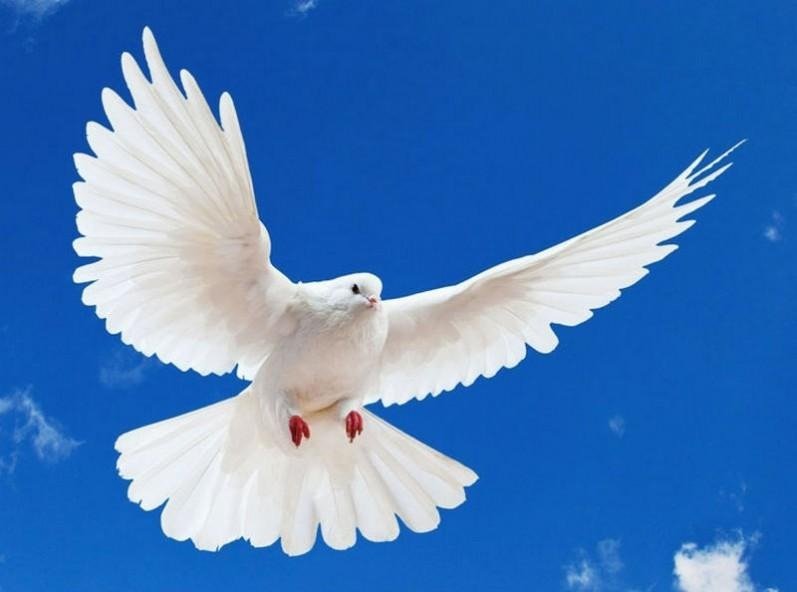
| White dove | Peace, purity, hope, innocence | Religious art, weddings, peace campaigns |
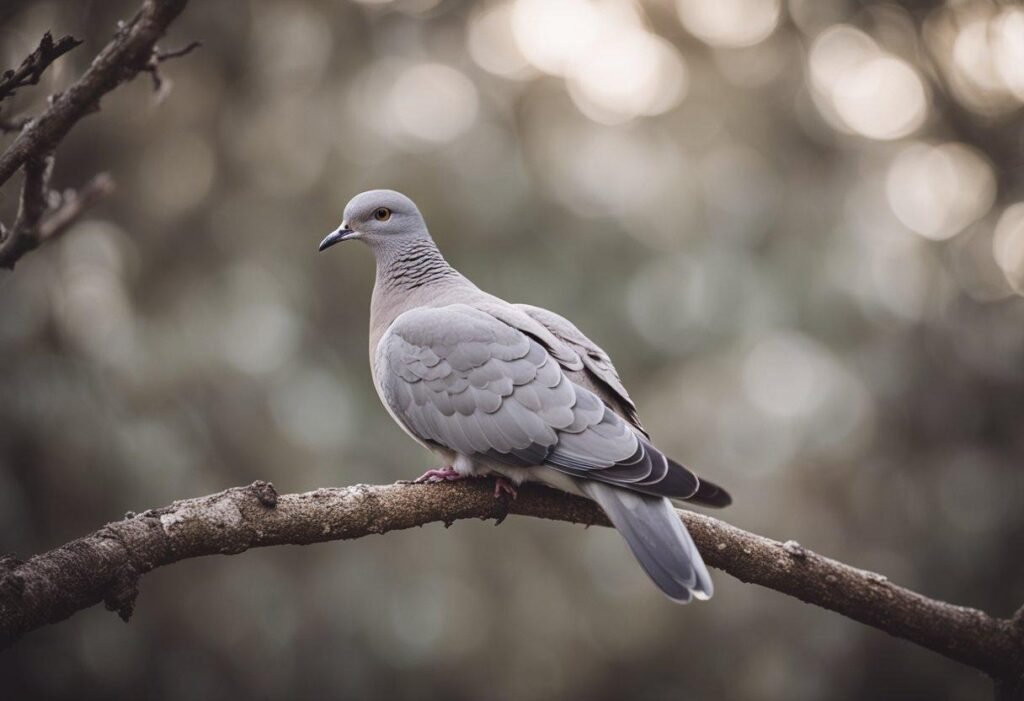
| Gray dove | Everyday peace, resilience, simplicity | Nature writing, personal reflection |
| Pair of white doves | Love, partnership, harmony | Weddings, anniversaries, romantic artwork |
| Dove carrying an olive branch | Reconciliation, renewal, peaceful resolution | Political imagery, religious art |
| Dove in flight | Freedom, release, spiritual elevation | Memorial art, poetry, illustrations |
| Dove resting quietly | Calm, safety, emotional stillness | Meditation imagery, home decoration |
These are common interpretive conventions rather than a universal color code. Gray doves, for instance, do not possess a fixed symbolic meaning across all cultures. Their interpretation depends on the message an artist or writer wishes to convey.
Why White Doves Are So Popular
White feathers create strong visual contrast against dark backgrounds and green foliage. This makes a white dove easy to recognize in illustrations, logos, religious paintings, and printed materials.
The color also connects with established artistic conventions that associate whiteness with innocence, sacredness, and purity in certain cultural contexts.
Yet white does not mean the same thing everywhere. In some societies, white is strongly associated with mourning and funerary practices. Therefore, a white dove may communicate purity in one context and remembrance or spiritual transition in another.
What Does It Mean When You See a Dove?
Seeing a dove may feel meaningful, especially during an emotionally important moment. Its significance can be understood through natural observation, personal associations, and spiritual interpretation.
Seeing a Dove in Everyday Life
A dove appearing near your home, sitting on a windowsill, or flying overhead may simply be an ordinary encounter with wildlife. Doves and pigeons live in many urban and rural environments, often near people.
If the encounter feels significant, you can also reflect on what the bird brings to mind. Perhaps it reminds you to seek peace in a difficult relationship, appreciate a calm moment, or approach a decision with patience.
That personal reflection can be valuable without assuming that the encounter predicts a future event.
Seeing a Dove During a Difficult Period
Some people interpret a dove encountered during grief, uncertainty, or personal change as a reminder of hope.
This can work as a personal symbol: the bird becomes connected to a meaningful memory or an intention to move forward. But there is no established scientific evidence that seeing a dove independently predicts reconciliation, financial success, or a particular life outcome.
A balanced interpretation leaves room for personal meaning without presenting spiritual beliefs as proven facts.
Is Seeing a Dove a Good Omen?
In popular spiritual writing, doves are often described as positive omens associated with peace, love, and new beginnings. These ideas belong to cultural and personal belief systems rather than a universally established tradition.
Whether someone treats a dove as a good omen depends on their worldview. A person may find reassurance in the encounter, while another may simply appreciate the bird’s beauty.
The most useful approach is to consider what the symbol means to you while remaining grounded in the circumstances of your life.
Dove Symbolism in Dreams
Dream interpretations are subjective. A dove in a dream does not have one scientifically validated meaning, and dream imagery cannot reliably predict future events. Nevertheless, people often use symbolic interpretations to reflect on emotions and personal experiences.
| Dream image | Possible symbolic interpretation | Reflection question |
| A white dove flying | Freedom, relief, or hope | Where would I like to feel freer? |
| Two doves together | Connection, trust, or partnership | Which relationships matter most to me? |
| A dove carrying an olive branch | Reconciliation or a desire for peace | Is there a conflict I want to resolve? |
| A dove resting in a nest | Safety, home, or belonging | What helps me feel secure? |
| An injured dove | Vulnerability, loss, or concern | Is something important to me feeling fragile? |
| A dove entering a house | Change, welcome, or a personal association with home | What changes or memories are on my mind? |
These interpretations are prompts for reflection, not fixed meanings.
For example, someone who recently experienced an argument might associate a dove with a wish to reconcile. Someone else may connect the same dream to a childhood memory of feeding birds.
Did you know? Dream symbols are often interpreted differently by different psychological and cultural traditions. A careful interpretation considers the dreamer’s emotions and circumstances instead of relying on a universal dictionary of symbols.
Dove Symbolism in Literature, Poetry, and Storytelling
Writers use doves to communicate complex ideas without explaining every emotion directly. The bird can become a recurring motif, a contrast to violence, or a turning point in a story.
Doves as Literary Symbols of Peace
In a novel about war, a dove appearing over a damaged landscape may emphasize the distance between human violence and the possibility of reconciliation.
The bird might also expose a contradiction. A character could use dove imagery to claim peaceful intentions while continuing to behave aggressively. In that case, the symbol becomes ironic rather than reassuring.
This flexibility makes dove symbolism useful in poetry, drama, fiction, and political writing.
Doves as Symbols of Innocence and Vulnerability
A writer may introduce a dove into a harsh environment to represent a character’s vulnerability. Its presence can emphasize the contrast between tenderness and cruelty.
However, the dove need not represent a helpless character. It may instead represent resilience: the ability to preserve compassion even when surrounded by conflict.
Doves and the Language of Metaphor
A metaphor transfers meaning from one thing to another. When a poet describes peace as a dove settling on a branch, the bird transforms an abstract concept into a scene readers can visualize.
The image becomes more effective when it includes specific details, such as the movement of wings, the stillness of the branch, or the sound of the bird.
For writers, the practical lesson is simple: use dove imagery when it contributes to the emotional or thematic development of a piece, rather than inserting it merely because it is a familiar symbol.
Dove Symbolism in Art and Visual Design
Artists and designers use doves because their shapes are recognizable and their cultural associations are well established. A simple dove silhouette can communicate peace quickly, while a detailed painting can convey religious significance, tenderness, grief, or freedom.

9
Religious Iconography
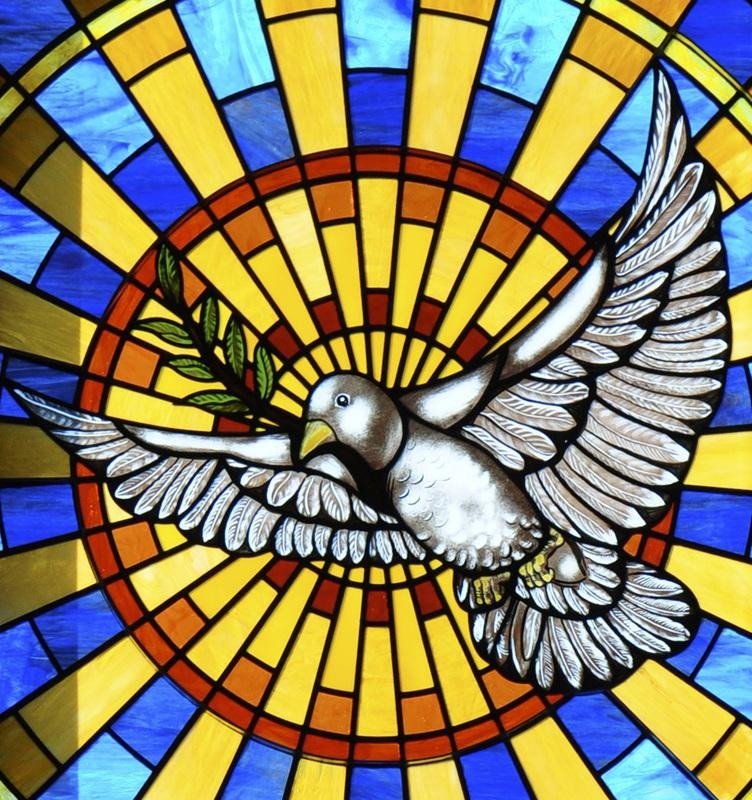
In Christian iconography, the dove may appear above a sacred figure, within a beam of light, or near a baptismal scene. Its placement helps viewers understand its role in the composition.
A dove surrounded by light may suggest divine presence, while one positioned near a person receiving baptism points toward the biblical account of the Holy Spirit descending like a dove.
The meaning is established through the relationship between the bird and the other visual elements, not through the bird alone.
Branding and Consumer Communication
Businesses and nonprofit organizations may use dove imagery to suggest care, trust, peace, or social responsibility.
A humanitarian organization, for example, might use a dove to communicate a commitment to peaceful cooperation. A wellness brand might use a soft dove illustration to suggest calmness and emotional balance.
However, a symbol cannot establish that an organization is ethical, effective, or trustworthy. Those qualities require evidence from the organization’s conduct, products, and practices.
Design Principles for Using a Dove
When incorporating dove imagery into a logo, poster, website, or publication, consider these principles:
- Clarity: A simplified silhouette often remains recognizable at small sizes.
- Context: An olive branch strengthens the association with peace and reconciliation.
- Color: White can suggest purity in some settings, while other colors may support a different brand identity.
- Cultural sensitivity: Religious imagery should be used with an understanding of its significance to relevant communities.
- Accessibility: Provide suitable contrast and alternative text so that the image’s purpose is not communicated through appearance alone.
Dove symbolism works best in design when the visual message aligns with the actual purpose and behavior of the organization using it.
Dove Symbolism in Weddings, Funerals, and Everyday Traditions
Doves often appear during major life events because their familiar associations help people express emotions that are difficult to put into words.
Weddings and Marriage Ceremonies
At weddings, a pair of doves may symbolize love, fidelity, partnership, and the hope for a harmonious marriage.
Their use reflects a cultural interpretation of the birds’ social bonds. However, releasing live birds is not necessary to communicate these ideas. Illustrations, paper decorations, floral arrangements, or symbolic artwork can convey the same message without introducing animal-welfare concerns.
Funerals and Memorials
In memorial settings, a dove may represent peace, remembrance, spiritual release, or hope beyond death.
For someone with Christian beliefs, it may evoke the Holy Spirit or the promise of spiritual peace. For another person, it may simply symbolize a loved one’s gentle nature or the wish that the deceased has found peace.
There is no single correct interpretation. Personal beliefs, family traditions, and the preferences of the bereaved should guide the choice of imagery.
Peace Events and Humanitarian Campaigns
At public gatherings, doves can communicate solidarity, nonviolence, and a commitment to peaceful solutions.
A dove displayed alongside a message about reconciliation may communicate a clear aspiration. Yet the symbol is most meaningful when accompanied by concrete actions, such as dialogue, conflict prevention, and support for affected communities.
Common Mistakes When Interpreting Dove Symbolism
Dove symbolism becomes more meaningful when familiar associations are not mistaken for universal facts.
Mistake 1: Assuming every dove represents peace.
A dove can symbolize the Holy Spirit, love, innocence, remembrance, or another idea depending on the setting.
Mistake 2: Treating spiritual interpretations as scientific facts.
A dove may feel like a personal sign, but its appearance does not establish that a supernatural message or prediction has occurred.
Mistake 3: Applying one culture’s meaning to everyone.
Dove imagery should be interpreted through its specific historical, religious, and cultural context.
Mistake 4: Confusing symbolism with animal behavior.
A dove’s association with gentleness is a cultural interpretation, not proof that all doves are peaceful in every circumstance.
Mistake 5: Assuming the dove and olive branch have always meant exactly the same thing.
The familiar peace emblem developed through historical interactions between biblical narratives, classical imagery, and later artistic traditions.
Herald of Culturology
+1
Myth vs. Fact: Understanding Dove Symbolism
| Common claim | More accurate explanation |
| Doves have always represented universal peace. | The peace association developed historically and is not universal across all cultures. |
| Every white dove represents purity. | Purity is a common cultural association, but context and local traditions influence meaning. |
| Seeing a dove predicts good fortune. | This is a spiritual or folk interpretation, not a scientifically established prediction. |
| The dove is always a Christian symbol. | Doves appear in classical mythology, secular political imagery, literature, and many everyday settings. |
| A dove in a dream has one fixed meaning. | Dream interpretations vary with personal experience and cultural background. |
| The dove and olive branch have identical meanings. | The dove can represent several ideas, while the branch adds a particular association with peace and renewal. |
Practical Applications: How to Use Dove Symbolism Meaningfully
Understanding dove symbolism is useful beyond religious studies and mythology. It can inform writing, design, education, communication, and personal reflection.

For branding and marketing
Use a dove when the intended message genuinely relates to peace, compassion, care, or reconciliation. Support the visual message with clear evidence of the brand’s values rather than relying on symbolism alone.
For writers and educators
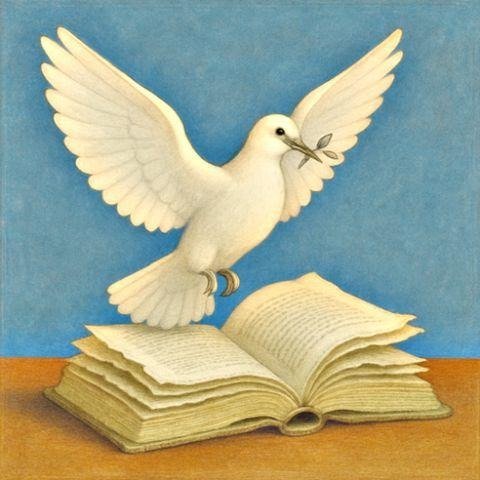
Use dove imagery to explain metaphor, biblical narratives, cultural change, or the relationship between visual signs and abstract concepts. Encourage readers to compare interpretations rather than memorize a single definition.
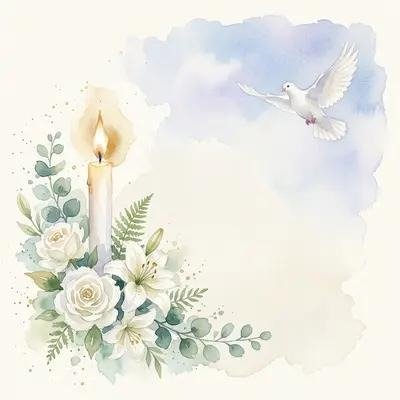
For memorials and personal reflection
A dove can communicate remembrance, hope, or peace without imposing a specific religious belief. Choose imagery that reflects the individual and the family’s wishes.

For community communication
A dove can make a message about reconciliation or nonviolence immediately recognizable. Pair it with practical commitments that demonstrate how peace will be pursued.
Key Insights About Dove Symbolism
The most important insight is that a dove’s meaning comes from the interaction between nature, history, and human interpretation.
- Peace: The dove carrying an olive branch is a widely recognized emblem of reconciliation.
- Love: Pairs of doves often represent companionship, affection, and commitment.
- Hope: The story of Noah connects the returning dove with the possibility of renewed life.
- Spirituality: In Christian iconography, the dove is strongly associated with the Holy Spirit.
- Freedom: A dove in flight can represent release, independence, or spiritual elevation.
- Remembrance: In memorial settings, the bird may symbolize peace, hope, or the memory of a loved one.
- Cultural context: No single interpretation applies to every society, religion, or individual.
- Practical meaning: In art, literature, branding, and communication, a dove works as a visual sign whose interpretation depends on context.
Conclusion: Why Dove Symbolism Still Matters
Dove symbolism has endured because it connects familiar natural imagery with some of humanity’s most important ideas:
peace after conflict, love between people, hope after hardship, and the search for spiritual meaning.
From the biblical account of Noah to Christian depictions of the Holy Spirit, from classical associations with love to modern peace campaigns, the dove has acquired layers of meaning through centuries of cultural interpretation.
Its use in weddings, funerals, literature, branding, and public art demonstrates how a simple image can communicate complex emotions.
Understanding these associations also means recognizing their limits.
A dove does not carry the same meaning in every culture, and spiritual interpretations should not be confused with scientific evidence.
Historical context, religious tradition, artistic choices, and personal experience all influence what the bird represents.
Ultimately, the enduring significance of the dove lies in its ability to make abstract ideas visible. Whether it appears in a painting, a poem, a religious ceremony, or a peace campaign, it invites people to reflect on compassion, reconciliation, freedom, and the possibility of beginning again.
Frequently Asked Questions About Dove Symbolism
1. What is the spiritual meaning of a dove?
The spiritual meaning of a dove commonly includes peace, hope, purity, divine guidance, and renewal. In Christianity, the dove is associated with the Holy Spirit. In personal spiritual interpretations, it may represent comfort, emotional healing, or a connection to something greater than oneself. These meanings vary across traditions and individual beliefs.
2. What does a white dove symbolize?
A white dove commonly symbolizes peace, innocence, purity, hope, and spiritual renewal. It frequently appears in weddings, religious artwork, memorials, and humanitarian campaigns. However, its meaning depends on context, since white can also be associated with mourning in some cultural traditions.
3. Why is a dove a symbol of peace?
The dove became associated with peace through the interaction of biblical narratives, classical imagery, and early Christian art. In the story of Noah, a dove returns with an olive leaf after the flood, signaling that the waters have receded. Later interpretations connected the dove and olive branch with reconciliation and peace. The image subsequently became a widely recognized secular peace symbol.
Wikipedia
+1
4. What does a dove symbolize in Christianity?
In Christianity, the dove most notably represents the Holy Spirit, drawing on Gospel accounts of the Spirit descending upon Jesus at his baptism like a dove. It can also symbolize baptism, divine guidance, peace, reconciliation, and spiritual hope. Its precise meaning depends on the passage, artwork, or religious ceremony in which it appears.
5. What does it mean when two doves appear together?
Two doves commonly symbolize love, partnership, harmony, devotion, and companionship. They are frequently used in wedding decorations and romantic artwork. Their meaning is based partly on cultural interpretations of dove pair bonding and is not a universal rule about relationships or a prediction of romantic events.
6. What does seeing a dove mean in a dream?
A dove in a dream may personally suggest peace, hope, freedom, reconciliation, or emotional comfort. For someone experiencing conflict, it might reflect a desire for resolution; for someone grieving, it may evoke remembrance. Dreams do not have one universally validated symbolic meaning, so the dreamer’s feelings and personal circumstances are important to interpretation.
Semantic Entities, NLP Concepts, and Related Keywords
The following terms describe the major entities and topical relationships covered in this article. They can also help organize related articles for a symbolism-focused website.
| Category | Related terms and entities |
| Primary keyword | Doves symbolism, dove symbolism, symbolism of doves |
| Core symbolic meanings | Peace, love, hope, purity, innocence, freedom, renewal, reconciliation, compassion |
| Religious entities | Noah’s ark, Genesis, Jesus’ baptism, Holy Spirit, Christian iconography, biblical symbolism |
| Historical and mythological entities | Aphrodite, Venus, ancient Greece, ancient Rome, Pablo Picasso, peace movements |
| Visual symbols | White dove, olive branch, flying dove, pair of doves, dove silhouette |
| Psychological concepts | Emotional associations, perception, personal meaning, memory, dream interpretation |
| Humanities concepts | Semiotics, anthropology, mythology, cultural identity, folklore, religious studies |
| Creative applications | Literature, poetry, visual arts, graphic design, branding, storytelling |
| Practical contexts | Weddings, funerals, memorials, humanitarian campaigns, education, digital communication |
| Long-tail keywords | What does a dove symbolize spiritually, white dove meaning, dove and olive branch meaning, dove symbolism in Christianity, two doves symbolism, seeing a dove meaning, dove symbolism in dreams |
SEO note: These terms are useful when they genuinely support the topic and answer readers’ questions. They should not be inserted mechanically or treated as a guarantee of search rankings. Original research, accurate sourcing, helpful internal links, clear authorship, and a satisfying reader experience remain important parts of a strong content strategy.

Explore mythology, ancient symbols, and historical meanings with Benjamin Foster.
