
Penguin Symbolism: What Do Penguins Represent?
Penguin symbolism explores the meanings people associate with penguins, including loyalty, adaptability, emotional connection, perseverance, community, and balance.
Although penguins live in challenging environments, their distinctive behavior and social lives make them powerful subjects for storytelling, spiritual reflection, art, literature, and modern visual communication.
The symbolism of the penguin matters because animals often help people express complicated human experiences through recognizable natural characteristics.
Penguins endure harsh weather, move between land and sea, gather in colonies, and, in many species, participate in remarkable forms of parental care.
These real behaviors provide a foundation for symbolic interpretations about relationships, resilience, cooperation, and navigating change.
Whether you have encountered a penguin in a dream, noticed one appearing repeatedly in artwork, considered a penguin tattoo, or simply wondered what this unusual bird represents, understanding its symbolism requires looking at both its biology and the cultural meanings people attach to it.
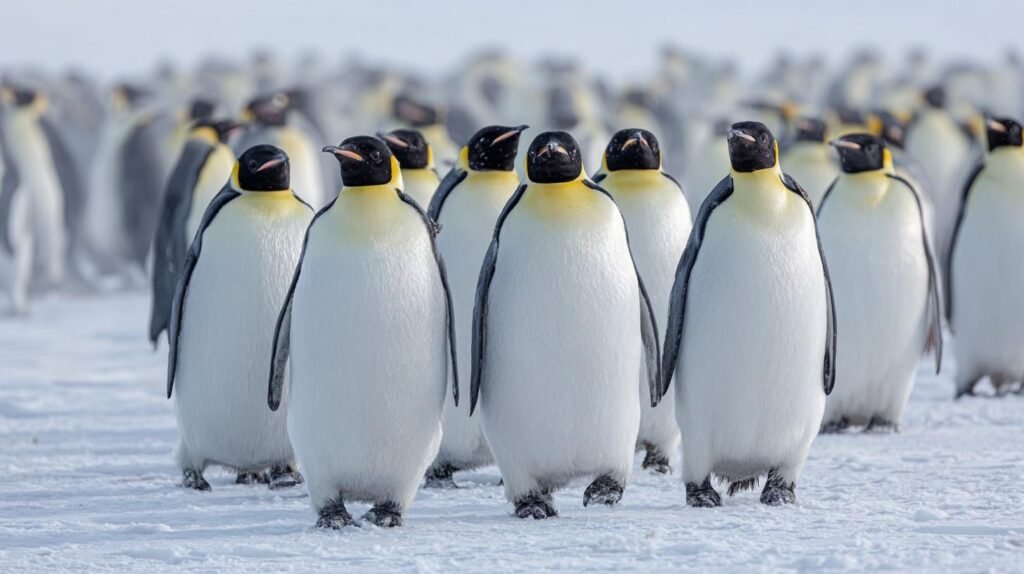
Penguins in their natural environment inspire associations with endurance, cooperation, family bonds, and adaptation.
What Is the Meaning of Penguin Symbolism?
Penguin symbolism refers to the symbolic meanings people assign to penguins based on their physical characteristics, behavior, habitat, and role in human imagination. Common interpretations include loyalty, teamwork, resilience, family devotion, adaptability, individuality, and emotional balance, although meanings vary across cultures and personal experiences.
The penguin’s distinctive appearance and unusual way of moving between land and water make it especially interesting as a symbol. It can appear awkward on land yet move with impressive agility underwater. This contrast offers a useful metaphor for the difference between how someone appears to others and what they are capable of achieving.
Here are the major symbolic associations of penguins:
| Symbolic meaning | Natural inspiration | Possible human lesson |
| Loyalty | Pair bonds in some species | Nurture trust and commitment |
| Resilience | Living in demanding environments | Continue adapting through hardship |
| Teamwork | Social behavior in colonies | Cooperate while respecting individual needs |
| Family devotion | Parental care and chick-rearing | Support and protect those who depend on you |
| Adaptability | Life on land, ice, and in water | Develop different skills for changing circumstances |
| Balance | Movement between two environments | Recognize when to act, rest, or change direction |
| Individuality | Distinctive appearance and species differences | Accept traits that make you different |
| Patience | Incubation and the demands of raising young | Give meaningful processes time to develop |
These meanings are interpretations rather than universal rules. Penguin behavior differs among species, and a symbolic association does not automatically describe every penguin or every person who identifies with one.
1. The Historical Origins and Evolution of Penguin Symbolism
Penguin symbolism developed differently from the symbolism of animals that appear frequently in ancient mythology. Because penguins are native to the Southern Hemisphere, many ancient Mediterranean and European societies had little or no direct knowledge of them.
Early human encounters with penguins
Penguins have long been part of the natural environments of southern Africa, South America, Australia, New Zealand, and islands across the Southern Ocean. Their relationships with local communities therefore predate their widespread recognition in European natural history.
European sailors encountered penguins during voyages into southern waters, and written accounts gradually introduced these birds to broader audiences. Early encounters were not necessarily affectionate or symbolic. Penguins were sometimes treated as sources of food and oil, reflecting the practical priorities of maritime exploration.
Taylor & Francis Online
+1
As natural history developed, penguins increasingly became objects of scientific observation, illustration, and public fascination. Their upright posture, contrasting plumage, and unusual movement made them particularly memorable.
Over time, the penguin acquired several modern symbolic associations:
- Endurance: Its ability to survive demanding environments inspired images of perseverance.
- Community: Colony life encouraged comparisons with cooperation and belonging.
- Family devotion: Parental care became a recognizable theme in wildlife documentaries and popular storytelling.
- Individuality: Its distinctive appearance made it an appealing figure for cartoons, characters, and branding.
- Adaptation: Its ability to move between land and water became a metaphor for flexibility.
These associations developed through observation, storytelling, and popular culture rather than from a single universal ancient tradition.
Penguins in modern popular culture
Films, documentaries, children’s books, advertisements, and animated characters have made penguins familiar to audiences far beyond their natural habitats.
Wildlife documentaries often emphasize the challenges of raising young and surviving extreme weather. Animated stories, meanwhile, frequently portray penguins as funny, determined, socially connected, or unusually expressive.
This difference demonstrates how symbolism works: a real animal provides recognizable characteristics, while a storyteller selects and exaggerates particular traits to communicate an idea.
2. The Spiritual Meaning of a Penguin
In contemporary spiritual interpretations, penguins often symbolize emotional balance, perseverance, cooperation, devotion, and the ability to remain grounded during difficult periods. These meanings are personal or tradition-specific interpretations, not scientifically established messages transmitted by the animal.
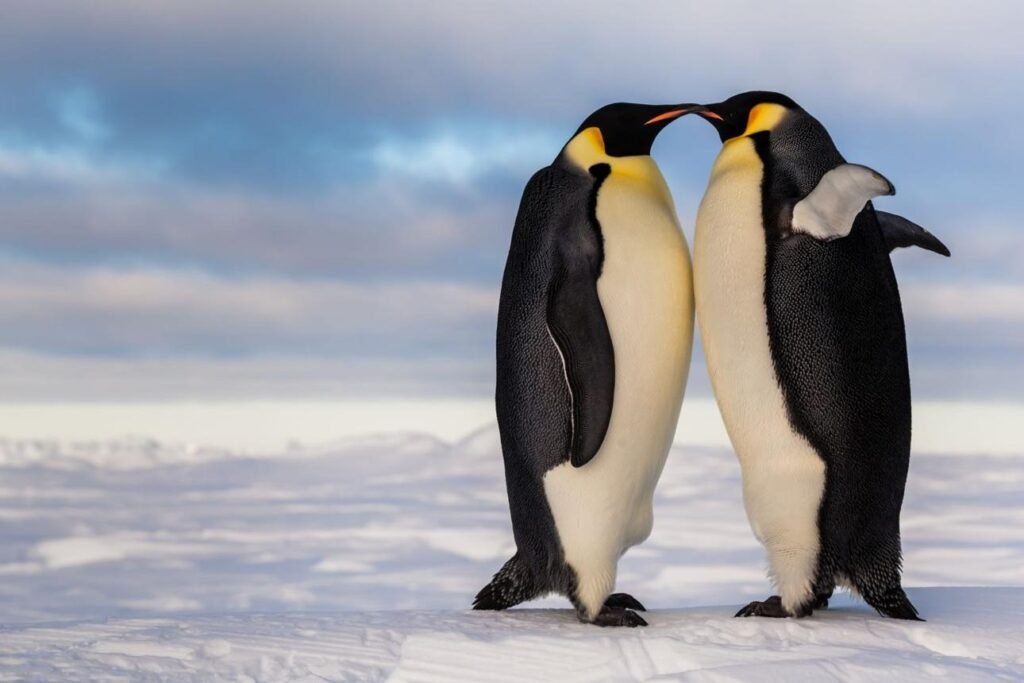
Penguin symbolism as a reminder of resilience
A penguin may represent the strength required to continue through uncertainty. Its natural environment offers a vivid image of endurance, but the lesson does not need to be about tolerating every hardship indefinitely.
Instead, the penguin can serve as a reminder that resilience includes preparation, rest, cooperation, and changing strategies when circumstances demand it.
For example, someone experiencing a career transition might use the penguin as a personal symbol of persistence: progress can be slow, conditions can be uncomfortable, and success may depend on learning new skills rather than forcing a single approach.
Emotional balance and adaptability
Penguins live in two very different environments: they move on land and rely on the ocean for feeding. Symbolically, this can represent the ability to navigate different emotional or social situations.
Land might be interpreted as stability, routine, or the familiar, while water might represent uncertainty, emotion, or exploration. This is a modern metaphor rather than an established universal spiritual code.
The interpretation may be especially meaningful to someone balancing work with personal life, independence with partnership, or ambition with rest.
Community and spiritual belonging
Penguins are frequently associated with belonging because many species gather in colonies. Their social behavior encourages reflection on the value of supportive relationships.
A spiritual interpretation might ask:
- Do I have people who support me during difficult periods?
- Am I contributing to the well-being of my community?
- Do I feel connected to others without losing my individuality?
- Can I ask for help when I need it?
The penguin’s symbolic lesson is not that people must always remain in groups. It is that healthy connection can coexist with personal independence.
Penguin as a spirit animal
In contemporary spiritual language, a penguin spirit animal is often interpreted as a symbol of loyalty, emotional steadiness, cooperation, and resilience.
People who feel drawn to penguins may use the animal as a personal reminder to:
- Value meaningful relationships.
- Adapt without abandoning their principles.
- Find humor during challenging experiences.
- Accept their distinctive qualities.
- Recognize when community support is necessary.
The phrase spirit animal has specific meanings in some Indigenous traditions and should not be treated as a universal label detached from cultural context. For a personal reflection, phrases such as symbolic animal guide or animal inspiration may be more appropriate when no particular cultural tradition is intended.
3. Penguin Symbolism in Love, Relationships, and Loyalty
Penguins commonly symbolize partnership, affection, commitment, and family bonds. Their courtship behaviors and parental care make them recognizable symbols of relationships, but the popular belief that every penguin mates for life is inaccurate.
What do penguins symbolize in love?
A penguin can represent the everyday work that makes a relationship strong: trust, communication, mutual support, and shared responsibility.
In particular, penguin symbolism emphasizes that love is not simply a feeling. It can also involve practical actions, such as caring for another person, adapting to changing circumstances, and working toward shared goals.
Some penguin species form seasonal or repeated pair bonds, while partnership patterns differ across species and breeding seasons. Emperor and king penguins, for example, commonly change partners between breeding seasons, whereas some other species show stronger rates of reunion with previous partners.
BBC Earth
+1
The symbolic value of the penguin therefore lies less in a supposed guarantee of lifelong pairing and more in the observable effort many penguins invest in reproduction and parental care.
Penguin symbolism for couples
For couples, penguins can serve as a symbol of:
- Commitment: Choosing to invest in a relationship.
- Cooperation: Sharing responsibilities rather than expecting one partner to do everything.
- Trust: Maintaining connection through periods of separation.
- Patience: Allowing a relationship to develop over time.
- Family: Creating a supportive environment for children or other dependents.
A penguin illustration on a wedding card, anniversary gift, or couple’s keepsake can communicate warmth and companionship without the formality of more traditional romantic symbols.
Penguin symbolism in friendship
Penguins can also represent dependable friendship. Their social behavior encourages the idea that strong communities are built through repeated acts of support, not just dramatic displays of affection.
For a friend going through a difficult time, a penguin themed gift might express solidarity: you do not have to navigate every challenge alone.
4. Penguin Symbolism in Family, Parenting, and Community
One of the strongest associations with penguins is parental devotion. Their breeding behaviors provide striking examples of the effort required to protect and raise young.
In emperor penguins, the male incubates the egg on his feet beneath a fold of skin while the female travels to sea to feed. Other penguin species use different arrangements, with incubation and chick-rearing duties varying by species.
BBC Earth
+1
The symbolism of parental care
Penguin parents can symbolize protection, patience, sacrifice, and responsibility. This makes the bird a meaningful image for discussions about caregiving, family relationships, and the emotional work involved in raising children.
The broader lesson is that care often involves more than affection. It requires time, attention, coordination, and an ability to respond to changing needs.
Community and collective resilience
Penguin colonies provide another important symbolic connection. In some species, gathering in groups can help protect individuals from harsh conditions. King penguin chicks may also form groups known as crèches while their parents forage.
ScienceDirect
+1
These behaviors can inspire human examples such as:
- Families sharing childcare responsibilities.
- Neighbors organizing support during severe weather.
- Teams distributing tasks during demanding projects.
- Communities protecting vulnerable members.
However, community symbolism should not be confused with the idea that every group is automatically supportive. Human groups can also create pressure to conform. The penguin offers an opportunity to reflect on both the benefits of belonging and the importance of individuality.
5. Penguin Symbolism Across Cultures and Traditions
Penguin symbolism is not identical across the world. Its interpretation depends on whether a culture has a long-standing relationship with local penguin species, encounters the bird mainly through popular media, or uses it within a personal spiritual framework.
| Cultural or interpretive context | Possible meaning | Important distinction |
| Aotearoa New Zealand | Local penguin species may carry ecological and culturally specific significance | Māori traditions are diverse; meanings should be grounded in particular sources and communities |
| Southern African coastal settings | Penguins can evoke local wildlife, marine environments, and conservation | Ecological importance is distinct from a universal spiritual meaning |
| Contemporary Western popular culture | Family, loyalty, humor, resilience, and companionship | Many associations developed through media and wildlife storytelling |
| Contemporary spiritual practice | Balance, emotional steadiness, perseverance, and cooperation | Interpretations are personal unless grounded in a specific tradition |
| Conservation and environmental education | Biodiversity, ocean health, and vulnerability to environmental change | These meanings arise from modern ecological awareness |
Māori traditions and the tawaki
The Fiordland crested penguin, known as tawaki, is native to Aotearoa New Zealand. Research and cultural discussions document a connection between tawaki and a Māori figure associated with lightning. This is a more specific cultural relationship than broad claims that penguins mean the same thing in every Indigenous tradition.
symbollore.com
+1
When discussing Māori knowledge, it is important to respect local names, the particular species involved, and the context of the tradition. Māori cultural knowledge should not be reduced to a generic list of spiritual animal meanings.
Penguins in Southern Africa
The African penguin is associated with the region’s coastal and marine ecosystems. In contemporary public communication, it can represent biodiversity, the importance of protecting ocean habitats, and the relationship between wildlife and human activity.
This is especially useful in conservation education, where an animal’s recognizable appearance can help audiences connect with complex environmental issues.
Western symbolism and popular media
In much of modern Western popular culture, penguins are presented as charming, humorous, devoted, or resilient. Their black-and-white plumage resembles formal clothing, which makes them useful visual characters for themes involving elegance, order, ceremony, and social behavior.
These are cultural conventions rather than universal historical meanings.
Religious symbolism: Is the penguin mentioned in the Bible?
Penguins are not traditionally prominent symbols in biblical narratives or major classical religious traditions. Modern Christian-themed artwork might use a penguin to illustrate care, family, community, or perseverance, but these are contemporary applications rather than established biblical meanings.
Likewise, claims that penguins have one fixed meaning in Hinduism, Buddhism, or other religions should be treated cautiously unless a specific, credible traditional source supports them.
6. Penguin Symbolism in Dreams
Penguins in dreams can be interpreted as symbols of companionship, emotional balance, perseverance, or the desire to belong. However, dreams do not have one scientifically established symbolic dictionary, and the meaning of a penguin dream depends on the dreamer’s circumstances, feelings, and personal associations.
Here are several common interpretations used in contemporary dream symbolism.
| Penguin dream | Possible symbolic interpretation |
| Seeing a single penguin | Independence, self-acceptance, or the need for companionship |
| Seeing a group of penguins | Community, belonging, or social expectations |
| A penguin swimming | Emotional exploration, flexibility, or moving through uncertainty |
| A penguin walking on ice | Caution, patience, or navigating an unstable situation |
| A penguin chick | New responsibilities, vulnerability, or a developing project |
| Helping a penguin | Compassion, protection, or a desire to support someone |
| A penguin struggling | Feeling out of place or needing additional support |
These interpretations are possibilities, not predictions.
What does it mean to dream about a penguin?
Consider the emotional atmosphere of the dream. A penguin that makes you feel calm may connect with security or companionship. A penguin that appears isolated might bring to mind loneliness or independence. A penguin struggling in water could reflect concerns about a difficult transition.
Ask yourself three questions:
- What was the penguin doing?
- What emotions did I experience during the dream?
- Does the scene resemble something happening in my waking life?
This approach treats symbolism as a tool for reflection rather than proof that the dream predicts a future event.
7. The Symbolic Meaning of Penguin Colors and Appearance
Penguins are visually distinctive, and their appearance contributes to their use in art, design, fashion, and storytelling.
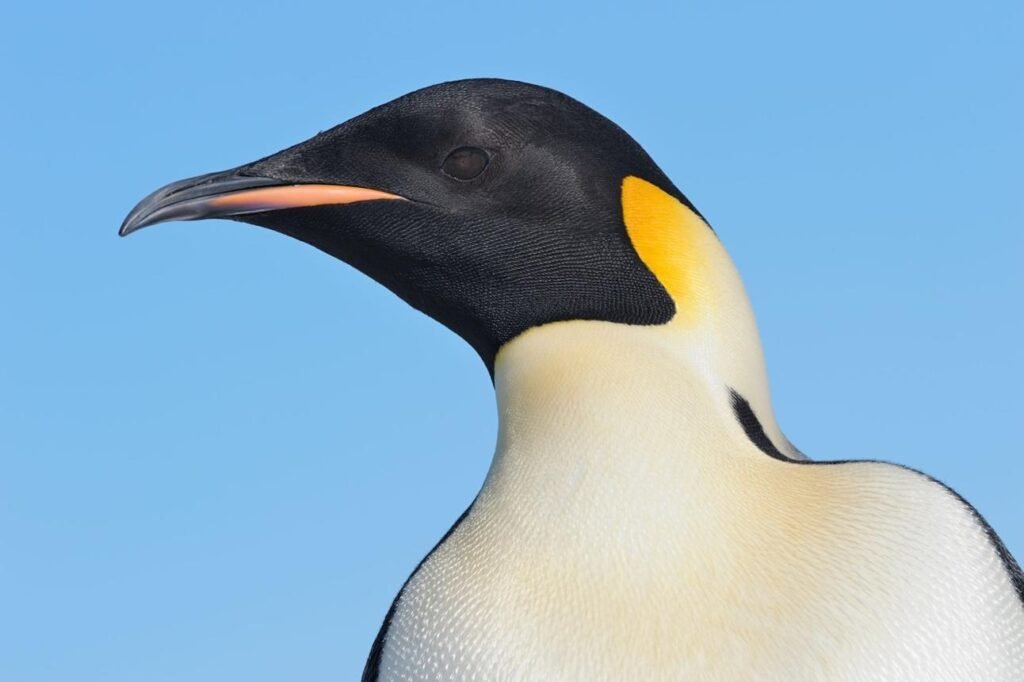
Black and white
Often associated with contrast, balance, formality, simplicity, and duality.
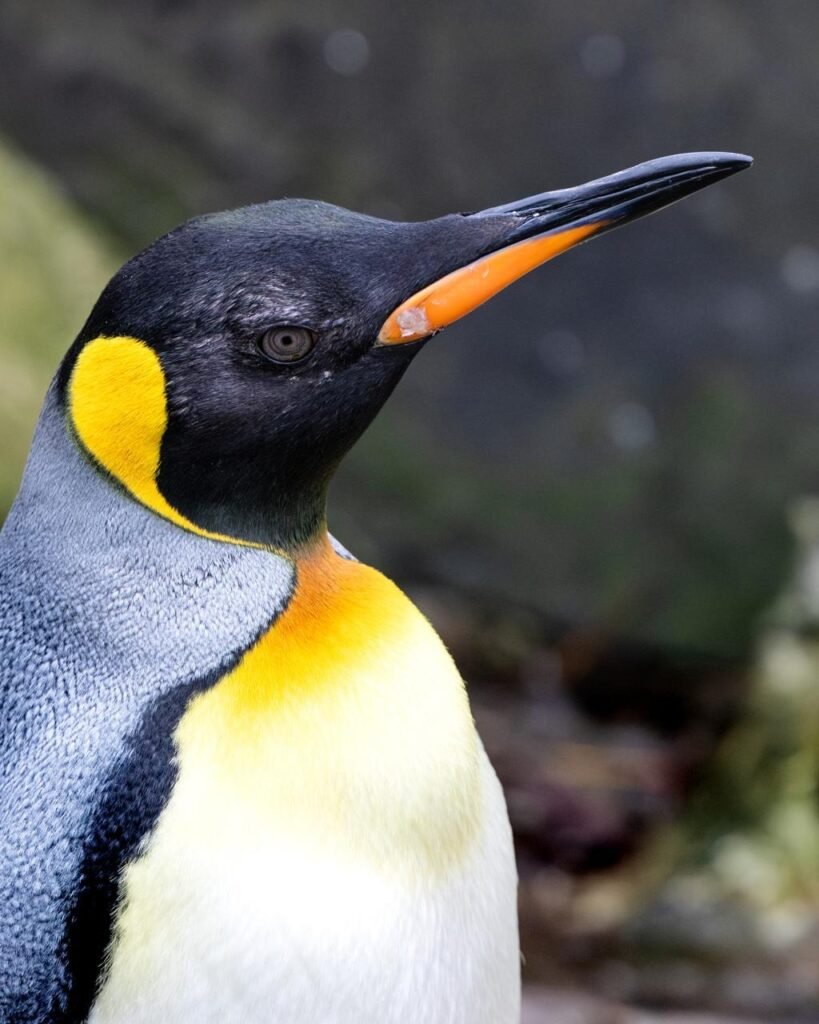
Yellow and orange markings
Can suggest warmth, energy, distinction, and vitality in a design.

Blue-gray tones
May evoke coolness, calm, the ocean, or a connection with nature.
Black-and-white penguin symbolism
A penguin’s contrasting plumage can invite interpretations of duality: two different qualities existing within one whole. In a visual composition, this may suggest the balance between individuality and community, seriousness and playfulness, or stability and change.
However, the colors themselves do not have one universal psychological meaning. Color associations depend on context, design choices, cultural conventions, and personal experience.
The penguin’s black-and-white appearance also resembles a formal suit. This makes it particularly effective in cartoons and illustrations that portray penguins as dignified, professional, or comically serious.
What does a penguin tattoo symbolize?
A penguin tattoo may represent loyalty, resilience, family, friendship, individuality, or a personal connection to nature.
The intended meaning often depends on the design:
- Two penguins may represent a partnership or close relationship.
- An adult penguin with a chick may commemorate parenthood or family.
- A swimming penguin may suggest adaptability and personal growth.
- A minimalist penguin may represent quiet confidence or a love of simplicity.
- A penguin in a playful pose may symbolize humor and not taking life too seriously.
The most meaningful tattoo is one whose symbolism reflects the wearer’s own experience rather than an assumed universal interpretation.
8. Penguin Symbolism in Art, Literature, and Storytelling
Penguins are useful in visual storytelling because their appearance is distinctive and their behavior can be interpreted in multiple ways.
In literature, a penguin character can represent an outsider navigating unfamiliar circumstances, a loyal friend, a determined survivor, or a community member balancing personal desires with collective expectations.
Penguins as literary symbols
A writer might use a penguin to explore belonging. The bird appears similar to the others in its colony, yet each individual has its own experiences and behavior. This can help tell stories about fitting in without losing one’s identity.
Another writer might emphasize the penguin’s apparent awkwardness on land and agility underwater. The contrast can become a metaphor for hidden talent: someone may struggle in one environment while thriving in another.
Penguins can also help authors explore the difference between appearance and reality. A character who seems comical or clumsy may demonstrate courage, intelligence, or emotional depth when circumstances become difficult.
Penguins in film and animation
Animated penguins are frequently portrayed with human characteristics. Their upright stance, expressive movements, and recognizable appearance make them effective characters for comedy, adventure, and family-oriented storytelling.
This process is called anthropomorphism: attributing human traits, motivations, or emotions to nonhuman animals.
Anthropomorphism can make complex ideas accessible, especially to children. It can also lead audiences to mistake fictional behavior for established animal behavior. Responsible storytelling can use emotional appeal while distinguishing between a character’s invented personality and the biology of real penguins.
Penguins as symbols of the outsider
The penguin is especially effective as a symbol of being different. Although penguins are birds, they cannot fly, and their movement on land looks very different from that of many other birds.
In a story, these features can represent a character who does not fit conventional expectations but possesses other strengths.
The message is not that everyone must eventually become like everyone else. It is that a person’s abilities may become more apparent in the right environment.
9. Penguin Symbolism in Branding, Marketing, and Design
Penguins are recognizable visual symbols with applications in branding, advertising, educational materials, and digital communication. Their appearance can communicate friendliness, trust, playfulness, or a connection to wildlife.
Why brands use penguin imagery
A penguin logo or character can help a brand appear approachable because the animal is familiar and visually distinctive. Stylized penguins can also be memorable at small sizes, making them useful for icons, mascots, merchandise, and children’s products.
| Design application | Potential message | Practical consideration |
| Children’s products | Friendliness and playfulness | Use expressive shapes and accessible illustrations |
| Environmental campaigns | Wildlife protection and ocean conservation | Connect the imagery to accurate conservation information |
| Education | Curiosity, discovery, and learning | Pair illustrations with age-appropriate factual content |
| Community organizations | Cooperation and belonging | Avoid implying that conformity is necessary |
| Winter-themed campaigns | Cold climates and seasonal imagery | Remember that not all penguins live in icy environments |
| Personal brands | Individuality, humor, and adaptability | Make sure the symbol fits the audience and brand identity |
Expert Tip: Choose symbolism according to the audience
A penguin can communicate different things depending on how it is illustrated.
A realistic emperor penguin standing in a harsh Antarctic environment may suggest endurance and wildlife conservation. A smiling cartoon penguin may communicate friendliness and humor. A pair of stylized penguins might be more appropriate for a relationship-themed product.
The design principle is simple: select the characteristic that supports your message, and do not expect the image alone to communicate every intended meaning.
10. Penguin Symbolism in Psychology and Human Perception
Animal symbolism connects with how people interpret visual forms, remember stories, and assign meaning to familiar objects.
The penguin is a useful example because its distinctive appearance and recognizable behaviors make it easy to associate with particular ideas. These associations can influence how people respond to penguin imagery, even when the image is used in an entirely fictional setting.
Anthropomorphism and emotional connection
People often attribute human emotions or personalities to animals. A penguin standing beside its chick might be interpreted as protective, while a group of penguins might appear cooperative or friendly.
Such responses can support storytelling and education. However, interpreting animal behavior through human categories can also oversimplify it.
Scientific explanations of penguin behavior should distinguish observable actions from human interpretations of those actions.
Semiotics: How the penguin becomes a sign
Semiotics is the study of signs and how they produce meaning.
In semiotics, a penguin can function as a sign whose meaning depends on context. A penguin image on a conservation poster may represent an endangered ecosystem. On a greeting card, it may communicate affection. In a business logo, it might express simplicity or friendliness.
The same image can carry different meanings because the audience, setting, and surrounding information influence interpretation.
This principle applies to symbols generally: meaning is not contained in the image alone but emerges through the relationship between the image, its context, and the person interpreting it.
11. Penguin Symbolism and Environmental Awareness
Penguins have become important figures in public conversations about biodiversity, marine ecosystems, and environmental change.
Their appeal makes them useful in educational campaigns because audiences can develop an emotional connection with an animal before learning about the ecological systems on which it depends.
The penguin as a conservation symbol
In conservation communication, a penguin may represent:
- The health of marine and coastal habitats.
- The effects of climate change on vulnerable species.
- The importance of protecting breeding sites.
- The relationship between wildlife, fisheries, and human activity.
- The need for evidence-based environmental action.
The African penguin, for example, has become a prominent focus of conservation concern. More broadly, penguin populations face different pressures depending on species and location, so environmental claims should be tied to reliable, species-specific evidence.
The emperor penguin also illustrates how symbolic resilience must not be confused with unlimited survival capacity. Conservation reporting has highlighted concerns about changing sea-ice conditions and their consequences for breeding and survival.
The Times
+1
A useful lesson emerges here: admiration for resilience should encourage protection, not an assumption that nature can withstand every disturbance.
12. Did You Know? Fascinating Facts Behind Penguin Symbolism
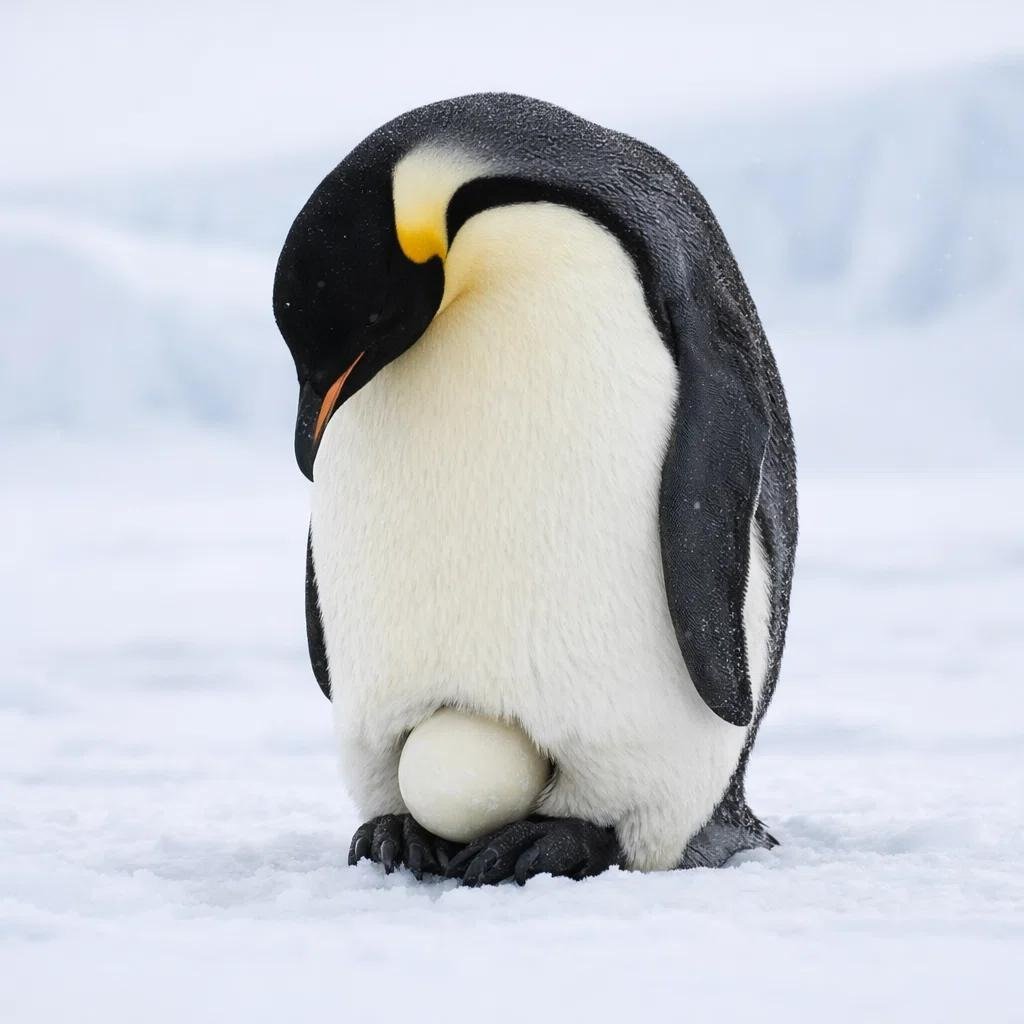
Some penguin fathers incubate the egg
In emperor penguins, the male keeps the egg warm on his feet beneath a skin fold while the female goes to sea to feed. This behavior helps explain why emperor penguins are powerful modern symbols of parental care.
BBC Earth
+1
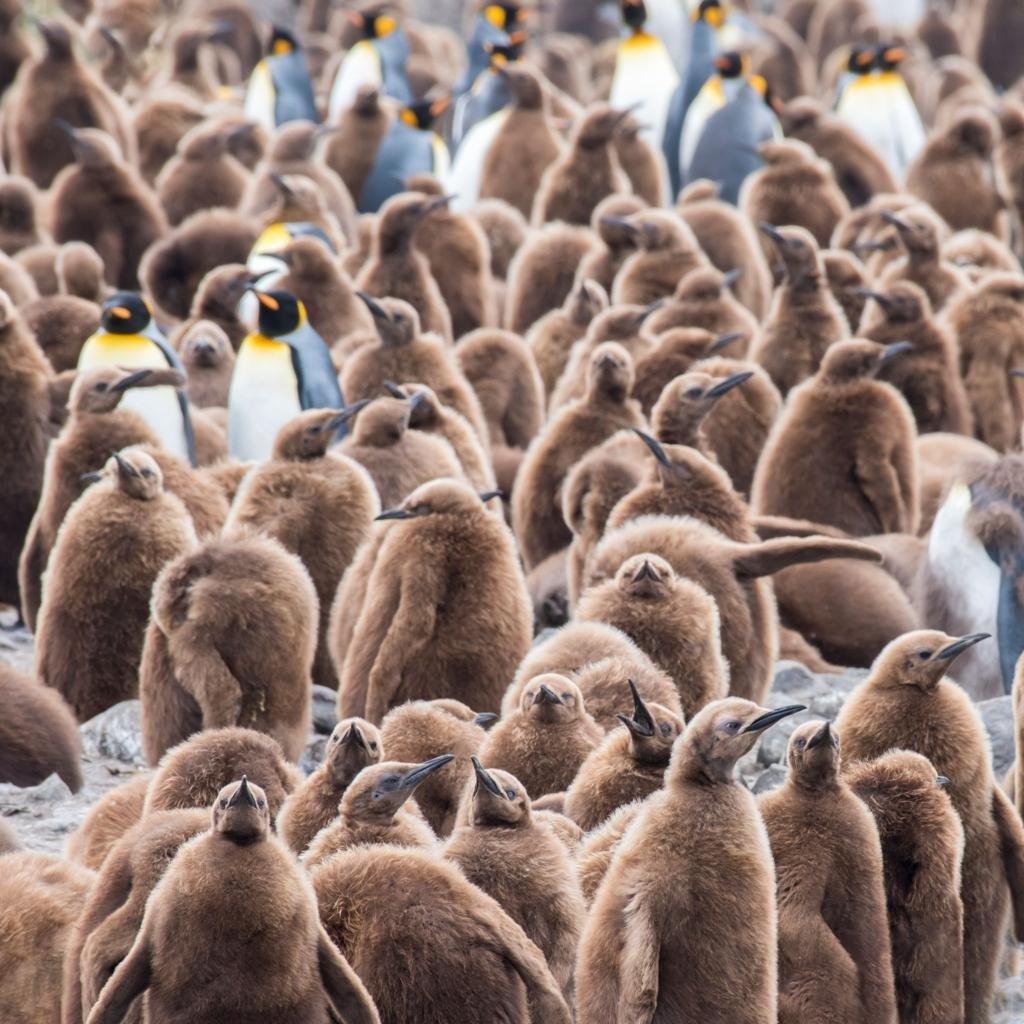
Penguin chicks can gather in groups
King penguin chicks form crèches while adults forage. These groups are a useful real-world example of social behavior that can inspire symbolic interpretations of community and shared protection.
ScienceDirect
+1
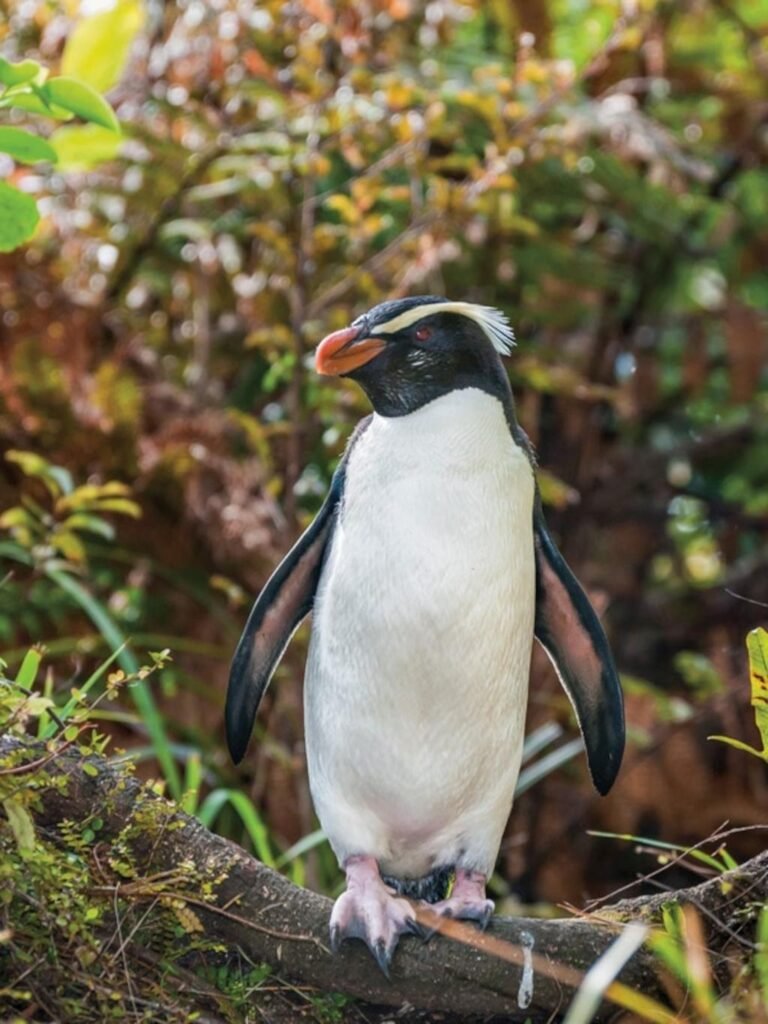
Not every penguin lives on Antarctic ice
The Fiordland crested penguin, or tawaki, breeds in coastal forests and other habitats in New Zealand. This challenges the popular image of all penguins as inhabitants of frozen landscapes.
The Guardian
+1
13. Common Mistakes When Interpreting Penguin Symbolism
Penguin symbolism becomes more meaningful when interpretations remain connected to evidence and cultural context.
Mistake 1: Assuming penguins always mate for life.
Penguin pair bonds vary across species. Some partnerships persist across breeding seasons, while others do not. Use the penguin as a symbol of commitment without presenting lifelong pairing as a universal biological fact.
BBC Earth
+1
Mistake 2: Treating spiritual interpretations as scientific facts.
Ideas such as a penguin bringing a spiritual message can be meaningful to an individual, but they are personal or tradition-specific beliefs rather than established scientific conclusions.
Mistake 3: Claiming every culture shares the same penguin symbolism.
Different communities have different histories, wildlife relationships, and belief systems. Modern popular meanings should not be attributed automatically to ancient or Indigenous traditions.
Mistake 4: Assuming penguins represent only coldness or emotional distance.
Although penguins are associated with cold environments, their symbolic uses frequently emphasize care, social connection, and endurance. The intended meaning depends on context.
Mistake 5: Confusing fictional penguins with real animal behavior.
An animated penguin may act like a human, but real penguins behave according to their biology and environment. Use fiction as a source of cultural interpretation, not as scientific evidence.
14. Myth vs. Fact: Understanding Penguin Symbolism
| Claim | Myth or fact? | Accurate explanation |
| All penguins symbolize lifelong romantic love | Myth | Commitment is a common symbolic interpretation, but pairing patterns vary |
| Penguins can symbolize resilience | Interpretation grounded in fact | Their adaptations and survival behaviors inspire this association |
| Every penguin lives in Antarctica | Myth | Penguins also live in temperate and other Southern Hemisphere habitats |
| Penguins universally represent balance | Myth | Balance is a modern symbolic reading, not a universal cultural rule |
| Penguins can represent parental care | Interpretation grounded in fact | Many species display substantial parental investment, with differences across species |
| A penguin dream predicts the future | Unsupported claim | Dream interpretation is subjective and not a reliable predictive method |
| Penguin imagery can support conservation education | Fact about communication use | Recognizable wildlife imagery can help make environmental messages accessible |
15. Practical Applications: How to Use Penguin Symbolism in Everyday Life
Penguin symbolism can be useful when you turn its meanings into questions, creative choices, or practical reminders rather than treating them as fixed rules.
- Personal growth: Use the penguin as a reminder to adapt when your current approach is not working.
- Relationships: Let its association with cooperation encourage shared responsibilities and honest communication.
- Family life: Use penguin imagery to celebrate caregiving, patience, and mutual support.
- Creative writing: Develop a penguin character to explore belonging, individuality, perseverance, or the experience of being misunderstood.
- Education: Introduce animal behavior, ecology, and symbolic interpretation together so students learn to distinguish facts from metaphors.
- Branding: Choose penguin imagery when friendliness, community, or environmental awareness fits your message.
- Personal reflection: If penguins have become meaningful to you, consider which qualities you associate with them and why.
Expert Tip: Connect a symbol to an action
Instead of simply deciding that a penguin represents resilience, identify what resilience means in your current situation. It might mean asking for help, developing a new skill, or allowing yourself time to recover.
A symbol becomes more useful when it helps you recognize a practical next step.
16. Key Insights: What the Penguin Teaches Us
The most meaningful lessons associated with penguin symbolism emerge from the relationship between natural behavior and human interpretation.
Penguins remind us that strength does not always look dramatic. Cooperation can be essential to survival, but individuality still matters. Caring relationships require effort, and adaptation often means developing abilities that are useful in different environments.
Their distinctive appearance also demonstrates how visual symbols communicate meaning. The same penguin can suggest warmth and humor in a children’s illustration, perseverance in a wildlife documentary, or environmental responsibility in a conservation campaign.
These interpretations are not universal truths about penguins. They are ways people use a recognizable animal to explore human values, emotions, relationships, and responsibilities.
Conclusion: Why Penguin Symbolism Still Matters
Penguin symbolism brings together ideas of resilience, loyalty, adaptability, family devotion, cooperation, and individuality.
These associations draw inspiration from the birds’ distinctive appearance, social behaviors, parental care, and ability to live in diverse environments.
Historically, penguins differ from many animals whose symbolism developed through extensive ancient mythological traditions.
Much of their widely recognized modern symbolism has emerged through natural history, wildlife observation, literature, film, education, and contemporary spiritual reflection.
Specific cultural connections, including those associated with the tawaki in Māori tradition, deserve attention within their own contexts.
Understanding penguin symbolism also reveals something about symbolism itself.
Animals become meaningful signs through a combination of observable characteristics, cultural knowledge, storytelling, and individual experience.
Their meanings can change across settings without losing their ability to communicate.
Whether you encounter a penguin in a dream, choose it for a tattoo, include it in a creative project, or use it to communicate an environmental message, the most valuable interpretation is one that respects both the real animal and the context in which its image appears.
Ultimately, the penguin can serve as a reminder that resilience and connection are not opposing qualities. We can develop independence while accepting support, remain committed while adapting to change, and recognize our own strengths even when we feel out of place.
Frequently Asked Questions About Penguin Symbolism
1. What does a penguin symbolize spiritually?
A penguin commonly symbolizes resilience, adaptability, emotional balance, loyalty, and community in contemporary spiritual interpretations. People may use it as a personal reminder to persevere, nurture relationships, and remain flexible during change. These meanings are interpretive rather than universal spiritual facts.
2. What does seeing a penguin mean?
Seeing a penguin may remind you of companionship, perseverance, family, or adapting to unfamiliar circumstances. If the encounter feels personally significant, consider what penguins represent to you and what is happening in your life. There is no established evidence that seeing a penguin predicts a particular event.
3. What does a penguin symbolize in love?
A penguin often represents affection, commitment, trust, and cooperation. Its parental care and social behavior make it a popular symbol for couples and families. However, penguins do not all mate for life, so their symbolism should not be confused with a universal biological pattern.
4. What does a penguin mean in a dream?
A penguin in a dream may represent belonging, emotional balance, independence, or the need for support. A group of penguins might bring to mind community, while an isolated penguin could suggest independence or loneliness. These interpretations depend on personal associations and are not reliable predictions.
5. What does a penguin symbolize in different cultures?
Penguin symbolism varies by cultural and historical context. Modern popular culture often associates penguins with family, humor, resilience, and cooperation. In Aotearoa New Zealand, the Fiordland crested penguin, or tawaki, also has a documented connection with a Māori tradition involving a lightning-associated figure. There is no single meaning shared by all cultures.
6. What does a penguin tattoo symbolize?
A penguin tattoo can represent loyalty, family, resilience, individuality, friendship, or adaptability. Two penguins may symbolize a close relationship, while an adult and chick may represent parenthood. The meaning ultimately depends on the wearer’s intentions, the artwork, and the personal experiences connected to the design.
Key Takeaways
- Resilience: Penguins inspire the idea of continuing through challenging circumstances.
- Loyalty: They can represent commitment, trust, and dependable relationships.
- Family: Their parental behavior makes them recognizable symbols of caregiving.
- Community: Colony life provides a metaphor for cooperation and belonging.
- Adaptability: Movement between land and water inspires interpretations of flexibility.
- Individuality: Their distinctive appearance can symbolize embracing differences.
- Spiritual meaning: Contemporary interpretations emphasize balance and perseverance, but meanings are not universal.
- Cultural accuracy: Penguin symbolism should be interpreted with attention to historical context and specific traditions.
- Modern relevance: Penguins appear in literature, branding, education, environmental communication, art, and popular media.
Semantic Entities, NLP Concepts, and Related Keywords
The following terms identify the major semantic relationships covered in this article and can help organize related content for your symbolism website.
| Topic cluster | Related entities and keywords |
| Core symbolism | Penguin symbolism, penguin meaning, penguin symbolic meaning, penguin traits |
| Spiritual interpretations | Penguin spiritual meaning, penguin spirit animal, animal symbolism, spiritual reflection |
| Love and relationships | Penguin symbolism in love, loyalty, commitment, partnership, friendship |
| Family and community | Penguin parenting, family devotion, parental care, penguin colonies, teamwork |
| Psychology and dreams | Penguin dream meaning, animal symbolism in dreams, anthropomorphism, human perception |
| Culture and history | Tawaki, Māori traditions, natural history, cultural symbolism, folklore |
| Visual communication | Penguin imagery, semiotics, iconography, color symbolism, black-and-white symbolism |
| Art and literature | Penguin in literature, penguin characters, storytelling, animation, visual metaphors |
| Branding and design | Penguin logo meaning, brand identity, mascot design, visual communication, consumer perception |
| Environmental themes | African penguin, emperor penguin, marine ecosystems, biodiversity, wildlife conservation |
| Personal applications | Penguin tattoo meaning, resilience, adaptability, belonging, self-acceptance |
Related topical relationships
- Penguin symbolism and animal behavior
- Penguin symbolism and emotional resilience
- Penguin symbolism and family relationships
- Penguin symbolism and modern spirituality
- Penguin symbolism and dreams
- Penguin symbolism and Māori cultural context
- Penguin symbolism and semiotics
- Penguin symbolism and color psychology
- Penguin symbolism and branding
- Penguin symbolism and conservation education
For stronger topical authority on your symbolism website, these relationships can support related articles on bird symbolism, animal symbolism in dreams, loyalty symbolism, family symbolism, resilience symbolism, and the symbolism of marine animals. Each article should contribute distinct information rather than repeat the same generic meanings.
Sources for Further Reading
The following references support the article’s biological and cultural context.
- Smithsonian Ocean Penguins. Information on penguin biology, breeding, and cultural representation.
- BBC Earth Penguin facts. An overview of penguin behavior, breeding, and variation between species.
- Animal Diversity Web Sphenisciformes (penguins). Information about penguin habitats, nesting, and parental care.
- ScienceDirect The adaptive significance of crèches in the king penguin. Research on king penguin chick-group behavior.
- The Guardian Research into New Zealand’s Fiordland crested penguins. Reporting on tawaki ecology and ongoing research.
Editorial note: This article distinguishes observable penguin behavior from cultural, psychological, and spiritual interpretations. It is written to support human-first SEO and semantic relevance, but no article can guarantee a particular search ranking or AI-search visibility.

Discover symbolism in art, literature, and creativity with Amelia Rhodes’ insightful articles.
